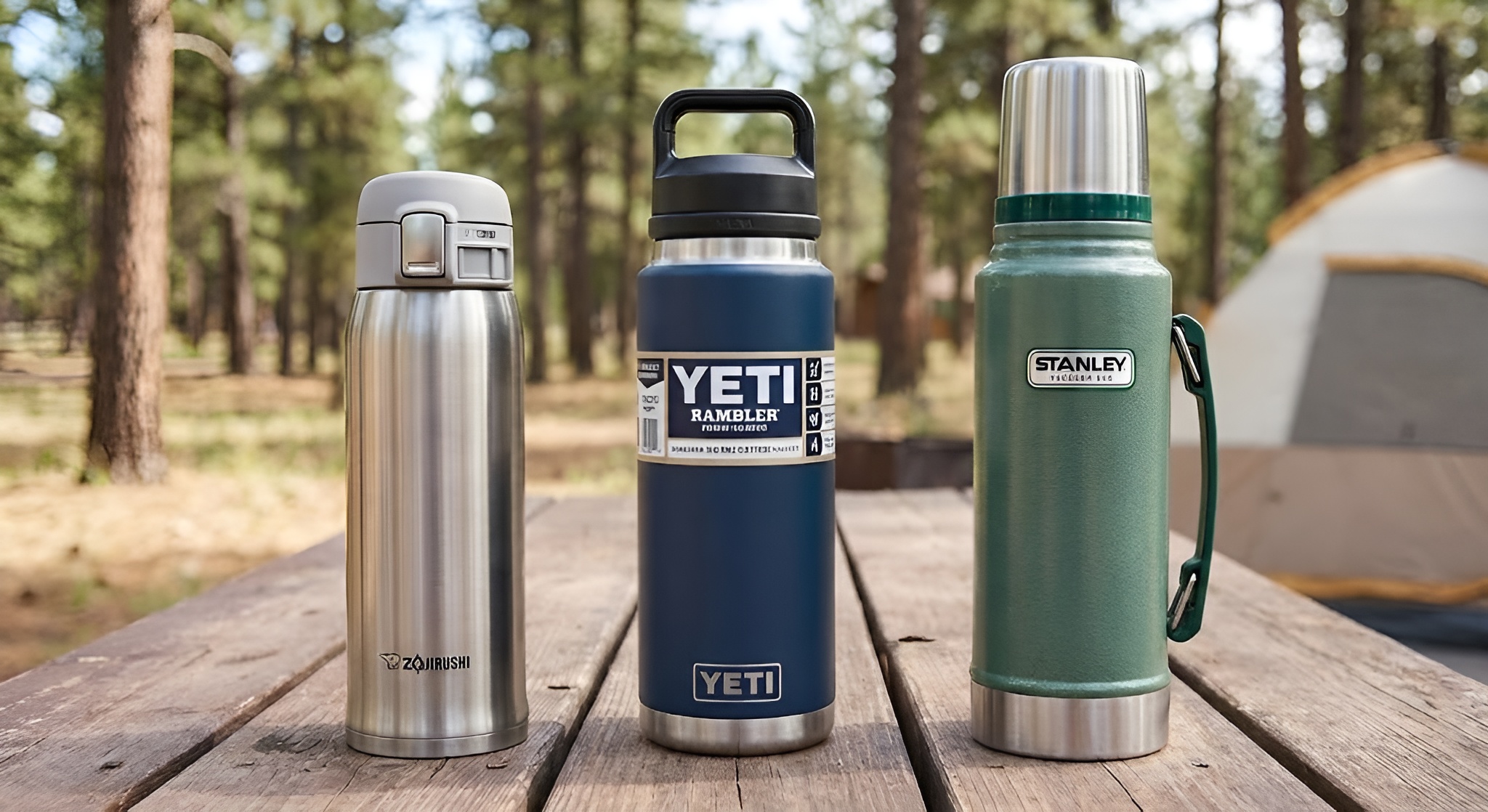
1. What a Picnic Tea Flask Is (and Isn't)
A tea flask or thermos is a portable insulated container designed to keep brewed tea at drinking temperature—typically 60–75 °C—for several hours after filling. The term "thermos" is often used generically (it was originally a brand name, now a common noun in British English), but all effective models share the same core technology: a double-wall vacuum chamber that eliminates conductive and convective heat loss. The vacuum layer sits between an inner vessel (which holds the liquid) and an outer shell, preventing heat from escaping through the walls; reflective coatings on the inner surfaces further reduce radiative heat transfer.
What a flask is not: a magic box that defies thermodynamics. Even the best vacuum flask will lose heat over time, especially through the lid and neck (which cannot be fully sealed in vacuum). A well-designed 1-litre stainless flask filled with boiling water will typically drop to ~70 °C after six hours and ~55 °C after twelve, depending on ambient temperature and how often you open it. Single-wall metal or plastic bottles, foam-insulated "cool bags," and double-wall air-gap designs (without vacuum) are not true flasks—they'll keep tea warm for thirty to sixty minutes at best, useless for a county show or outdoor pub-garden afternoon.
For picnics, you want a flask with a wide-mouth pouring system (so you can decant into mugs or cups) rather than a narrow-neck personal bottle. The distinction matters: narrow "travel mugs" are designed for sipping directly and often use screw-on lids that are awkward for sharing; picnic flasks have push-button spouts, flip caps, or cup-style screw tops that double as drinking vessels.
Vacuum or Nothing
If the product description doesn't explicitly say "vacuum insulated" or "double-wall vacuum," assume it isn't—and expect your tea to be lukewarm within the hour.
2. How Vacuum Insulation Keeps Tea Hot (and Where Heat Still Escapes)
Heat moves in three ways: conduction (direct contact), convection (fluid circulation), and radiation (infrared energy). A vacuum flask tackles the first two by removing the air between the inner and outer walls—no molecules means no conduction or convection. Most quality flasks also coat the inner wall with a reflective metal layer (often copper or aluminium) to bounce radiant heat back into the liquid. This combination can reduce heat loss through the body to near zero under laboratory conditions.
In the real world, heat still escapes through the neck and lid assembly, where the inner and outer walls must meet to form a seal. The wider the neck, the greater the thermal bridge; this is why narrow-neck thermoses (originally designed for soup or coffee) often outperform wide-mouth tea flasks in pure retention tests. The lid itself—typically plastic or steel with a rubber gasket—is never vacuum-insulated, so every time you open the flask you lose a pulse of steam and heat. Ambient temperature matters too: a flask will lose heat faster on a January hilltop than on a July beach, because the temperature gradient drives the rate of transfer.
Manufacturers quote retention figures—"keeps drinks hot for 12 hours"—but these are measured under controlled conditions (often starting at 95 °C, measured in a 20 °C room, unopened). In a cold car boot or a draughty motorway service-station picnic area, expect six to eight hours to a drinkable 60 °C, less if you're pouring multiple cups. That's still excellent—enough for any day trip—but not the 24-hour claim some brands imply.
3. Stainless Steel vs. Glass Liners: Flavour, Durability, and Weight
The inner liner is where your tea sits, and its material affects taste, fragility, and maintenance. Stainless steel—typically 18/8 (18% chromium, 8% nickel) food-grade alloy—is now the dominant choice. It's light, shatterproof, and corrosion-resistant, and when properly electropolished it presents a smooth, inert surface that won't leach flavours or retain odours. High-quality steel liners are genuinely flavour-neutral; cheaper or poorly finished steel can impart a faint metallic taint, especially noticeable in delicate white or green teas, though black tea and robust roasted oolongs mask it.
Glass liners (borosilicate, the same material used in laboratory beakers) are chemically inert and preserve flavour perfectly—there is zero risk of taste transfer. Vintage Thermos-brand flasks used glass, and a handful of specialist models still do. The trade-offs: glass is heavier than steel for the same capacity, and it will shatter if dropped onto rock or concrete, even inside a protective steel shell. Modern screw-in glass refills can be replaced, but they're less common in UK retail in 2026 and generally found only in premium or heritage ranges.
A third option, sometimes marketed as "ceramic-coated" or "enamel-lined" steel, applies a thin glaze over the stainless surface. This can improve flavour neutrality and make cleaning easier (tea tannins are less likely to stain), but the coating can chip if you scrub hard or knock the flask. For most picnic use—where robustness and weight matter—high-grade stainless steel is the pragmatic choice. If you're carrying the flask in a padded bag and prize absolute flavour purity for cream-tea service or rare single-estate brews, glass is worth the extra care.
The Sniff Test
Before first use, rinse the empty flask with boiling water, seal it for ten minutes, then open and smell. A strong plastic or metallic odour suggests poor-quality seals or liner finish—return it.
4. Lid and Seal Designs: Screw-Top, Push-Button, and Leak-Proofing
The lid is the flask's Achilles heel—it's where leaks start, heat escapes, and usability lives or dies. Screw-top lids (often doubling as a cup) are mechanically simple: you twist off the cap, pour, and screw it back on. They rely on a silicone or rubber O-ring compressed between cap and neck to seal. Screw tops are reliable if the O-ring is intact and the threads are clean; they rarely leak when properly closed, and they're easy to disassemble for washing. The downside: you need two hands to open, and if you lose the cap on a windy moor, you've lost your seal.
Push-button or flip-top pouring lids let you dispense tea one-handed by pressing a lever or button that opens an internal valve. They're convenient when you're holding a mug in the other hand or balancing the flask on a car bonnet. The catch: the valve mechanism introduces more failure points. Dirt, tea leaves, or limescale can lodge in the valve seat and prevent a full seal; silicone diaphragms can perish after a year of use. Many budget flasks use these lids because they feel premium, but unless the valve is well-engineered (stainless-steel spring, food-grade silicone, easy to dismantle), they'll drip or weep when tipped in a rucksack.
A hybrid design—screw cap with a small pouring spout and a secondary flip cover—offers a middle ground: you unscrew for full access and cleaning, but you can flip the spout open for quick pouring without removing the cap entirely. Whichever style you choose, leak-proofing depends on the seal material (silicone lasts longer than cheap rubber) and your ability to keep it clean. After every few uses, remove the seal, rinse it, and check for splits or compression set (permanent flattening). A worn seal will leak no matter how tightly you screw the lid.
5. Capacity, Weight, and Portability for Sharing
Picnic flasks in the UK market range from 350 ml personal sizes to 2-litre family models. The sweet spot for two to three people is 1 litre (1000 ml), which yields roughly three standard 330 ml mugs or four smaller cups. A 1-litre stainless vacuum flask weighs 400–500 g empty; add a kilogram for the liquid, and you're carrying ~1.5 kg total—manageable in a rucksack but noticeable over a long National Trust estate walk.
Smaller 500–750 ml flasks weigh 300–400 g empty and are genuinely portable for solo walkers or couples who drink slowly, but they run dry fast if you're sharing at a blackberry-foraging stop or street-party picnic. At the other end, 1.5–2 litre models are excellent for car-boot picnics, farmers' markets, or family days where you can leave the flask on a blanket, but they're too bulky for anything involving hills or stiles.
Consider the height and diameter too: a tall, narrow flask fits more easily into a rucksack side pocket but has a higher centre of gravity and can tip in the car. A squat, wide design is stable and easier to pour from when sitting on uneven ground, but won't slot into standard bottle pockets. If you already own a travel tea kit or portable brewing set, measure your bag's compartments before buying.
The One-Litre Rule
For any outing longer than two hours with more than one person, start at 1 litre. Smaller flasks disappoint; larger ones stay in the car.
6. Materials, Coatings, and Tea Flavour Interactions
Beyond the liner, you'll encounter various exterior finishes and internal treatments. Powder-coated or painted steel exteriors are durable and available in many colours, but the coating can chip if dropped on stone; bare brushed or polished stainless is more scratch-resistant and easier to clean, though it shows fingerprints. Neither affects the tea inside, but a chipped exterior can let moisture reach the vacuum seal over time, eventually degrading insulation.
Some flasks advertise "BPA-free" plastic components. This is relevant for any parts that touch hot liquid—lid liners, gaskets, push-button valve housings—but meaningless for all-metal designs. Bisphenol A (BPA) is an endocrine-disrupting chemical once common in polycarbonate plastics; most food-contact plastics in the UK and EU have been BPA-free since the early 2010s. If a flask still highlights this in 2026, it may be relying on outdated safety messaging rather than offering a genuine advantage. Check instead that any plastic components are marked PP (polypropylene) or silicone, both stable at boiling temperatures.
"Medical-grade" or "surgical-grade" stainless steel is another common claim. There's no single standard for these terms; they usually refer to 316 stainless (higher molybdenum content, better corrosion resistance) rather than the more common 304 (18/8). For tea flasks, 304 is perfectly adequate unless you're storing acidic liquids for days. The real quality marker is electropolishing—a process that smooths the steel surface at a microscopic level, removing manufacturing oils and micro-pits where flavours or bacteria could cling. A properly electropolished 304 liner will outperform a rough-finished 316 for flavour neutrality and ease of cleaning.
7. Pouring, Cleaning, and Long-Term Maintenance
Pouring hot tea from a flask sounds trivial, but a badly designed spout or valve can dribble, splash, or deliver an uncontrolled gush that overfills your mug. Wide screw-off caps give you full control—you can pour slowly by tilting gently—but you're also fully exposing the neck, so heat escapes fast. Narrow pouring spouts (built into push-button lids) channel the flow neatly but can't be adjusted mid-pour; if the internal tube is too short or poorly angled, the last 100 ml may not pour out at all, trapped below the tube inlet.
Cleaning is where many flasks fail in the long term. Tea tannins stain stainless steel over time, leaving a brown film that's harmless but unsightly and can eventually affect taste. A wide mouth (at least 5 cm diameter) lets you reach inside with a bottle brush or sponge; narrow-neck designs require a long brush or tablet-based cleaners. Avoid abrasive scourers or bleach, which can scratch electropolished surfaces or damage seals. A weekly soak in warm water with a teaspoon of bicarbonate of soda or a proprietary flask-cleaning tablet will dissolve tannin without scratching.
The gaskets and seals need regular inspection. Remove them every few weeks, rinse under warm water, and check for black mould (common if you store the flask sealed between uses). Let all parts air-dry fully before reassembling. If you notice a persistent rubbery or musty smell, replace the seals—most manufacturers sell spares, and generic silicone O-rings are available in standard sizes from hardware shops. A flask body can last decades; seals and lids are consumables, typically good for two to three years of regular use.
The Overnight Soda Trick
For stubborn tannin stains, fill the flask with warm water and two tablespoons of bicarbonate of soda, seal, shake, and leave overnight. Rinse in the morning—most stains lift without scrubbing.
8. Price Tiers, Marketing Red Flags, and What to Pay in 2026
UK picnic flasks span a wide price range. Budget models (£10–20) are often single-brand supermarket or outdoor-retailer own-labels, using basic stainless vacuum construction and simple screw lids. They work—vacuum is vacuum—but finish quality varies, seals may be thinner silicone, and heat retention can fall short of headline claims. Expect six hours to ~65 °C rather than twelve, and check reviews for leakage reports. They're adequate for occasional use or as a backup flask in the car, but not ideal if you're relying on hot tea at the end of a long October half-term walk.
Mid-range (£25–45) flasks from established outdoor or homeware brands offer better electropolishing, thicker vacuum walls, and more robust lid mechanisms. Heat retention meets or exceeds quoted figures, replacement seals are readily available, and build quality supports years of regular picnicking. This is the sweet spot for most buyers: you're paying for engineering and materials that matter, not marketing. For current top picks across capacities and lid styles, see our best tea thermos and best thermos flasks for hot tea reviews.
Premium models (£50–80+) often feature glass or ceramic-lined interiors, precision-machined stainless components, proprietary lid designs, or heritage branding. They can be worth it if you value aesthetics, maximum flavour purity, or want a flask that doubles as a wedding gift or tea gift. Functionally, the heat-retention difference over a good £35 flask is marginal—perhaps an extra hour to drinkable temperature—but the pouring experience, longevity, and repairability can justify the cost for daily users.
Watch for marketing red flags: "24-hour hot" claims without specifying ambient temperature or acceptable end temperature (some brands count 40 °C as "hot"); "NASA technology" or "military-grade" labels (vacuum flasks predate NASA, and "military-grade" has no consumer meaning); and "keeps tea fresh" language that confuses temperature retention with flavour preservation (a flask doesn't stop oxidation, it just slows cooling). Similarly, "eco-friendly" stainless steel is a stretch—steel is recyclable and durable, but mining and smelting are energy-intensive; the real environmental win is using a flask for years instead of buying disposable cups. If a product leads with these claims rather than hard specs (capacity, insulation type, seal material, measured retention), assume the engineering is unremarkable.
Retention Reality Check
Any flask claiming more than 12 hours to a drinkable temperature (≥60 °C) in real-world conditions is overselling. Good flasks do 8–10 hours; excellent ones edge past 12 in mild weather—but none are magic.


Comments