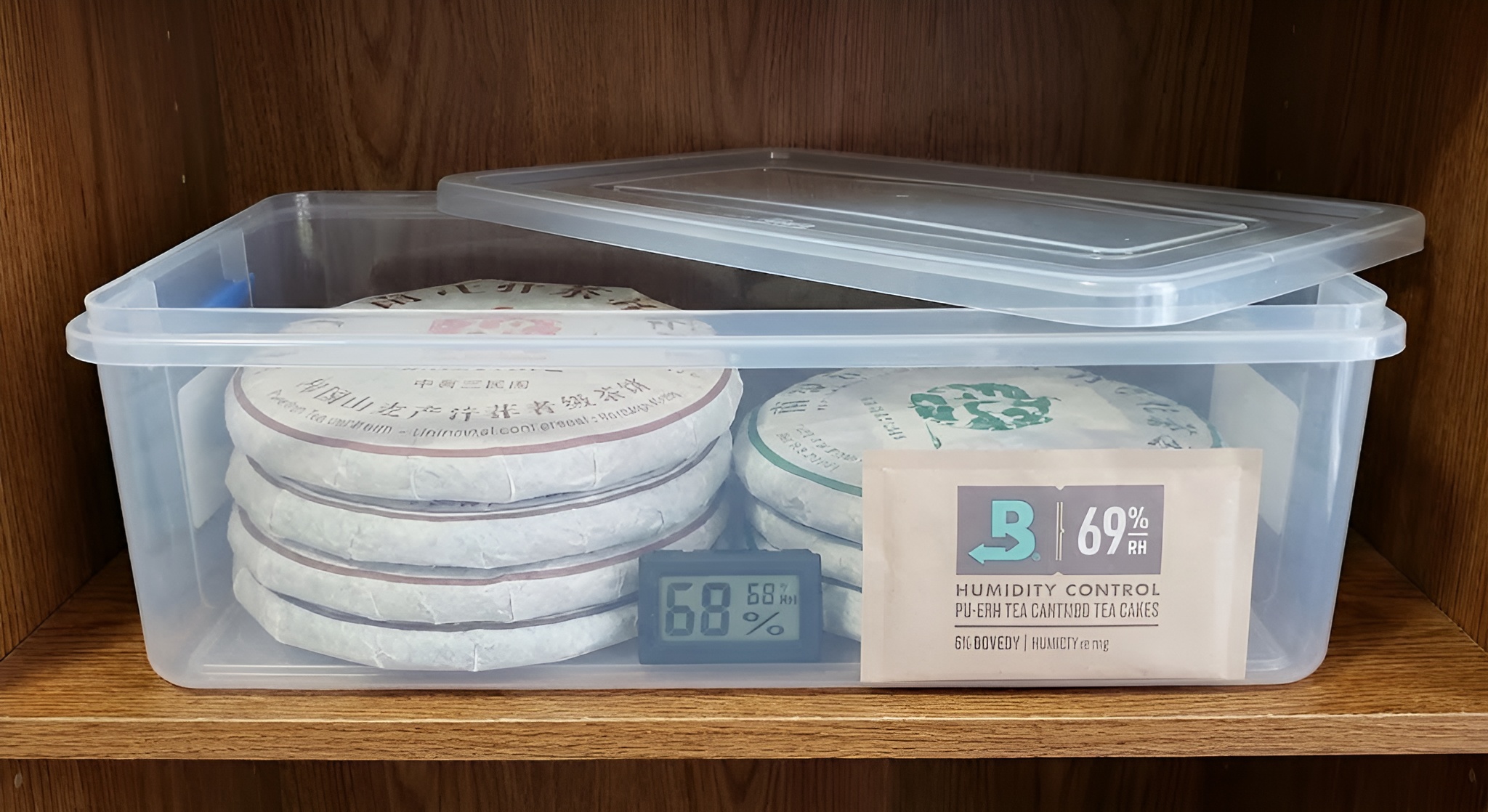
1. Introduction: The Art and Science of the Tea Bioreactor
It is a post-fermented tea designed to undergo a slow, metabolic metamorphosis over decades, improving in complexity, texture, and value. However, this transformation is not inevitable; it is strictly conditional. The tea leaf acts merely as a substrate—a host for a complex ecological succession of microbial life and slow chemical oxidation. Without the correct environmental parameters, this process will stall, or worse, deviate into spoilage.1
For the modern collector residing outside the traditional, subtropical aging regions of Hong Kong, Malaysia, or Yunnan, the ambient environment is frequently hostile to this process. Central heating systems in North America and Europe often reduce indoor relative humidity (RH) to below 30% during winter months—levels at which the microbial engines of Pu-erh cease to function and the essential oils of the leaf irreversibly volatilize.3 Consequently, the development of the "Pumidor"—a controlled environment or bioreactor designed to mimic the favorable conditions of a wet storage warehouse while mitigating the risks of mold—has become an essential apparatus for the serious practitioner. This report provides a comprehensive, technical examination of the principles, materials, and methodologies required to construct and maintain effective Pu-erh storage systems. It ranges from passive, entry-level microclimates to sophisticated, automated climate-controlled cabinets, integrating biological, thermodynamic, and materials science perspectives to offer a definitive guide on the subject.
2. The Biological Imperative: Microbial Ecology and Chemical Transformation
To engineer an effective storage solution, one must first possess a nuanced understanding of the biological mechanisms that the storage vessel is intended to support. The Pumidor is not merely a box; it is a life-support system for a specific microbiome.
2.1 The Microbial Engine: Fungal Succession and Enzymatic Activity
The primary distinction between Pu-erh and other tea categories is the involvement of microbial fermentation. Research indicates that the aging process, particularly for Shou (ripe) and aged Sheng (raw) Pu-erh, is driven by a succession of fungal and bacterial communities. Aspergillus niger is frequently cited as a dominant species in the fermentation of pile-fermented (Shou) Pu-erh, playing a critical role in the hydrolysis of polysaccharides and the degradation of polyphenols into smoother, sweeter compounds.5
However, the microbial landscape is diverse. In naturally aged Sheng Pu-erh, the ecosystem includes various species of Penicillium, Rhizopus, and Aspergillus, alongside yeasts such as Saccharomyces. These organisms secrete extracellular enzymes—cellulases, pectinases, and polyphenol oxidases—that break down the structural components of the leaf.5 This enzymatic activity is responsible for the conversion of astringent catechins into theaflavins and thearubigins, resulting in the characteristic darkening of the tea soup and the development of "aged" flavor profiles described as camphor, date, or wood.8
Crucially, these metabolic processes are strictly regulated by water availability. Microorganisms do not respond to "Relative Humidity" directly; they respond to Water Activity ($a_w$), which is the partial vapor pressure of water in the substrate relative to the standard state. However, in a storage context, the equilibrium relative humidity (ERH) of the air surrounding the tea eventually dictates the water activity within the leaf. If the storage environment drops below 50% RH, the moisture content of the leaf falls below the threshold required for microbial metabolism. The fungi enter a state of dormancy, and the "aging" process effectively halts. Conversely, if humidity exceeds 80% for prolonged periods, the environment may favor rapid-growing, hydrophilic spoilage organisms, including pathogenic molds like Aspergillus flavus, which can produce mycotoxins.9
2.2 The thermodynamics of Aging: Temperature and Reaction Rates
Temperature acts as the accelerator for these biological and chemical reactions. According to the Arrhenius equation, the rate of chemical reaction roughly doubles for every 10°C increase in temperature. In the context of tea storage, higher temperatures generally accelerate the oxidative darkening of the leaf and the breakdown of bitterness.2
However, biological systems have optimal thermal windows. The ideal temperature range for Pu-erh aging is generally accepted to be between 20°C and 30°C (68°F–86°F).4 Low Temperature (<15°C): Microbial metabolism slows significantly. While chemical oxidation continues at a reduced rate, the transformative "fermentation" aspects are minimized. Storage at these temperatures preserves the "green" character of the tea for longer but delays the development of aged complexity.12 High Temperature (>30°C): While heat accelerates aging, excessive heat can lead to the volatilization of delicate aromatic compounds, leaving the tea tasting "flat." Furthermore, high temperatures combined with high humidity create a "sauna effect" that significantly increases the risk of aggressive mold growth and souring due to anaerobic bacterial proliferation if airflow is insufficient.11
Expert Tip: The Oxygen Requirement
Unlike wine, which is aged anaerobically, or cigars, which require gas exchange primarily to release ammonia, Pu-erh tea requires oxygen. The fermentation pathways are largely aerobic. If a storage container is hermetically sealed for too long, the environment can become anaerobic, shifting the microbial balance toward bacteria that produce sour, "pickled" off-flavors. The Pumidor must be a "semi-open" system.3
2.3 The Necessity of Gas Exchange
Therefore, the engineering challenge of the Pumidor is to create a "semi-open" system: sufficiently sealed to retain humidity and temperature, yet sufficiently permeable to allow for the ingress of oxygen and the egress of metabolic byproducts like carbon dioxide.14
3. Environmental Parameters and Psychrometrics
Based on the biological requirements, we can establish the target metrics for a functional Pumidor.
3.1 The Golden Zone: Target Metrics
| Parameter | Optimal Range | Risk Threshold (Low) | Risk Threshold (High) | Consequences of Deviation |
|---|---|---|---|---|
| Relative Humidity (RH) | 60% – 70% | < 50% | > 75% | Low: Dormancy. High: Mold. |
| Temperature | 20°C – 25°C | < 15°C | > 30°C | Low: Stalled aging. High: Aroma loss. |
| Airflow | Periodic / Gentle | Stagnant | Constant Draft | Stagnant: Sourness. Draft: Aroma stripping. |
| Light | Total Darkness | N/A | Direct UV | High: Photodegradation. |
3.2 Psychrometrics: The Dew Point Danger
A critical and often overlooked aspect of high-humidity storage is the dew point. The capacity of air to hold water vapor decreases as temperature drops. If a Pumidor is maintained at 70% RH at 25°C, and the temperature suddenly drops to 19°C (e.g., due to a home thermostat setback at night), the air may reach 100% saturation. When saturation occurs, water vapor condenses into liquid water on the coldest surfaces—typically the walls of the container or the tea wrappers themselves. This liquid water is the primary vector for mold blooms. Stable temperature is therefore a prerequisite for stable humidity. A system that fluctuates wildly in temperature will inevitably suffer from condensation cycles, regardless of the average humidity setting.13
3.3 Sheng vs. Shou: The Separation Protocol
A fundamental rule of Pu-erh storage is the segregation of Raw (Sheng) and Ripe (Shou) teas. Shou Pu-erh: Has undergone an accelerated, wet-pile fermentation process (Wo Dui). It possesses a strong, earthy, sometimes fishy or muddy aroma, especially when young. Sheng Pu-erh: Possesses delicate floral, fruity, and grassy aromatics. Because tea leaves are highly adsorbent (they effectively act as activated carbon filters), storing Sheng and Shou together results in "cross-contamination." The aggressive aromatics of the Shou will overpower and muddy the delicate top notes of the Sheng, leading to a homogenous, indistinct flavor profile. Serious collectors utilize separate Pumidors or completely isolated compartments for these two categories.2 (See Sheng vs. Shou Guide).
4. Materials Science: Vessel Selection and Chemical Neutrality
The material used to construct the Pumidor is not merely a structural component; it interacts chemically with the tea.
Expert Tip: The Prohibition of Spanish Cedar
In the world of cigar preservation, humidors are almost exclusively lined with Spanish Cedar (Cedrela odorata). For Pu-erh tea, this is disastrous. The tea leaves will greedily absorb the cedrela oils. Within weeks, fine Pu-erh will taste exclusively of cedar, masking the terroir flavors. Under no circumstances should a standard cigar humidor be used for tea storage unless it is lined with a completely impermeable barrier.18
4.2 The Gold Standard: Paulownia Wood (Paulownia tomentosa)
In the Japanese tradition of Kiribako, Paulownia wood (Kiri) is the preferred material for storing tea implements, kimono, and ceramics. It is increasingly adopted for high-end Pu-erh cabinets. Odor Neutrality: High-grade Paulownia is virtually odorless, ensuring the tea's flavor remains authentic.20 Hygroscopic Buffering: The wood is porous and dimensionally stable. It absorbs excess moisture during humid periods and releases it during dry periods, acting as a passive climate control buffer.21 Insulation: It has an exceptionally low thermal conductivity and high ignition point (over 400°C), providing excellent thermal stability for the contents.21 Insect Resistance: It contains tannins and sesamin which naturally repel insects without the strong odor of cedar.21
4.3 Inert Polymers and Metals
For DIY solutions, food-grade plastics (HDPE, PP) are common. Neutrality: These materials are non-reactive but must be thoroughly washed and aired to remove manufacturing release agents or plasticizer smells ("plastic funk").23 Condensation Risk: Unlike wood, plastic and metal are non-porous. They cannot buffer humidity. If the temperature drops, condensation will form directly on the container walls. This necessitates the use of absorbent liners (bamboo mats, paper) inside plastic bins to mitigate water pooling.24
5. Tier 1 Solution: The Passive Micro-Environment (Mylar & Boveda)
For the entry-level collector or those living in extremely arid environments where conditioning a whole cabinet is impractical, the "Mylar and Boveda" method represents the most efficient, cost-effective, and safe storage solution. (See Storing Tea Guide).
5.1 The Principle of Isolation
Instead of attempting to humidify a large volume of air, this method minimizes the air volume by creating individual micro-climates for each cake or tong (stack) of tea.
5.2 Materials and Protocol
Containment: Thick (5mil+), food-grade Mylar bags are used. These provide a robust barrier against moisture loss, light, and odor ingress.26 Humidification: Boveda packs (specifically the 60g or 320g sizes calibrated to 65% or 69% RH). These packs utilize a reverse-osmosis membrane and a saturated salt solution to provide 2-way humidity control—adding moisture when dry and absorbing it when wet.28 Shell: An opaque plastic tote (e.g., HDPE) is used to hold the bags, providing physical protection and darkness. Implementation Steps: * Insertion: Place the tea cake (still in its original paper wrapper) inside the Mylar bag. * Buffering: Insert one 60g Boveda pack per cake, or a large 320g pack for a full tong of 7 cakes. * Sealing: Press out most of the excess air (but do not vacuum seal tightly, as this can crush the leaves and halt aging) and seal the zip-lock. * Maintenance: Check the packs every 3–6 months. If the pack becomes rigid/hard, it has depleted its water content and needs replacement or recharging.30
Recommended Products for Tier 1 Storage
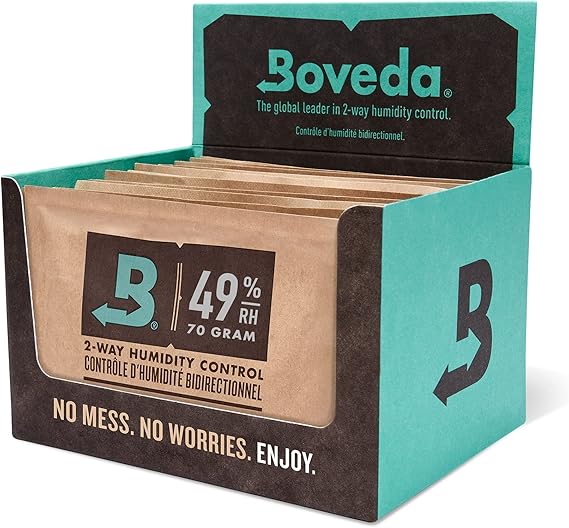
Boveda 69% RH Packs (Size 60)
The industry standard for 2-way humidity control. Perfect for individual cakes or small stacks.
Check Price on Amazon
5 Mil Mylar Bags (1 Gallon)
Thick, food-grade barrier bags to create isolated micro-climates for your tea cakes.
Check Price on Amazon5.3 Theoretical Limitations
There is significant debate regarding the efficacy of this method for long-term aging. Some purists argue that without free air circulation, the oxidative changes are retarded, resulting in tea that is preserved rather than aged. This "preservation vs. aging" debate suggests Mylar is excellent for keeping tea drinkable in a dry climate but perhaps suboptimal for developing the deep, geocentric flavors associated with traditional warehouse storage over 20+ years.26 To mitigate this, practitioners often leave the bag slightly unzipped or "burp" the bags bi-annually to allow gas exchange.
6. Tier 2 Solution: The Converted Wine Cooler (The "Pumidor")
The converted wine cooler is the most widely adopted solution for intermediate to advanced collectors in the West. It offers thermal mass, an airtight seal, and a display aesthetic, effectively bridging the gap between a refrigerator and a professional humidor.
6.1 Thermodynamic Selection: Compressor vs. Thermoelectric
The most critical engineering decision is the choice of the cooling unit. Compressor Fridges: These operate using a vapor-compression cycle. The evaporator coils become extremely cold (often near freezing) to cool the air. This extreme temperature differential causes rapid condensation of ambient moisture onto the coils, which is then drained away. This process aggressively strips humidity from the interior, often reducing RH to 20%. These units are generally unsuitable for tea storage unless modified with aggressive active humidification that fights the compressor's drying effect.12 Thermoelectric (Peltier) Coolers: These utilize the Peltier effect, where a voltage applied across two dissimilar conductors creates a heat flux. The cooling plate does not reach the freezing extremes of a compressor coil, resulting in significantly less condensation and humidity stripping. They are also vibration-free and silent. This is the preferred vessel for a Pumidor.4
Expert Tip: The Conversion Protocol
1. Sanitization: Clean all interior surfaces with distilled water and white vinegar to remove plastic smells. Use activated charcoal to absorb VOCs.34
2. Plug the Drain: Wine coolers are designed to drain condensation. Pumidors must retain it. Seal the drain hole air-tight with electrical tape or silicone.32
3. Shelf Fabrication: Replace metal racks with Paulownia or food-safe plastic grid. Solid shelves block airflow; use slotted designs.38
Recommended Products for Tier 2 Storage
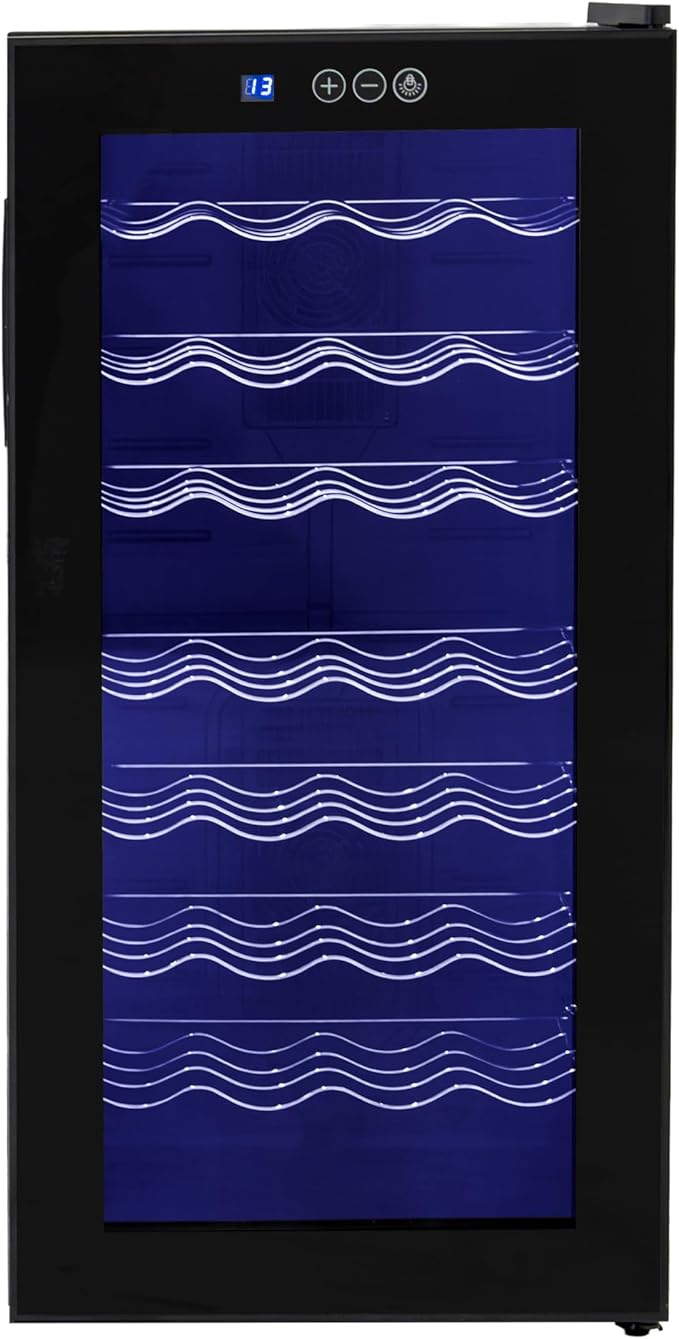
Thermoelectric Wine Cooler (28 Bottle)
Vibration-free and humidity-friendly cooling. The ideal base for a Pumidor build.
Check Price on Amazon
Govee WiFi Hygrometer
Monitor your tea's environment from your phone with historical data logging and alerts.
Check Price on Amazon6.3 Environmental Management Systems
Humidification: * Passive: For a sealed cooler, passive buffering is often sufficient. Use Heartfelt Beads or large Boveda (320g) packs. Heartfelt beads are silica-based desiccant beads pre-treated with salts to maintain a specific RH (e.g., 65% or 70%). They are generally more cost-effective for larger volumes than Boveda.33 * Active: If passive methods fail, an active humidifier is required (see Section 7). Temperature Control: * Cooling: If the room exceeds 26°C, the cooler should be plugged in and set to 18°C–20°C. Note: Cooling increases Relative Humidity. If the unit cools significantly, monitor for condensation.33 * Heating: If the room is too cold (<18°C), the cooler's insulation helps, but active heat may be needed. A reptile heating mat or seedling mat can be placed on the floor of the unit (elevated on a rack, never touching tea). This should be controlled by an external thermostat (e.g., Inkbird).41 Airflow: Stagnant air in a humid environment is a primary vector for mold. Install computer case fans (120mm/140mm) inside the unit to circulate air. These 12V fans should be wired to a USB adapter (5V) or a variable voltage controller to run at low RPM. High-speed fans cause excessive drying of the tea wrappers ("wind burn").43 Fans should not run 24/7. A smart plug or timer should cycle them for 15 minutes every 3–6 hours to homogenize the air without stripping moisture.40
7. Tier 3 & 4 Solutions: Active Climate Systems and Custom Cabinetry
For the serious collector with hundreds of cakes, the manual maintenance of Boveda packs becomes impractical. Large-scale storage requires automated, active systems, often housed in converted commercial refrigerators or bespoke wooden cabinets.
7.1 The Nervous System: Control Logic
Automation relies on decoupling the sensing and actuation functions. The internal thermostats of consumer appliances are notoriously inaccurate. Inkbird IHC-200: A dedicated humidity controller. It features a sensor probe and two power outlets: "Work 1" (Humidifier) and "Work 2" (Dehumidifier/Fan). The user sets a target (e.g., 65%) and a differential (e.g., ±3%). The controller powers the humidifier when RH drops below 62% and cuts power at 65%.45 Inkbird ITC-308: A parallel device for temperature control, managing heating mats and cooling units.47 Smart Integration: More advanced setups utilize ESP32 microcontrollers with DHT22 or BME280 sensors, feeding data to home automation platforms (Home Assistant) to control smart plugs. This allows for complex logic, such as "Only run humidifier if fan is ON".48
Expert Tip: Active Humidification
Ultrasonic: Instant response and energy efficient, but can create "White Dust" (minerals) if tap water is used. Must use Distilled water.
Evaporative: Self-regulating and no white dust, but wicks can grow mold.
Recommendation: Use a small ultrasonic humidifier with distilled water, connected to an Inkbird controller, paired with a circulation fan to disperse the mist.54
7.3 The Bespoke Cabinet (Paulownia)
The ultimate expression of tea storage is the custom-built Paulownia cabinet. This combines the active control of Tier 3 with the material benefits of Tier 4. Construction: Use architectural-grade Paulownia. Joinery should be traditional (dovetails, wooden pegs) to minimize the use of glues containing formaldehyde or strong odors. If glue is needed, food-safe hide glue or Titebond III is acceptable if aired thoroughly.55 Sealing: While the wood breathes, the doors must be gasketed (felt or silicone strip) to prevent excessive humidity leakage that would force the active system to run constantly, depleting water reservoirs rapidly.57 Internal Layout: Drawers are preferred over shelves for organization. Drawer bottoms should be slatted or screened to allow the humidified air (which is denser than dry air) to circulate through the tea stack.55
8. Monitoring, Data Logging, and Calibration
The reliability of any storage system is only as good as the data used to manage it.
8.1 The Drift of Digital Sensors
Mass-produced digital hygrometers are notoriously inaccurate, often drifting by ±5-10% RH out of the box. Relying on an uncalibrated sensor is a primary cause of mold outbreaks (thinking it is 65% when it is actually 75%). The Salt Test (Calibration Protocol): Place a bottle cap filled with table salt and dampen it with distilled water until it reaches the consistency of wet sand (no standing water). Place the cap and the hygrometer inside a sealed Ziploc bag or airtight container. Wait 12–24 hours for the environment to equilibrate. The physics of the saturated salt solution dictates that the air will reach exactly 75% RH. Note the deviation on the hygrometer and apply this offset (e.g., if it reads 70%, add +5% to all future readings).58
8.2 Smart Monitoring Ecosystems
Modern collectors favor Wi-Fi or Bluetooth-enabled sensors that provide historical data logging and push alerts. Govee / SensorPush: These sensors are highly regarded for their accuracy and app integration. They allow users to see graphs of humidity spikes (e.g., did the RH spike to 90% while I was on vacation?). They also support in-app calibration offsets derived from the salt test.60 Boveda Butler: A dedicated cigar monitor, effective but often tied to a proprietary ecosystem.
9. Remediation and Consumption Protocols
Even with perfect systems, issues can arise. Knowing how to recover is as important as prevention.
Expert Tip: Mold Management
White/Dusty Mold ("Frost"): Usually benign. Brush off outdoors and air out in lower humidity.
Green/Blue/Black Mold: Danger. Indicates pathogenic species. Isolate and discard.
Golden Flowers: Tiny yellow dots. Beneficial fungi (Eurotium cristatum), prized in dark tea.10
9.2 The "Waking Up" Protocol
Tea stored at 65-70% RH in a sealed environment will often taste "stuffy," "muted," or "watery" if brewed immediately. The moisture content is too high for optimal infusion dynamics. De-Storage: Remove the cake from the Pumidor 2–4 weeks before intended consumption. Acclimation: Place the cake in a neutral, breathable container (porcelain jar or unglazed Jianshui clay jar) at ambient room humidity (40–50%). This slowly lowers the leaf's water activity, concentrating the juices and allowing "bin notes" to dissipate. Breaking: Break apart the required leaf 15–30 minutes prior to brewing. Place it in a Cha He (tea holder) to breathe. This brief oxidative window helps "wake up" the volatile aromatics.67
9.3 Teaware Selection for Aged Tea
The vessel used to brew the tea interacts with the storage results. Porcelain (Gaiwan): Neutral and non-porous. It reveals the tea exactly as it is, including any storage faults (mustiness, sourness). Ideal for testing storage progress.70 Yixing Clay (Zisha): Porous and heat-retentive. High-fired clay (Zi Ni) is excellent for aged Sheng and Shou. The porosity can round out rough edges and mute slight storage odors (like "pumidor funk"), enhancing the texture and body of the liquor.72 (See Yixing Teapot Guide).
10. Summary Comparison of Methodologies
| Feature | Tier 1: Mylar + Boveda | Tier 2: Wine Cooler | Tier 3/4: Active Cabinet |
|---|---|---|---|
| Primary Mechanism | Isolation / Micro-climate | Insulation / Passive or Active | Automated Climate Control |
| Cost Profile | Low ($20 - $50) | Medium ($150 - $400) | High ($500 - $2000+) |
| Capacity | Scalable (1 cake at a time) | Medium (20 - 50 cakes) | Large (100 - 500+ cakes) |
| Humidity Stability | Excellent (Hermetic seal) | Good (Thermal mass helps) | Excellent (Active correction) |
| Airflow | Very Low (Anaerobic risk) | Moderate (Fan assisted) | High (Custom designed) |
| Maintenance Load | Low (Recharge annually) | Medium (Water refill, checks) | High (Cleaning, calibration) |
11. Conclusion
The construction of a Pu-erh Pumidor is an exercise in applied science, balancing the biological needs of the tea with the physical constraints of the modern home. Whether the collector chooses the simplicity of Mylar bags or the sophistication of a climate-controlled Paulownia cabinet, the governing principles remain the same: stability, hydration, and controlled gas exchange.
The evidence suggests that while the "perfect" storage condition remains a subject of nuanced debate between the "wet" and "dry" storage schools of Asia, the paramount danger to Pu-erh in the Western world is extreme dryness. Any system that consistently maintains 60–70% relative humidity while preventing condensation and mold is infinitely superior to ambient storage. For the aspiring connoisseur, the Thermoelectric Wine Cooler conversion, utilizing active circulation and passive buffering, offers the highest safety margin, the best insulation against thermal shock, and a scalable platform for guiding tea through the decades-long journey of fermentation.
Works Cited
- Unlock the Secrets of Pu-erh Tea Aging: Taste Time in a Cup - Orientaleaf, accessed November 23, 2025, https://orientaleaf.com/blogs/tea-101/pu-erh-tea-aging-guide
- Master Pu-erh Tea Storage: 7 Secret Tips for Perfect Aging in 2025 - Orientaleaf, accessed November 23, 2025, https://orientaleaf.com/blogs/tea-101/pu-erh-tea-storage-guide
- Storing Pu'er tea – You are the final master - A Tea Addict's Journal, accessed November 23, 2025, https://marshaln.com/2016/01/storing-puer-tea-you-are-the-final-master/
- What is a Pumidor? A Guide to Pu-erh Storage & Aging - TeaTrade, accessed November 23, 2025, https://teatrade.co.uk/learning/pumidor-puerh.html
- Changes in sensory characteristics, chemical composition and microbial succession during fermentation of ancient plants Pu-erh tea - PMC - NIH, accessed November 23, 2025, https://pmc.ncbi.nlm.nih.gov/articles/PMC10739768/
- Enhanced Fermentation of Pu-Erh Tea with Aspergillus niger: Quality and Microbial Community Analysis - PMC, accessed November 23, 2025, https://pmc.ncbi.nlm.nih.gov/articles/PMC11643846/
- Interaction and Metabolic Function of Microbiota during Tibetan Tea Fermentation through Bioaugmentation with Aspergillus niger - MDPI, accessed November 23, 2025, https://www.mdpi.com/2311-5637/9/7/690
- Tea but not - Nordic Food Lab, accessed November 23, 2025, https://nordicfoodlab.org/blog/2016/03/tea-but-not/
- Essential Do's and Don'ts for Aging Pu-erh Tea, accessed November 23, 2025, https://www.banateacompany.com/pages/aging-of-pu-erh-tea.html
- Mold In Puer Tea: Friend or Foe? - J-TEA INTERNATIONAL LLC, accessed November 23, 2025, https://jteainternational.com/blog/mold-in-puer-tea-friend-or-foe/
- How We Think About Storage.. The Storage Spectrum - TeaDB, accessed November 23, 2025, https://teadb.org/storage-as-a-spectrum/
- Ideas of proper puerh storage - A Tea Addict's Journal, accessed November 23, 2025, https://marshaln.com/2012/03/ideas-of-proper-puerh-storage/
- Potential solution for pu'er storage : r/puer - Reddit, accessed November 23, 2025, https://www.reddit.com/r/puer/comments/17yerha/potential_solution_for_puer_storage/
- How To Store Pu-erh At Home For Aging, accessed November 23, 2025, https://pathofcha.com/blogs/all-about-tea/how-to-store-pu-erh-at-home-for-aging
- Wet vs Dry Storage Puerh: Mastering Aging for Flavor & Investment - Orientaleaf, accessed November 23, 2025, https://orientaleaf.com/blogs/tea-101/puerh-wet-vs-dry-storage-guide
- The Aging of Pu-erh Tea - Bana Tea Company, accessed November 23, 2025, https://www.banateacompany.com/pages/aging-of-pu-erh-tea.html
- Looking for the LEAST fragrant wood for storing tea - Woodworking Stack Exchange, accessed November 23, 2025, https://woodworking.stackexchange.com/questions/11202/looking-for-the-least-fragrant-wood-for-storing-tea
- Puerh Storage - Steepster, accessed November 23, 2025, https://steepster.com/discuss/12952-puerh-storage
- Storage Methodology & Odor-Free Storage - TeaDB, accessed November 23, 2025, https://teadb.org/storage-methodology-odor-free-storage-things-to-watch-out-for-in-a-few-popular-western-storage-methods/
- KITCHEN BASE CABINET JOINERY KIT - Paulownia Timber, accessed November 23, 2025, https://www.paulowniatimber.co.uk/paulownia-samples/kitchen-base-cabinet-joinery-kit
- Paulownia wooden box "Kiribako" for storage - Japanese Custom Box, accessed November 23, 2025, https://japanesebox.net/2022/10/05/paulownia-wooden-box-kiribako-for-storage/
- Properties and characteristics of Paulownia wood, accessed November 23, 2025, https://paulownia.energy/article/view/properties-and-characteristics-of-paulownia-wood/
- Pumidors 101. Designing & Maintain Your Own Pumidor - TeaDB, accessed November 23, 2025, https://teadb.org/pumidors-101-designing-maintain-your-own-pumidor/
- Tea Storage - Page of Tea, accessed November 23, 2025, https://www.pageoftea.com/tea-storage
- Best material for tea storage - Steepster, accessed November 23, 2025, https://steepster.com/discuss/15370-best-material-for-tea-storage
- What to expect from mylar + boveda storage in the west? : r/puer - Reddit, accessed November 23, 2025, https://www.reddit.com/r/puer/comments/o2m1qc/what_to_expect_from_mylar_boveda_storage_in_the/
- To Mylar, or not to Mylar? : r/puer - Reddit, accessed November 23, 2025, https://www.reddit.com/r/puer/comments/kq4bcm/to_mylar_or_not_to_mylar/
- newbie question about puer storage - Reddit, accessed November 23, 2025, https://www.reddit.com/r/puer/comments/j8j7oi/newbie_question_about_puer_storage/
- Aging puerh: what is your setup? - TeaForum.org, accessed November 23, 2025, https://www.teaforum.org/viewtopic.php?t=20
- How I Am Storing My Pu'erh - TeaDB, accessed November 23, 2025, https://teadb.org/how-i-am-storing-my-puerh/
- Why airflow is ruining your puer - Reddit, accessed November 23, 2025, https://www.reddit.com/r/puer/comments/18n0x33/why_airflow_is_ruining_your_puer/
- Convert that Wine Cooler to a Giant Humidor - BnB Tobacco, accessed November 23, 2025, https://www.bnbtobacco.com/blogs/news/convert-that-wine-cooler-to-a-giant-humidor
- New Winedaor - humidity fluctuation help - Humidors - FOH Cigars, accessed November 23, 2025, https://www.fohcigars.com/forum/topic/126430-new-winedaor-humidity-fluctuation-help/
- How to Maintain a Clean Humidifier | HowStuffWorks, accessed November 23, 2025, https://home.howstuffworks.com/can-humidifier-make-sick.htm
- Wine Cooler (Inoperable) to Humidor Conversion - FOH Cigars, accessed November 23, 2025, https://www.fohcigars.com/forum/topic/153115-wine-cooler-inoperable-to-humidor-conversion/
- Purchased a VinoTemp Wine Cooler to convert to wineador... - CIGAR.com, accessed November 23, 2025, https://forum.cigar.com/discussion/56607/purchased-a-vinotemp-wine-cooler-to-convert-to-wineador
- Does Ozone Kill Mold And Is It Safe? Benefits Vs Risks, accessed November 23, 2025, https://www.oxidationtech.com/blog/does-ozone-kill-mold-and-is-it-safe-benefits-vs-risks-an-article-by-damage-control/
- How To Choose & Find Wood For Pyrography | Safe Vs Unsafe Wood - YouTube, accessed November 23, 2025, https://www.youtube.com/watch?v=MSwhPEyYCyo
- Which Food Safe Wood Finishes are Worth Using and Which Aren't, accessed November 23, 2025, https://vanduynwoodwork.com/2021/11/19/food-safe-wood-finishes/
- Home Storage Pumidor Survey – teadb, accessed November 23, 2025, https://teadb.org/pumidor-survey/
- How to Setup a Thermostat for Reptiles - YouTube, accessed November 23, 2025, https://www.youtube.com/watch?v=7EDX59Zlto4
- Maintaining stable temperature in pumidor? : r/puer - Reddit, accessed November 23, 2025, https://www.reddit.com/r/puer/comments/sovzy6/maintaining_stable_temperature_in_pumidor/
- What is a good (cheap) way to slow down a fan with a thermistor?, accessed November 23, 2025, https://electronics.stackexchange.com/questions/474241/what-is-a-good-cheap-way-to-slow-down-a-fan-with-a-thermistor
- Quiet PC - How To Power PC Fans From the Mains - YouTube, accessed November 23, 2025, https://www.youtube.com/watch?v=TqJ45QkMZQY
- Inkbird IHC-200 Humidity Controller - How This Is The Best Product For Your Guitars, accessed November 23, 2025, https://www.youtube.com/watch?v=BC5B85BP86M
- Digital Humidity Controller IHC-200 Series - INKBIRD, accessed November 23, 2025, https://inkbird.com/products/humidity-controller-ihc-200
- ITC-608T Temp and humidity probes - INKBIRD Community, accessed November 23, 2025, https://community.inkbird.com/t/itc-608t-temp-and-humidity-probes/100627
- How to Make Your Own Tea Pumidor [Dennysodes #123] - YouTube, accessed November 23, 2025, https://www.youtube.com/watch?v=1tZzAERHS1E
- What's the Difference Between Ultrasonic Humidifier and Evaporative Humidifier? - HisoAir, accessed November 23, 2025, https://hisoair.com/whats-the-difference-between-ultrasonic-humidifier-and-evaporative-humidifier/
- Use and Care of Home Humidifiers | US EPA, accessed November 23, 2025, https://www.epa.gov/indoor-air-quality-iaq/use-and-care-home-humidifiers
- In the last few days, I've noticed a ton of items around the house have this white film on them - Reddit, accessed November 23, 2025, https://www.reddit.com/r/Whatisthis/comments/1avszwf/in_the_last_few_days_ive_noticed_a_ton_of_items/
- Evaporative Humidifiers vs. Ultrasonic Humidifiers - Levoit, accessed November 23, 2025, https://levoit.com/blogs/levoit-blog/evaporative-humidifiers-vs-ultrasonic-humidifiers
- Evaporative vs. Ultrasonic Humidifiers: Which is Best? - WELOV, accessed November 23, 2025, https://welovhome.com/blog/post/evaporative-vs-ultrasonic-humidifiers-buying-guide
- Humidifier & Dehumidifiers that turn on when plugged in (for Inkbird use) + Temp advice - Reddit, accessed November 23, 2025, https://www.reddit.com/r/microgrowery/comments/fhv6vt/humidifier_dehumidifiers_that_turn_on_when/
- Build a Modern Tea Cabinet | Precision Joinery & Waterfall Grain, Hand-Fitted Drawers, accessed November 23, 2025, https://www.youtube.com/watch?v=n1sCwfXhHqI
- Hanging Tea Cabinet - YouTube, accessed November 23, 2025, https://www.youtube.com/watch?v=ZobB0OA3uU4
- Condensation in Your Wine Fridge: Effective Tips and Solutions, accessed November 23, 2025, https://winefridge.sg/blogs/news/condensation-in-your-wine-fridge-effective-tips-and-solutions
- How to Calibrate a Hygrometer (Humidity Sensor) using the Salt Test - Steve Jenkins, accessed November 23, 2025, https://www.stevejenkins.com/blog/2014/06/how-to-calibrate-a-hygrometer-humidity-sensor-using-the-salt-test/
- Easiest way to calibrate your Govee Thermohygrometer | Salami Making - YouTube, accessed November 23, 2025, https://www.youtube.com/watch?v=PrL0xcubc9w
- Govee vs. SensorPush Wireless Smart Temperature Sensor, accessed November 23, 2025, https://us.govee.com/blogs/product-review-blog/govee-vs-sensorpush-wireless-smart-temperature-sensor
- Best Smart Hygrometer (Boveda Smart Sensor vs. SensorPush) - YouTube, accessed November 23, 2025, https://www.youtube.com/watch?v=dVL9tNGcGwE
- Do the Govee Hygrometers need some sort of calibration? There is a discrepancy in relative humidity. - Reddit, accessed November 23, 2025, https://www.reddit.com/r/Govee/comments/1e1jf52/do_the_govee_hygrometers_need_some_sort_of/
- Mold - Steepster, accessed November 23, 2025, https://steepster.com/discuss/13434-mold
- How to proceed with moldy pu erh? : r/tea - Reddit, accessed November 23, 2025, https://www.reddit.com/r/tea/comments/vvrhjx/how_to_proceed_with_moldy_pu_erh/
- Does Hydrogen Peroxide Kill Mold? What Works and What Doesn't - Healthline, accessed November 23, 2025, https://www.healthline.com/health/does-hydrogen-peroxide-kill-mold
- Dealing with mould : r/tea - Reddit, accessed November 23, 2025, https://www.reddit.com/r/tea/comments/12xsxhc/dealing_with_mould/
- Aging Pu-erh tea. Wet vs dry storage (Part II) - Path of Cha, accessed November 23, 2025, https://pathofcha.com/blogs/all-about-tea/aging-pu-erh-tea-wet-storage-vs-dry-storage-part-2
- Ultimate Guide of Awakening Pu erh Tea - Cspuerh (Chen Sheng Hao), accessed November 23, 2025, https://cspuerh.com/blogs/news/ultimate-guide-of-awakening-puer-tea
- Breaking whole cakes up, to do or not to do? : r/puer - Reddit, accessed November 23, 2025, https://www.reddit.com/r/puer/comments/gesfwd/breaking_whole_cakes_up_to_do_or_not_to_do/
- Teaware Pairing: The Perfect Pot for Every Tea - Red Blossom Tea Company, accessed November 23, 2025, https://redblossomtea.com/blogs/red-blossom-blog/teaware-pairing-the-perfect-pot-for-every-tea
- Porcelain vs Clay: Which Teaware Should You Start With? - YouTube, accessed November 23, 2025, https://www.youtube.com/watch?v=JMsxDOfMZfU
- The Ultimate Guide to Choosing the Best Teaware for Pu-erh Tea - Orientaleaf, accessed November 23, 2025, https://orientaleaf.com/blogs/tea-101/teaware-selection-for-pu-erh-tea
- What Clay Works Best With Puer? - Reddit, accessed November 23, 2025, https://www.reddit.com/r/puer/comments/137t2se/what_clay_works_best_with_puer/
Comments