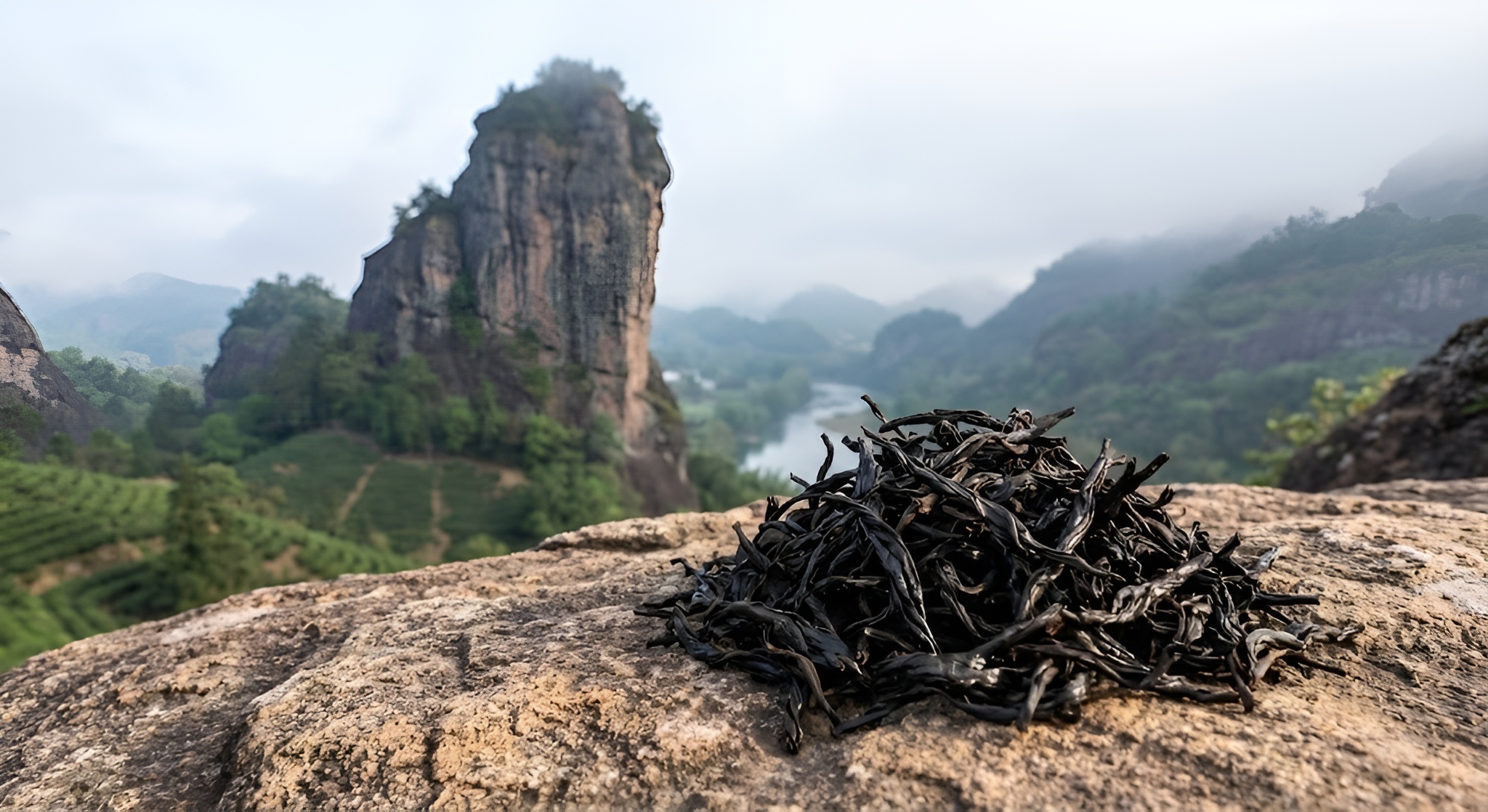
1. History: From Blending Filler to Superstardom
Rou Gui was discovered in the Qing Dynasty but remained obscure for centuries. The Wuyi mountains were dominated by the "Four Great Bushes" (Si Da Ming Cong), like Da Hong Pao.
In the 1980s, the Wuyi government pushed for asexual propagation to increase yields. Rou Gui was the perfect candidate:
1. It grows fast: High yield.
2. It smells strong: Even with poor processing, it retains its spicy kick.
3. It survives roasting: Its thick leaves can withstand the heavy charcoal fire ("Hongbei") required for traditional Rock Tea.
Today, Rou Gui covers nearly 40% of the Wuyi growing area. It is the "Cabernet Sauvignon" of Rock Tea—bold, reliable, and capable of aging.
2. The Chemistry: Spice and Fire
Why does it taste spicy?
Cinnamaldehyde Precursors: While Rou Gui doesn't contain the exact same essential oil as bark cinnamon, it contains glycosidic precursors that, upon oxidation and roasting, degrade into spicy, woody volatiles.
Pyrazines (The Roast): Because Rou Gui is heavily roasted (often 3 times over 3 months), it is rich in Alkylpyrazines. These provide the "coffee," "toast," and "mineral" backbone.
Linalool (The Fruit): Underneath the fire, there is a high concentration of floral terpenes. In high-quality Rou Gui, once the roast fades (after 6 months of resting), a distinct "Peach/Plum" fruitiness emerges.
Expert Tip: "Ma Rou" vs. "Niu Rou"
In China, Rou Gui prices depend entirely on Terroir (Zheng Yan).
Ma Rou (Horse Meat): Grown at Ma Tou Yan (Horse Head Rock). Known for being high-pitched, open, and explosively spicy. The soil here is rocky and sun-exposed.
Niu Rou (Beef): Grown at Niu Lan Keng (Cattle Pen Pit). Known for being deep, soft, and extremely mineral ("Yan Yun"). The valley is shady and humid. "Beef" is the most expensive tea in the world per gram.
3. Rou Gui vs. Shui Xian: Meat vs. Bones
The Wuyi phrase "Xiang Bu Guo Rou Gui, Chun Bu Guo Shui Xian" summarizes the rivalry:
"For aroma, nothing beats Rou Gui. For mellowness, nothing beats Shui Xian."
| Feature | Rou Gui (The Meat) | Shui Xian (The Bones) |
|---|---|---|
| Dominant Trait | Aroma (High Fragrance) | Mouthfeel (Water Texture) |
| Flavor | Cinnamon, Spice, Sharp | Orchid, Bamboo, Soft |
| Personality | Aggressive ("Ba Qi") | Gentle, Ghostly |
| Leaf Age | Usually Young Bushes | Often Old Bushes (Lao Cong) |
4. Processing: The Charcoal Roast
The soul of Rou Gui is the Hongbei (Roasting).
After the tea is made, it is placed in bamboo baskets over smoldering lychee-wood charcoal.
First Roast (Spring): To dry the tea.
Second Roast (Summer): To deepen the flavor and convert bitterness into sweetness.
Third Roast (Autumn): To seal the flavor ("Eating the Fire").
This process creates the famous "Yan Yun" (Rock Rhyme). A properly roasted Rou Gui should not taste burnt; it should taste like liquid stone with a sweet, minty aftertaste that rises from the throat.
Taste the "Ma Rou"
Authentic Ma Tou Yan Rou Gui is intense. We have sourced a medium-roast version that balances the spicy cinnamon notes with the mineral "Rock Bone" structure.
Shop Wuyi Rou Gui
Comments