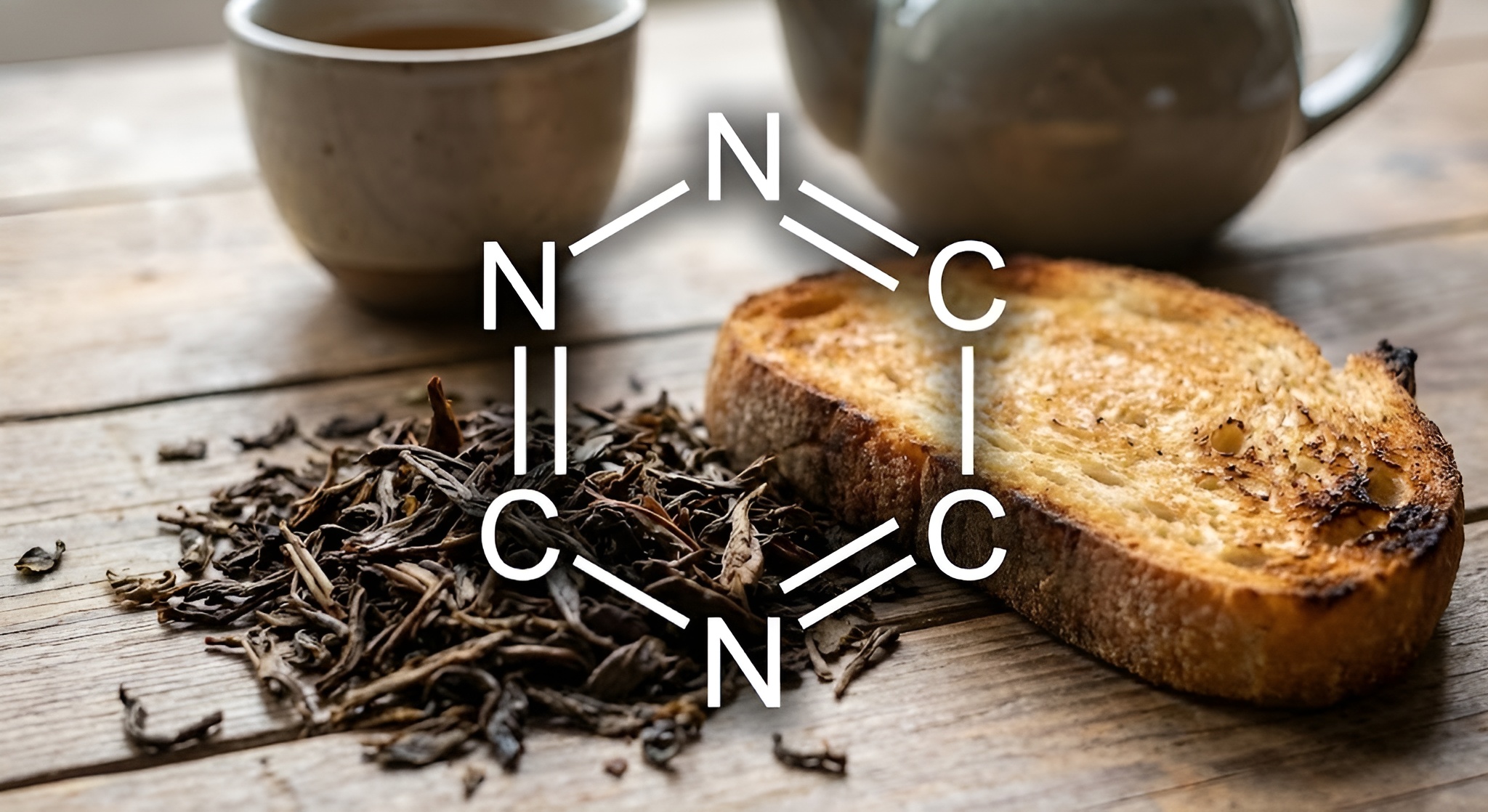
1. The Chemistry: The Maillard Reaction
You know the smell of baking bread or searing steak? That is the Maillard Reaction. It is a chemical browning process where amino acids react with reducing sugars under heat.
In tea, this happens during the final processing steps. The plant's natural sugars (glucose/fructose) combine with amino acids (like L-Theanine) to form a variety of flavor compounds, the most potent of which are Pyrazines.
The Two Main Types:
1. 2,5-dimethylpyrazine: Smells like roasted nuts and earthy cocoa.
2. 2-ethyl-3,5-dimethylpyrazine: Smells like toast and coffee.
2. Why Stems Make Better Roast
In high-end tea culture (like Gyokuro), stems are often sorted out. But for roasting, stems (Kuki) are gold.
The Science: The transport vessels in the stem are rich in free amino acids and sugars that are moving up the plant. The leaf blade, by contrast, is richer in Catechins (bitterness).
Because the stems have more "Fuel" (Sugar + Amino Acids) for the Maillard reaction, they produce a sweeter, nuttier roast than the leaf. This is why Kukicha (Stem Tea) is often roasted into Kari-gane Hojicha, widely considered the sweetest form of roasted tea.
Expert Tip: The "Popcorn" Cheat
In Genmaicha, the "toasted" flavor comes primarily from the roasted rice, not the tea leaf. The rice provides a massive dose of pyrazines (specifically acetylpyrazine), allowing the tea maker to use a fresher, grassier Bancha leaf base. It is a masterful chemical pairing of "Green" (Hexenol) and "Roast" (Pyrazine).
3. The Cultivar Connection
While the roasting process creates the molecule, the genetic potential of the leaf determines the quality. High-amino acid cultivars make better roasted tea.
| Tea Style | Key Pyrazine Source | Dominant Flavor |
|---|---|---|
| Hojicha | High-heat roasting of Bancha/Kukicha | Coffee, Caramel, Toast |
| Rou Gui (Wuyi) | Charcoal roasting over 10-20 hours | Cinnamon, Dark Chocolate, Smoke |
| Genmaicha | Roasted Rice Grains | Popcorn, Nutty, Savory |
| Roasted TGY | Slow baking of Oolong leaves | Burnt Sugar, Incense |
4. Brewing: The Boiling Point
Pyrazines are relatively stable, but they are "locked" in the dried leaf structure. To release the full aromatic profile of a roasted tea, you need energy.
The Temperature Rule: Always use 100°C (Boiling) water for Hojicha and Roasted Oolong. Lower temperatures (80°C) will fail to extract the heavy pyrazines, leaving the tea tasting flat and watery.
The caffeine Bonus: Because the high heat of roasting degrades caffeine (sublimation), you can brew these teas with boiling water without extracting excessive bitterness. This makes them perfect for evening drinking.
Taste the Roast
We have curated the best high-pyrazine teas, from stem-heavy Hojicha to charcoal-roasted Wuyi Oolongs. These are the ultimate comfort brews.
Best Roasted Teas
Comments