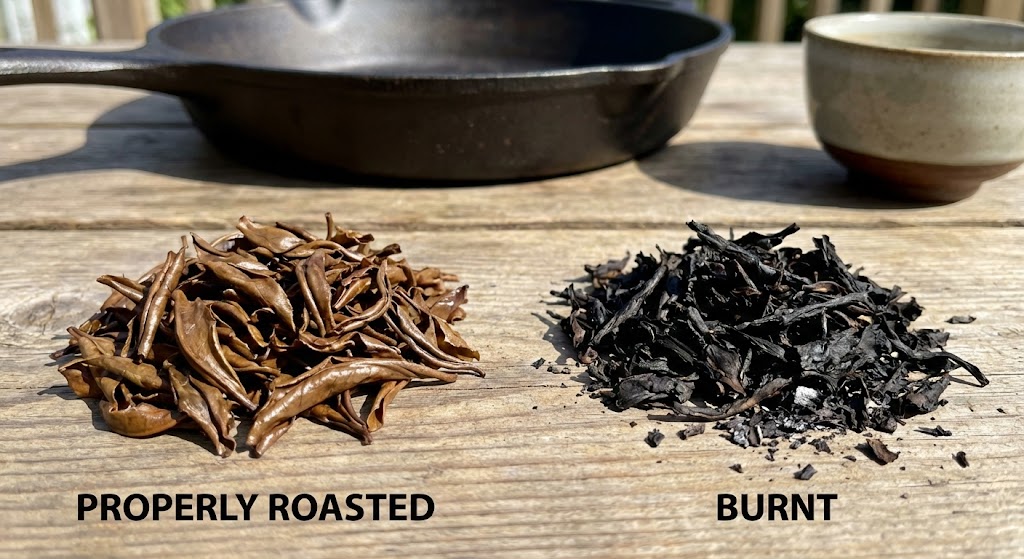
Maillard Reaction vs. Pyrolysis: The Chemistry
Proper roasting creates Maillard reaction (140-165°C)—amino acids react with reducing sugars, producing complex flavors (nutty, toasty, caramel). Burning creates pyrolysis (>180°C)—organic compounds decompose, producing char, ash, bitter compounds. One is controlled flavor development. The other is destruction.
The wet leaf reveals which occurred: Maillard-roasted leaves are brown, intact, with sweet/toasted aroma. Pyrolyzed leaves are black, brittle, with acrid/ashy smell. Press wet leaf—properly roasted flexes, burnt crumbles. The structural integrity difference is tactile.
The Ash Test
Rub burnt-looking wet leaf between fingers. Maillard roast: brown residue, intact structure. Pyrolysis: black ash, fragmented tissue. If your fingers turn black like charcoal, the tea was burned, not roasted.
Why Vendors Burn Tea
Burning hides defects: red edges, sourness, poor leaf quality, pesticide taste—all masked by char flavor. Commodity tea gets burned to make it drinkable. Low-grade leaves get burned to appear premium "charcoal roasted." The burn isn't a feature—it's camouflage.
Traditional roasting is expensive: skilled labor, precise temperature control, small batches, constant monitoring. Burning is cheap: crank heat high, roast large batches, ignore precision. If tea tastes primarily of char/smoke rather than leaf character, it's likely burned to save costs or hide quality issues.
Lapsang Souchong: Traditional vs. Burnt
True Lapsang Souchong is smoked over pine wood (smoke adhesion, not burning). The leaf remains brown, flexible, aromatic. Fake Lapsang is burned with direct flame or over-roasted to mimic smoke. The leaf becomes black, brittle, acrid. Wet leaf test distinguishes them immediately.
| Process | Temperature | Leaf Color | Texture | Aroma |
|---|---|---|---|---|
| Maillard Roast | 140-165°C | Brown, intact | Flexible when wet | Sweet, toasted, nutty |
| Light Pyrolysis | 180-200°C | Dark brown, some char | Brittle edges | Smoky, slightly acrid |
| Heavy Pyrolysis | >200°C | Black, carbonized | Crumbles to ash | Ashy, burnt, bitter |
| Lapsang (real) | 60-80°C smoke | Brown, whole | Fully flexible | Pine smoke, sweet |
| Lapsang (fake) | >180°C burn | Black, broken | Brittle, ashy | Acrid, charcoal, harsh |
Detecting Burnt Tea Marketing Tricks
Burnt tea gets marketed as: "charcoal roasted" (sounds traditional), "heavily roasted" (sounds bold), "smoky traditional process" (sounds authentic). Real descriptors: carbonized, over-roasted, burnt. The wet leaf reveals truth—black brittle ash vs. brown flexible roast.
Premium pricing doesn't prevent burning. Expensive "charcoal roasted" oolongs can still be burnt. Test every purchase: wet leaf should be brown and flexible, not black and crumbly. If it dissolves to ash, you paid premium for charcoal.
What Does "Burnt Tea" Really Mean?
Burnt tea results from excessive heat application during processing—typically during kill-green (enzyme inactivation), roasting, or drying steps. The heat chars leaf tissue, creating bitter, acrid flavors and dark brown-black color. Unlike intentional roasting (like Hojicha), burning is accidental—a production defect that permanently ruins the tea.
Chemical cause: Temperatures above 400°C cause Maillard reaction to go too far, producing bitter pyrazines and burnt sugars. Simultaneously, polyphenols undergo thermal degradation into harsh, acrid compounds. The combination creates the characteristic "burnt rubber" or "charcoal" flavor that's unmistakable.
Most common in pan-fired Chinese green teas (Dragon Well, Bi Luo Chun) where workers misjudge wok temperature. Also appears in oolongs if roasting temperature/time isn't controlled precisely. Japanese steamed teas rarely burn (steam is uniform 100°C, hard to overheat).
Visual Detection: Dry Leaf Inspection
Burnt tea shows dark brown-to-black patches on dry leaves, often concentrated on leaf tips or edges (the thinnest parts char first). Compare to red-edge defect (reddish-brown margins) or normal roasting (uniform golden-brown). Burning is darker, blacker, more localized.
Under bright light, burnt areas appear matte/dull while properly processed areas remain somewhat shiny. Burnt tissue also feels brittle—crumbles to powder when rubbed between fingers. Normal dried tea feels crisp but flexible. If leaves disintegrate to ash-like powder, they've been burnt.
Smell Test: The Burnt Rubber Signature
Dry leaf smell: burnt tea has acrid, charcoal-like aroma mixed with the tea's natural scent. Not the pleasant roasted-nut smell of well-roasted oolong—this is harsh, chemical, unpleasant. If dry leaf smells like burnt toast or tire rubber, it's been overheated.
Wet leaf smell (after brewing): The burnt odor intensifies. Properly roasted tea smells sweet, nutty, caramelized. Burnt tea smells bitter, acrid, smoky in a bad way (different from Lapsang Souchong's intentional pine smoke). Trust your nose—burnt is unmistakable once you've smelled it.
Taste Test: Bitter, Acrid, Undrinkable
Burnt tea tastes aggressively bitter with metallic, acrid finish. Swallowing leaves unpleasant aftertaste that lingers 10-20 minutes. Compare to normal tea astringency (drying mouthfeel but not chemically harsh) or bitterness from over-steeping (strong but not acrid). Burning creates uniquely unpleasant chemical taste.
The liquor color: unusually dark for the tea type. Burnt green tea brews dark amber instead of pale yellow-green. Burnt oolong brews almost black instead of golden-orange. The color change signals thermal degradation of chlorophyll and carotenoid pigments.
Why Burning Happens: Production Errors
Cause 1: Inexperienced workers misjudge wok temperature during hand-processing. Dragon Well requires 280-350°C wok surface—too hot (>400°C) and leaves burn in seconds. Skilled workers test temperature by sprinkling water drops (should sizzle and evaporate in 1-2 seconds for correct temp).
Cause 2: Equipment failure in mechanical dryers. Temperature sensors malfunction, heat spikes to 500-600°C for a few seconds, entire batch ruined. Quality producers have redundant temperature controls to prevent this.
Cause 3: Deliberate corner-cutting. High heat = faster processing = more batches per day. Unscrupulous producers use excessive heat to speed production, knowing they can blend burnt batches with good batches to hide defects (dilute to 10-20% burnt leaves, sell as "acceptable" quality).
Economic Fraud: Selling Burnt Tea as "High-Roast"
Dishonest vendors market burnt oolong as "traditional heavy roast" or burnt green tea as "smoky artisan style." They're selling defective production as intentional flavor choice—charging premium for garbage. True heavy-roast oolong tastes sweet, nutty, caramelized. Burnt tea tastes bitter, acrid, harsh.
The fraud works because many consumers lack reference points—they don't know what "proper roast" tastes like, so they accept burnt as "strong flavor." Wet leaf examination exposes this: properly roasted leaves show uniform golden-brown color. Burnt leaves show black char patches concentrated on thin tissue.
Is Burnt Tea Ever Salvageable?
Short answer: no. Burning is permanent chemical damage—you can't un-burn organic compounds. Some sellers claim "rinse burnt tea 2-3 times to remove harsh flavor." This doesn't work. Rinsing removes surface dust/debris, not thermally degraded polyphenols bonded into leaf tissue.
If you detect burning in purchased tea: demand full refund. Don't accept "brew it differently" excuses. Burnt is a production defect, not a brewing problem. Legitimate vendors refund defective batches immediately. Vendors who resist refunds are selling knowingly defective products.
Prevention When Buying
Request small samples before bulk purchase. Smell dry leaf (check for acrid odor). Brew small amount, examine wet leaves (check for black char). Taste critically (bitter/acrid = burnt). Only commit to large quantities after these tests pass.
Buy from transparent vendors who admit production variations. Best producers mark "slightly burnt batch - 30% off normal price" and sell honestly. Avoid vendors who never admit defects—they're hiding problems in premium-priced tea.
Comments