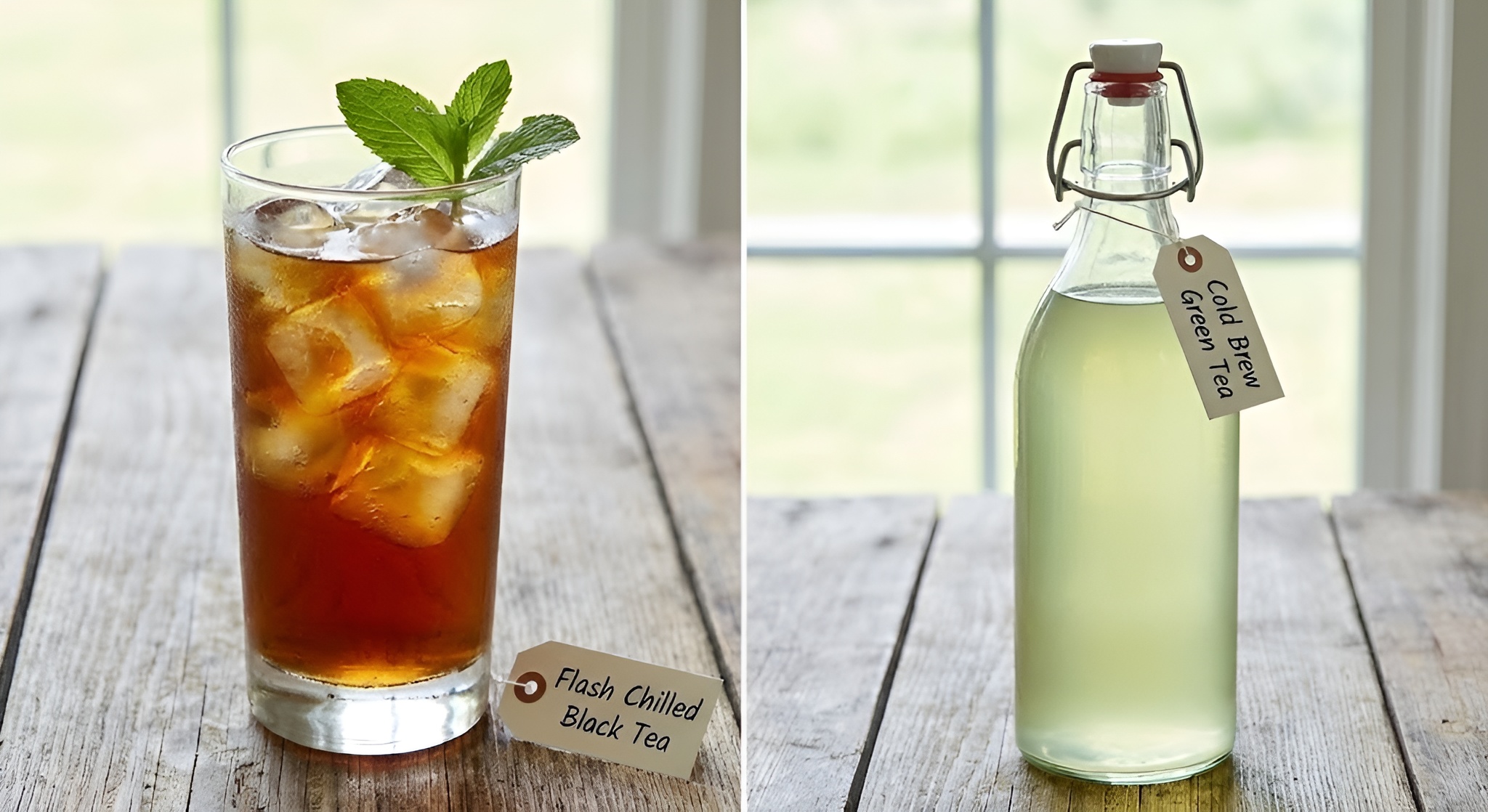
1. The Science of Cold Brew (Mizudashi)
Cold brewing is the process of steeping tea leaves in cold or room-temperature water for an extended period (usually 6–12 hours). It is often called Mizudashi in Japan.
Why does it taste so different? It's all about solubility. The chemical compounds in tea dissolve at different rates depending on temperature.
- Amino Acids (Sweetness/Umami): Soluble in cold water.
- Catechins & Tannins (Bitterness/Astringency): Mostly insoluble in cold water. require heat to extract fully.
- caffeine: Semi-soluble in cold water (extracts slowly).
This means Cold Brew essentially "cheats" the system. You get the sweet, savory body of the tea without the risk of bitterness, making it foolproof for beginner brewers.
The "Vitamin C" Boost
Heat destroys Vitamin C. Because Cold Brew never exposes the leaves to boiling water, studies show it retains significantly higher levels of Vitamin C compared to hot tea. This makes it an excellent immune-boosting summer drink.
2. The Science of Flash Chill (Kouridashi variant)
Flash Chilling involves brewing a strong tea concentrate with hot water (using normal brewing temperatures) and immediately pouring it over ice to dilute and cool it instantly.
Why bother with heat? Some teas need thermal energy to wake up. Tightly rolled Oolongs or dense Black teas possess volatile aromatic compounds (the "high notes") that simply won't release in cold water. If you cold brew a high-mountain Oolong, it might taste flat. If you flash chill it, you extract those floral aromatics and then "shock" them into suspension by cooling rapidly.
| Feature | Cold Brew | Flash Chill |
|---|---|---|
| Extraction Temp | 4°C - 20°C | 80°C - 100°C |
| Time Required | 6 - 12 Hours | 3 - 5 Minutes |
| Flavor Profile | Sweet, Smooth, Mellow | Aromatic, Complex, Crisp |
| Risk of Bitterness | Very Low | High (if over-steeped) |
| Best For | Japanese Green, Herbal, White | Black, Oolong, Darjeeling |
3. How to Brew: The Golden Ratios
Method A: The Cold Brew (The Lazy Way)
- Ratio: Use 10g of loose leaf tea per 1 liter of water.
- Vessel: Place leaves in a pitcher or Hario Bottle.
- Water: Fill with cold filtered water.
- Wait: Refrigerate for 6-8 hours (Green/White) or 12 hours (Black/Oolong).
- Serve: You don't even need to remove the leaves immediately, as they won't turn bitter.
Method B: The Flash Chill (The Active Way)
- Ratio: Use the "Double Strength" rule. Use 2x the normal amount of leaf (e.g., 6g for a 300ml cup).
- Ice: Fill a tall glass to the brim with ice.
- Brew: Steep the tea in hot water (half the volume of your final serving) for the normal time (e.g., 2-3 mins).
- Shock: Pour the hot concentrate directly over the ice. The ice will melt, diluting the tea to the perfect strength while cooling it instantly.
The "Cream Down" Problem
Have you ever put hot tea in the fridge and it turned cloudy? This is called "Cream Down" (a reaction between tannins and caffeine). Flash chilling prevents this by cooling the tea so rapidly the compounds don't have time to precipitate, keeping your iced tea crystal clear.
4. The Verdict: Which is Better?
Neither is superior; they are tools for different jobs. To be a true tea expert, you should match the method to the leaf.
- Choose Cold Brew if: You have Japanese Greens (Sencha/gyokuro), fruit infusions, or lower-quality tea bags that you want to make taste smoother. It is also the safest method regarding bacteria (see our Sun Tea Safety guide).
- Choose Flash Chill if: You have a floral Dan Cong Oolong, a citrusy Earl Grey, or a First Flush Darjeeling. You need the heat to unlock the perfume.



References
- Lin, S. D., et al. (2014). Effect of different brewing methods on antioxidant properties of tea. Journal of Food Science.
- Das, P. R., & Eun, J. B. (2018). A comparative study of the antioxidant properties of cold and hot brew tea. International Journal of Food Science & Technology.
Comments