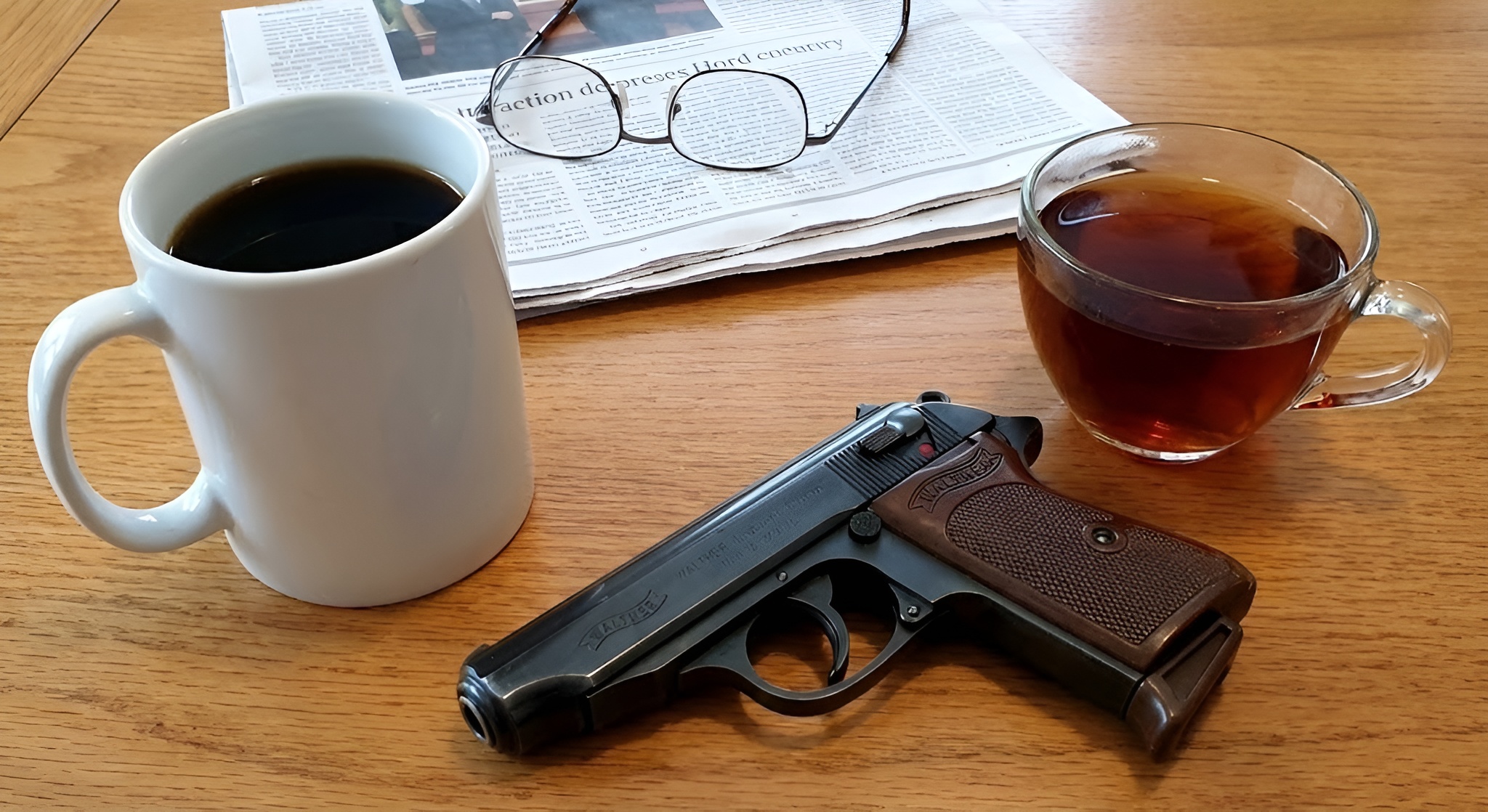
1. "Mud": The Goldfinger Incident
The anti-tea rant in Goldfinger is iconic not just for its aggression, but for its placement. Bond is being offered tea by a secretary. In a normal British novel, accepting the tea would be a moment of grounding or politeness. Bond rejects it violently.
The Cultural Context of the 1950s: To understand this hatred, you have to understand the era. In the 1950s, Britain was in decline. The Empire was dissolving. Rationing (which included tea) had only just ended in 1952. Tea was associated with the Blitz, with "making do," with cold flats, and with the drab, grey reality of post-war socialism. It was the drink of the administrator, the housewife, and the bureaucrat.
Bond was none of those things. He was a "blunt instrument" of the Cold War. He needed to be sharper, faster, and more dangerous. By rejecting tea, Bond rejects the fading past. He aligns himself with the jet-set future—a world of Casinos, American CIA agents, and high-speed travel. Tea is slow; Bond is fast.
Expert Tip: The "Nursery Food" Aversion
Fleming often described Bond's dislikes as "nursery food"—soft, sweet, comforting things. Bond hates sweet tea for the same reason he hates untied shoelaces: it implies a lack of discipline. His palate is strictly dry and bitter (Martinis, black coffee, champagne). If he *did* drink tea, it would likely be Lapsang Souchong—smoky, masculine, and sugar-free.
2. The Coffee Obsession: Blue Mountain or Bust
If tea is mud, what is fuel? Coffee. Specifically, Blue Mountain Coffee from Jamaica. In Live and Let Die, Fleming writes lovingly about Bond's breakfast routine. It isn't just a cup of joe; it's a ritual.
Bond brews his coffee in a Chemex—a glass pour-over device invented in America in 1941. In 1950s London, a Chemex was an exotic, futuristic piece of laboratory equipment. Using it signaled that Bond was modern, scientific, and transatlantic. He didn't use a dusty old teapot; he used chemistry.
Why Blue Mountain? Ian Fleming lived in Jamaica at his Goldeneye estate while writing the novels. He fell in love with the local bean. Blue Mountain is famous for being mild, lacking the harsh bitterness of Robusta, but highly caffeinated. It fits Bond perfectly: expensive, exclusive, and potent. While we at TeaTrade prefer leaves, we admit that a Single Origin coffee has terroir just like tea.
3. When Bond Actually Drinks Tea (The Rare Exceptions)
Despite the "mud" comment, Bond does drink tea in the books, but only under specific, revealing circumstances. These exceptions prove the rule: he only drinks it when it is "exotic" or functional.
A. The Japanese Tea Ceremony (You Only Live Twice)
In You Only Live Twice, Bond spends significant time in Japan training to become a ninja (yes, really). Here, he drinks green tea with the head of the Japanese Secret Service, Tiger Tanaka. Bond respects this tea. Why?
Because the Japanese Tea Ceremony (Chanoyu) is not "domestic." It is martial. It is disciplined. It is steep in history and danger (Samurai often drank tea before battle). Bond appreciates the ritual because it is foreign and precise, distinct from the "cozy" British tea time he despises. It aligns with his appreciation for Zen culture and warrior codes.
B. Iced Tea in America
In the US-set novels, Bond occasionally drinks Iced Tea. Again, this is permissible because it is "American." It is cold, refreshing, and consumed in high-heat environments. It doesn't carry the baggage of the British drawing room. It is a utility beverage for a hot climate.
C. Tea as Medicine
Bond gets beaten up. A lot. When recovering from injuries in hospital wings, he accepts tea, but begrudgingly. In these moments, tea is reduced to its medicinal roots—a way to rehydrate and warm a body in shock. It is not pleasure; it is maintenance.
4. Why Bond Was Wrong (The Case for Tea Espionage)
Bond dismissed tea as "mud," but from a tradecraft perspective, he missed a massive trick. Tea is the ultimate spy beverage. In fact, the British Empire he served was built on Tea Espionage.
In the 1840s, the British East India Company sent a botanist spy named Robert Fortune into China. Disguised as a Chinese merchant, Fortune stole tea plants, seeds, and processing secrets from the forbidden interior of China and smuggled them into India. This act of corporate espionage broke the Chinese monopoly and launched the tea industry in Assam and Darjeeling. Read the full story of Tea Espionage here.
Bond, a student of history and espionage, should have respected tea as the product of one of the greatest intelligence operations of all time.
The Biochemistry of the Sniper
Furthermore, Bond got the chemistry wrong. He relies on coffee for alertness. Coffee delivers a jagged spike of adrenaline and cortisol (the "fight or flight" response). This causes jittery hands—a nightmare for a sniper or a man aiming a Walther PPK.
Tea, specifically green tea like Matcha or Gyokuro, contains L-Theanine. This amino acid crosses the blood-brain barrier and promotes alpha brain wave activity. It creates a state of "alert calmness." It sharpens focus without the shakes. A real-world double-0 agent would drink Matcha before a mission, not a double espresso.
Expert Tip: The "Q" Connection
In the films, Q (Desmond Llewelyn) is often seen with a pot of tea in his lab. This visually contrasts Q (the eccentric, cozy British uncle) with Bond (the cold, international killer). Tea represents the "Safety of the Lab," while Bond represents the "Danger of the Field." The mug of tea is a visual shorthand for "Home."
5. The Modern Bond: Daniel Craig and Protein Shakes
In the modern era, the culinary landscape has changed. The Daniel Craig films portray a Bond who is even more utilitarian. He is rarely seen eating or drinking for pleasure (unless it's alcohol to numb the pain). The romance of the Chemex and the Blue Mountain coffee is gone.
Modern Bond consumes protein shakes, water, and whatever is at hand. He is a machine. However, in Skyfall, there is a return to British iconography. The porcelain bulldog on M's desk, the explosion of MI6—these symbols force Bond to confront his British identity. While we don't see him sipping Earl Grey, the "Britishness" he spent 50 years running away from finally catches up to him.
6. What If Bond Was Written Today? (Yerba Mate?)
If Ian Fleming were writing today, what would Bond drink? It likely wouldn't be a latte (too milky) or an artisanal pour-over (too hipster).
Our bet is on Yerba Mate. It is high in caffeine, smoky, bitter, and consumed by tough gauchos in South America. It fits his "exotic tough guy" persona perfectly. It offers the kick of coffee with the herbal complexity of tea, and it requires a specific, slightly dangerous-looking metal straw (bombilla) to drink. It is a ritual, but a masculine, rugged one. Check out our Yerba Mate recommendations here.
Conclusion: Shaken, Not Stirred (and Not Steeped)
James Bond's hatred of tea was a brilliant literary device by Ian Fleming. It was a way to distance his hero from the declining, cozy image of post-war Britain and align him with the sharp, caffeinated energy of the American century.
However, we think Bond missed out. A smoky Lapsang, a grassy Sencha, or a strong Assam would have suited his character perfectly—complex, bitter, and capable of getting the job done. Perhaps in the next reboot, 007 will finally appreciate the leaf.
Drink Like a Villain
Since Bond won't drink tea, maybe the villains will. We reviewed the Gold versions of everyday favorites, fit for Goldfinger.
Review: Teas for World Domination
Comments