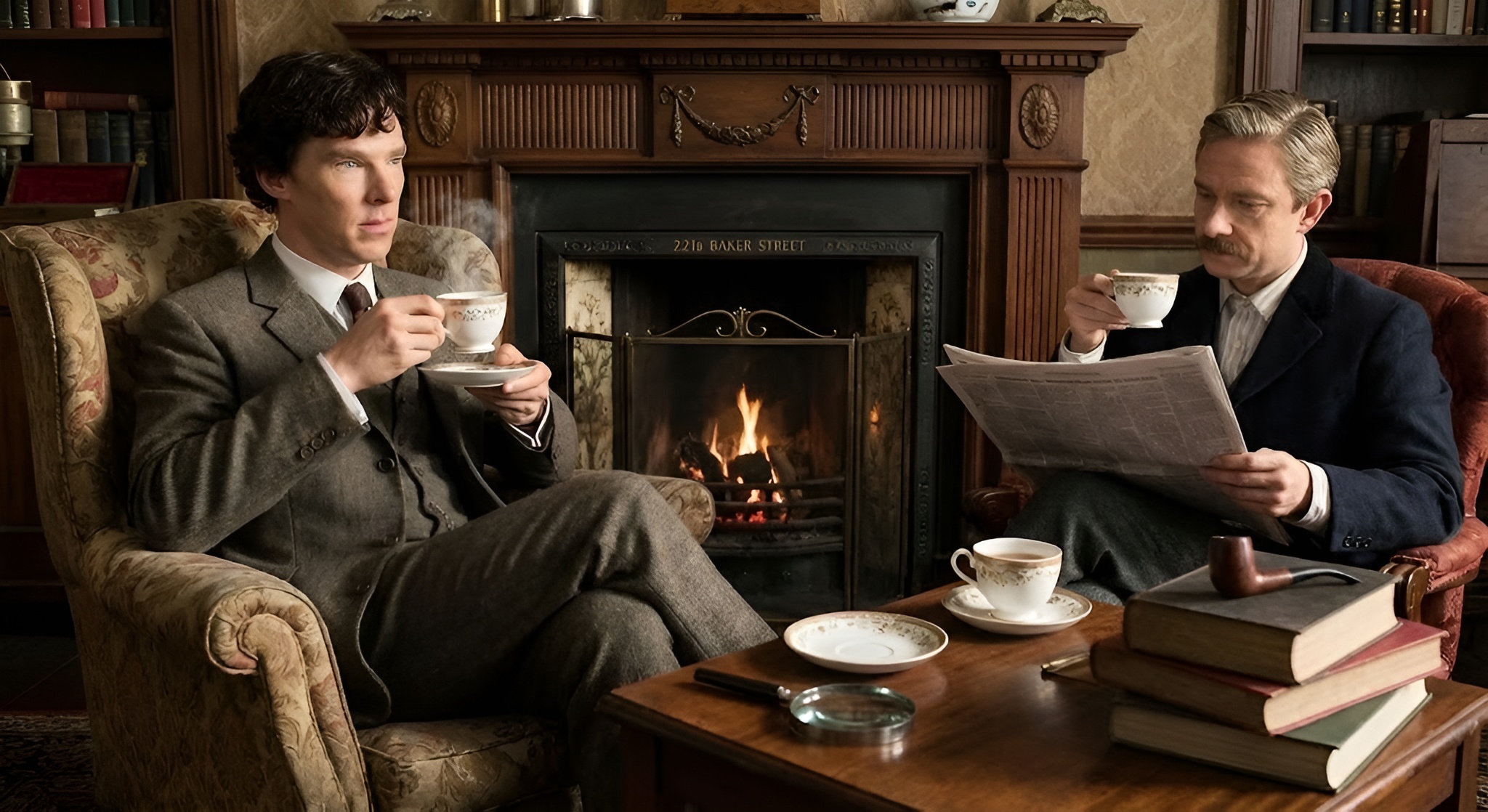
1. The Myth of Lapsang Souchong
If you search for "Sherlock Holmes Tea" online, you will find countless blends featuring Lapsang Souchong. The logic is sound: Holmes smoked an ounce of shag tobacco a day. The pine-smoked aroma of Lapsang would complement the stale air of his apartment perfectly.
However, textual evidence suggests otherwise. In The Hound of the Baskervilles or A Study in Scarlet, tea is mentioned frequently, but never by specific varietal. The association likely stems from modern character profiling—we want Holmes to drink something eccentric and smoky because it fits his "dark and stormy" vibe. In reality, Lapsang was a niche luxury in the Victorian era, often reserved for the aristocracy or specific connoisseurs, not necessarily a bachelor detective living in a cluttered flat.
Expert Tip: The Russian Caravan Connection
Some theories suggest Holmes might have enjoyed Russian Caravan tea. This blend, historically transported by camel across Asia, picked up a smoky flavor from campfires. It was available in London and considered a sophisticated, strong choice—perhaps more fitting for a man of the world than a pure Lapsang.
2. The Mrs. Hudson Factor: What Was Actually Brewed?
We must remember that Holmes rarely brewed his own tea. That duty fell to the long-suffering Mrs. Hudson. As a Victorian landlady, she would have prioritized economy and reliability. In the late 1880s, the British tea market was undergoing a seismic shift.
The Rise of the Empire: In the early 19th century, all tea came from China. By the time of Holmes (1880s-1900s), British-grown tea from India (Assam) and Ceylon (Sri Lanka) was flooding the market. It was stronger, cheaper, and considered "patriotic."
It is highly probable that Mrs. Hudson brewed a sturdy Congou (a grade of Chinese black tea) or a robust Assam blend. This would be strong enough to wake Holmes from a drug-induced stupor or fuel Watson after a long night of writing.
Expert Tip: Victorian Adulteration
Holmes, a master chemist, would have been acutely aware of tea adulteration. In Victorian London, cheap tea was often mixed with iron filings, graphite, or used leaves dried with gum. Holmes likely insisted on sourcing his leaf from a reputable merchant like Twining's or Fortnum's to ensure purity—a Connoisseur's Guide before its time.
3. The "7% Solution" vs. caffeine
Holmes famously turned to a 7% solution of cocaine or morphine to stimulate his mind during periods of boredom. However, when on a case, he required a different kind of fuel. Tea was the "upper" that kept him sharp without the debilitating crash of narcotics.
The caffeine in tea interacts with L-Theanine to produce a state of focused calm—exactly what a detective needs to deduce clues. While coffee was available in London, tea was the ubiquitous lubricant of social interaction and private thought. It allowed Holmes to pause, light his pipe, and let the data "settle" in his mind.
4. The Chemistry of the Pot
If Holmes did brew his own tea, how would he do it? As a man who conducted chemical experiments in his living room, he would view brewing as a precise extraction process.
- Water Temperature: He would know that boiling water (100°C) is essential for black tea to extract the tannins and theaflavins fully. Read about reboiling water here.
- Vessel: He likely used a silver or earthenware pot. Silver retains heat poorly but looks grand; earthenware (like a Brown Betty) retains heat well, essential for a long morning of deduction.
- Timing: Holmes would not tolerate bitter, stewed tea. He would likely be precise about the infusion time, perhaps even using a laboratory beaker if a teapot wasn't handy.
Expert Tip: The Bunsen Burner
In the stories, Holmes keeps a Bunsen burner on his workbench. It is entirely plausible that on particularly manic nights, he brewed tea directly over the burner in a Pyrex flask—the original "lab brew."
5. The Breakfast Table: A Stage for Deduction
Many of Holmes' most famous deductions occur at the breakfast table. "I observe you have been in Afghanistan, Watson," or analyzing the walking stick in The Hound of the Baskervilles. Tea is the silent witness to these revelations.
The breakfast table was a sanctuary. It was the one time of day where Holmes and Watson sat as equals. The ritual of pouring tea—likely English Breakfast—grounded the chaotic events of the stories. It provided a moment of domestic normalcy before the game was afoot.
Expert Tip: Tea and Biscuits?
While Watson might have enjoyed a scone, Holmes famously forgot to eat when working. He viewed digestion as a drain on brainpower. His tea would likely be taken black or with a splash of milk, unencumbered by food, fueling pure thought.
6. Conclusion: The "Smoky" Truth
So, did Holmes drink Lapsang? Probably not. The literary evidence points to a strong, standard Victorian black tea. However, the *spirit* of Lapsang—intellectual, intense, and slightly abrasive—matches Holmes perfectly. It is the tea he *should* have drunk, which is why the myth persists.
If you want to channel your inner detective, we recommend brewing a cup of Authentic Lapsang Souchong. Let the smoke clear your mind, eliminate the impossible, and whatever remains—however improbable—must be the truth.
Solve the Mystery of Flavor
Want to try the tea that *feels* like Sherlock? We reviewed the best Lapsang Souchong and "Russian Caravan" blends on the market.
Review: Best Smoky TeasRelated Reading in Literature & Film
- Miss Marple's Tea Mysteries: Village Tea Shop Detection
- Agatha Christie's Tea Murders: Poison and Afternoon Tea
- Cranford: Victorian Ladies Governing Through Tea
- Emma: Tea as Social Currency in Regency England
- The Remains of the Day: Butler's Tea Service as Emotional Repression
- Brideshead Revisited: Tea, Class, and Aristocratic England
- Narnia's Mr. Tumnus Tea: CS Lewis's Moral Infrastructure
- Doctor Who's Tea Culture: 60 Years of British Tea
Comments