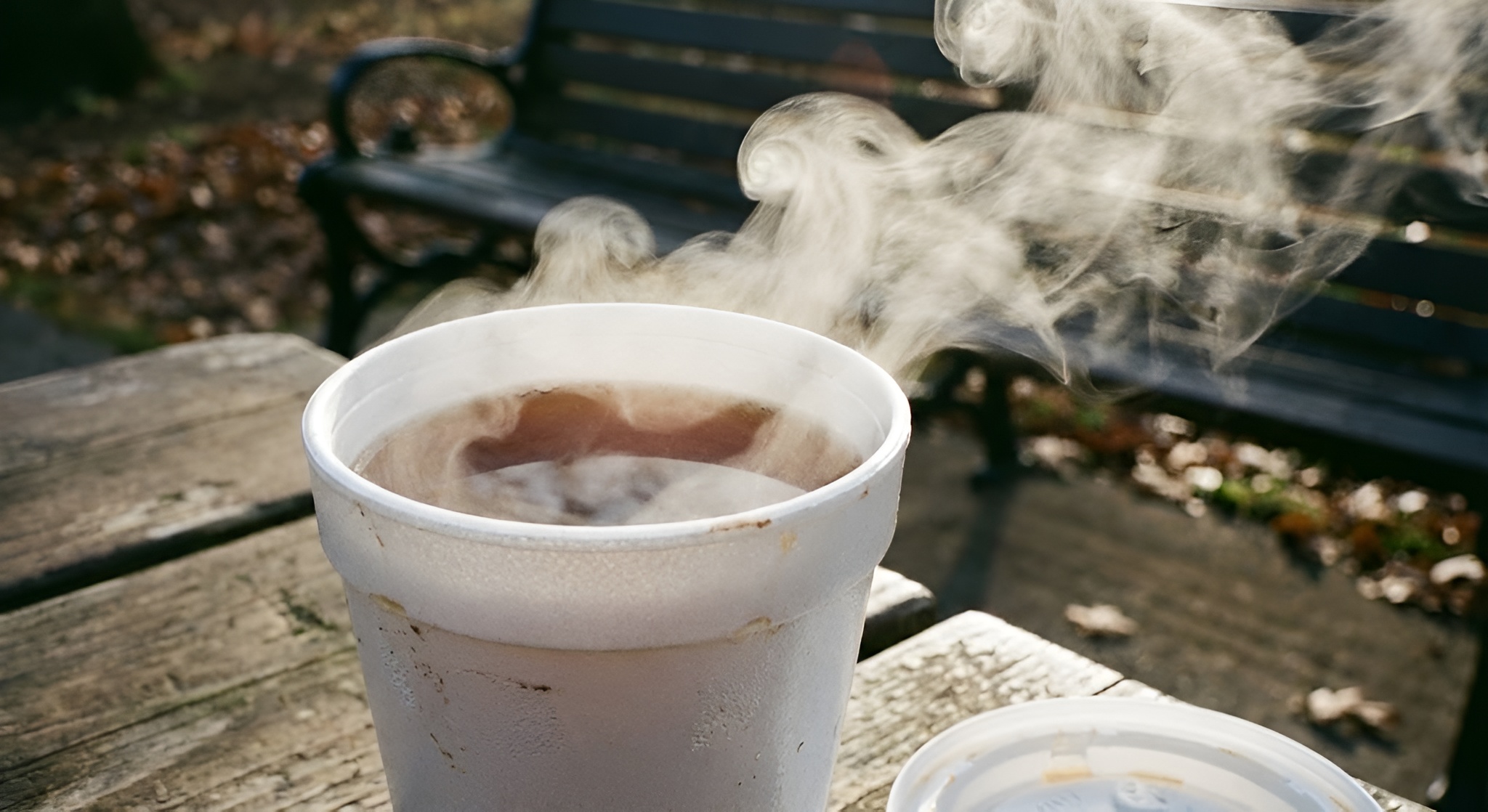
1. The Chemistry: What is Styrene?
Styrofoam is a trade name for expanded polystyrene foam. It is 95% air, which makes it a great insulator. The remaining 5% is plastic polymer.
The building block is Styrene. The National Toxicology Program lists styrene as "reasonably anticipated to be a human carcinogen." While the amount that leaches into a single cup of tea is generally below acute toxicity levels, it is bio-accumulative. Drinking 3-4 cups a day from foam exposes you to a steady drip-feed of this compound.
Expert Tip: The "Lemon" Warning
If you add a slice of lemon to hot tea in a foam cup, look closely at the rim. Within minutes, you might see the surface become rough or pitted. This is the acid physically dissolving the plastic. Never drink acidic beverages from Styrofoam.
2. Factors That Increase Risk
Styrofoam is relatively stable with cold water. The danger arises when you introduce energy (heat) or solvents (acid/fat).
| Factor | Effect on Leaching | Risk Level |
|---|---|---|
| Temperature (Boiling) | Heat loosens the polymer bonds, releasing styrene gas and monomers. | High |
| Acidity (Lemon/Hibiscus) | Acid acts as a solvent, corroding the cup surface. | Very High |
| Fat (Whole Milk) | Lipids can extract styrene (which is fat-soluble). | Moderate |
| Alcohol | Dissolves polystyrene instantly (turning it into sludge). | Extreme |
Expert Tip: Visible "Pitting"
Have you ever finished a cup of tea and noticed tiny holes or a rough texture on the inside of the cup where the liquid line was? That isn't manufacturing error; that is material that has dissolved into your drink.
3. Environmental & Taste Impact
Beyond health, Styrofoam ruins the tea experience.
- Taste Absorption: Being porous, foam absorbs aromatic oils. It literally steals flavor from your high-quality Earl Grey or Darjeeling.
- Microplastics: As the cup degrades, microscopic particles of plastic enter your digestive system. We explore this further in our Microplastics in Tea Guide.
- Waste: It is non-biodegradable and difficult to recycle. That cup you used for 10 minutes will sit in a landfill for 500 years.
Expert Tip: The Recycling Myth
Technically, Styrofoam can be recycled, but it is so expensive and voluminous that almost no municipal centers accept it. In 99% of cases, it ends up in the ocean or landfill.
4. Better Alternatives
If you have a choice, almost anything is better than foam.
| Material | Safety | Heat Retention |
|---|---|---|
| Double-Walled Glass | 100% Safe (Inert) | Good |
| Ceramic / Porcelain | 100% Safe | Excellent |
| Paper Cup (PE Lined) | Better than foam, but lining can shed microplastics. | Poor |
| Stainless Steel | Safe (Food Grade 18/8) | Excellent (vacuum) |
Expert Tip: "Paper" isn't always plastic-free
Most disposable "paper" cups are lined with polyethylene (plastic) to prevent leaking. While safer than Styrofoam, they still release microplastics when exposed to boiling water. The only truly safe option is a reusable cup.
Ready to upgrade your daily cup?
Ditch the disposable waste and the chemical risk. We reviewed the best travel mugs and glass tumblers that keep your tea hot without the side of styrene. See our top picks here: The Best Teaware & Gear of 2025 →
Comments