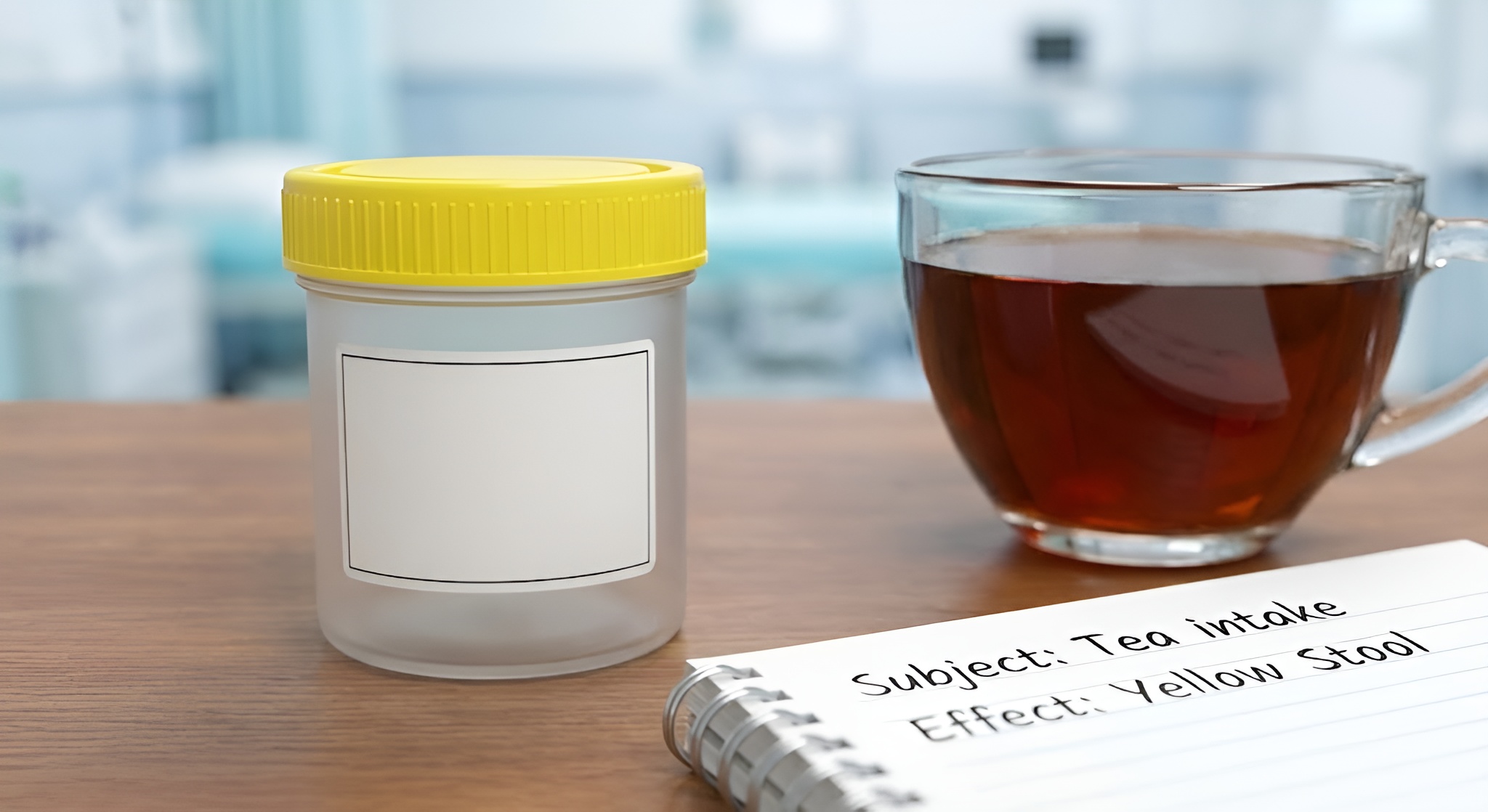
The Biology of Brown: How Bile Works
To understand why stool turns yellow, we must first understand why it is normally brown. The color of your stool comes from a fluid called Bile.
Bile is produced by your liver and stored in your gallbladder. Its primary job is to emulsify fats from your diet, making them easier to digest. Bile starts out as a bright yellow-green fluid containing a pigment called Bilirubin (a byproduct of broken-down red blood cells).
The Transition:
1. When you eat fat, the gallbladder squirts green/yellow bile into the small intestine.
2. As the food travels through the intestine, bacteria and enzymes chemically alter the bilirubin.
3. It turns from Bilirubin (Yellow) -> Biliverdin (Green) -> and finally into Stercobilin (Brown).
This process requires time. If food moves through your digestive tract too quickly—a condition known as "decreased transit time" or "rapid gastric emptying"—the bacteria in your gut do not have enough time to turn the bile brown. The result? Stool that exits the body still looking yellow or green.
Mechanism 1: caffeine and "Rapid Transit"
This is where tea comes in. Tea contains Caffeine, a potent central nervous system stimulant. But caffeine doesn't just wake up your brain; it wakes up your gut.
The Gastrocolic Reflex
Caffeine stimulates the smooth muscles of the colon, triggering a wave of contractions known as Peristalsis. This is often referred to as the "Gastrocolic Reflex." In many people, this reflex is mild and helpful. However, for those with a sensitive gut or Irritable Bowel Syndrome (IBS), caffeine can send the colon into overdrive.
If you drink strong tea on an empty stomach, the caffeine hits the digestive system rapidly. The colon contracts violently, rushing the contents of the small intestine toward the exit. Because the transit time is drastically reduced, the yellow bile doesn't have time to degrade into brown stercobilin. The result is loose, yellowish stool, often accompanied by cramping.
The Genetic Factor (CYP1A2)
Why does tea give you yellow stool but not your friend? It might be your genes. The CYP1A2 gene regulates how fast your liver metabolizes caffeine. "Slow Metabolizers" keep caffeine in their system longer, leading to prolonged stimulation of the gut and a higher likelihood of digestive distress. If you get the jitters easily, you are likely also prone to caffeine-induced rapid transit.
Mechanism 2: The Milk Intolerance (The Hidden Culprit)
For many tea drinkers, the tea leaf itself is innocent. The villain is the milk. In the UK and parts of Asia, tea is rarely drunk black.
Lactose Intolerance is incredibly common, affecting nearly 65% of the global adult population to some degree. It happens when the body stops producing enough Lactase, the enzyme needed to break down milk sugar (lactose).
Osmotic Diarrhea
When a lactose-intolerant person drinks a milky cup of Assam, the lactose sugar passes undigested into the colon. There, gut bacteria ferment it aggressively. This fermentation creates gas (bloating) and lactic acid. More importantly, the undigested sugar draws water from the body into the bowel via osmosis. This flood of water flushes the stool out rapidly—too fast for the bile to turn brown. This is a classic cause of yellow, watery diarrhea after breakfast tea. If you suspect this, try switching to Oat Milk or drinking your tea black.
Mechanism 3: Fat Malabsorption (Steatorrhea)
Sometimes, yellow stool isn't just fast; it's greasy, foul-smelling, and floats in the toilet bowl. This condition is called Steatorrhea, which literally means "fat flow." It indicates that your body is not absorbing the fat from your diet.
Surprisingly, certain teas are drunk specifically because they block fat absorption. While this is marketed as a weight-loss benefit, the side effect is yellow, fatty stool.
Pu-erh Tea & Lipase Inhibition
Pu-erh Tea is famous for its cholesterol-lowering properties. It contains statins (lovastatin) and a unique compound called theabrownin. Studies have shown that Theabrownin inhibits Pancreatic Lipase, the enzyme your body uses to break down dietary fat. If the fat isn't broken down, it cannot be absorbed into the bloodstream. Instead, it passes straight through your intestines and into the toilet. High-fat meals paired with strong Pu-erh can result in pale, yellow, oily stools.
Green Tea & EGCG
Similarly, extremely high doses of Green Tea (or Matcha) provide high levels of EGCG. EGCG interferes with lipid emulsification and absorption. While this mechanism is celebrated in diet circles, it can be distressing in the bathroom. If you are taking Green Tea Extract supplements or drinking 5+ cups of Matcha a day, you may be inducing mild steatorrhea.
Mechanism 4: Tannins and Digestion
Tea is rich in Polyphenols (Tannins). While generally healthy antioxidants, tannins have a binding property. They bind to iron, proteins, and digestive enzymes.
In high concentrations (like a very strong, stewed black tea), tannins can irritate the lining of the stomach and intestines. For those with sensitive stomachs or IBS-D (Diarrhea-predominant Irritable Bowel Syndrome), this irritation triggers a "dumping syndrome" response. The body perceives the high tannin load as a mild toxin or irritant and flushes water into the gut to dilute it and expel it quickly. Once again, this speed prevents the bile from turning brown, resulting in loose, yellow stool.
Mechanism 5: Herbal "Detox" Teas (The Danger Zone)
If you are drinking "Slimming Tea," "Detox Tea," or "Flat Tummy Tea," check the ingredients label immediately. Many of these blends contain Senna (or Cassia).
Senna is a powerful natural laxative. It contains compounds called sennosides that irritate the bowel lining to force muscle contractions. Senna is a medical-grade treatment for severe constipation, not a daily beverage. Regular use of Senna almost always causes rapid, yellow diarrhea and severe cramping. Long-term use can damage the nerves in the colon (Cathartic Colon), making it impossible to poop without laxatives. If your tea contains Senna, stop drinking it immediately.
For a safe alternative that supports liver health without laxatives, try Dandelion Root Tea instead.
Red Flags: When to See a Doctor
While tea is a common cause of digestive speed-up, yellow stool can also indicate serious medical issues involving the liver, gallbladder, or pancreas.
- Gilbert's Syndrome: A common, harmless genetic liver condition where the liver doesn't process bilirubin efficiently. Stress, fasting, or dehydration (potentially exacerbated by tea's diuretic effect) can trigger episodes of yellowing skin or stool.
- Gallstones: If a stone blocks the bile duct, bile cannot reach the intestine at all. In this case, stool turns Pale Clay or Grey (acholic), not yellow. This is a medical emergency.
- Giardia: A parasite often contracted from contaminated water. It causes persistent, bright yellow, explosive diarrhea.
Seek medical help if: You have yellow skin/eyes (Jaundice), severe abdominal pain, fever, unexplained weight loss, or if the color persists for more than a few days after stopping tea.
Troubleshooting: How to Fix It
If you suspect tea is the cause, follow this elimination protocol:
| Suspected Cause | Test / Solution |
|---|---|
| Rapid Transit (Caffeine) | Switch to CO2 Decaf Tea or herbal teas like Rooibos for 3 days. If stool normalizes, it was the caffeine. |
| Lactose Intolerance | Drink your tea black or use Oat/Almond milk. If symptoms stop, it's the dairy, not the tea. |
| Fat Malabsorption | Stop drinking "Slimming" or Pu-erh teas with heavy meals. Check if the stool floats (grease). |
| Senna / Laxatives | Check herbal tea ingredients. Avoid anything listing "Senna" or "Cassia" or "Chinese Mallow." |
| Tannin Sensitivity | Brew your tea lighter (3 mins max) and never drink it on an empty stomach. Eat toast first. |
Try Peppermint or Ginger
If you have an upset stomach but still want a warm drink, switch to Peppermint Tea or Ginger Tea. Both are antispasmodics that relax the gut muscles, slowing down transit time and allowing digestion to normalize. Peppermint contains menthol, which calms the gastrocolic reflex.
Comments