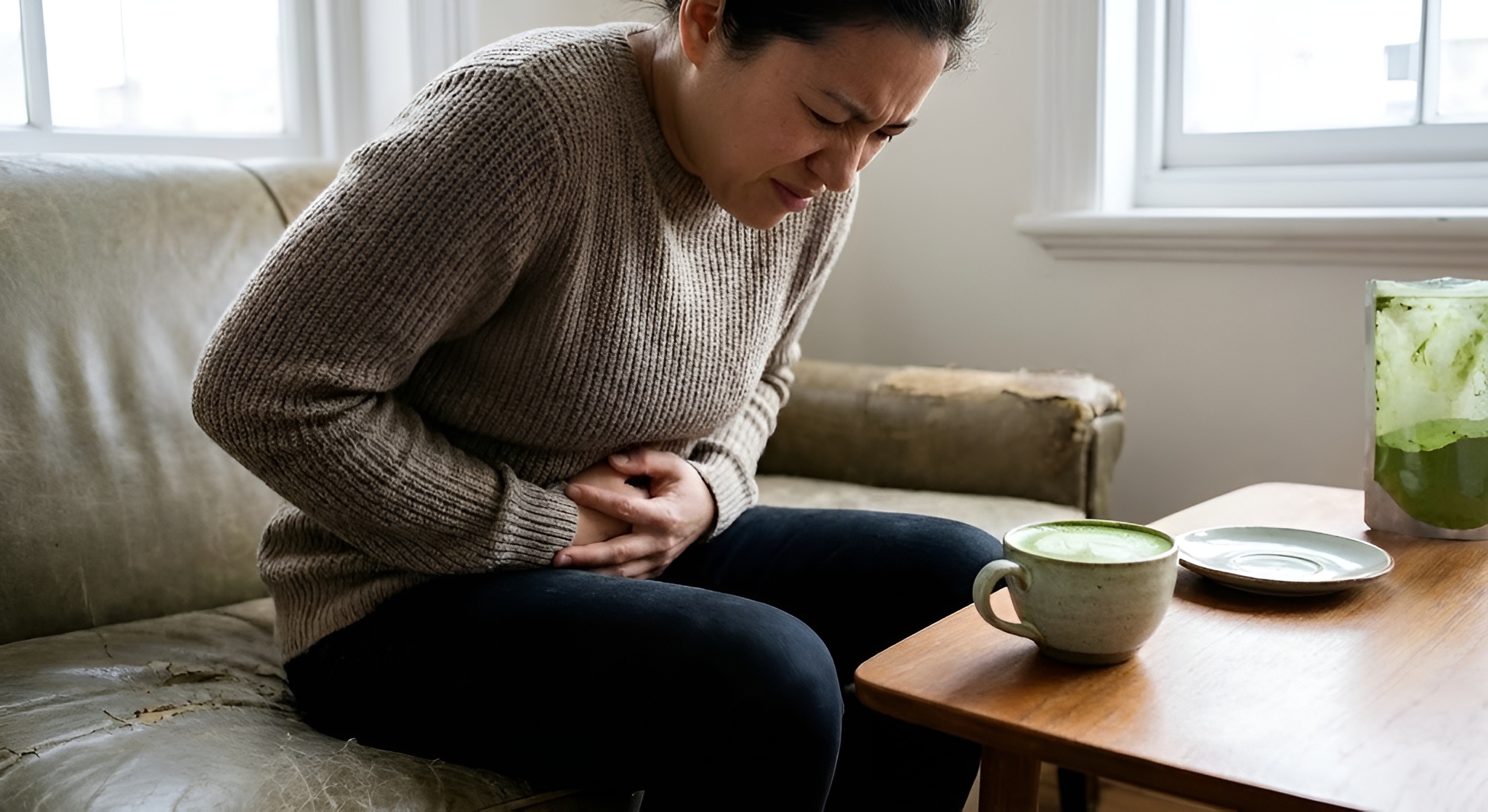
1. The caffeine Kick: Why Your Colon Wakes Up
Green tea contains caffeine. While less than coffee, it is still significant, especially in Matcha where you consume the whole leaf. Caffeine acts as a stimulant to the colon by increasing the contractions of the intestines.
The Gastrocolic Reflex: When caffeine hits your stomach, it triggers the release of gastrin, a hormone that kickstarts colonic activity. This causes the muscles in your large intestine to contract (peristalsis). If this happens too fast, your colon doesn't have time to absorb water from the waste, resulting in loose, watery stools. Essentially, the tea is hitting the "Eject" button on your digestion.
Expert Tip #1: Matcha is Potent
One teaspoon of Matcha powder contains as much caffeine as a double espresso (approx 70mg). Because it is a suspension of leaf fiber, it hits the gut harder than steeped tea. If you have IBS, treat Matcha like rocket fuel—handle with extreme caution.
2. The Tannin Attack: Why Your Stomach Revolts
While caffeine speeds things up, Tannins (polyphenols) are what make it painful. Tannins are astringent compounds designed to deter pests from eating the tea plant. They are naturally bitter and "grabby." Tannins can irritate the digestive tissue, potentially leading to symptoms such as nausea or stomach ache.
When you drink strong tea on an empty stomach, the tannins bind to the proteins in your stomach lining (mucosa). This irritation causes inflammation. To protect itself, the stomach may dump fluids into the intestines to flush out the irritant. This sudden influx of fluid turns normal digestion into diarrhea.
Expert Tip #2: The Empty Stomach Rule
The #1 cause of green tea diarrhea is drinking it Fasted. Without food proteins for the tannins to bind to, they attack your gut lining instead. Never drink green tea first thing in the morning without at least a biscuit or piece of toast.
Try a Gentler Brew
Fed up with the stomach ache? We tested the best low-tannin teas specifically for sensitive tummies. Hojicha and Genmaicha are game changers.
See Top 10 Gentle Teas3. The Quality Factor: Cheap Tea = More Pain?
Is your tea high quality, or is it "dust"? Cheap tea bags are filled with "fannings" (broken dust). These tiny particles release tannins incredibly fast due to increased surface area. A high-quality loose leaf tea releases tannins slowly over multiple steeps.
Furthermore, cheap Matcha is often made from older, tougher leaves (lower on the plant) which are higher in astringent catechins. Ceremonial Grade Matcha uses young, shaded leaves which are high in L-Theanine (calming) and lower in harsh tannins. If your Matcha tastes bitter and fishy, your stomach is going to hate it.
Expert Tip #3: The Pesticide Issue
Cheap, non-organic tea can carry pesticide residues. While rare, some sensitive individuals react to these chemicals with digestive distress. If you drink tea daily, consider switching to Organic to rule this out.
4. Diagnostic Table: Is It the Tea or You?
Use this table to figure out why your brew is betraying you.
| Symptom | Likely Cause | The Fix |
|---|---|---|
| Urgent need to go 20 mins after drinking. | Caffeine (Gastrocolic Reflex) | Switch to Decaf or Low-Caffeine (Hojicha). |
| Stomach cramping and nausea. | Tannins (Irritation) | Eat food first. Don't brew with boiling water. |
| Occurs only with Matcha. | Fiber Overload / oxidation | Use less powder (1/2 tsp) or switch to loose leaf. |
| Occurs with milk tea (Latte). | Lactose Intolerance | Switch to Oat or Almond milk. |
5. The Immediate Fix: Stop the Rumble
If you are reading this while regretting your life choices, here is what to do:
- Eat Starch: A piece of white bread, rice, or a cracker. The starch absorbs excess fluid and acid in the stomach.
- Hydrate (Slowly): Diarrhea causes dehydration. Sip water slowly. Do not chug it, or you will trigger the reflex again.
- Ginger: If you have ginger tea (caffeine-free), sip it. Ginger is a natural anti-spasmodic that calms the gut muscles.
Expert Tip #4: The "Cold Brew" Trick
Cold water extracts far fewer tannins and less caffeine than hot water. If hot tea makes you run to the loo, try Cold Brewing. It’s smoother, sweeter, and much gentler on the gut.
6. What Can I Drink Instead?
If your stomach simply cannot handle raw Green Tea (Sencha/Matcha), you don't have to quit tea. You just need to change the type.
- Hojicha (Roasted Green Tea): The roasting process destroys the tannins and lowers caffeine. It is the #1 tea recommended for sensitive stomachs in Japan.
- Genmaicha (Rice Tea): The roasted rice releases starch which coats the stomach lining, acting as a buffer.
- Oolong: The partial oxidation softens the harsh "green" edge, making it easier to digest than raw green tea.
Expert Tip #5: Avoid "Diet" Teas
Many "Slimming Teas" or "Detox Teas" sold online actively contain Senna Leaf, which is a medical laxative. If your green tea is a "blend" designed for weight loss, check the label. You might be dosing yourself with a purgative without knowing it.
Conclusion: Respect the Potency
Green tea is often marketed as a gentle, harmless beverage. In reality, it is a pharmacologically active plant extract. It stimulates, it irritates, and it moves things along. This can be great for constipation, but terrible for a morning meeting.
You don't need to stop drinking it. Just treat it with respect. Eat breakfast first, lower your brewing temperature to 80°C, and if all else fails, switch to the roasted comfort of Hojicha. Your gut will thank you.
Expert Tip #6: The Milk Buffer
While tea purists may cringe, adding a splash of milk (dairy or soy) to green tea can bind the tannins before they reach your stomach. The proteins in milk neutralize the astringency. It turns a harsh brew into a latte.
Comments