The 5-Year Tea Sold as 25-Year Vintage: A £4,500 Markup
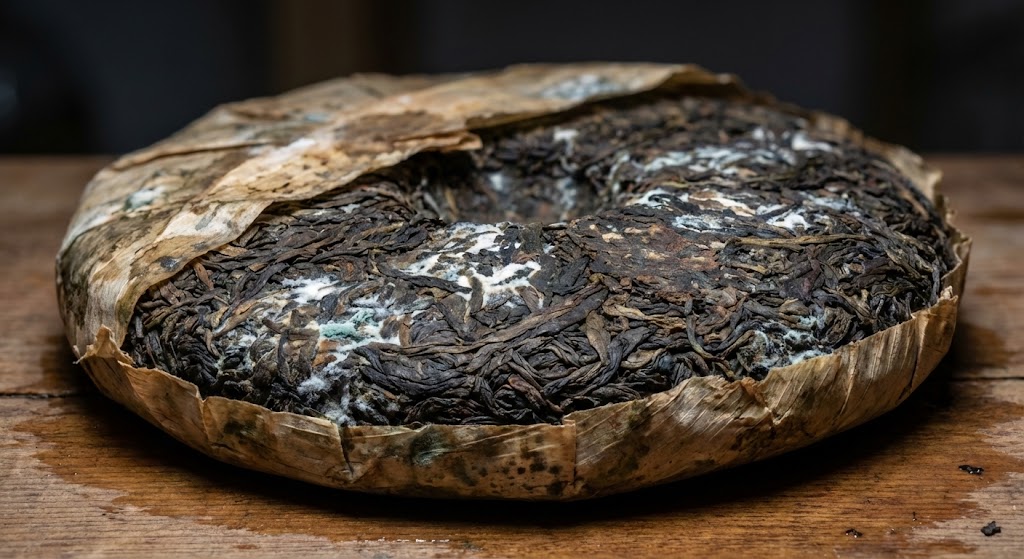
Wet storage can transform brand-new Puerh into 'aged-looking' tea in 18-36 months: 80-95% humidity + 25-30°C temperature accelerates microbial fermentation, darkens leaves, mellows bitterness, and creates visual 'aging' markers (white spots, darkened wrappers, compressed cakes). A 2020 production cake (£30-50 wholesale) stored wet for 2-3 years develops appearance of 15-20 year dry-stored tea. Vendors then sell it as '1990s vintage' (£500-1,500 retail). The £450-1,450 markup comes from fraudulent age claim, not genuine aging. Radiocarbon dating exposes this instantly: C-14 levels prove the tea is 2020, not 1995, regardless of storage-induced appearance.
Wet vs Dry Storage: The Fundamental Difference
Puerh aging occurs through two mechanisms: (1) enzymatic oxidation (tea's own enzymes slowly transforming polyphenols), and (2) microbial fermentation (bacteria, yeasts, molds metabolizing tea compounds). Dry storage emphasizes enzymatic oxidation (slow, clean, complex). Wet storage emphasizes microbial fermentation (fast, earthy, simplified).
Dry Storage Parameters:
- Humidity: 50-70% relative humidity (RH). Low enough to prevent mold growth, high enough for gradual oxidation.
- Temperature: 20-28°C (room temperature, minimal seasonal variation in climate-controlled storage).
- Airflow: Moderate ventilation (prevents mustiness, allows oxygen exposure for oxidation).
- Duration: 10-30 years to achieve full transformation (bitterness → sweetness, astringency → smoothness, green notes → aged complexity).
- Result: Clear amber/red liquor, camphor/dried fruit/honey notes, clean aftertaste, no mustiness. Leaves remain relatively intact (brownish but structured).
Wet Storage Parameters:
- Humidity: 75-95% RH (intentionally high to accelerate fermentation).
- Temperature: 25-32°C (hot + humid = rapid microbial activity).
- Airflow: Minimal or sealed (traps moisture, intensifies fermentation).
- Duration: 18 months to 5 years to achieve 'aged' appearance (faster transformation but different character).
- Result: Dark reddish-brown liquor, earthy/musty/camphor notes (camphor from mold metabolites, not natural aging), thick/smooth mouthfeel, leaves very dark and fragmented. Potential white mold spots ("bai shuang" or "white frost").
| Characteristic | Dry Storage (20 years) | Wet Storage (3 years) | Visual Similarity | Taste Difference |
|---|---|---|---|---|
| Liquor color | Clear amber-red | Dark reddish-brown (opaque) | Wet storage looks 'older' | Dry: fruity/honey. Wet: earthy/musty |
| Leaf appearance | Brown, intact structure | Very dark brown-black, fragmented | Wet storage looks 'more aged' | Dry leaves flexible, wet leaves brittle |
| Aroma | Camphor, dried fruit, honey | Earthy, musty, artificial camphor smell | Both have 'aged' smell | Dry smells clean, wet smells damp/musty |
| Mouthfeel | Smooth, oily, complex | Thick, smooth, simplified | Both smooth (bitterness gone) | Dry has layered complexity, wet is one-note |
| Wrapper patina | Even yellowing (35 years oxidation) | Blotchy darkening (mold staining) | Both look 'old' | Dry even/gradual, wet uneven/splotchy |
| White spots on leaves | Rare (natural oxidation crystals) | Common (mold: Aspergillus, Penicillium) | Both can have white spots | Dry spots are crystalline, wet spots are fuzzy |
The Fraud Mechanism: Artificial Aging Process
Step 1: Acquire Cheap Recent Production — Fraudsters buy low-grade Puerh cakes (2018-2022 production, factory overstock or plantation tea) at £20-50/kg wholesale. Younger tea is better for wet storage fraud because it starts with strong bitterness/astringency (wet storage will mellow this quickly, mimicking aged tea's smoothness).
Step 2: Wet Storage Acceleration — Tea is stored in hot, humid warehouse (Guangdong Province coastal regions are ideal: 28-32°C, 80-90% RH naturally, or artificially humidified basement warehouses). Techniques:
- Sealed plastic wrapping: Wrap cakes in plastic film (traps moisture against the tea, prevents drying).
- Humidifier use: Industrial humidifiers maintain 85-95% RH (higher than natural environment).
- Heat lamps: Infrared lamps raise temperature to 30-32°C (accelerates microbial metabolism).
- Periodic misting: Spray tea with clean water every 2-4 weeks (rehydrates leaves, sustains microbial activity).
Duration: 18-36 months. Monitoring: check monthly for mold growth (white Aspergillus mold is desired for "white frost" aging markers; black/green mold is over-fermentation, discard the batch).
Step 3: Drying and Stabilization — After wet storage period, tea is moved to dry environment (50-60% RH, 20-25°C) for 3-6 months. This stops active fermentation, stabilizes the tea, and reduces obvious mustiness (the wet smell fades slightly but earthy character remains).
Step 4: Rewrapping with Fake Vintage Labels — Remove original wrapper (which says "2020 production"), replace with aged-looking wrapper claiming "1995 production" or "1990s vintage." Wrapper aging techniques:
- Soak paper in weak tea solution, dry in sun (yellows the paper).
- Rub with cigarette ash, dust, or dirt (creates "aged" patina).
- Crumple and flatten repeatedly (mimics 25 years of handling wear).
- Print vintage-style labels (1990s Menghai/Xiaguan factory designs, reproduced from online archives).
Step 5: Market as "Traditional Hong Kong Storage Vintage Puerh" — Sell the tea at £400-1,200/kg, claiming "20-25 year old Puerh, traditionally stored in Hong Kong warehouse." The visual appearance (dark leaves, thick liquor, white spots, aged wrapper) supports the claim. Most buyers can't distinguish wet-storage-fraud from genuine aged tea without expert tasting or lab testing.
Detecting Wet Storage Fraud: Sensory and Scientific Tests
- Mustiness test: Brew the tea (5g in 100ml, 100°C water, 10 sec rinse + 30 sec steep). Genuine dry-stored aged Puerh smells like camphor, dried fruit, honey, tobacco (clean aged notes). Wet-stored fraud smells musty, earthy, like damp basement or forest floor. If you think 'this smells like mold,' it's wet storage.
- Liquor clarity: Hold the tea liquor against white background in natural light. Dry-stored aged Puerh: clear amber-red (transparent, you can read text through it). Wet-stored fraud: dark reddish-brown, opaque or cloudy (microbial sediment, broken leaf particles from over-fermentation).
- White frost inspection: The white spots on leaves ("bai shuang") can be natural oxidation crystals (dry storage, rare) or mold (wet storage, common). Test: scrape the white spot with fingernail. Natural crystals are hard, crystalline, don't brush off easily. Mold is soft, fuzzy, brushes off as powder. If it's powdery, it's wet storage mold.
- Aftertaste duration: Genuine 20-year dry-stored Puerh has long-lasting aftertaste (huigan, returning sweetness for 10-20 minutes after swallowing). Wet-stored fraud has short aftertaste (1-3 minutes, then fades). Spit out the tea, wait 10 minutes—if there's no lingering sweetness, it's wet storage or young tea.
- Leaf brittleness: Break open the compressed cake, examine the leaves. Dry-stored 20-year Puerh: leaves are brown but pliable (bend without cracking). Wet-stored 3-year fraud: leaves are very dark and brittle (snap cleanly when bent) due to over-fermentation breaking down cellular structure.
- Radiocarbon dating: The definitive test. C-14 analysis (£400-600) proves production year regardless of storage method. '1995 vintage' claim but C-14 shows 2020 production = fraud. If buying >£500 of 'vintage' Puerh, the £500 test is essential insurance.
Health Risks: Aflatoxin and Mycotoxins
Wet storage fraud isn't just economic crime—it's a potential health hazard:
Aflatoxin Contamination: Aspergillus flavus and A. parasiticus (mold species that produce aflatoxin, a carcinogenic mycotoxin) can colonize wet-stored tea if humidity exceeds 85% and temperature is 28-32°C. A 2016 study by Guangdong Food Safety Bureau tested 87 wet-stored Puerh samples from Guangzhou markets: 23 samples (26%) exceeded China's aflatoxin B1 limit (5 µg/kg), with highest measured level at 47 µg/kg (9x legal limit).
Symptoms of chronic low-dose aflatoxin exposure: liver damage (elevated ALT/AST enzymes), increased liver cancer risk (aflatoxin is Group 1 carcinogen per IARC), immune suppression. Drinking contaminated tea daily for years = cumulative toxin exposure.
Ochratoxin A (OTA): Produced by Penicillium and Aspergillus ochraceus, another mycotoxin found in improperly stored tea. OTA causes kidney damage (nephrotoxicity). Same 2016 Guangdong study found OTA in 18% of wet-stored samples (7-22 µg/kg, exceeding EU limit of 5 µg/kg for tea).
Detection: Mycotoxin contamination is invisible and tasteless at low levels (high levels taste bitter/acrid, but sub-acute contamination is undetectable by taste). Lab testing required: HPLC (high-performance liquid chromatography) or LC-MS (liquid chromatography-mass spectrometry). Cost: £150-300 per sample. Few consumers test their tea, creating health risk from undetected contamination.
Vendor response to contamination concerns: "Traditional wet storage is safe, Chinese have done this for centuries." Truth: traditional Hong Kong wet storage used 70-80% RH (below aflatoxin risk threshold of 85%), and tea was regularly inspected/discarded if mold was excessive. Modern fraud wet storage uses 85-95% RH (faster aging, higher contamination risk) with no quality control.
| Storage Method | Humidity | Temperature | Aflatoxin Risk | Aging Speed | Market Position |
|---|---|---|---|---|---|
| Dry storage (Kunming/Taiwan) | 50-65% RH | 20-25°C | Zero (too dry for mold) | Slow (15-30 years) | Premium 'clean aged' tea |
| Traditional wet storage (1970s-1990s HK) | 70-80% RH | 25-28°C | Low (occasional spot mold) | Moderate (8-15 years) | 'Traditional storage' category |
| Modern controlled wet storage | 75-85% RH | 26-30°C | Moderate (monitored, tested) | Fast (4-8 years) | Legitimate 'wet-stored' (labeled honestly) |
| Fraud wet storage (extreme acceleration) | 85-95% RH | 28-32°C | High (26% aflatoxin positive rate) | Very fast (18-36 months) | Sold as 'vintage' fraud |
| Shu Puerh (pile fermentation) | 85-95% RH (deliberate) | 50-65°C (thermophilic) | Low (high temp kills aflatoxin molds) | Instant (45-60 days) | Different category (cooked Puerh, not aged raw) |
Price Differential: The Economics of Fraud
Legitimate Pricing:
- 3-year-old Puerh (2021 production, stored dry): £40-80/kg retail (recent vintage, still bitter, needs more aging).
- 10-year-old Puerh (2014 production, dry storage): £120-250/kg (mid-aged, bitterness mellowing, developing complexity).
- 20-year-old Puerh (2004 production, dry storage): £300-700/kg (well-aged, smooth, complex, collectible).
- 30-year-old Puerh (1994 production, dry storage): £800-2,500/kg (vintage, rare, premium aged character).
Fraud Pricing:
- 2021 production, wet-stored 2 years (2021-2023): Production cost £20-40/kg. Wet storage cost (humidity, warehouse, labor): £5-10/kg. Total: £25-50/kg. Sold as "15-20 year vintage": £400-900/kg. Profit: £350-850/kg (700-1,700% markup).
Victim profile: International buyers (Europe, North America, Australia) unfamiliar with genuine aged Puerh flavor. They've read that "aged Puerh is smooth and dark," so when they taste wet-stored fraud (which is smooth and dark due to forced fermentation), they believe it's legitimately aged. Chinese domestic buyers are harder to fool (more experience with real aged tea, can detect mustiness).
Legal and Regulatory Response
China: Wet storage itself isn't illegal (it's a legitimate traditional method if labeled honestly). Fraud occurs when wet-stored tea is mislabeled as dry-stored or when age is misrepresented. China Food Safety Law (2015) prohibits false labeling, but enforcement is minimal. Penalties: £10,000-50,000 fines (vs £500,000+ annual profit from fraud = cost of doing business).
International: EU, UK, US have generic "false advertising" and "product mislabeling" laws, but no specific Puerh aging standards. Customs relies on importer's declaration (if importer claims "20-year vintage," customs accepts it without verification). No country does routine radiocarbon testing of imported tea to verify age claims.
Industry self-regulation: Some high-end vendors (Yunnan Sourcing, White2Tea, Crimson Lotus Tea) voluntarily disclose storage method ("Guangdong natural storage" vs "Kunming dry storage") and production year ("2015 production, 9 years aged" not "vintage Puerh"). But most vendors use vague language ("traditionally stored," "aged Puerh") to obscure wet storage fraud.
Consumer Protection: How to Avoid Wet Storage Fraud
Demand Storage Disclosure: Ask vendor: "What storage method? Humidity level? Location? Duration?" Legitimate sellers answer transparently ("Guangdong storage, 75-80% RH, 6 years"). Fraudsters evade ("traditionally stored in Hong Kong" without specifics = probably fraud).
Price Reality Check: If "20-year vintage Puerh" costs <£200/kg, it's fraud. Real 20-year dry-stored Puerh is £300-700/kg minimum. If it's suspiciously cheap, it's either wet-stored fraud or young tea mislabeled.
Sensory Testing: If you're experienced with aged Puerh, trust your palate: mustiness = wet storage, clean complexity = dry storage. If you're a beginner, buy sample sizes (25-50g) from multiple vendors, compare side-by-side, learn the difference before committing to large purchases.
Radiocarbon Verification: For vintage purchases >£500, budget £400-600 for C-14 dating. If the vendor balks at allowing a sample to be tested ("you don't trust me?"), that's a red flag—legitimate sellers welcome testing (proves their claims).
Buy from Transparent Vendors: Vendors who disclose production year, storage location, storage method, and provide photos of their warehouse = low fraud risk. Vendors who use vague marketing ("aged Puerh," "vintage tea," "Hong Kong storage") without specifics = high fraud risk.
Conclusion: The 18-Month Shortcut to "20-Year Vintage"
Wet storage fraud is the most widespread Puerh scam by volume: thousands of tons annually. The fraud is simple (humid warehouse + 18-36 months = aged appearance), profitable (£350-850/kg markup), and low-risk (minimal enforcement, hard to prove in court). The health risks (aflatoxin/mycotoxin contamination) are under-recognized—26% contamination rate in tested samples, yet few consumers test their tea.
The solution: demand transparency (production year, storage method, humidity level), verify with radiocarbon dating for expensive purchases, and learn to distinguish mustiness (wet storage) from clean aged complexity (dry storage). Your palate is your first defense; lab testing is your definitive proof. This deception runs parallel to vintage wrapper counterfeiting and origin fraud—all three exploit consumer inability to verify claims. The wet storage scam specifically targets buyers who've never tasted genuine dry-aged Puerh, just as the 88 Qing Bing fraud targets buyers who've never seen authentic 1980s wrappers under UV fluorescence.
Comments