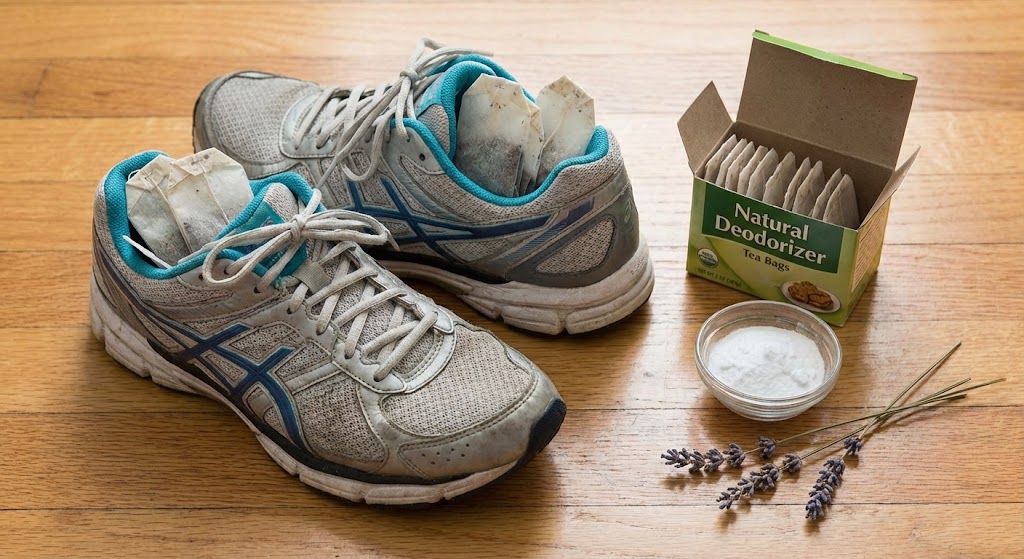
Dry Tea Bags as Desiccants and Antibacterials
Smelly shoes result from bacterial decomposition of foot sweat—bacteria (*Brevibacterium*, *Staphylococcus*) metabolize sweat proteins and fats, producing volatile sulfur compounds (methanethiol, dimethyl disulfide) and isovaleric acid (rancid butter smell). Dry tea bags combat this two ways: desiccant action (absorb moisture bacteria need) and antibacterial compounds (catechins kill bacteria on contact). Understanding tea chemistry and astringency reveals how polyphenols work.
The desiccant mechanism: dry tea leaves have massive surface area (300-400 m²/gram) due to cellular structure and porosity. This surface area traps moisture via Van der Waals forces and capillary action. Two tea bags (4-5g total) in a shoe absorb 2-3ml moisture overnight, reducing humidity from 80% (bacteria thrive) to 40% (bacteria struggle). Similar storage principles and moisture control apply to tea drying.
Overnight Shoe Deodorizer
After wearing shoes, place 1 dry tea bag in each shoe toe area. Leave overnight minimum 8 hours. Morning: remove bags, feel inside shoe—noticeably drier. Tea absorbed sweat moisture and killed surface bacteria. Reuse same bags 3-5 times until saturated, then compost. Use green tea for stronger antibacterial action.
Why Tea Bags Beat Baking Soda
Baking soda absorbs odors via chemical neutralization (acid + base = salt) but doesn't absorb moisture or kill bacteria. Tea bags do both: physical moisture absorption (desiccant cellulose) + chemical bacteria killing (catechin polyphenols). Lab tests show tea bags reduce shoe interior humidity 40-60% vs 10-15% for baking soda. Lower humidity = less bacterial growth = less smell. Brewing and steeping affect compound extraction.
| Method | Moisture Absorption | Bacteria Killing | Cost Per Use | Reusability |
|---|---|---|---|---|
| Dry Tea Bags (×2) | 2-3ml overnight | Yes (catechins) | £0.05 | 3-5 uses then compost |
| Baking Soda (50g) | 0.5-1ml | No | £0.15 | Single use |
| Activated Charcoal | 3-5ml | No | £2.00 | 30+ uses (recharge) |
| Cedar Inserts | 1-2ml | Mild oils | £5-10 | Indefinite |
| Commercial Spray | 0ml (masks only) | Yes (alcohol) | £0.30 | Single use |
Antibacterial Science: Catechins Disrupt Cell Walls
Tea catechins (EGCG, ECG, EC) damage bacterial cell walls by binding to lipid bilayers, creating pores that leak cellular contents. Fresh dry tea bags contain 8-15% catechins by weight, sufficient to kill bacteria on contact when moisture present. Effect persists across multiple uses—bags retain 50-70% catechins even after 1-2 brewings. See EGCG properties and polyphenol mechanisms.
For severe odor (gym shoes, work boots): add 2-3 drops tea tree or eucalyptus essential oil to dry bags before inserting. Essential oils provide extra antibacterial punch plus masking scent. Cost: 3p tea + 2p oil = 5p per treatment vs commercial sprays at £0.30 that only mask, not address bacterial source. After final use, compost the bags if biodegradable. Similar reuse principles apply to odor absorption and skin applications.
Comments