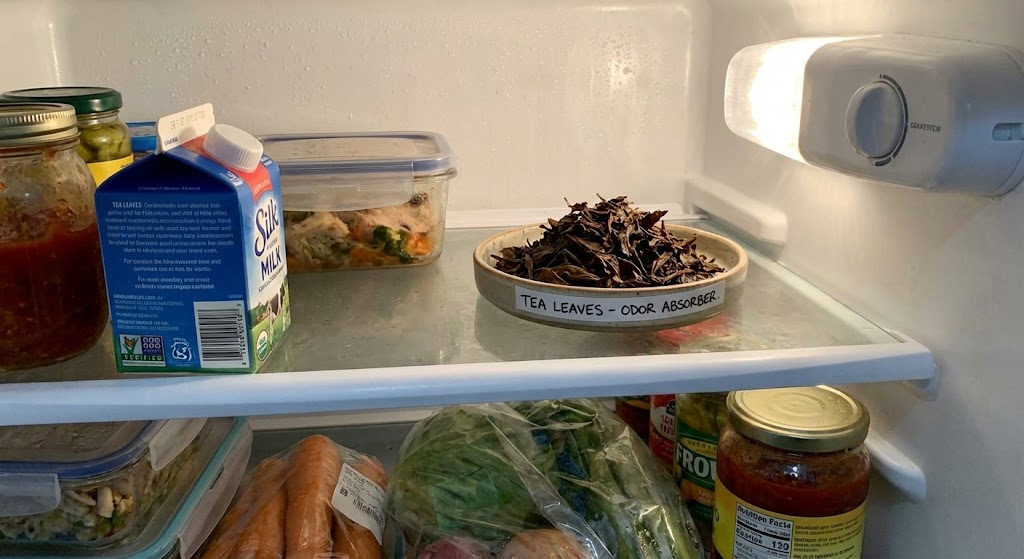
How Tea Leaves Absorb Fridge Odors
Fridge smells result from volatile organic compounds (VOCs) released by decomposing food—trimethylamine (fish smell), methanethiol (rotting vegetables), butyric acid (rancid dairy), diacetyl (fermented notes). Dried tea leaves absorb these molecules through massive surface area (300-400 m²/gram) combined with chemical binding to porous cellulose structure. Understanding storage principles helps prevent tea degradation.
The absorption mechanism: tea leaves are hygroscopic (water-absorbing) and have micro-porous structure at cellular level. VOC molecules diffuse into these pores via concentration gradient, becoming trapped by Van der Waals forces and hydrogen bonding with cellulose hydroxyl groups. The large surface area means one small dish of dried tea leaves (50g) can trap odor molecules from 200+ liter fridge volume. This same polyphenol and oxidation chemistry applies to dyeing.
DIY Fridge Deodorizer Setup
Empty 10-15 used tea bags onto small plate or shallow dish, spread to maximize surface area exposure. Place in back of fridge (warmest spot where odors concentrate). Leave for 1-2 weeks, then replace with fresh used bags. One box of tea (£2 for 80 bags) provides 6 months of fridge deodorizing at £0.33 per month. After final use, reuse or compost.
Used Tea vs Baking Soda vs Activated Charcoal
Baking soda absorbs odors via acid-base neutralization chemistry—reacts with acidic VOCs (butyric acid, acetic acid) to form neutral salts. Works well for acidic odors but ineffective against neutral compounds (trimethylamine). Tea leaves work via physical adsorption—trap ALL VOCs regardless of chemical nature. Activated charcoal has 10x surface area (3000 m²/g) vs tea (300 m²/g) but costs 20x more. Similar absorption applies to shoe odors and polyphenol binding.
| Deodorizer | Surface Area | Odor Absorption | Cost Per Month | Lifespan |
|---|---|---|---|---|
| Used Tea Leaves | 300-400 m²/g | All VOC types (physical) | £0.33 | 1-2 weeks then compost |
| Baking Soda (50g) | ~1 m²/g | Acidic VOCs only (chemical) | £0.15 | 1 month then discard |
| Activated Charcoal | 3000 m²/g | All VOCs (physical) | £4-6 | 3 months (recharge in sun) |
| Commercial Gel Beads | Variable | Mask odor (fragrance) | £2-3 | 1 month then discard |
| Coffee Grounds | ~100 m²/g | All VOCs (moderate) | £0.50 | 1-2 weeks then compost |
The Humidity Balance: Why Dried Tea Works Better
Wet/damp tea leaves actually promote odor in fridge—the moisture creates environment for bacterial growth on leaves themselves, generating new odors instead of absorbing existing ones. Dried tea leaves (moisture content below 10%) are stable, won't support bacterial growth, maintain porous structure for VOC absorption. Always ensure used tea bags are fully dried (24-48 hours air drying) before using as fridge deodorizer. See tea storage and shelf life principles.
Drying method: spread used tea bag contents on plate, leave in room temperature 24 hours or place in sunny window 8-12 hours. Leaves should crumble easily when dry (moisture content ~5-8%). If still pliable/damp, continue drying. Placing damp tea in fridge creates mold growth risk—defeats deodorizing purpose and potentially contaminates food. Similar drying principles apply to tea production and preservation methods.
Placement Strategy: Where to Put Tea for Maximum Effect
Best location: back of fridge on middle or top shelf. This is warmest area (cooling coils pull heat from here) where odorous VOCs volatilize most actively. Worst location: bottom vegetable drawer—coldest spot, minimal air circulation, VOCs less volatile. For maximum deodorizing, place tea where air circulates and temperature is warmest (relative to fridge average of 3-4°C).
Multi-zone strategy for large fridges: place small dish (20g dried tea) in each section—main compartment, vegetable drawer, door shelves. Total 60-80g tea covers all zones. This distributed approach handles localized odor sources (e.g., fish in main compartment, vegetables in drawer) better than single central placement. Understanding temperature and circulation principles from brewing science helps optimize placement.
Fridge Deodorizing Pro Tips
- Replace every 1-2 weeks: Saturated tea leaves can't absorb more VOCs. Fresh leaves essential for ongoing odor control
- Compost spent tea: Once saturated with odors, add to compost pile—VOCs break down harmlessly in composting process. See composting guide and bag materials.
- Don't cover dish: Maximizing air contact with tea surface is key. Covered dish reduces absorption by 50-70%
- Combine with source elimination: Tea absorbs odors but doesn't eliminate rotting food. Clean fridge weekly, discard spoiled items
- Use any tea type: Black, green, herbal all work—deodorizing uses physical surface area, not specific chemistry
The Science of Odor Molecule Size and Tea Pore Size
Tea leaf cellular pores range 10-100 nanometers diameter. Common fridge VOCs: trimethylamine (molecular weight 59 Da, ~0.5nm diameter), butyric acid (88 Da, ~0.6nm), methanethiol (48 Da, ~0.4nm). All these molecules are small enough to enter tea pores easily via diffusion. Once inside, they're trapped by chemical interactions (hydrogen bonding, Van der Waals forces) with cellulose and residual polyphenols. Understanding tea chemistry and catechin structure reveals binding mechanisms.
This is why tea works across odor types while baking soda is selective—physical trapping doesn't discriminate by chemical class, only by size. Since food odor molecules are universally small (under 200 Da), tea's pore size accommodates all of them. The absorption capacity depends on total surface area, which is why dried spread-out leaves work better than compressed wet bags (surface area accessibility). This same surface chemistry principle applies to shoe deodorizing and after use, spent leaves can be composted. Other cleaning and household uses leverage similar tannin properties.


Comments