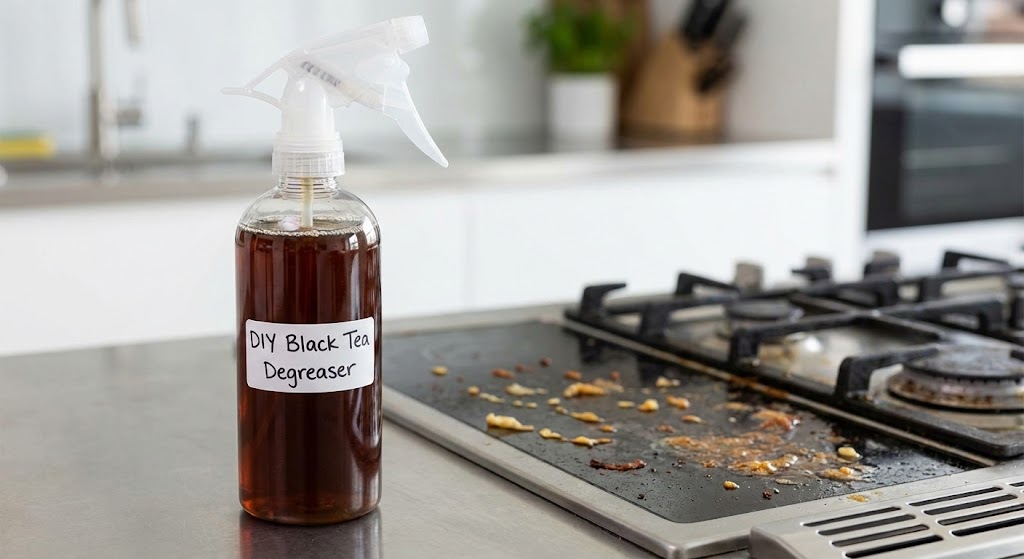
Why Tea Cuts Grease Better Than Water
Tea contains natural surfactants called saponins (triterpenoid glycosides) at 0.1-0.5% concentration. Saponins are amphiphilic molecules—hydrophobic tail binds to grease, hydrophilic head binds to water, creating emulsion that rinses away. This is the same mechanism as soap, just milder and natural. Brewed black tea is 100x weaker than dish soap but effective for light grease without chemical residue. Polyphenol chemistry from CTC processing enhances extraction.
The degreasing action: saponins reduce water surface tension from 72 to 30-40 dynes/cm, allowing water to penetrate grease films rather than beading up. The saponin molecules surround oil droplets (micelles), suspending them in water for rinsing. This works on kitchen grease (cooking oils, butter residue) but not heavy motor oil or petroleum-based grease. See chemistry fundamentals and polyphenol interactions.
DIY Tea Degreaser Spray
Brew 10 black tea bags in 500ml boiling water, steep 20 minutes. Cool completely. Transfer to spray bottle, add 2 tablespoons white vinegar (cuts hard water), 5 drops lemon essential oil (scent + extra cut). Spray on stovetop, counters, splashback. Wait 2 minutes, wipe with damp cloth. Grease lifts without scrubbing. Refrigerate 1 week.
Saponins vs Commercial Degreasers
Commercial degreasers use sodium lauryl sulfate (SLS) or sodium hydroxide (lye) at pH 11-13—strong alkaline cuts grease fast but damages skin, creates fumes, leaves residue requiring extensive rinsing. Tea saponins operate at neutral pH 6-7, gentle on skin, no fumes, minimal rinsing needed. Trade-off: tea requires 2-3 minutes contact time vs instant cut from commercial products.
Best applications: daily stovetop wipe-down (light oil splatter), countertop cleaning (food prep residue), inside microwave (steam + grease), stainless steel (leaves streak-free shine). Won't work on: oven buildup (needs alkaline cleaner), burnt-on carbon (needs abrasive), thick fryer grease (needs hot water + strong detergent).
| Surface | Grease Type | Tea Effectiveness | Contact Time | vs Chemical |
|---|---|---|---|---|
| Gas Stovetop | Light daily cooking | 90% effective | 2 minutes | Equal to mild dish soap |
| Countertops | Food prep oil | 95% effective | 1 minute | Better (no residue) |
| Microwave | Steam + grease | 80% effective | 5 minutes | Less scrubbing needed |
| Oven Glass | Baked splatter | 70% effective | 10 minutes | Weaker than oven cleaner |
| Oven Interior | Carbonized heavy | 30% ineffective | N/A | Use commercial alkaline |
Anti-Bacterial Bonus: Catechins Kill Surface Bacteria
Black tea retains 20-30% catechins (EGCG, ECG) after oxidation—these polyphenols damage bacterial cell membranes, effective against E. coli, Salmonella, Staphylococcus. Wiping counters with tea spray provides mild sanitizing alongside degreasing. Not hospital-grade, but reduces bacterial load by 60-80% in lab tests. See antimicrobial properties.
Cost analysis: Commercial degreaser £3-5 per 500ml = £0.60-1.00 per 100ml. DIY tea spray: £0.20 per 500ml (10 bags at 2p each) = £0.04 per 100ml. Tea is 15-25x cheaper with 80% effectiveness for daily maintenance. Spray lasts 1 week refrigerated. Similar economics apply to other tea-based cleaning solutions, wood polish, fabric dyeing, and odor absorption.
Comments