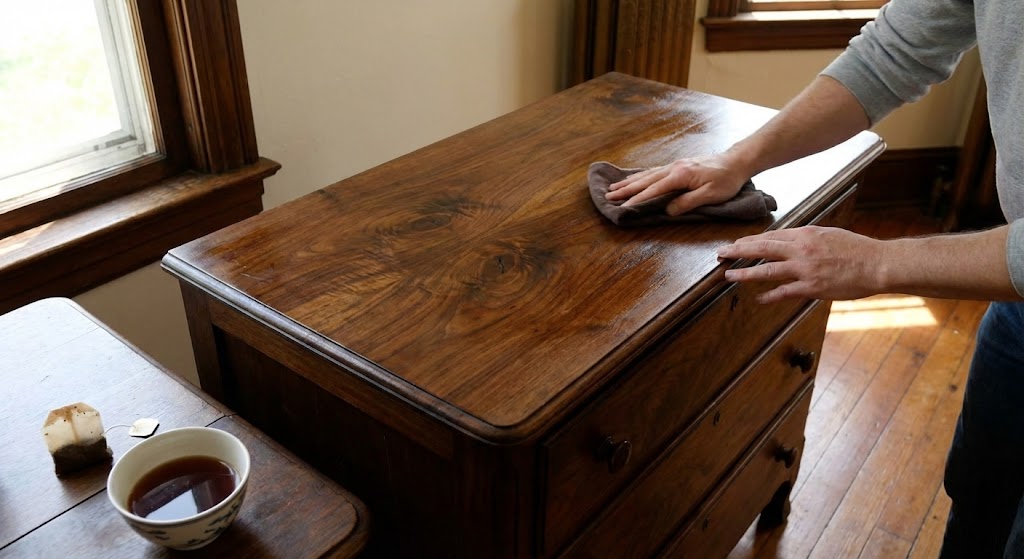
How Tea Brings Out Wood Grain
Weak black tea enhances dark wood furniture (walnut, mahogany, cherry) by depositing thin tannic acid film that darkens surface while leaving grain pattern more visible. Tannins bind to lignin (wood polymer) preferentially in denser grain areas, creating subtle contrast between light and dark wood zones. Result: deeper color, more pronounced grain figure, slight sheen from tannin coating. Similar polyphenol and chemical bonding applies to tenderizing meat.
The chemistry: lignin in wood contains phenolic groups structurally similar to tannins. When tea tannins contact wood surface, they hydrogen-bond with lignin's hydroxyl groups, creating chemical affinity for wood over ambient air. The tannin layer is molecularly thin (10-50 nanometers) but optically significant—enough to darken tone and enhance reflection without building up sticky residue.
Tea Wood Polish Method
Brew 2 black tea bags in 500ml boiling water, steep 10 minutes, cool completely. Strain into bowl (remove all particulates). Dip clean soft cloth in tea, wring until damp not dripping. Wipe wood furniture in direction of grain, covering evenly. Let dry 30 minutes. Buff with dry cloth. Repeat monthly for maintained finish. Darkens tone slightly, enhances grain. See water quality and tea storage.
Why This Works on Dark Woods, Not Light
Dark woods (walnut, mahogany, cherry, oak) already contain high tannin levels naturally—adding tea tannins is compatible, enhances existing tone. Light woods (pine, maple, birch) have low natural tannins—adding tea creates uneven splotchy darkening because tannin absorption varies by grain density. Use tea polish only on dark woods where darkening is desirable, avoid on light woods unless deliberately staining. Understanding tannin extraction and processing methods improves results.
Best wood types for tea polish: walnut (deep brown enhanced to near-black), mahogany (reddish tone enriched), cherry (develops aged patina faster), oak (grain figure emphasized). Woods to avoid: pine (turns muddy orange-brown), maple (splotches unpredictably), bamboo (modern finish resists tannin absorption), any painted/laminate surface (tannins won't penetrate modern finishes). Use Assam or Ceylon for strongest tannin content. See tea characteristics and oxidation compounds.
| Wood Type | Natural Tannin | Tea Effect | Appearance Change | Recommended |
|---|---|---|---|---|
| Walnut | Very high | Darkens 10-20% | Richer brown, pronounced grain | Yes—excellent |
| Mahogany | High | Deepens red tone | More antique appearance | Yes—excellent |
| Oak | Moderate-high | Emphasizes grain | Grain figure stands out more | Yes—good |
| Cherry | Moderate | Accelerates aging | Develops patina faster | Yes—good |
| Pine | Low | Uneven darkening | Splotchy orange-brown | No—avoid |
| Maple | Low | Unpredictable | Blotchy appearance | No—avoid |
Tea vs Commercial Wood Polish: Composition Comparison
Commercial furniture polish (Pledge, Old English, etc.) contains: mineral oil or petroleum distillates (carrier), silicone (shine), fragrance, emulsifiers. These create glossy film that sits ON wood surface vs penetrating. Tea polish contains: water (evaporates), tannic acid (bonds to wood chemically), no additives. The difference: commercial products mask wood character with artificial shine, tea enhances natural wood characteristics.
Trade-offs: Commercial polish gives instant dramatic shine, lasts 1-2 weeks, builds up residue over time requiring stripping. Tea polish gives subtle authentic appearance, requires monthly reapplication, never builds residue (tannins penetrate rather than coat). For antique furniture or natural wood enthusiasts, tea is superior. For high-gloss modern aesthetic, commercial products better.
Advanced Technique: Tea + Linseed Oil Combination
For worn/dry dark wood: wipe with tea first (tannins darken and enhance grain), let dry completely, then apply thin coat of boiled linseed oil (penetrating oil that moisturizes wood fibers). The tea provides color/grain enhancement, oil provides protection/moisture. This combination revives neglected furniture better than either treatment alone.
Application sequence is critical: tea first (water-based), then oil (oil-based). Reversing order prevents tannin penetration because oil seals surface. Let tea dry completely (30-60 minutes) before oil application. Use boiled linseed oil, not raw (raw takes weeks to dry, attracts dust). Thin oil coat buffed after 20-minute absorption gives best results.
Wood Polish Application Tips
- Test hidden area first: Try technique on furniture bottom/back to verify desired color change before visible surfaces
- Use weak tea: Over-concentration causes too-dark splotching. 2 bags/500ml maximum for polishing (vs 20+ bags for dyeing)
- Wipe with grain always: Cross-grain wiping creates visible streaks. Follow wood grain direction for even application
- Remove all dust first: Tea will lock in surface dust permanently. Clean thoroughly before applying tea
- Don't use on waxed surfaces: Wax prevents tannin penetration. Strip wax first with mineral spirits if desired
Historical Context: Victorian Tea-Based Wood Treatments
Tea wood polish isn't new—Victorian households (1850-1900) regularly used tea for furniture maintenance before commercial products existed. The technique fell out of favor post-WWII with rise of petroleum-based cleaning products marketed as "modern" and "convenient." Recent revival driven by natural/non-toxic product trend and restoration enthusiasts seeking period-appropriate methods. See British tea traditions and Victorian-era practices.
Period manuals recommend tea for: refreshing faded mahogany, reviving dull walnut, maintaining oak tables between annual waxing. The technique works because it's chemically compatible with historical furniture finishes (shellac, natural oils) unlike modern silicone products that leave incompatible residue on antiques. Understanding polyphenol chemistry reveals why tannin bonding creates such effective wood treatments. Other tea applications: glass cleaning, degreasing, rust removal.
Comments