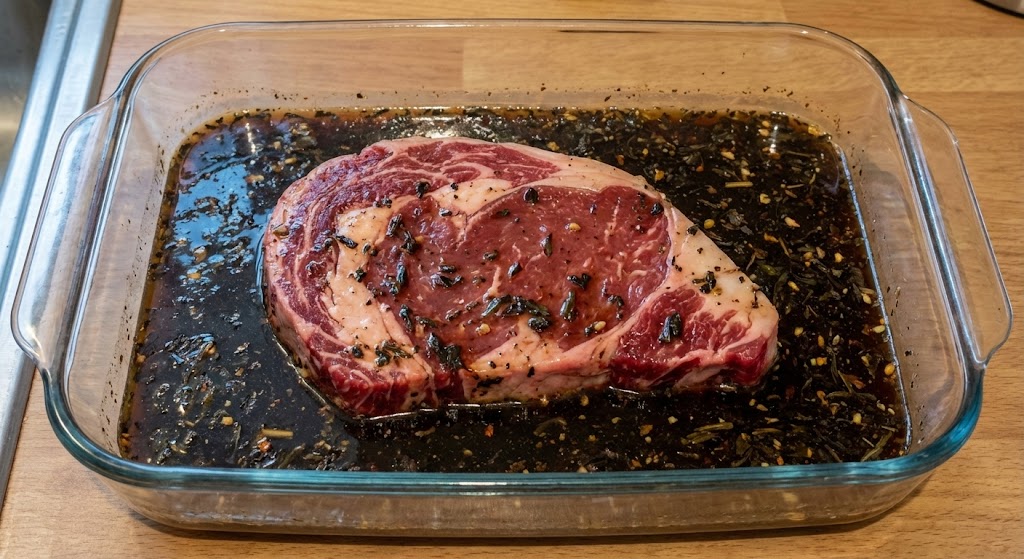
How Tannins Denature Proteins for Meat Tenderization
Cheap cuts of beef (chuck, round, brisket) are tough because dense collagen networks cross-link muscle fibers. Tannins in black tea chemically denature these proteins through hydrogen bonding—tannin molecules bind to collagen's peptide bonds, disrupting tertiary structure, partially unfolding proteins. Result: softer, more tender meat without mechanical pounding.
The tenderization mechanism: tannins (molecular weight 500-3000 Da) wedge between collagen triple helices, breaking non-covalent bonds (hydrogen bonds, Van der Waals forces). This doesn't digest collagen like enzymes (papain in papaya, bromelain in pineapple) but weakens the matrix enough to improve chewability. Maximum effect after 4-8 hour marinade at 4°C refrigeration.
Basic Tea Marinade Formula
Brew 4 black tea bags in 250ml boiling water, steep 15 minutes for maximum tannin extraction. Cool completely. Add 2 tablespoons soy sauce (salt penetrates meat), 1 tablespoon oil (carries flavors), 2 cloves crushed garlic. Submerge cheap steak (chuck/round), refrigerate 6-8 hours. Tannins tenderize, soy seasons, oil moisturizes.
Black Tea vs Green Tea for Tenderizing
Black tea contains 15-20% tannins (theaflavins, thearubigins) vs 8-12% in green tea. Higher tannin concentration = faster denaturation = better tenderization in same timeframe. Black tea marinade tenderizes in 6-8 hours; green tea requires 12-18 hours for equivalent effect. Plus black tea flavor (malty, robust) complements beef better than green's grassy notes.
| Meat Cut | Toughness Level | Tea Marinade Time | Tenderization Success | Cooking Method |
|---|---|---|---|---|
| Chuck Steak | Very tough (dense collagen) | 8-12 hours | 70-80% softer | Grill/pan-sear after marinate |
| Round Steak | Tough (lean, little fat) | 6-8 hours | 60-70% softer | Stir-fry or braise |
| Flank Steak | Medium-tough (long fibers) | 4-6 hours | 50-60% softer | Grill hot & fast, slice against grain |
| Brisket | Very tough (needs long cook) | 12-24 hours | 40-50% softer (pre-braise) | Slow cook/smoke after |
| Ribeye/Tenderloin | Already tender | 0-2 hours (flavor only) | Unnecessary | Grill as-is, no marinade needed |
The Science of "Over-Tenderizing"
Marinades over 24 hours cause mushy texture—excessive tannin penetration denatures proteins TOO much, turning firm texture into paste-like consistency. The collagen matrix breaks down completely, muscle fibers fall apart, meat loses structural integrity. Commercial marinades say "max 12 hours"—longer isn't better, it's destructive. This oxidation chemistry principle applies broadly.
Enzymatic vs tannin tenderizers: Enzymes (papain, bromelain) digest collagen by cleaving peptide bonds—literally breaking proteins into fragments. Aggressive, fast (2-4 hours), risky (easy to over-tenderize to mush). Tannins denature without digesting—weaken structure but maintain integrity. Slower (6-12 hours), gentler, harder to ruin meat. Tea is more forgiving for home cooks.
Flavor pairing: Assam (malty, robust) best for beef. Ceylon (bright, citrus) good for pork. Lapsang Souchong (smoky) excellent for brisket/ribs. Explore smoking tea for enhanced depth or tea chemistry to understand tannin extraction for marinades. Similar pairing principles and British culinary tradition inform tannin applications.
Comments