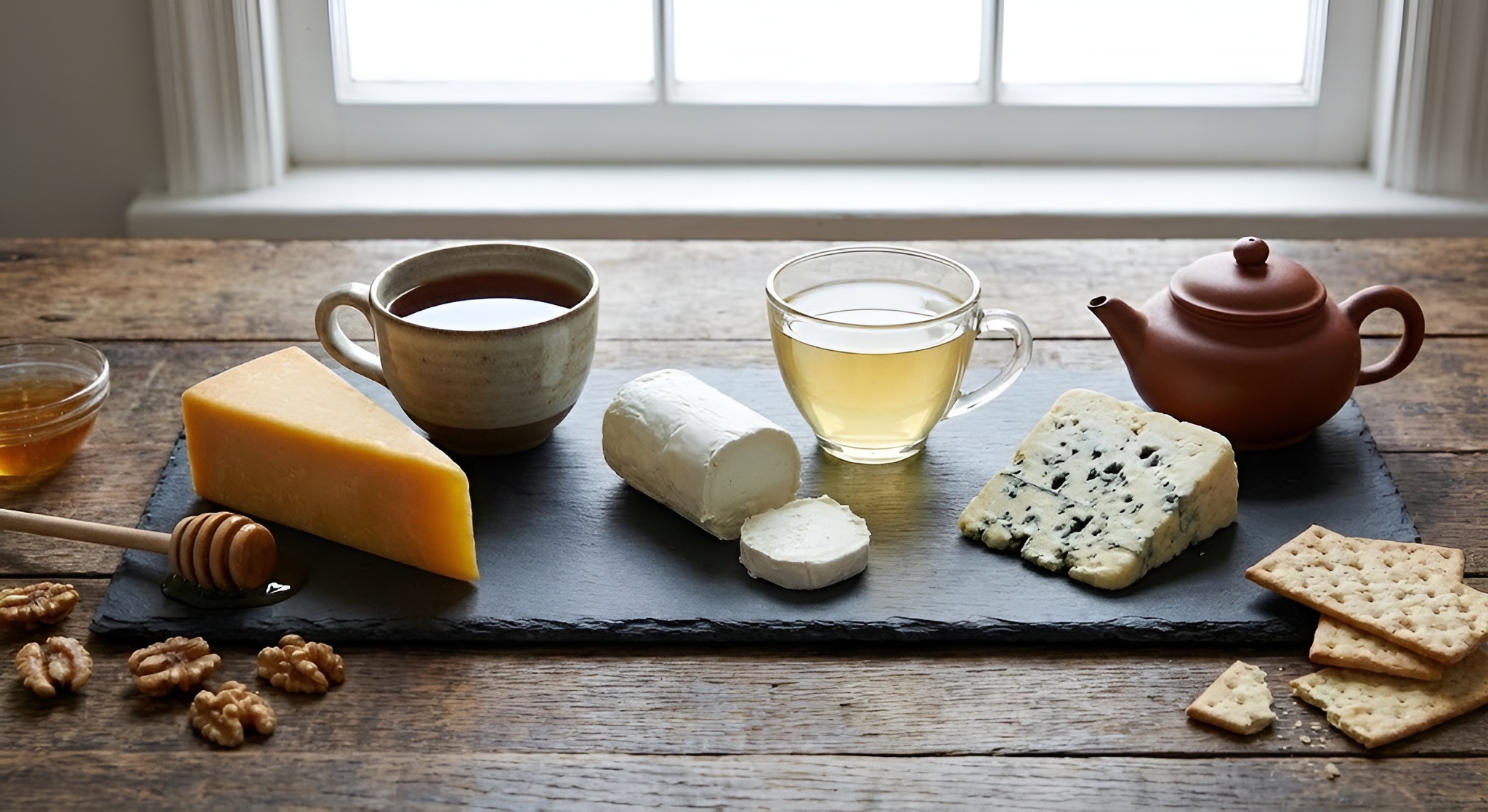
Why Tea Beats Wine: The Science of Interaction
Sommeliers love wine and cheese because of the interaction between tannins (astringency) and fat/protein. Tea does this too, but it brings two extra weapons to the table: Heat and Variety.
1. The Melting Point
Most cheese fats are solid at room temperature. When you drink cold white wine with Brie, the fat can sometimes form a waxy coating in your mouth. Hot tea (served at 60-90°C) melts this fat instantly. It turns the cheese into a creamy emulsion, allowing the volatile flavor compounds to travel up to your nose (Retro-nasal Olfaction). Read more about flavor perception here.
2. The Tannin Scrub
Cheese is rich in Casein protein. Tea is rich in Polyphenols (Tannins). Chemically, tannins love to bind with proteins. When you sip tea after a bite of cheese, the tannins grab onto the lingering cheese proteins and strip them from your tongue. This "scrubbing" effect resets your palate, making the next bite of cheese taste just as impactful as the first. This prevents "palate fatigue." Learn more about Tannins here.
Pairing by Cheese Category
Just as you wouldn't pair a light Pinot Grigio with a heavy steak, you can't pair a delicate White Tea with a stinky Blue cheese. You must match the "weight" and intensity.
1. Fresh & Bloomy Rind (Mozzarella, Brie, Camembert)
Profile: Creamy, milky, grassy, sometimes mushroomy. High moisture, lower salt.
The Challenge: These cheeses are delicate. A strong black tea would crush them.
The Pairing: Sencha (Green Tea) or White Peony.
Why: Sencha has a grassy, vegetal profile that mirrors the "grass-fed" notes in fresh dairy. The slight astringency cuts through the creaminess of Brie without overpowering the mushroom rind notes.
2. Hard & Aged (Cheddar, Comté, Manchego)
Profile: Dense, salty, crystalline, nutty, caramelized.
The Challenge: High salt and intense Umami. You need a tea with backbone.
The Pairing: Roasted Oolong (Da Hong Pao) or Assam Black Tea.
Why: Aged cheeses have nutty, caramel notes. Roasted Oolongs share this profile (toasted, woody, mineral). The heavy tannins in Assam stand up to the salt and fat of a sharp Cheddar, creating a savory/malty harmony.
3. The Umami Bomb: Parmesan & Gyokuro
This is a pairing for the adventurous. Parmesan is pure Umami (glutamates). Gyokuro is the highest grade of Japanese green tea, known for its savory, broth-like broth.
The Result: When combined, the amino acids in the tea and the cheese amplify each other. It tastes less like "Tea and Cheese" and more like a rich, savory soup. Learn the science of Umami here.
4. Blue Cheese (Stilton, Roquefort, Gorgonzola)
Profile: Pungent, salty, metallic, spicy mold.
The Challenge: Blue cheese is aggressive. It destroys delicate flavors. You need a tea that is sweet and heavy to balance the salt.
The Pairing: Shou Pu-erh.
Why: Ripe (Shou) Pu-erh is fermented, earthy, and naturally sweet with a thick body. It is one of the few teas that can stand toe-to-toe with Blue Cheese. The microbial fermentation in the tea complements the mold fermentation in the cheese.
The Digestive Aid
In France, it is common to end a meal with a cheese course. Pairing this with Pu-erh is not just tasty; it is medicinal. Pu-erh tea has been shown to aid in the digestion of fats (lipolysis), making you feel less heavy after a rich cheese board. Read about Pu-erh and Fat Digestion.
5. Goat Cheese (Chèvre)
Profile: Tart, acidic, chalky, animalistic (goaty).
The Pairing: First Flush Darjeeling.
Why: You need acidity to match acidity. The crisp, floral, citrusy notes of a spring Darjeeling mirror the tartness of the goat cheese. A heavy black tea would make the goat cheese taste sour and metallic.
6. Washed Rind (Epoisses, Taleggio - "Stinky Cheese")
Profile: Funky, meaty, yeasty, sticky.
The Pairing: Lapsang Souchong.
Why: Smoky tea pairs with "meaty" flavors. The pine-smoke of Lapsang cuts through the barnyard funk of washed-rind cheeses, creating a pairing reminiscent of smoked ham and cheese.
How to Host a Tea & Cheese Tasting
Want to impress guests? Ditch the wine board and try a tea board.
- Temperature: Serve the tea hot, but not scalding (around 70-80°C). If it is boiling, it might numb the tongue.
- Progression: Start light (Goat/Brie with Green/White Tea) and move to dark (Cheddar/Blue with Oolong/Pu-erh).
- The Method: Take a bite of cheese. Chew it until it coats your mouth. Take a sip of hot tea. Let them mingle. Notice how the tea melts the cheese and changes the flavor profile.
Summary Cheat Sheet
| Cheese Type | Example | Ideal Tea Pairing | Why It Works |
|---|---|---|---|
| Fresh / Goat | Chèvre, Feta | First Flush Darjeeling | Citrus notes match acidity. |
| Bloomy Rind | Brie, Camembert | Sencha, White Peony | Grassiness matches cream. |
| Hard / Aged | Cheddar, Gouda | Assam, Roasted Oolong | Tannins cut fat; Nutty notes align. |
| Blue | Stilton, Roquefort | Shou Pu-erh | Earthy sweetness balances salt. |
| Washed Rind | Taleggio | Lapsang Souchong | Smoke complements funk. |
Try "Tea-Washed" Cheese
Some artisan cheesemakers are now washing their cheese rinds in tea instead of brine or alcohol. If you can find a tea-washed cheese, pair it with the same tea used in the washing process for a perfect echo.
Comments