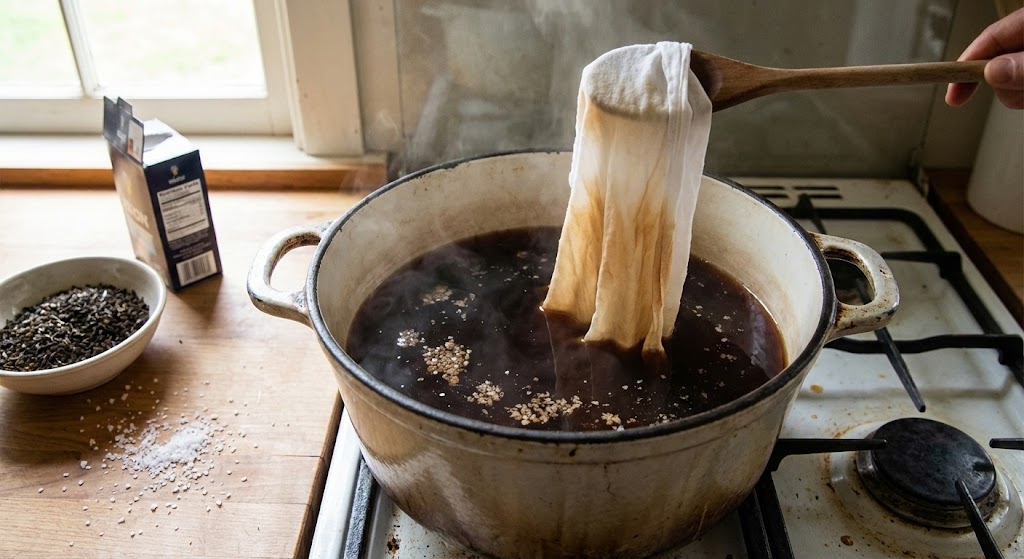
How Tea Dyes Cotton to Vintage Beige
White cotton fabric dyed with black tea turns warm beige-tan ("antique" color) because tea tannins (brown pigments: theaflavins, thearubigins) bind to cellulose fibers through hydrogen bonding. The color is semi-permanent with salt fixative—wash-resistant to 30-40 cycles before significant fading. Creates aged/vintage aesthetic for crafts, costumes, quilting. Similar bonding chemistry applies to glass cleaning, wood finishing, and meat tenderizing.
The dyeing chemistry: tannins are polyphenolic compounds with multiple hydroxyl (-OH) groups that form hydrogen bonds with cotton cellulose's hydroxyl groups. These bonds survive gentle washing (cold water, mild detergent) but break down under harsh conditions (hot water, bleach, sunlight). Adding salt during dyeing creates ionic bridge that strengthens tannin-cellulose bond, improving color fastness from 10-15 washes (no salt) to 30-40 washes (with salt). See chemistry fundamentals and astringent properties.
Basic Tea Fabric Dye Method
Boil 20-30 black tea bags in 4 liters water for 30 minutes—creates concentrated tannin bath. Remove bags, add 4 tablespoons salt (fixative), stir until dissolved. Submerge pre-washed white cotton fabric, simmer 1 hour stirring occasionally. Remove, rinse cold water until runs clear, hang dry. Result: vintage beige, depth depends on tea concentration.
Color Depth Control: Tea Concentration vs Time
Light beige (barely-aged look): 10 tea bags/4L water, 30 minute soak. Medium tan (aged 50 years): 20 bags/4L, 1 hour simmer. Dark brown (100+ year aged): 40 bags/4L, 2 hour simmer. Color continues developing for 24 hours after dyeing as tannins fully bond—fabric darkens 10-20% during drying. Test small swatch first to preview final color. Different tea varieties create unique color tones via oxidation levels.
| Fabric Type | Tea Bags per 4L | Simmer Time | Final Color | Wash Fastness |
|---|---|---|---|---|
| Quilting Cotton | 20 bags | 1 hour | Medium tan | 30-40 washes (with salt) |
| Muslin/Cheesecloth | 15 bags | 45 minutes | Light-medium beige | 25-35 washes |
| Canvas/Duck Cloth | 30 bags | 1.5 hours | Medium tan (resists dyeing) | 35-45 washes (dense weave) |
| Linen | 20 bags | 1 hour | Warmer beige (yellow undertone) | 25-30 washes |
| Synthetic (Polyester) | Any amount | Any time | Won't dye (no cellulose) | N/A—incompatible |
Salt Fixative Chemistry
Salt (sodium chloride) improves tannin bonding through ionic interaction. In water, salt dissociates to Na⁺ and Cl⁻ ions creating electrostatic bridge between negatively-charged tannin molecules and cellulose hydroxyl groups, essentially "gluing" tannin more tightly to fabric. Result: tannins resist washing away during laundering.
Optimal salt concentration: 1 tablespoon per liter dye bath (4 tablespoons per 4L). More salt doesn't improve fixation beyond this. Less salt yields weaker bonds and faster fading (15-20 washes instead of 30-40). Cost comparison: Commercial fabric dye £5-7 per packet dyes ~500g fabric. Tea dyeing: £0.60 for 30 bags dyes 1kg+ fabric. Tea is 8-10x cheaper for vintage aesthetic. The same Victorian-era tannin chemistry also applies to wood staining, degreasing, and rust conversion. After use, compost bags if biodegradable.
Comments