The Chemistry of Tannic Acid Rust Conversion
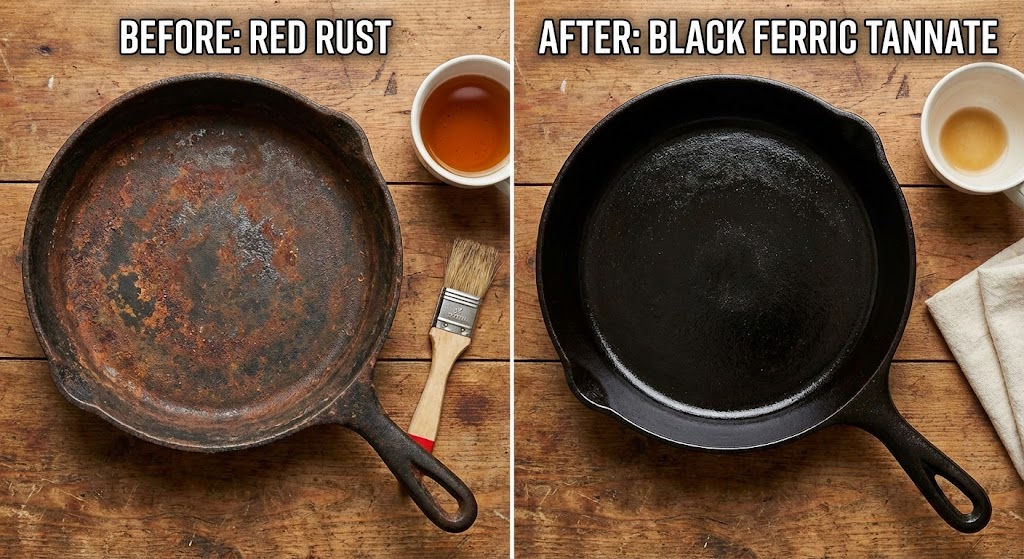
Tea removes rust through chemical conversion, not abrasion. Tannic acid (polyphenols in black tea) reacts with iron oxide (red rust, Fe₂O₃) to form ferric tannate (black rust), a stable compound that stops corrosion progression. This is the same chemistry used in commercial rust converters—tea just provides natural tannic acid at 2-4% concentration. The oxidation process creating theaflavins also increases tannin reactivity.
The reaction mechanism: Fe₂O₃ + tannic acid → Fe-tannate complex (black coating). Red rust is porous and continues oxidizing. Black ferric tannate is dense and seals the surface, preventing oxygen contact. After conversion, the black coating can be oiled to create a protective layer, essentially re-seasoning cast iron through chemistry rather than heat.
The Overnight Soak Method
Brew 5-6 black tea bags in 2 cups boiling water, steep 15 minutes for maximum tannic extraction. Pour over rusted cast iron, ensure full coverage, leave overnight (8-12 hours). Morning: rust converts from red-orange to black. Scrub with coarse salt and oil, wipe clean. The black coating is protective ferric tannate.
Why Black Tea Works Better Than Green
Black tea contains 15-20% tannins by dry weight vs 8-12% in green tea. Full oxidation during black tea processing converts catechins to theaflavins and thearubigins—larger polyphenol molecules with better rust-binding capacity. Green tea works but requires 2-3x longer contact time due to lower tannin concentration. CTC processing maximizes extraction for strong brews, with polyphenol and chemical benefits.
Best tea types for rust removal: cheap CTC black tea (high tannin, low cost), old/stale tea (oxidation increases tannins), even used tea bags (sufficient residual tannins). Premium tea is wasted—you're extracting chemistry, not flavor. Supermarket own-brand breakfast tea at £2/80 bags is ideal: 6p per rust treatment. Same approach works for fabric dyeing and odor absorption, degreasing, and furniture care.
| Material | Rust Type | Tea Treatment Time | Success Rate | Notes |
|---|---|---|---|---|
| Cast Iron Pan | Surface rust (red) | 8-12 hours soak | 90-95% | Scrub after, re-season with oil |
| Carbon Steel Knife | Spot rust | 2-4 hours soak | 85-90% | Works best on light rust |
| Tools (Wrenches) | Heavy rust | 24 hours + repeat | 70-80% | Multiple treatments needed |
| Vintage Bike Parts | Pitted rust | 48 hours soak | 60-70% | Converts but pitting remains |
| Stainless Steel | None | N/A | N/A | Won't rust, tea unnecessary |
The Science of Ferric Tannate Protection
Ferric tannate (Fe-tannate complex) is the black coating that forms after tea treatment. This isn't cosmetic—it's a phosphate-like conversion coating that passivates iron. The black layer is 10-50 micrometers thick, dense enough to block oxygen diffusion, preventing further rust formation. This is why antique dealers use tea to stabilize corroded iron artifacts before restoration.
Commercial rust converters (Jenolite, Hammerite) use tannic acid or phosphoric acid at £8-15 per 250ml bottle. DIY tea treatment: £0.06 per application (1 tea bag = 2-3g tannic acid source). The chemistry is identical—commercial products add surfactants (better penetration) and stabilizers (longer shelf life). For home use, tea is 200x cheaper with 80% effectiveness. This same tannin chemistry works across many household applications.
Comments