1. The Certification Jungle: Who Can You Trust?
Consumers are drowning in logos. Every box claims to be "Ethical," "Sustainable," or "Conscious." But these words have very specific, often limited legal definitions.
Fair Trade: This is an economic certification. Its primary mechanism is a Minimum Price Floor. If the global market price for tea crashes (which happens often), Fair Trade buyers guarantee a minimum payment to the cooperative. It protects against bankruptcy, but it doesn't guarantee prosperity.
Rainforest Alliance (The Frog): This is primarily an environmental certification. It ensures farmers aren't chopping down virgin rainforest or using banned pesticides. While it has labor standards, a farm can be Rainforest Alliance certified while paying the legal minimum wage—which in many countries is below the poverty line.
Organic: This refers to the soil, not the worker. You can have a 100% Organic tea garden that uses forced labor. Do not confuse "Natural" with "Ethical."
We break down the nuance of every major label in our Label Wars Guide.
Expert Tip: The "Mass Balance" Loophole
Did you know that "Fair Trade" tea bags might not contain 100% Fair Trade tea? Under "Mass Balance" rules, companies can mix certified and non-certified leaves as long as they buy the equivalent amount of credits. It's like green energy credits for the grid. Read more about Mass Balance here.
2. The Economics of £5: Why Farmers Stay Poor
Tea is heavy, bulky, and cheap. This physical reality dictates the economics. When you buy a box of tea bags in the UK or US, the vast majority of your money pays for things that happen after the tea leaves the farm.
- Retailer Margin (Supermarket): ~30-35%
- Brand Marketing & Packaging: ~25%
- Logistics (Shipping/Warehousing): ~15%
- Taxes (VAT/Duty): ~5-20%
- The Tea Itself (FOB Price): ~5-10%
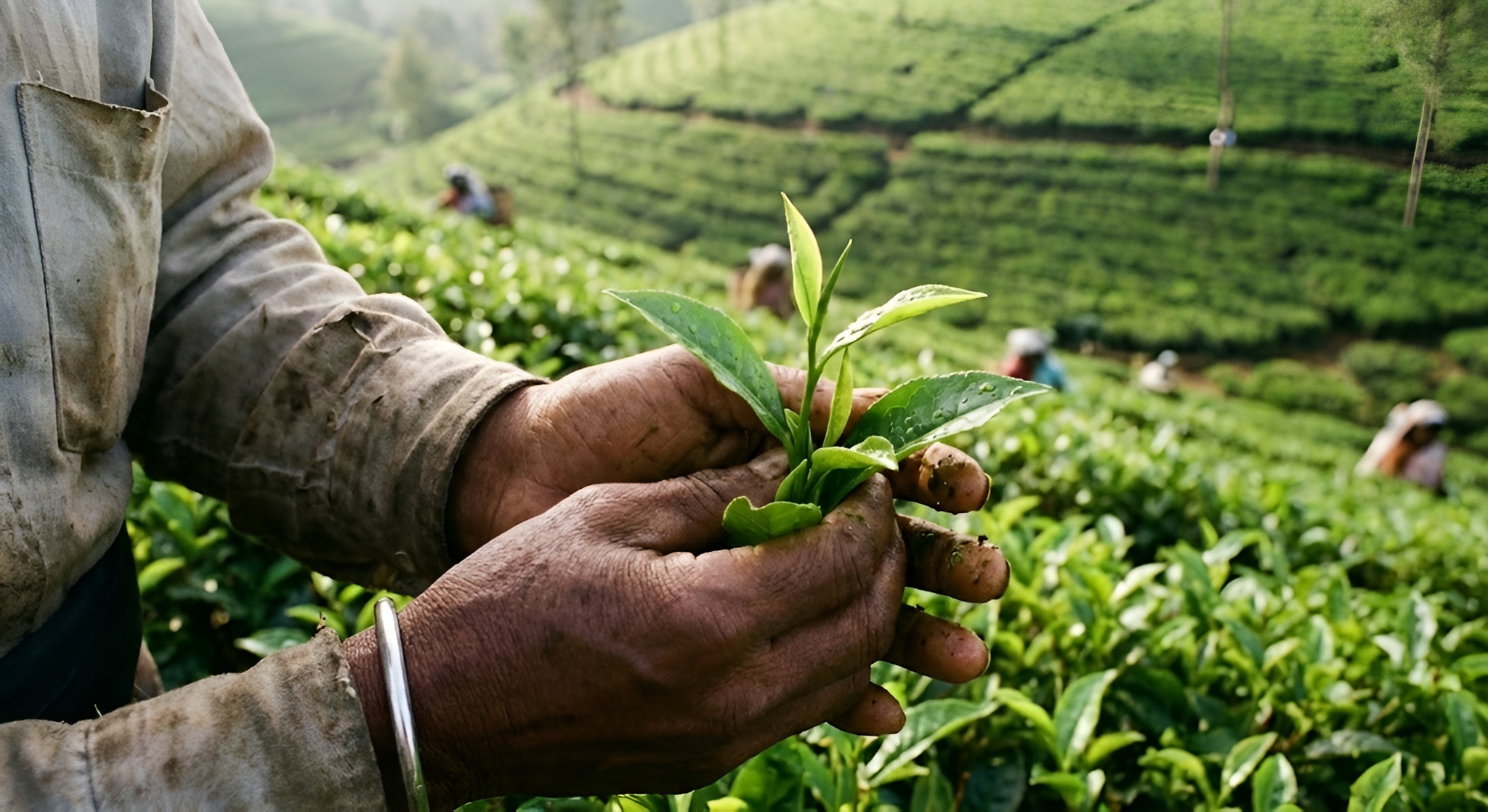
Out of that last 10%, the estate owner takes a cut, the factory takes a cut, and the picker—the person doing the backbreaking work—receives pennies. In Malawi, pickers are often paid by the kilogram, incentivizing speed over quality. In Darjeeling, the "Gi Brand" status commands higher prices, but political unrest and climate change are squeezing margins.
We visualize this breakdown in our viral report: The Cost of a Cup: Follow the Money.
3. The "Direct Trade" Revolution
If the supply chain is the problem, is "Direct Trade" the solution? Small, artisan tea vendors (like those dealing in Single Origin teas) often fly to China or Taiwan, meet the farmer, and buy the tea directly. This cuts out the auctions, the brokers, and the blenders.
The Pros: The farmer sets the price (Price Maker vs. Price Taker). The quality is higher because the farmer is rewarded for craftsmanship, not just yield.
The Cons: It creates an "Elite" market. Direct Trade works for $50/kg Oolong, but it doesn't scale for the $5/kg breakfast tea that 90% of the world drinks. We explore the limits of this model in Direct Trade vs. Fair Trade.
4. Greenwashing vs. Impact
Corporations know you care. That's why they paint their boxes green. But some companies are putting their profits where their mouth is.
Vahdam Teas: Based in India, they cut out the colonial middlemen and ship fresh from source, retaining revenue in the country of origin.
Rare Tea Lady: Advocates for direct relationships and transparency in ingredients.
Tea Leaf Trust: A charity specifically supporting the education of tea communities in Sri Lanka.
We have vetted the market to find brands that offer transparency, not just slogans. See our Review of Ethical Tea Brands.
Take Action: Drink Better
The easiest way to change the industry is to change what you buy. Switch from commodity tea bags to Single Estate loose leaf. You drink less microplastic, taste better tea, and pay the farmer for quality.
Switch to Loose Leaf
Comments