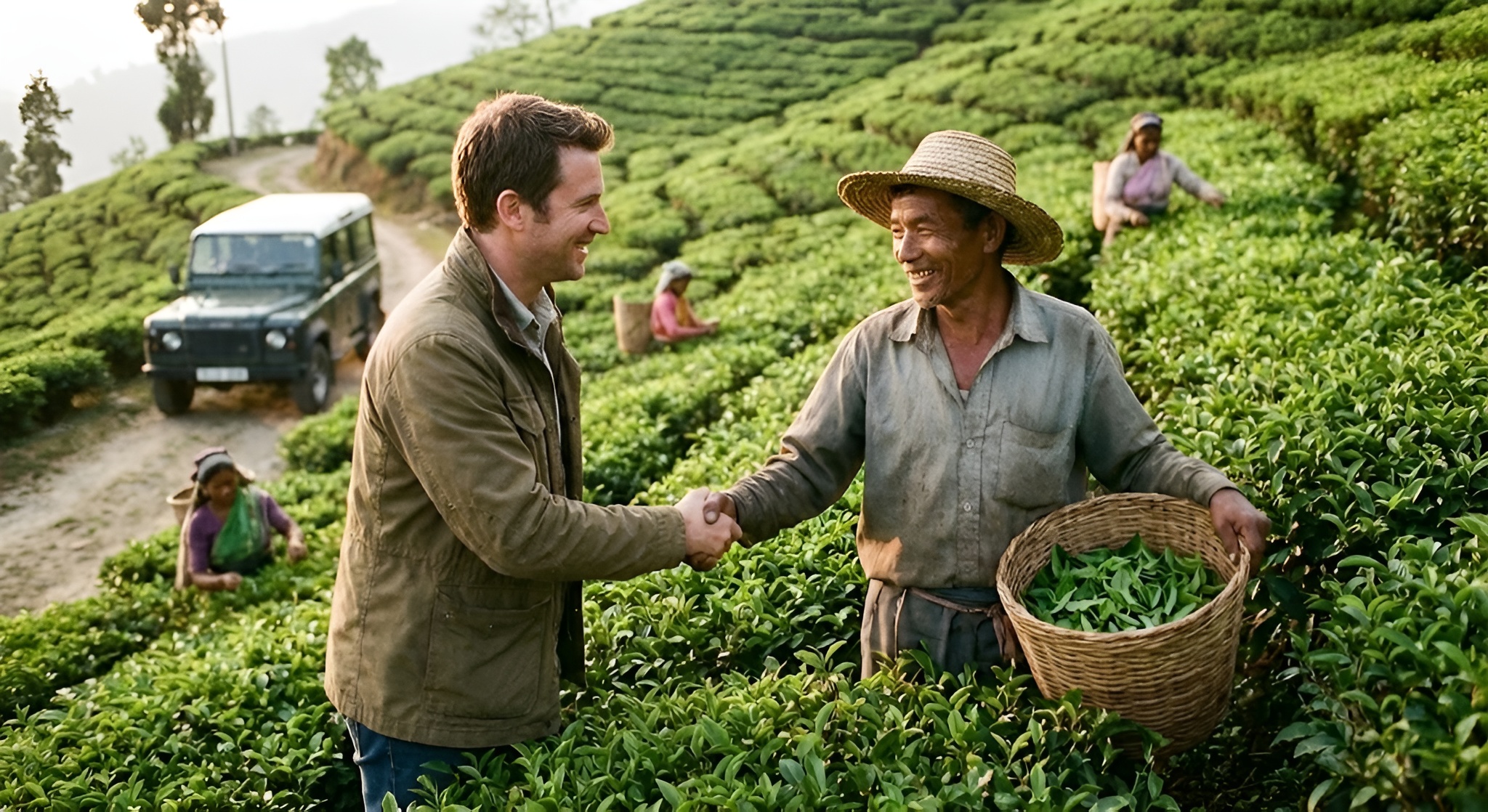
1. What is Direct Trade? (The Ideal vs. The Reality)
The Ideal: A tea company (usually a specialist or boutique brand) establishes a long-term relationship with a specific estate or smallholder coop. They negotiate a price based on quality, usually significantly higher than the commodity market price. The money goes directly to the producer.
The Reality: "Direct" is a spectrum.
1. True Direct: The buyer visits the farm annually, tastes the harvest, and wires money to the farmer's bank account. This is common in high-end Taiwanese Oolong or Pu-erh markets.
2. Remote Direct: The buyer communicates via WeChat/WhatsApp with the farmer but uses a local export agent to handle the paperwork and shipping. This is still "Direct" in spirit, as the relationship is personal.
3. "Direct" Marketing: A brand buys tea from a large wholesaler in Germany who bought it from an agent in China who bought it from the farm. The brand calls it "Direct" because they know the name of the farm. This is Greenwashing.
Expert Tip: The "Relationship Coffee" Model
The tea industry is borrowing heavily from the "Third Wave Coffee" movement. In coffee, Direct Trade is about "Relationship Coffee"—investing in a farm's infrastructure (new drying tables, better irrigation) to improve quality next year. If a tea brand isn't investing in the farm's future, they are just a customer, not a partner.
2. Comparison: Fair Trade vs. Direct Trade
These two models solve different problems for different types of farmers.
| Feature | Fair Trade (Certification) | Direct Trade (Philosophy) |
|---|---|---|
| Primary Goal | Poverty alleviation & Price Floor | Quality Maximization & Relationship |
| Target Farmer | Commodity producers (CTC, Tea Bags) | Artisan producers (Loose Leaf, Orthodox) |
| Price Determination | Minimum Price + Social Premium | Negotiated based on Quality (Cupping Score) |
| Regulation | Audited by Third Party (FLOCERT) | Self-Regulated (Trust based) |
| Cost to Farmer | High (Certification Fees) | Low (No fees, just samples) |
The Verdict: Fair Trade is a safety net. Direct Trade is a ladder to wealth. Fair Trade keeps you from starving; Direct Trade can make you middle class—if you have the skill to produce premium tea.
3. In Defense of the Middleman
It is popular to demonize the "Middleman" as a leech. But in the Supply Chain, a good middleman (or "Aggregator") provides essential services that a small farmer cannot afford.
- Cash Flow: Farmers need money now to pay pickers. A middleman often pays cash on pickup. A Direct Trade buyer might pay net-30 or net-60 days after delivery.
- Risk: If a shipping container falls off a boat or gets rejected by customs for pesticide residue, who takes the loss? Usually the exporter/middleman. In Direct Trade, if the shipment fails, the farmer might not get paid.
- Logistics: A farmer in a remote village in Yunnan does not have an export license or a FedEx account. They need someone to consolidate their 50kg of tea into a 10-ton container to make shipping affordable.
The Ethical Middleman: The goal isn't to kill the middleman; it's to find transparent middlemen who add value rather than just extracting profit. Brands like Teabox or Vahdam act as "Source-Based Aggregators," keeping the value-add within India rather than London.
Expert Tip: "Ethically Sourced" is Meaningless
If you see "Ethically Sourced" on a box without a logo (Fair Trade/Rainforest) or a specific story about a farm, it is a marketing term with zero legal weight. It usually just means "we bought it from a legal supplier." Always look for specifics: Which estate? What project?
4. How to Spot Fake Direct Trade
Since anyone can say "Direct Trade," you need to be a detective. Here are the green flags to look for:
- Specific Origin: Does the label say "Yunnan Black Tea" (Vague) or "Fengqing Village, Mr. Li's Farm, Spring 2025 Harvest" (Specific)? The more detail, the more likely the relationship is real.
- Transparency Reports: The best brands publish annual reports showing the FOB (Free On Board) price they paid vs. the market price.
- Photos of the Buyer: Look at the "About Us" page. Do you see the founder actually standing in the tea field with the farmer? Or are they stock photos of smiling pickers?
- Seasonality: Direct Trade tea runs out. If a brand has unlimited stock of a "Single Estate" tea year-round, year after year, they are likely blending from multiple sources.
Expert Tip: The "Single Origin" Connection
Direct Trade almost always implies Single Origin. Blends (like English Breakfast) are by definition a mix of many farms, making direct relationships impossible to maintain for every ingredient. If you want ethical transparency, buy unblended tea.
See the Brands We Trust
We've vetted the market to find the tea companies that truly practice Direct Trade, paying farmers 3-5x the commodity price.
See Ethical Brand Reviews
Comments