1. The Supermarket Tax (35%+)
The single biggest chunk of your money stays right in your neighborhood. Supermarkets operate on margins. For a "Premium" product like ethical tea, they often charge a listing fee just to put it on the shelf, plus a margin of 30-40%.
Why? Real estate. Shelf space is expensive. A box of tea is bulky but light. It takes up volume that could be used for higher-turnover items. Therefore, the tea brand must pay a premium to be there. This money pays for the store's rent, staff, electricity, and profit. It never leaves the country.
Expert Tip: Buy Direct
When you buy directly from a brand's website (DTC), you cut out the supermarket margin. While shipping costs eat some of this, more of the profit margin remains with the tea company, theoretically allowing them to pay farmers more (if they are ethical). See our list of Direct-to-Consumer Brands.
2. Brand & Packaging (30%)
The next biggest cost is the box itself.
1. Materials: A high-quality cardboard box, foil freshness wrappers, and PLA (cornstarch) pyramid bags cost money. Often, the packaging costs more than the tea inside it.
2. Marketing: TV ads, social media, and that beautiful graphic design all cost millions.
3. Profit: The brand needs to make a profit to survive.
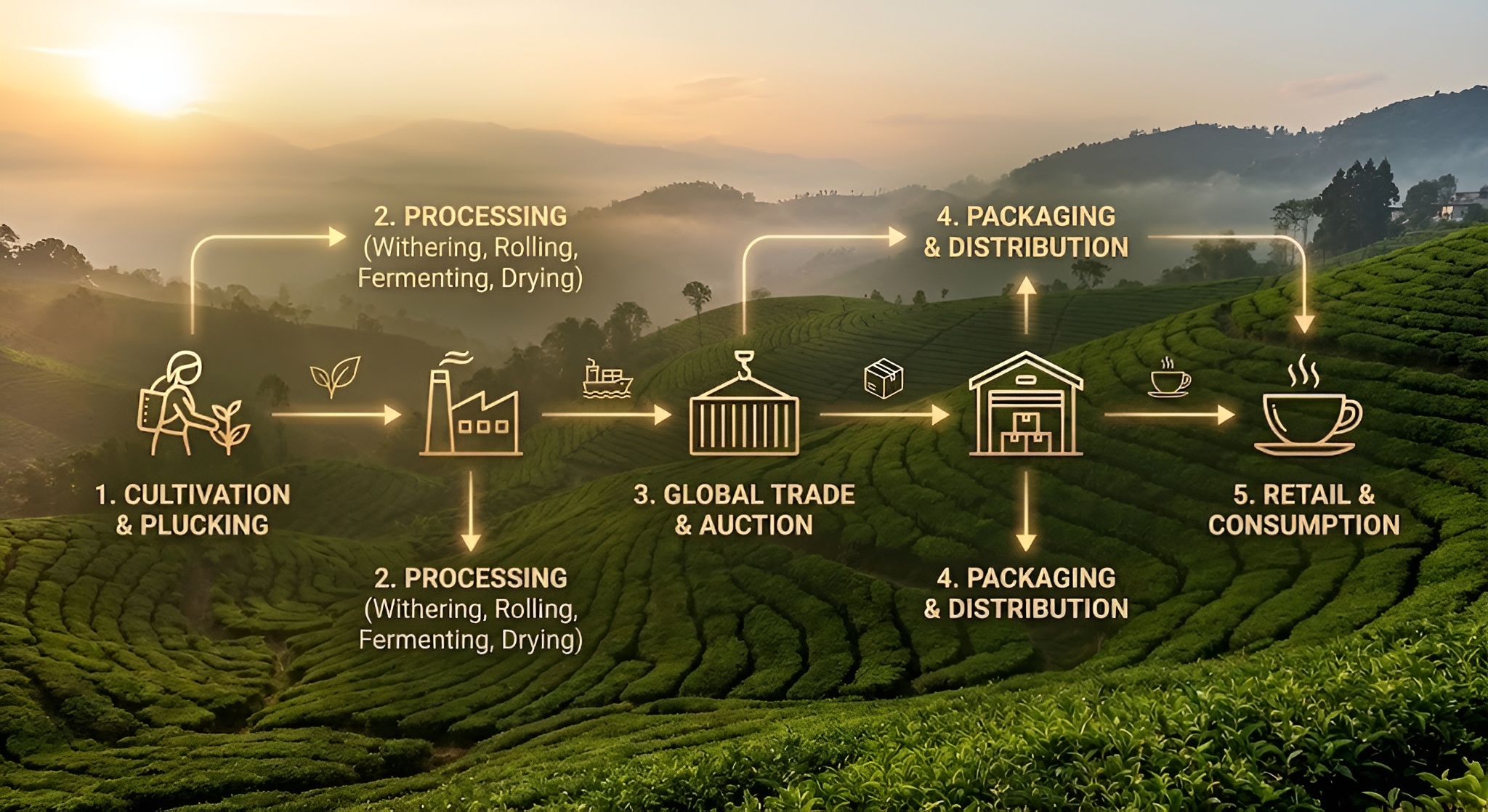
This stage is where the "Value Add" happens. A kilo of bulk tea might cost $3 at auction. Once bagged and boxed, that same kilo is sold for $40+ (in retail units). This wealth creation happens in the consuming country (UK/USA), meaning the origin country (India/Kenya) misses out on the economic boom.
3. Logistics & Taxes (20%)
Tea is an agricultural product that must move thousands of miles.
1. Shipping: Containers from Kolkata or Mombasa to Felixstowe or New Jersey.
2. Warehousing: Storing the tea in climate-controlled environments to prevent mold.
3. Taxes: Import duties, VAT, and corporate taxes.
This is the "invisible cost" of global trade. It is unavoidable unless you live next to a tea farm.
4. The Farmer's Share (1-5%)
This is the tragedy. After everyone else has taken their cut, what is left for the producer?
The "FOB Price" (Free On Board) is the price paid to put the tea on the ship. This price has to cover:
- The Estate Owner's profit.
- The Factory processing costs (electricity/fuel for drying).
- The Manager's salary.
- The Picker's wage.
In Assam, the daily wage for a tea picker is often mandated by law but remains incredibly low (around £2-£3 per day). Even with "Fair Trade" premiums, the structural economics of the auction system keep raw material prices depressed. A "good" price at auction might be $4/kg. That's 0.4 cents per gram.
Expert Tip: The Quality Multiplier
The only way for a farmer to escape this trap is to produce High Quality (Orthodox) Tea. Commodity CTC tea sells for $3/kg. Handmade, artisan loose leaf can sell for $50-$200/kg. By switching to quality over quantity, the farmer creates a product that bypasses the auction system entirely. This is the premise of Direct Trade.
Support the Change
We have identified 5 brands that break this cycle by paying significantly above the auction price or owning their own supply chain.
See Ethical Brand Reviews
Comments