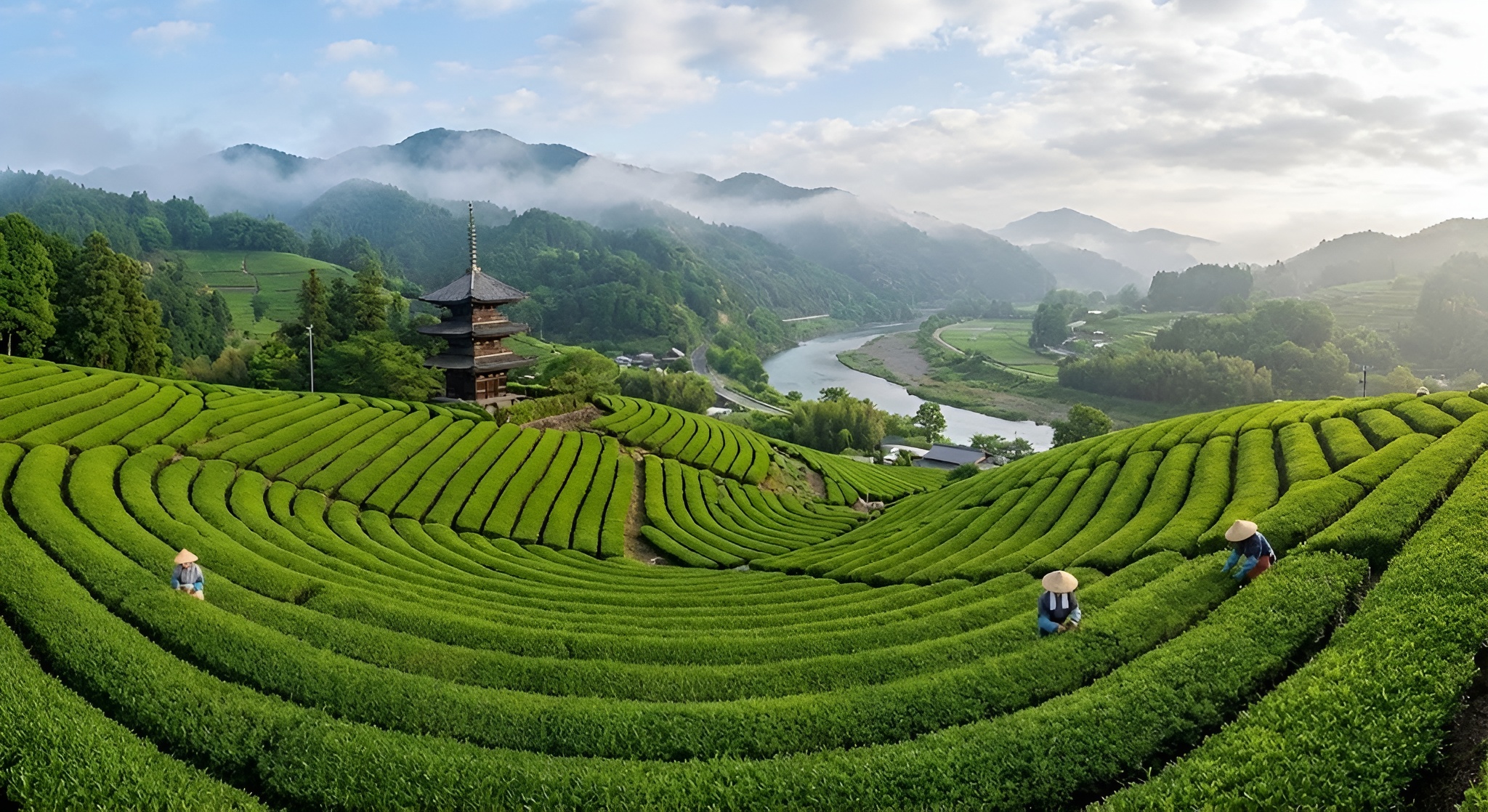
1. History: The Shogun's Choice
The story of Uji tea begins in the Kamakura Period (1185–1333). The Zen monk Eisai, famous for bringing Zen Buddhism to Japan, returned from China with tea seeds. He gave these seeds to the High Priest Myoe of Kozan-ji Temple in Toganoo (Kyoto). Myoe was looking for a suitable location to cultivate the plants, as Toganoo was often too cold.
Myoe rode his horse south to Uji and recognized that the misty climate and well-drained soil along the Uji River were perfect for the Camellia sinensis plant. He taught the locals how to sow the seeds. The experiment was a spectacular success. By the time of the Ashikaga Shogunate (14th century), Uji tea was recognized as superior to all others (Honcha), while tea from other regions was considered "Non-tea" (Hicha).
Shogun Ashikaga Yoshimitsu was so impressed that he established the "Seven Famous Tea Gardens of Uji" (Uji Shichimeien). These gardens became legendary, producing the tea used in the developing Chanoyu (Tea Ceremony). Today, only one of these original seven gardens—the Okunoyama garden—still exists near Byodo-in Temple, maintained by the Horii Shichimeien company.
The Tea Jar Procession (Chatsubo Dochu)
During the Edo period, Uji tea was so revered that it was transported to the Shogun in Edo (Tokyo) in a formal procession called Chatsubo Dochu (Tea Jar Journey). The jars of tea were given the same status as a high-ranking Daimyo (feudal lord). If commoners encountered the tea jars on the road, they had to clear the path and bow down to them. This ritual solidified Uji's reputation as the "Tea of the Emperors."
2. The Terroir: Mist and River
What makes Uji taste different from Shizuoka or Kagoshima? It is the microclimate. Uji is a basin surrounded by mountains, with the mighty Uji River cutting through the center. The geology here is an alluvial fan, meaning the soil is sediment washed down from the mountains over millennia.
The Mist Effect (Kawa-giri): The temperature difference between day and night in the basin causes heavy fog to rise from the river in the mornings. This fog acts as a natural sunscreen. It diffuses the sunlight, slowing down photosynthesis. When the tea plant receives less light, it produces more chlorophyll (turning a deeper green) and retains more L-Theanine (amino acids), rather than converting them into bitter catechins. This natural phenomenon is why Uji tea is inherently sweeter and greener than teas grown in full coastal sun.
The Soil: The soil in Uji is well-aerated but rich in minerals. Unlike the volcanic ash soils of southern Kyushu, Uji soil requires the roots to work harder, growing deep to find nutrients. This struggle results in a tea with a "heavy" mouthfeel, complex minerality, and a long finish that lingers on the palate.
The Scent of Uji
If you visit Uji, walk down Omotesando street towards the Byodo-in Temple (the Phoenix Hall on the 10 yen coin). The street is lined with historic tea roasters. The scent of roasting Hojicha permeates the air—this specific toasty aroma is known locally as the "Scent of Uji" and is recognized as one of the "100 Scents of Japan" by the Ministry of Environment.
3. The Innovation of Shading (Oishita)
Uji's greatest contribution to the world is the invention of artificial shading. In the 16th century, Uji farmers began covering their tea fields with straw mats and reed screens to protect them from late spring frosts. They discovered an accidental side effect: the tea from these covered fields was sweeter, less bitter, and had a darker green color.
This method, called Oishita-saibai, evolved into the production of Tencha (Matcha) and later Gyokuro (Jade Dew). Today, there are two main ways this is done in Uji:
- Honzu (Traditional): A canopy is built over the tea fields using reeds and straw. This allows the plants to grow freely without being crushed by the weight of the covering. It provides dappled light and excellent airflow. This method produces the highest grade, award-winning teas but is extremely labor-intensive.
- Jikagise (Modern): Black plastic mesh (Cheesecloth) is draped directly onto the tea bushes. While efficient, it can damage the leaves slightly and increase humidity around the plant. Most commercial matcha is produced this way.
4. Uji Native Cultivars
While the Yabukita cultivar dominates 75% of Japan due to its high yield and frost resistance, Uji has stubbornly preserved its own genetic lineage. These cultivars are bred specifically for the intense shading process and for stone-grinding into powder. They are softer, sweeter, and more delicate than Yabukita.
- Samidori: An Uji native. It has a brilliant bright green color and a velvety, creamy texture. It is the gold standard for high-grade Matcha because it lacks astringency. Read our comparison of Samidori vs. Okumidori here.
- Gokou: Known for its distinctive "nori" (seaweed) aroma and milky aftertaste. It is a favorite for Gyokuro lovers who want that savory, broth-like experience.
- Asahi: The "King of Tencha." It has very little bitterness and an incredibly rich, savory profile. However, it is a low-yield plant with a short harvest window, making teas from this cultivar very expensive. It often wins the National Tea Competition.
5. The Invention of Sencha: Soen Nagatani
Uji is not just about Matcha. In 1738, a farmer from Uji-Tawara named Soen Nagatani invented the modern method of making Sencha (steamed green tea). Before him, most tea was either powdered (Matcha) or boiled brown liquid (Bancha).
Nagatani developed the "Uji Method" (Uji-Seiho), which involved steaming the fresh buds to stop oxidation, then rolling them by hand over a heated furnace (Hoiro) to dry them into needle shapes. This process preserved the green color and fresh aroma. He took his new tea to Edo (Tokyo), where it became an instant sensation. This revolutionized Japanese tea, making high-quality green tea accessible to commoners, not just the aristocracy. Uji-Tawara is still known today as the birthplace of Sencha.
The Art of Gogumi (Blending)
In Uji, the "Chashi" (Tea Master) is an artist. Unlike single-origin coffee where "pure" is better, Uji tea is traditionally blended. This skill is called Gogumi. A Master will take the aroma of a Yabukita, the vibrant color of a Samidori, and the heavy body of an Okumidori to create a perfectly balanced Matcha that tastes consistent year after year. A single tin of high-end Uji Matcha might contain leaves from 10 different farmers, blended to perfection.
Taste the History
We have curated a list of the best authentic Uji teas available in 2025, from ceremonial grade Matcha to the rare Gyokuro needles.
Review: Best Uji Teas of 2025
Comments