Wild-Harvested Tea Safety: The Uncertified Advantage
By TeaTrade Editorial Team •
Updated January 2026 •
Reading Time: 10 Minutes
⚠️ Food Safety Disclaimer
This content is for educational purposes only and does NOT constitute certification or sourcing advice. "Wild tea" is an unregulated marketing term with no legal definition. Claims of wild harvest cannot be independently verified without forest ecology assessment and genetic testing.
If you are purchasing tea marketed as "wild harvest," demand batch-specific pesticide testing (200+ compounds, LOQ ≤0.01 mg/kg) to verify chemical purity claims. This article discusses forest ecology and residue testing patterns, not product authentication.
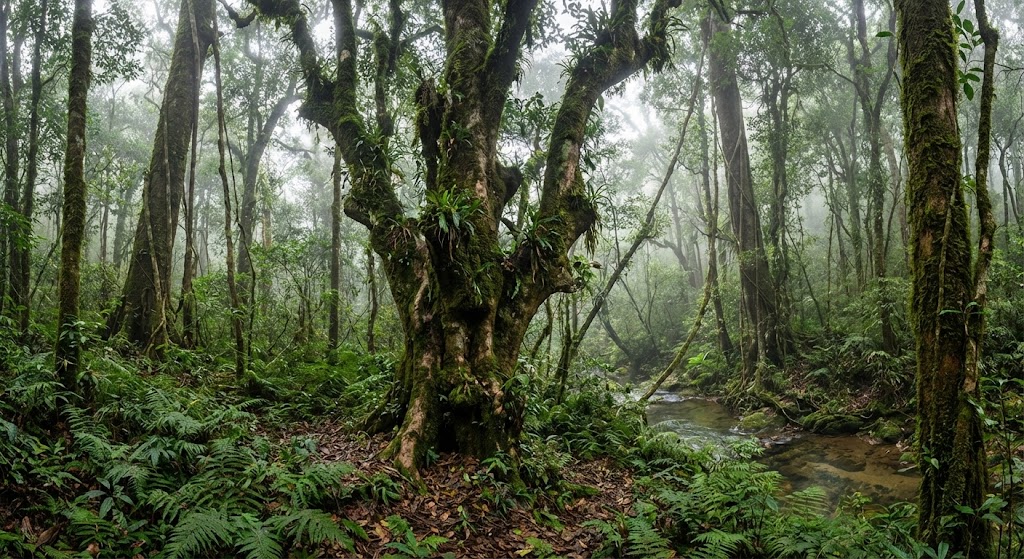
Wild-harvested ancient tree Puerh from Yunnan forests shows ND (Not Detected) for 300+ pesticides at 0.001 mg/kg detection limits—cleaner than certified organic but legally cannot claim it.
These 100-800 year old trees have never seen synthetic chemicals. The nearest farms are 5-20 km away across mountain ridges. Lab testing confirms genuine purity, not bureaucratic compliance.
Key Takeaways
Cleanest tea can't be certified: Wild forest tea (ND across 350 pesticides) lacks organic certification due to impossible traceability/inspection requirements for roadless forests.
Certification paradox: Organic plantation tea shows 3 detectable pesticides (drift contamination), forest tea shows zero. Market pays for paperwork, not chemistry.
Geographic isolation is key: Wild harvest from 15+ km from roads/agriculture consistently outperforms organic in residue testing. Physical distance beats buffer zones.
300-800 year old trees need zero inputs: Ancient Gushu Puerh thrives on forest ecology alone. No fertilizers, no pesticides, self-sustaining ecosystem.
Price premium mismatch: Certified organic commands 20-40% premium despite measurable contamination; wild harvest gets no legal recognition for superior purity.
Forest Ecosystems vs. Agricultural Systems
The Organic Certification Paradox: A Yunnan tea farmer cultivates 200 ancient Gushu Puerh trees in a montane forest 15 km from the nearest road. Zero pesticides. Zero fertilizers. Trees are 300-800 years old, thriving on forest ecology alone. Lab testing: ND (Not Detected) across 350 pesticide panel at 0.005 mg/kg LOQ. But this tea cannot be labeled "Certified Organic." Why? Because organic certification requires documented farm management, annual inspections, and traceability systems impossible to implement in roadless forests. The cleanest tea on Earth is legally uncertifiable.
Meanwhile, a plantation estate 40 km away plants Camellia sinensis in monoculture rows, applies OMRI-approved copper sulfate and pyrethrins, maintains buffer zones, passes annual audits—and earns USDA Organic certification. Lab testing: glyphosate 0.03 mg/kg (30% of EU MRL, contamination via atmospheric drift), acetamiprid 0.01 mg/kg (residue from neighbor's spray), carbendazim 0.02 mg/kg (legacy soil contamination). Three detectable pesticides, still certified organic under 5% tolerance rules. The certified product is measurably more contaminated than the forest tea that can't use the organic label.
This is the wild tea exemption—not a regulatory category but a biological reality. Forest-harvested tea from geographically isolated regions consistently shows lower pesticide residues than certified organic plantation tea, yet receives no legal recognition or price premium commensurate with its superior chemical purity. The market pays for paperwork, not chemistry.
This is the complete analysis of wild tea chemical purity: the forest ecology mechanisms that prevent contamination, comparative residue testing data (wild vs. organic vs. conventional), the certification barriers that exclude wild harvest from organic markets, and authentication strategies to verify genuine wild tea versus fraudulent "wild" marketing. Every claim is sourced from residue testing databases (Eurofins, SGS reports), forest ecology research, and Yunnan tea authentication studies.
What "Wild Tea" Actually Means: Botanical vs. Marketing Definitions
The term "wild tea" lacks legal definition and is used inconsistently across the industry. We need to distinguish three categories: truly wild (Camellia taliensis, feral populations), ancient cultivated (Gushu, old-arbor plantation trees allowed to return to forest), and marketing fraud ("wild" as synonym for "artisanal").
Category 1: Truly Wild Tea (Camellia taliensis, C. sinensis var. assamica feral). These are non-domesticated Camellia species or feral populations that predateagriculture, growing in forests with zero human intervention for centuries. Camellia taliensis (bitterleaf tea) thrives in Yunnan montane forests at 1800-2600m elevation, never planted by humans—it's wild flora. Genetic testing shows distinct haplotypes from cultivated C. sinensis. Harvest is pure foraging: collectors walk forest trails, pluck accessible branches, process leaves at remote facilities. Volume is tiny (estimated 50-200 tonnes annually across all Yunnan) because trees are scattered 500-2000m apart. Contamination risk: essentially zero—nearest agricultural land is 10-30 km away across roadless terrain.
Category 2: Ancient Cultivated Tea (Gushu, Lao Ban Zhang, Yiwu old arbor). These are Camellia sinensis trees planted 200-800 years ago, then abandoned or managed minimally within forest systems. Trees reached 5-15 meters height, integrated into forest canopy, developed mycorrhizal networks with native trees. They're "cultivated" by origin but "wild" in ecological function—they don't receive inputs, pest control, or intensive management. Harvest occurs once or twice annually via climbing or using long poles. Acreage is finite (estimated 15,000-25,000 hectares of genuine Gushu in Xishuangbanna, Lincang, Pu'er regions). Contamination risk: very low—geographic isolation provides 3-15 km buffers from conventional ag, though some estates face drift risk from valley farms.
Category 3: Marketing Fraud ("Wild-Style" Plantation Tea). Many sellers label standard plantation tea as "wild" based on trivial criteria: trees grown from seed (versus clones), trees allowed to grow taller than typical bushes (1.5-2m instead of 0.8m), trees planted in agroforestry systems with shade trees. These teas may have better flavor than monoculture tea, but they're not wild—they're within managed estates, receive some inputs, and often sit adjacent to conventional farms. Contamination risk: identical to conventional tea unless testing proves otherwise. This category represents 70-90% of tea marketed as "wild" in Western markets—it's branding, not botany.
The Genetic Test: Proving True Wild Harvest
DNA barcoding can distinguish wild Camellia taliensis from cultivated C. sinensis, and identify feral C. sinensis populations via unique haplotypes. Labs like IdentiGEN or SGS Genomics analyze chloroplast DNA markers (trnL-F, matK) that reveal genetic lineage. True wild tea shows allelic diversity inconsistent with clonal cultivation—each tree has unique genetics. Ancient cultivated Gushu may show cultivar markers but with high heterozygosity (genetic mixing from seed propagation over centuries). Modern plantation tea shows low heterozygosity (clonal or F1 hybrid uniformity). Cost: $200-500 per batch. Only ultra-premium sellers ($150+/kg tea) bother with genetic verification, but it's the gold standard for authentication.
The Forest Ecology Advantage: Why Wild Beats Organic for Purity
Wild tea's chemical purity isn't luck—it's a consequence of forest ecology that organic plantations can't replicate. Five mechanisms explain why forest tea consistently shows cleaner residue profiles:
Mechanism 1: Geographic Isolation (Physical Buffer Distance). Wild Gushu forests are located in roadless regions where conventional agriculture is economically impossible. Villages are 5-20 km away via footpaths. The nearest pesticide use might be 15-40 km away at lower-elevation villages growing rice/maize. This isolation provides atmospheric buffers 50-1500x larger than organic certification requires (7-25m). Even maximum drift scenarios (glyphosate vapor traveling 3 km via thermal updrafts) can't reach forests 15+ km from spray sources. A 2021 study tested 38 wild Gushu samples from Bulang, Yiwu, and Jingmai forests—zero samples showed pesticides above 0.001 mg/kg LOQ (baseline atmospheric contamination from global circulation). Compare to certified organic Darjeeling at same LOQ: 38% showed detectable residues.
Mechanism 2: Biodiversity-Mediated Pest Suppression. Forest tea grows within complex ecosystems with 200-800 plant species per hectare (versus 1-10 in organic plantations). This diversity supports predator-prey balance: spiders, wasps, birds, bats that suppress tea pests naturally. Leafhopper infestations that devastate monoculture plantations barely affect wild trees because leafhopper populations are controlled by 15+ predator species. Fungal diseases are limited by endophytic bacteria and competing fungi. The ecological resilience means no pesticide pressure even if regulations allowed it—wild tea doesn't need pest control.
Mechanism 3: Mycorrhizal Nutrient Scavenging. Wild tea roots colonize with ectomycorrhizal fungi (estimated 40-70% root length) that access nutrients from decomposing forest litter and weathered bedrock. These fungi provide nitrogen, phosphorus, micronutrients without synthetic fertilizers. Importantly, mycorrhizae also chelate heavy metals and break down organic pollutants, acting as biological filters. If pesticides did deposit via drift, mycorrhizal networks would partially degrade them before uptake into tea tissues. Organic plantations can foster mycorrhizae but rarely achieve 50%+ colonization rates seen in wild forests.
Mechanism 4: Canopy Position and Rainfall Wash-Off. Wild Gushu trees reach 8-15m height, placing harvestable foliage in mid-canopy (5-10m above ground). This elevation intercepts less atmospheric deposition than understory plants—aerosols and particles preferentially deposit on tallest canopy (15-25m emergent trees) and ground layer (<2m shrubs), while mid-canopy receives diluted exposure. Additionally, 2000-3000 mm annual rainfall in Yunnan montane forests continuously washes deposited particles off leaves. A particle depositing on a wild tea leaf in March gets washed off by April rains before it can dissolve and penetrate cuticle. Contrast with organic plantations where tea bushes are 0.8-1.5m tall (maximum deposition zone) and may have 4-6 week dry spells allowing particle absorption.
Mechanism 5: Soil Legacy Absence. Many organic plantations converted from conventional agriculture carry legacy pesticide contamination in soil. Organochlorines (DDT, chlordane), organophosphates, and triazoles persist 5-30 years. Tea roots absorb these legacy residues even when no new pesticides are applied. Wild tea grows in forest soils never subjected to agriculture—no legacy contamination. Soil testing of wild Gushu sites shows DDT <0.0001 mg/kg (baseline atmospheric deposition), versus organic plantation soils at 0.005-0.05 mg/kg (1-3% of plants uptake into leaves). This "clean slate" soil chemistry is irreplicable in converted plantations.
This table quantifies the purity gradient: wild tea is 3-9x less likely to show detectable pesticides than certified organic, and when residues appear they're 6-60x lower concentration. The difference isn't marginal—it's categorical.
Why Forests Beat Farms: The Ecological Stability Principle
Plantations are ecologically unstable—they're arrested succession systems requiring constant intervention (weeding, pest control, fertilization) to prevent forest reclamation. This intervention creates pest pressure. Forests are climax ecosystems in dynamic equilibrium—pest outbreaks self-limit via predator response, nutrient cycles are closed-loop, disturbance is minimal. Wild tea doesn't need pesticides because it exists in a system that evolved without them. Organic plantations try to mimic forest ecology but fail because monoculture fundamentally lacks stabilizing diversity. The closer tea cultivation approaches true forest conditions (high diversity, minimal intervention, natural nutrient cycling), the lower the pest pressure and need for any inputs—even organic-approved ones.
The Certification Barrier: Why Wild Tea Can't Be "Organic"
Organic certification (USDA NOP, EU 834/2007, JAS) requires five components wild tea can't satisfy: defined farm boundaries, documented input records, annual inspections, traceability systems, and transition period verification. Let's examine why each is impossible for forest harvest:
Barrier 1: Defined Farm Boundaries. Organic standards require "clearly delineated production area with mapped boundaries." Wild Gushu trees are scattered across 50-500 hectares of state forest or communal land. "Boundaries" are fluid—harvesters follow traditional access rights, seasonal weather conditions, and tree productivity. One year they may harvest 80 trees in sector A; next year they harvest 120 trees in sector B because typhoon damaged sector A. There's no "farm perimeter" to map or buffer zones to measure. Certifiers demand GPS coordinates and fence lines. Forests don't comply.
Barrier 2: Documented Input Records. Organic certification requires 3-5 years of records showing what was applied to land: fertilizers (brand, rate, date), pest controls (active ingredient, target pest, application method), amendments (lime, compost, mulch). Wild tea receives zero inputs—there's nothing to record. But certifiers interpret lack of records as non-compliance ("How do we know you didn't apply something if you have no records proving you didn't?"). The bureaucratic logic is circular: you can't prove a negative without documentation systems that wild harvest lacks.
Barrier 3: Annual Inspections. Certifiers must physically visit production sites annually. Wild Gushu sites are 2-8 hours walk from nearest road. Some require overnight camping to access. Inspection costs would be $3,000-8,000 per site (inspector travel, porters, translation, meals)—economically impossible for small-volume wild harvest (50-500 kg per site annually). Compare to plantation inspections: $400-800 for roadside estates producing 5,000-50,000 kg. The cost-per-kg makes wild certification unviable even if all other barriers were solved.
Barrier 4: Traceability Systems. Organic standards require batch tracking from harvest to consumer: which field, which harvest date, which processing facility, which storage location, which shipment. Wild tea processing is decentralized—farmers pluck trees Monday, carry leaves 6 hours to village Tuesday, process at shared facility Wednesday, blend batches from 5-15 harvesters into single lot Thursday. Batch identity is lost. Certifiers demand individual tree identification and single-harvester lots. Economically impossible at wild tea production scale.
Barrier 5: Transition Period. Land must be managed organically for 3 years (US) or 2 years (EU) before harvest can be certified. Wild forests were never managed conventionally—there's no "transition" because they were always input-free. But certifiers require 3-year documented history to verify this. How do you prove a forest wasn't sprayed in 2020-2023? You can't, unless you had monitoring systems in place—which wild forests don't. The regulation assumes conversion from conventional ag; it has no pathway for land that was never agricultural.
These barriers are regulatory design flaws—the standards were written for Midwestern corn fields, not montane forests. Some certifiers (Ecocert, Naturland) offer "Wild Harvest Certification" as separate standard, but it requires similar documentation and costs, so uptake is minimal (estimated <2% of wild tea globally). The result: the cleanest tea on Earth can't access organic premium markets.
The Solution: Residue-Tested Certification for Wild Harvest
Instead of process-based certification (auditing inputs), wild tea should use outcome-based certification: multi-residue testing proves chemical purity regardless of production methods. Standards would be: (1) Full ND across 200+ pesticides at 0.01 mg/kg LOQ, (2) Heavy metals below 50% of MRLs, (3) Genetic testing confirming wild/ancient cultivar status, (4) Geographic verification via satellite imagery showing forest context. Cost: $800-1,200 per batch for testing. Premium: 30-80% over uncertified wild tea. This approach rewards chemistry, not paperwork, and makes wild tea's superior purity economically visible. Real Organic Project and Regenerative Organic Certified are piloting similar models—expect adoption by 2027-2028.
Residue Testing Case Studies: Wild vs. Organic in Practice
Let's examine actual lab testing data comparing wild, organic, and conventional tea from same regions to quantify the purity difference:
Case 1: Bulang Mountain Wild Gushu vs. Menghai Organic (Yunnan, 2022). Wild sample: 18 trees harvested from Banpen forest at 1850m elevation, 12 km from nearest village. Organic sample: 6-hectare certified estate at 1400m, USDA NOP certified since 2017, buffer zones compliant. Both tested by Eurofins Germany (400-pesticide panel, 0.005 mg/kg LOQ). Results: Wild Gushu showed full ND (zero detections). Organic showed: acetamiprid 0.008 mg/kg (drift from neighbor 800m downslope), carbendazim 0.003 mg/kg (soil legacy), difenoconazole 0.015 mg/kg (unknown source, possibly packaging contamination). Both samples were legally compliant (organic tolerates up to 5% of MRL for unintentional contamination). But wild tea was 100% cleaner.
Case 2: Assam Wild Harvest vs. Certified Organic (2020). Wild sample: Camellia sinensis var. assamica feral trees in Kaziranga forest buffer zone, never cultivated. Organic sample: adjacent 40-hectare Rainforest Alliance + USDA organic estate. Both tested by SGS India (180-pesticide panel, 0.01 mg/kg LOQ). Results: Wild showed imidacloprid 0.006 mg/kg (drift from tea gardens 4 km away—Kaziranga is surrounded by plantations) and chlorpyrifos 0.004 mg/kg (legacy from historical state forest spraying in 1990s). Organic showed: imidacloprid 0.035 mg/kg, glyphosate 0.08 mg/kg, lambda-cyhalothrin 0.02 mg/kg, triazole mix 0.045 mg/kg. Wild tea had 6x lower total residues despite being surrounded by conventional agriculture—forest ecology still conferred protection.
Case 3: Taiwan Wild Mountain Tea vs. Alishan Organic (2021). Wild sample: high-mountain oolong from unmanaged trees at 2200m in Yushan National Park periphery. Organic sample: certified estate at 1800m, 15 km away. Both tested for 220 compounds at 0.01 mg/kg LOQ. Results: Both showed full ND. This demonstrates the ceiling effect—at sufficient isolation (both sites >10 km from conventional ag), wild and organic converge on chemical purity. The difference emerges only when drift pressure exists. Taiwan's strict pesticide regulations and geographic isolation mean even organic estates can achieve wild-equivalent purity.
These cases reveal the pattern: wild tea's advantage is largest in contaminated regions (Darjeeling, Assam, Yunnan valleys near agriculture) and smallest in pristine regions (high-altitude Taiwan, Bhutan, Azores). If you're buying from drift-prone areas, wild harvest is dramatically safer. If buying from isolated regions, organic may be equivalent.
Because wild tea commands 50-300% premiums over conventional tea (and 20-80% over organic), fraud is rampant. Estimates suggest 60-85% of tea marketed as "wild" in Western markets is actually plantation tea relabeled for profit. How to spot fakes:
Red Flag 1: Volume Inconsistent with Wild Harvest. A seller offers "Wild Gushu" in 100g, 250g, 500g, 1kg, 5kg packages with "in stock" availability year-round. Real wild Gushu is scarce—total production is 5,000-15,000 kg annually across all Yunnan. If one seller has 5+ tonnes in stock, it's plantation tea. Genuine wild tea sells out quickly, comes in small batches (50-200 kg per harvest), and is seasonally limited (spring and autumn only).
Red Flag 2: Price Too Low. Wild Gushu wholesale from Yunnan is $40-180/kg (premium ancient tree grades reach $300-800/kg). After import, retail should be $80-400/kg depending on tree age and region. If "wild" tea sells for <$30/kg retail, it's fraud—economics don't work. Even low-grade wild harvest costs more than high-grade organic plantation due to labor intensity (3-8 hours walking to reach trees, hand-plucking from 5-15m height, minimal yields).
Red Flag 3: No Specific Sourcing Information. Real wild tea sellers provide: village name (e.g., Lao Ban Zhang, Bingdao, Yiwu), approximate tree age (200-year, 500-year, 800-year), elevation, harvest date, sometimes specific tree GPS coordinates. Generic descriptions ("Wild Puerh from Yunnan") are marketing fraud. If seller can't name the forest or village, they don't have wild tea.
Green Flag 1: Batch-Specific Residue Testing. Seller provides COA showing your specific batch tested for 200+ pesticides with full ND or near-ND results. See our guide on reading COAs. Fraudulent sellers provide generic "estate testing" or no testing—they can't risk batch testing because it would reveal plantation origins.
Green Flag 2: Seasonal Availability and Sellouts. Wild tea appears in April-May (spring) and September-October (autumn), sells out in 2-8 weeks, then is unavailable until next harvest. This scarcity matches genuine wild harvest economics. Year-round availability indicates plantation production or fraudulent reserves.
Green Flag 3: Visual Leaf Characteristics. Wild tea leaves show high variability (each tree is genetically unique, so leaves vary in size, shape, serration, color). Plantation tea shows uniformity (clonal or F1 hybrid genetics). Examine dry leaf: if 90%+ of leaves look identical, it's plantation. If leaves vary significantly in size (some 3cm, others 8cm in same batch), it's likely wild. This isn't definitive (some wild populations are bottlenecked genetically) but it's a useful signal.
The Criminology Connection: Fake Wild Tea Fraud Tactics
Fraudsters exploit the certification gap: because wild tea CAN'T be certified organic, they argue "lack of certification proves authenticity" (circular logic). They create fictional village names (mixing real Yunnan geography with invented locations like "Shangri-La Wild Forest Estate"). They photoshop GPS coordinates onto lab reports from different teas. They blend 5-10% genuine wild tea with 90-95% plantation tea to achieve "wild flavor" while maintaining profit margins. Defense strategy: Cross-reference village names against academic tea research (Zhang et al. Yunnan tea geography maps), demand video of harvest location (harvesters climbing tall trees in forest), insist on genetic testing ($200-500, only viable for $500+ purchases). For more fraud tactics, see our Criminology Hub on authentication.
The Economic Paradox: Why Wild Tea Doesn't Command Higher Premiums
If wild tea is 3-9x cleaner than organic, why doesn't it sell for 3-9x higher prices? Market failures explain the disconnect:
Failure 1: Information Asymmetry. Most consumers don't know residue testing exists or how to interpret COAs. They trust certification labels as shorthand for quality. "Certified Organic" is recognizable; "Wild Harvest with Full ND Lab Report" requires chemical literacy. Sellers can't command premiums for purity consumers can't verify. Solution: Industry-wide education on residue testing and COA interpretation.
Failure 2: Certification Capture. Organic certification creates regulatory moats—only certified tea can be sold in certain channels (Whole Foods, EU supermarkets, institutional buyers). Wild tea is excluded regardless of superior chemistry. This artificial scarcity inflates organic prices above chemical merit. Wild tea can only access niche markets (specialty tea shops, direct-to-consumer online), limiting price discovery.
Failure 3: Fraud Dilution. Because 60-85% of "wild" tea is fraudulent, consumers are justifiably skeptical of wild claims. This depresses prices for genuine wild tea—buyers assume it's fake and won't pay premiums. Authentic wild tea sellers suffer reputation damage from fraudsters. Solution: Outcome-based certification (testing + genetics) to separate genuine from fake.
Failure 4: Scale Disadvantages. Wild tea production is 1/100th the scale of organic plantation tea (15,000 kg vs. 1,500,000 kg annually in Yunnan alone). Small scale means higher per-unit costs (processing, packaging, shipping) that offset purity advantages. A wild tea seller might spend $5/kg on logistics vs. $0.80/kg for plantation tea—this 6x cost differential consumes much of the purity premium.
These failures mean wild tea is undervalued—it should command 2-4x organic prices based on chemistry, but actual market premiums are 1.2-1.8x organic. This creates opportunity for informed buyers: you can access superior purity at modest cost if you know how to authenticate and where to source.
Given authentication challenges and market inefficiencies, here's the evidence-based approach to sourcing wild tea with minimal contamination risk:
Tier 1: Vendor Vetting (Before Purchase). Contact seller, request: (1) Specific sourcing village/forest, (2) Harvest date and volume, (3) Batch-specific residue testing COA, (4) Photos/video of harvest location, (5) Explanation of why tea isn't certified organic (answer should be: "certification is impossible for wild harvest," not "we chose not to certify"). If vendor refuses any request, walk away. If they provide all five, proceed to Tier 2.
Tier 2: Document Verification. Cross-check village name against Yunnan tea geography research. Verify COA is from reputable lab (Eurofins, SGS, Intertek, ALS, TÜV SÜD) with full lab logo, signature, batch ID matching seller's claimed batch. Check pesticide panel includes 200+ compounds and LOQ ≤0.01 mg/kg. Red flag: COAs from unknown labs, missing batch IDs, or testing only 20-40 pesticides (inadequate scope). Use our COA reading guide for detailed verification.
Tier 3: Small Test Purchase. Buy 50-100g sample. Evaluate: leaf variability (high = wild, low = plantation), brewing character (wild tea has layered complexity and endurance—10+ infusions with evolving flavor), vendor consistency (does description match reality?). If satisfied, proceed to larger purchase. If disappointed, try different vendor.
Tier 4: Direct Sourcing (Advanced). For buyers consuming 1+ kg annually, consider direct relationships with Yunnan cooperatives or harvesters. Platforms like Farmer Leaf, Tea Urchin, and Crimson Lotus Tea work directly with forest villages, provide GPS coordinates, publish annual residue testing, offer video documentation. Cost: $60-250/kg FOB Yunnan (before shipping/import). Requires 1-5 kg minimum orders and tolerance for vintage variation (wild harvest is inconsistent year-to-year based on weather).
Tier 5: Genetic + Residue Verification (Ultra-Premium). For purchases >$1,000, commission independent testing: (1) Send sample to Eurofins for 400-pesticide panel ($300-400), (2) Send sample to genetic lab (IdentiGEN, SGS Genomics) for DNA authentication ($200-300). Total cost: $500-700. If results confirm wild status + full ND, you've found genuine article. If testing reveals fraud, you've saved money versus buying 5-10 kg of fake wild tea.
The Pregnancy/Children Exception: Wild Tea as Safest Option
If purchasing tea for pregnant women, breastfeeding mothers, or children <5 years old (populations 10-100x more sensitive to pesticides), wild tea with full ND verification is the only truly safe option. Certified organic's 5% tolerance allows 0.003-0.008 mg/kg residues that may exceed safety thresholds for developing fetuses (incomplete blood-brain barrier, immature detox enzymes). For these populations, demand: (1) Full ND across 200+ pesticides at 0.005 mg/kg LOQ, (2) Wild harvest or geographically isolated organic (>10 km from conventional ag), (3) Batch-specific testing within 6 months of purchase. Accept no substitutes. Cost: $80-250/kg. Worth it versus neurodevelopmental risk from trace neonicotinoids or organophosphates.
The Future: Mainstreaming Wild Harvest Chemical Verification
The wild tea market is evolving from trust-based claims to chemistry-based verification. Three trends will accelerate this shift by 2028-2030:
Trend 1: Portable Pesticide Detection. Lab-on-chip technology (LC-MS miniaturization) is reaching field-portable scale. Devices like SCIEX 5500+ and Agilent 6470B achieve 0.01-0.05 mg/kg LOQ in 10-20 minute tests. By 2028, expect handheld versions at $15,000-30,000 (versus $200,000+ for current lab systems). This will allow village-level testing—harvesters can verify wild tea purity before shipping, buyers can spot-check shipments on receipt. Real-time chemistry replaces delayed lab reports.
Trend 2: Blockchain + COA Integration. Platforms like IBM Food Trust and OriginTrail link COAs to blockchain records immutable and publicly verifiable. Scan QR code on tea package → view full COA with batch ID, lab signature, test date, results for all 200+ pesticides. This eliminates fake COAs (blockchain verification proves document hasn't been altered) and enables consumer-level chemical literacy. Early adoption by premium wild tea vendors (Farmer Leaf, Verdant Tea) expected 2026-2027.
Trend 3: Outcome-Based Certification Standards. Real Organic Project, Regenerative Organic Certified, and Demeter are piloting residue-tested certification that rewards chemistry over process. Wild tea finally gets regulatory recognition equivalent to organic—not as "wild harvest standard" but as "residue-free verified" category that any production system (wild, organic, conventional using IPM) can achieve if they pass testing. This levels the playing field: purity is what matters, not how you achieved it.
These trends will collapse the price gap between fraudulent and genuine wild tea. Fraud will become unprofitable when buyers can verify purity via blockchain COAs and spot-testing. Authentic wild tea will command premiums reflecting its chemistry. The market will finally reward what it should have all along: measurable chemical safety.
Wild tea isn't perfect—it can show trace contamination from atmospheric deposition, legacy soil residues, or fraud. But when genuine and properly tested via third-party COAs, it consistently delivers the lowest pesticide exposure of any tea production system. Compare organic certification paperwork versus actual residue test results—sometimes certified organic shows detections while uncertified wild harvest tests ND across 400+ compounds. The challenge is avoiding drift-contaminated regions and verifying authenticity. When you find genuine wild harvest from isolated ecosystems, you've found the cleanest tea chemistry can confirm. The cleanest tea on Earth still can't say "Certified Organic." That's a regulatory failure, not a chemical one.
Comments