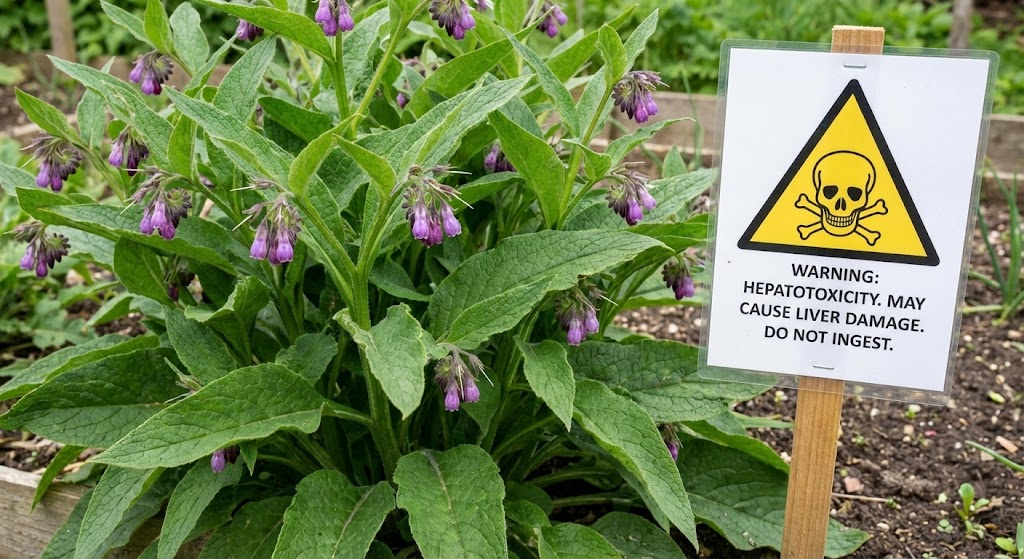
Comfrey Tea: The Bone Knitter That Kills Livers
Comfrey (Symphytum officinale) is traditional medicinal herb for wound healing, broken bones, bruises—contains allantoin (cell proliferation stimulator) giving genuine healing properties. Historically consumed as tea for internal medicine. Problem: comfrey also contains pyrrolizidine alkaloids (PAs: symphytine, echimidine, others) that cause irreversible liver damage via hepatic veno-occlusive disease (HVOD). Chronic consumption causes cirrhosis, liver failure, death. Parallels sassafras liver cancer and pennyroyal hepatotoxicity. Toxicological analysis identifies lethal compounds.
The toxic chemistry: pyrrolizidine alkaloids are hepatotoxic pro-toxins. They metabolize in liver via cytochrome P450 enzymes to reactive pyrrole compounds that alkylate (chemically bind) liver proteins and DNA. This causes: hepatocyte death, fibrosis (scarring), veno-occlusive disease (blood vessel blockage in liver). The damage is cumulative and irreversible—each dose adds to total burden. No safe threshold exists because alkylation is carcinogenic and dose-cumulative over lifetime.
HVOD: Hepatic Veno-Occlusive Disease from Comfrey
Symptoms appear weeks-months after comfrey consumption begins: abdominal swelling (ascites from portal hypertension), jaundice (yellow skin/eyes from bilirubin), fatigue, nausea. Diagnosis: liver biopsy shows characteristic vein blockage + fibrosis. Progression: acute HVOD can cause liver failure within days-weeks. Chronic PA exposure causes cirrhosis over months-years. Treatment: stop comfrey immediately, supportive care, liver transplant if failure occurs. Mortality rate 10-50% depending on severity. Prevention: never consume comfrey tea internally.
Why It's Still Sold: Regulatory Loopholes
UK/EU: comfrey sale for internal use was restricted 2001 after PA toxicity documented, but topical products remain legal (creams, ointments—allantoin absorbs through skin without liver metabolism). USA: FDA issued advisory 2001 warning against internal comfrey use but didn't ban sale—herbal supplements have weaker regulation than pharmaceuticals. Result: comfrey tea still available online, health food stores, labeled "for external use" with fine print (ignored by consumers). Ethical frameworks guide product standards.
The regulatory gap parallels pennyroyal's continued sale despite lethality—herbal products grandfathered under traditional use exemptions, requiring government action to ban (vs pharmaceutical approval process where burden of proof is safety/efficacy before sale). This creates danger: consumers assume "sold legally = safe" but reality is "not yet banned despite harm."
| PA-Containing Herb | Pyrrolizidine Alkaloids | Traditional Use | Toxicity | Legal Status UK |
|---|---|---|---|---|
| Comfrey | Symphytine, echimidine (high) | Wound healing, bones | HVOD, cirrhosis, cancer | Restricted (external only) |
| Borage | Amabiline (moderate) | Anti-inflammatory | Hepatotoxic (chronic use) | Legal with warnings |
| Coltsfoot | Senkirkine (moderate) | Cough remedy | Hepatotoxic, carcinogenic | Restricted sale |
| Butterbur | Petasin (variable) | Migraine prevention | Hepatotoxic unless PA-free extract | Legal (PA-free versions) |
| Ragwort | Jacobine, senecionine (very high) | None (livestock poison) | Severe hepatotoxic, lethal | Legal as plant (illegal as food) |
Cumulative Toxicity: The Slow Poisoning Mechanism
PA toxicity is insidious because damage accumulates silently. Unlike acute poisons (cyanide kills immediately, pennyroyal causes obvious illness), PAs cause progressive subclinical damage—liver enzymes rise slightly, fibrosis develops without symptoms, years pass before clinical liver disease manifests. By time symptoms appear (ascites, jaundice), cirrhosis is advanced and irreversible.
The dose makes the poison, but there's no safe dose. Studies estimate 0.5-10mg total PA intake over months-years can cause HVOD. One cup comfrey tea contains ~1-5mg PAs (varies by plant part, growing conditions, preparation). Daily consumption accumulates to toxic threshold within weeks-months. Some individuals (faster P450 metabolism) are more susceptible—genetic lottery determines who gets liver failure first. This unpredictability means all consumption is Russian roulette.
Topical Comfrey: Safe Alternative for Healing Properties
The irony: comfrey's healing properties (allantoin-mediated cell proliferation) are real and useful. Topical application (creams, poultices) delivers allantoin to wounds without PA liver exposure—PAs don't absorb readily through intact skin. Multiple clinical trials show comfrey cream accelerates healing of: bruises, sprains, post-surgical wounds. The therapeutic benefit exists, just not via tea consumption. Contrast with safe tea health benefits, fasting applications, and performance optimization.
Modern comfrey products use PA-free cultivars or extract allantoin without PAs—preserving benefit, eliminating risk. This demonstrates rational herb use: isolate beneficial compounds, remove toxic ones. Compare to digitalis (foxglove): plant is lethal, purified digoxin is life-saving heart medication. The botanical ≠ refined pharmaceutical distinction matters. Historical use isn't safety proof—comfrey was used for centuries before PA toxicity was understood, now we know better.
Herbal Tea Liver Safety Guidelines
- Avoid all PA-containing herbs internally: Comfrey, borage, coltsfoot, butterbur (unless certified PA-free), ragwort. No safe dose exists
- Check "natural" tea blends: Some herbal tea products contain comfrey without prominent labeling. Read full ingredient list
- Monitor liver enzymes if using herbs: Get ALT, AST, bilirubin blood tests every 6 months if consuming any hepatotoxic botanicals
- Stop immediately if symptoms: Abdominal swelling, yellowing skin/eyes, dark urine, clay-colored stool = liver damage. Seek medical care
- Use topical comfrey safely: Creams/ointments provide healing benefits without liver risk—apply to intact skin only, not open wounds
The lesson: tradition isn't evidence. Historical herbal use predates toxicology understanding. Modern science revealed many "traditional remedies" are harmful (sassafras liver cancer, pennyroyal liver failure). We have knowledge previous generations lacked—use it. Understanding cumulative exposure risks applies to all hepatotoxic herbs. Modern processing standards and quality control prevent contamination in legitimate tea.
Comments