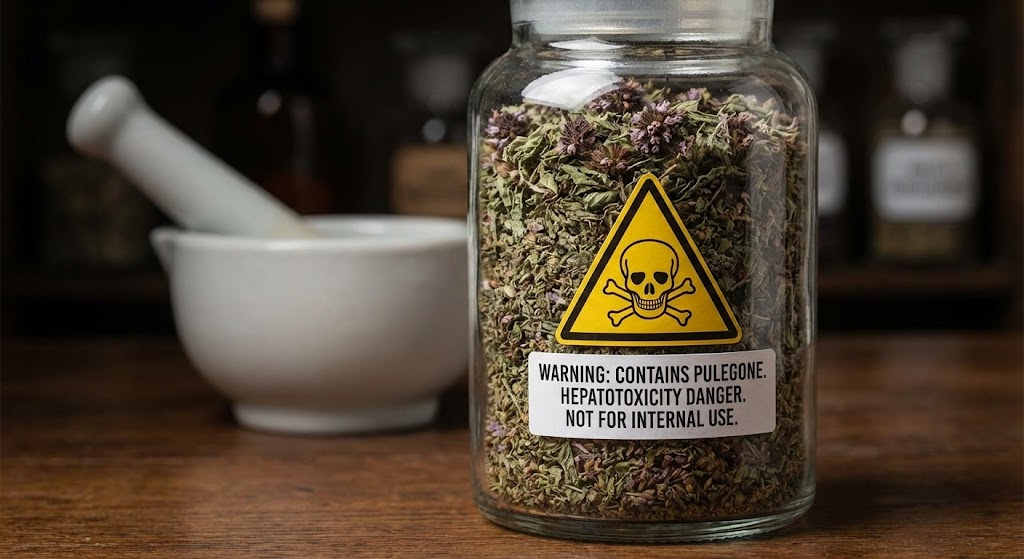
Why Pennyroyal Tea Destroys Livers
Pennyroyal (Mentha pulegium) is mint-family herb containing pulegone—hepatotoxic compound that causes acute liver failure at doses as low as 10-15ml essential oil or 30-50g dried herb brewed as herbal tea. Historically used for abortion (uterine contractions) but kills via liver necrosis before terminating pregnancy. Still sold legally in UK/EU as "herbal tea" despite documented deaths.
The toxicity mechanism: pulegone metabolizes in liver to menthofuran—reactive compound that binds covalently to liver cell proteins (protein adducts), causing hepatocyte death. The damage is dose-dependent but threshold is dangerously low. Single large dose (pregnancy termination attempt) causes fulminant hepatic failure requiring liver transplant within 48-72 hours or death. Safer alternatives include peppermint or spearmint which lack dangerous pulegone levels. Unlike chronic toxins in pregnancy, pennyroyal acts acutely.
Pennyroyal Poisoning Symptoms (Seek Emergency Care)
Symptoms appear 1-6 hours after ingestion: severe abdominal pain, nausea, vomiting, burning throat, confusion, seizures (neurotoxicity). Lab tests show rapidly rising liver enzymes (ALT/AST 1000+ U/L). This is medical emergency—irreversible liver damage progresses rapidly. No antidote exists, only supportive care (liver transplant if available). Never consume pennyroyal in any form.
Why It's Legal Despite Lethality
Pennyroyal remains legal as dried herb in most jurisdictions because herbal supplement regulation is weaker than pharmaceutical regulation. In UK: legal to sell as "food supplement" but not with medical claims. In USA: FDA banned pennyroyal oil for internal use (1990s) but dried herb still sold. In EU: sold with warning labels but not prohibited. This regulatory gap allows dangerous product on market—unlike the strict pesticide controls for true tea.
The cognitive dissonance: consumers assume "herbal" = "safe," but pennyroyal is more toxic than many controlled substances. It's legal while coca tea (legal Peru, felony USA) is banned despite coca tea being far less dangerous. The discrepancy reflects historical regulation (traditional herbs grandfathered) vs evidence-based toxicology.
| Toxic "Tea" | Active Toxin | Lethal Dose | Death Mechanism | Legal Status UK |
|---|---|---|---|---|
| Pennyroyal | Pulegone | 10-15ml oil / 30-50g herb | Liver failure | Legal (with warnings) |
| Comfrey | Pyrrolizidine alkaloids | 50-200g cumulative | Liver cirrhosis | Legal (restricted sale) |
| Sassafras | Safrole | Chronic mg doses | Liver cancer | Legal as herb (oil banned) |
| Foxglove | Digoxin | 5-10 leaves | Cardiac arrest | Legal as ornamental (not sold as tea) |
| Hemlock | Coniine | 100-200mg | Respiratory paralysis | Legal as plant (illegal as food) |
Historical Use: Abortion "Folk Medicine" That Kills
Pennyroyal's reputation as abortifacient dates to ancient Rome (Pliny documented use). The mechanism: pulegone stimulates smooth muscle contractions including uterus. However, abortifacient dose overlaps heavily with lethal dose—attempting abortion often results in liver failure death before pregnancy termination. Modern documented cases show this pattern repeatedly across British colonial records and contemporary medical literature.
Case study pattern: woman drinks large pennyroyal tea quantity attempting abortion → develops liver failure symptoms → hospitalized with ALT/AST over 10,000 U/L → liver transplant or death within 72 hours → pregnancy often continues despite liver failure. The folk medicine doesn't work for intended purpose but does cause preventable death. This pattern mirrors other dangerous traditional herbal practices where historical use doesn't equal safety. Unlike historical tea antidotes, pennyroyal has zero therapeutic benefit. Modern forensic analysis can detect pulegone metabolites post-mortem, enabling toxicological confirmation of cause—similar to alkaloid detection in other botanical poisonings.
Why "Natural" Doesn't Mean Safe
Common fallacy: "plants are natural therefore safe, chemicals are synthetic therefore dangerous." Reality: most lethal poisons are plant-derived (ricin from castor beans, cyanide from apricot pits, aconitine from monkshood). The LD50 (lethal dose) doesn't care about "naturalness"—it responds to chemistry.
Pennyroyal pulegone is single defined molecule with specific toxic mechanism, same as any pharmaceutical. Being extracted from mint vs synthesized in lab doesn't change hepatotoxicity. This reasoning error causes preventable deaths annually when people consume "safe herbal teas" assuming plant origin confers safety. Botulinum toxin (botulism) is natural—deadliest substance known. Salicylic acid (aspirin) is synthetic—saves millions of lives. Origin isn't relevant to safety.
Herbal Tea Safety Principles
- Research before consuming: Look up scientific name, search "[plant name] toxicity" in medical literature, not herbalist blogs
- Avoid "traditional" abortion herbs: Pennyroyal, tansy, rue, blue cohosh all cause more harm than intended effect
- Pregnancy = extra caution: Many herbs safe for general population are teratogenic (cause birth defects) or abortifacient
- Check liver enzyme levels: If consuming any hepatotoxic herb regularly, get ALT/AST blood test every 3-6 months
- Stop immediately if symptoms: Nausea, vomiting, abdominal pain after herbal tea = potential poisoning, seek medical care
Safer alternatives: True Camellia sinensis tea carries minimal risk compared to unregulated herbal "teas." For mint flavor without toxicity, use peppermint (Mentha × piperita) or spearmint (Mentha spicata)—neither contain dangerous pulegone levels. Avoid other toxic herbal teas marketed as "natural remedies."
Comments