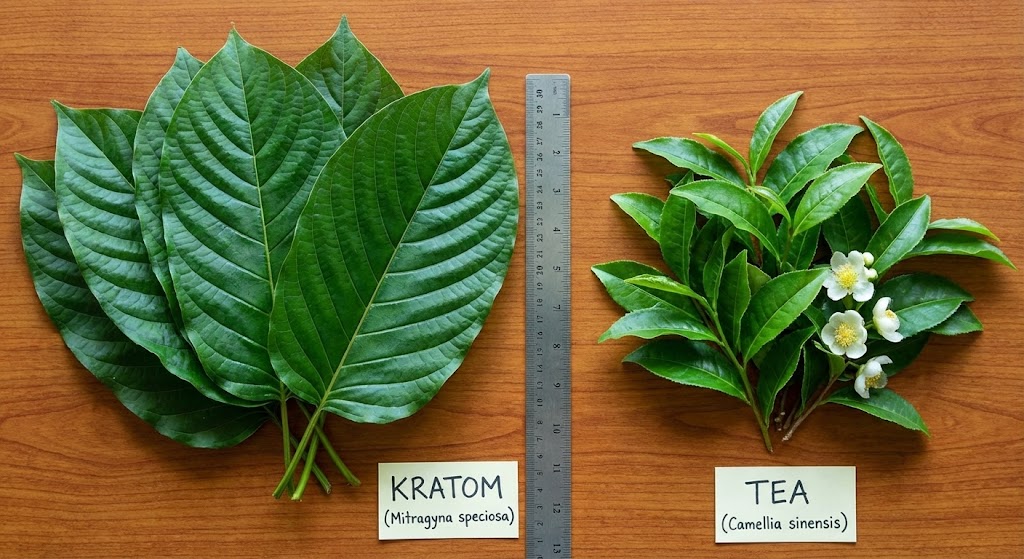
Kratom (Mitragyna speciosa) and tea (Camellia sinensis) are both tropical trees producing leaves brewed as beverages, but legal/pharmacological status differs dramatically. Tea is food-regulated, globally legal, contains mild stimulant (caffeine). Kratom is drug-regulated in some jurisdictions, banned in others, contains opioid receptor agonists (mitragynine, 7-hydroxymitragynine) with addiction potential. Both are technically "tea" if brewed from leaves, but kratom is pharmacological drug while tea is beverage. See herbal tea definitions.
The chemistry divide: Tea caffeine is adenosine receptor antagonist—blocks sleepiness, produces mild stimulation. Kratom alkaloids are μ-opioid receptor agonists—bind same receptors as morphine/heroin but weaker effect (partial agonist). Low-dose kratom (~1-5g) produces stimulation similar to strong concentrated tea. High-dose kratom (~5-15g) produces sedation, analgesia, euphoria similar to weak opioids. This dose-dependent effect mirrors pharmaceutical drugs not food substances. Compare to tea performance optimization.
Kratom Effects by Dose Range
Low dose (1-5g dried leaf): Stimulation, alertness, sociability, mood lift—feels like strong coffee. Onset 10-15 minutes, duration 2-3 hours. Mid dose (5-10g): Mixed stimulation/sedation, pain relief, mild euphoria. High dose (10-15g+): Sedation, strong analgesia, opioid-like relaxation, nausea risk. Tolerance develops with daily use, withdrawal symptoms (irritability, runny nose, insomnia) after cessation in chronic users. Not casual tea—it's a drug.
Legal Status: UK Legal, USA State-by-State Chaos
UK/EU: Kratom legal to possess, sell, consume as "food supplement" or "botanical" with no health claims. Not regulated as medicine or controlled drug. Thailand (kratom's native region): illegal 1943-2021, recently legalized for traditional use. USA: legal federally but banned in: Alabama, Arkansas, Indiana, Rhode Island, Vermont, Wisconsin + several counties/cities. DEA attempted Schedule I classification 2016 but withdrew after public backlash. Australia: Schedule 9 prohibited substance (same as heroin).
The regulatory chaos reflects kratom's ambiguous status: traditional botanical used for centuries vs substance with opioid-like pharmacology. Coffee is legal despite caffeine addiction potential. Kratom is banned/restricted despite lower addiction liability than prescription opioids. The inconsistency mirrors coca tea legal paradoxes—botanical in traditional use, controlled substance when isolated alkaloids extracted. See psychotropic plant history and regulatory ethics.
| Substance | Active Compound | Addiction Potential | Overdose Lethality | Legal Status UK | Legal Status USA |
|---|---|---|---|---|---|
| Kratom | Mitragynine (partial opioid) | Moderate (withdrawal) | Very low (rare deaths) | Legal | Legal (some states ban) |
| Coffee/Tea | Caffeine | Low (mild withdrawal) | Very low (200+ cups) | Legal | Legal |
| Tobacco | Nicotine | Very high (chemical dependency) | Low (poisoning rare) | Legal (age-restricted) | Legal (age-restricted) |
| Alcohol | Ethanol | High (physical dependency) | Moderate (acute poisoning) | Legal (age-restricted) | Legal (age-restricted) |
| Prescription Opioids | Morphine/Oxycodone | Very high (tolerance/dependency) | High (respiratory depression) | Controlled (Schedule 2) | Controlled (Schedule 2) |
The Opioid Replacement Controversy
Some chronic pain patients and recovering opioid addicts use kratom as harm reduction—substituting prescription opioids (Oxycodone, Fentanyl) or heroin with kratom to manage pain/withdrawal. The logic: kratom provides partial opioid effect without respiratory depression risk (main lethality mechanism of strong opioids). Studies show kratom assisted cessation in some heroin addicts (Malaysia, Thailand) but evidence quality is low.
The counterargument: kratom is still addictive, causes withdrawal, isn't pharmaceutical-grade (dosage varies by batch), lacks safety data. FDA position: kratom hasn't been proven safe/effective, shouldn't be marketed as addiction treatment. User community position: kratom saved them from heroin/pills, government interference denies access to life-saving plant. This debate parallels historical opium regulation conflicts—prohibition vs harm reduction approaches.
Contamination and Safety Concerns
Unlike regulated pharmaceuticals, kratom sold as "botanical supplement" has no manufacturing standards. Testing found contamination in commercial kratom: Salmonella (FDA outbreak investigations 2017-2018), heavy metals (lead from soil uptake), adulterants (synthetic opioids added to increase potency). The lack of regulation creates safety risk beyond the alkaloid pharmacology itself. Compare to tea heavy metal testing, fluoride monitoring, and quality certifications.
Additionally, kratom-related deaths (rare but documented) typically involve polysubstance use—kratom + prescription opioids + benzodiazepines. Pure kratom overdose fatality is extremely rare (respiratory depression ceiling effect due to partial agonist nature), but combination with CNS depressants is dangerous. This mirrors caffeine safety: pure caffeine toxicity is rare, but caffeine + alcohol/energy drink deaths occur via dehydration/cardiac stress.
Kratom vs Tea: Key Differences for Consumers
- Pharmacology: Tea affects wakefulness (caffeine). Kratom affects pain/mood (opioid receptors). Kratom is drug-like, tea is beverage-like
- Addiction risk: Tea causes mild caffeine dependence (headache on cessation). Kratom causes physical dependence (withdrawal syndrome)
- Dosage precision: Tea caffeine content predictable. Kratom alkaloid content varies 5-10x by strain/batch—no standardization
- Legal predictability: Tea legal everywhere. Kratom legal UK but illegal elsewhere—travel across borders risks prosecution
- Safety data: Tea consumed for millennia, safety profile well-established. Kratom long traditional use but limited modern toxicology data
The bottom line: calling kratom "tea" is technically accurate (brewed leaf beverage) but misleading about effect profile. Kratom belongs in drug category not food category, should be regulated accordingly for consumer protection (standardized dosing, contamination testing, honest labeling). Unlike true tea with minimal health risks, kratom carries pharmacological risks requiring proper oversight.
Comments