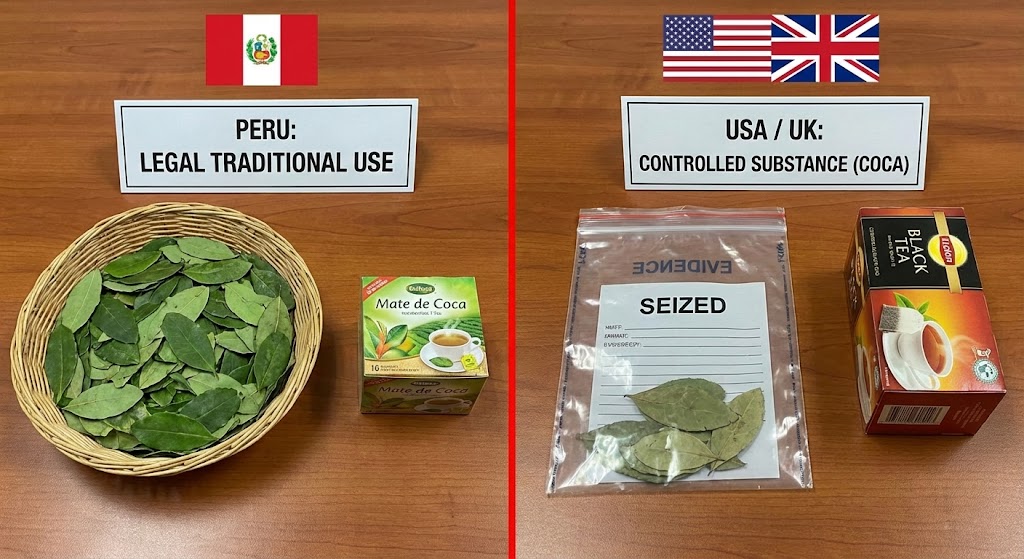
Coca Tea: Legal in Peru, Felony in USA
Coca tea (mate de coca) is traditional Andean beverage brewed from coca leaves (Erythroxylum coca)—same plant source as cocaine but vastly different effect. Coca leaves contain 0.5-1% cocaine alkaloid plus 13 other alkaloids (ecgonine, tropacocaine). Chewing/brewing whole leaves provides mild stimulation comparable to strong coffee, not euphoric cocaine "high" which requires chemical extraction concentrating alkaloid 100-300x. See tea stimulants.
Legal status paradox: Peru/Bolivia/Colombia (where coca grows) coca tea is legal, sold in supermarkets, served in hotels for altitude sickness. UK: coca leaf is controlled under Misuse of Drugs Act 1971—possession is criminal offense. USA: coca leaves are Schedule II controlled substance—importation carries 5-40 year federal prison sentence, equivalent to heroin/cocaine trafficking. This creates absurd scenario: beverage legal/normal in origin countries is serious felony elsewhere. See regulatory ethics and global tea customs.
Why Peruvians Drink Coca Tea for Altitude Sickness
Cusco, Peru sits at 3,400m elevation where reduced oxygen causes soroche (altitude sickness): headache, nausea, fatigue, shortness of breath. Coca leaf alkaloids (especially cocaine and ecgonine) are mild CNS stimulants + local vasoconstrictors that alleviate symptoms: increased respiration, reduced fatigue, appetite suppression. Traditional remedy: 2-3 cups coca tea daily upon arriving at altitude. Effect is gentle stimulation, not intoxication. Works comparably to pharmaceutical acetazolamide (Diamox) for mild-moderate soroche.
Cocaine Content: The Dosage Reality
One coca tea bag (1-2g dried leaves) contains 5-10mg cocaine alkaloid. Brewing extracts ~25-50% into water = 1.25-5mg cocaine per cup. Compare to: pharmaceutical cocaine (local anesthetic): 10-100mg topical doses. Recreational cocaine (nasal insufflation): 20-50mg per line. Crack cocaine (smoking): 100-200mg per hit. Coca tea cocaine content is 10-100x lower than abuse doses, delivered slowly via digestion (not rapid nasal/pulmonary absorption).
The pharmacokinetic difference is critical: insufflating/smoking cocaine causes rapid blood concentration spike (5-15mg/mL) reaching brain in seconds = intense euphoria. Drinking coca tea causes slow gradual rise (0.1-0.5mg/mL) over 30-60 minutes = mild stimulation no euphoria. Same chemical, completely different effect profile due to dose and route. This parallels caffeine: chewing raw coffee beans (rapid absorption, jittery) vs drinking brewed coffee (gradual absorption, smooth).
| Coca Form | Cocaine Content | Absorption Route | Peak Effect | Abuse Potential | Legal Status (USA) |
|---|---|---|---|---|---|
| Coca Tea | 1-5mg per cup | Oral (slow absorption) | Mild stimulation | None (non-intoxicating) | Schedule II (illegal) |
| Coca Leaf Chewing | 20-50mg per quid | Sublingual (moderate) | Moderate stimulation | Low (traditional use) | Schedule II (illegal) |
| Cocaine HCl (powder) | 20-50mg per line | Nasal (rapid) | Euphoria, high | Very high (addictive) | Schedule II (illegal) |
| Crack Cocaine | 100-200mg per hit | Pulmonary (very rapid) | Intense euphoria | Extremely high | Schedule II (illegal) |
| Pharmaceutical Cocaine | 10-100mg topical | Topical (controlled) | Local anesthesia | None (medical) | Schedule II (legal prescription) |
The Single Convention: Why Coca Is Banned Globally
1961 UN Single Convention on Narcotic Drugs classified coca leaf as Schedule I narcotic alongside heroin, cannabis—requiring signatories to prohibit cultivation/trade/use. This ignored millennia of traditional Andean coca use (cultural/religious significance) in favor of eliminating cocaine precursor supply. Bolivia withdrew from convention 2011, rejoined 2013 with reservation allowing traditional coca use. Peru maintains similar reservation. Rest of world treats coca as illegal narcotic.
The colonial context: coca prohibition was explicit cultural suppression. Spanish colonizers (1500s) initially banned coca use among indigenous population, then reversed ban when realizing coca-chewing laborers worked harder in silver mines. Modern prohibition continues this pattern—criminalizing indigenous practice based on Western drug war concerns. The WHO study (1995) concluded coca leaf chewing has no negative health effects, recommended differentiating traditional use from cocaine abuse. Study was never published due to USA pressure. See: opium prohibition history for parallel colonial drug control. Toxicology research and forensic analysis distinguish traditional use from abuse.
Drug Testing: Can Coca Tea Cause Positive Cocaine Test?
Yes. Urine drug screens test for benzoylecgonine (cocaine metabolite). Drinking coca tea produces enough benzoylecgonine to trigger positive result on standard 300 ng/mL cutoff test for 24-48 hours after consumption. This creates legal jeopardy: traveler drinks legal coca tea in Peru, returns to USA/UK, gets drug tested for employment = fails test, faces consequences despite not using illegal cocaine.
The false positive problem: no way to distinguish coca tea consumption from cocaine abuse via standard urine test—both produce identical metabolite. Gas chromatography-mass spectrometry (GC-MS) confirmation can quantify levels (coca tea produces lower concentrations than abuse doses) but most workplace testing doesn't include confirmatory testing. This means legal activity in one jurisdiction creates criminal/employment liability in another jurisdiction. The kafkaesque scenario: drink legal beverage abroad → test positive → lose job/face charges at home.
Coca Tea Travel Legal Risks
- Never bring coca products to USA/UK/EU: Even tea bags are Schedule II contraband. Airport customs seizure = felony trafficking charge potentially
- Avoid consumption before drug testing: If subject to workplace/sports testing, abstain from coca tea for 72+ hours before test to avoid positive result
- Declare coca consumption if tested positive: Explain recent Peru/Bolivia travel, request GC-MS confirmation to distinguish tea from abuse doses
- Check destination country laws: Argentina, Chile, Ecuador have similar prohibition despite proximity to coca-growing regions. Only Peru/Bolivia treat coca as legal
- The risk isn't worth it: Coca tea provides mild stimulation similar to strong coffee. Don't risk felony charges for marginal benefit
Medical Research: Why Coca Leaf Isn't Cocaine
Modern research distinguishes whole coca leaf effects from isolated cocaine: study in Peru (2012) showed coca chewing improved glucose tolerance and reduced metabolic syndrome markers. The whole leaf contains flavonoids, minerals, other alkaloids that modulate cocaine absorption and effect. This "entourage effect" means whole plant is fundamentally different from purified drug—comparable to eating poppy seed muffin (legal) vs injecting heroin (illegal). Traditional cultural practices recognize whole-plant benefits vs isolated compounds.
Yet legal systems ignore this distinction. The botanical=purified drug equivalence is chemical reductionism that fails pharmacological reality. Cannabis laws made same error (botanical plant = THC concentrate) until medical cannabis programs forced legal recognition of dosage/form differences. Coca prohibition persists because: cocaine harm is real (highly addictive stimulant), coca leaf is precursor (chemical extraction possible), political will doesn't exist to create coca/cocaine legal distinction despite evidence supporting it. This mirrors botanical vs alkaloid legal distinctions seen with other traditional plant medicines. Compare toxicity: comfrey hepatotoxicity, radiation, sassafras carcinogenicity.
Comments