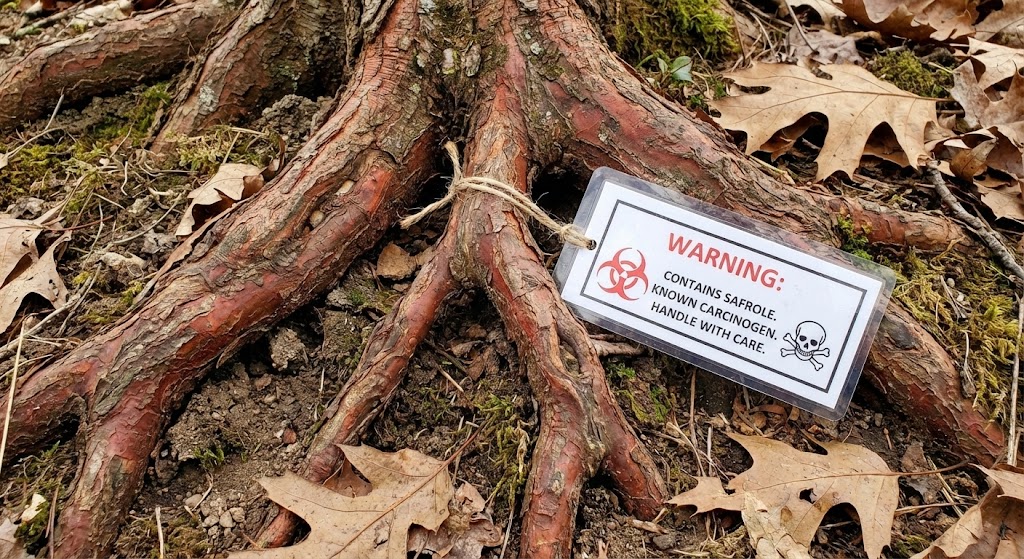
Sassafras Tea: The Original Root Beer Ingredient (Now Banned)
Sassafras albidum was traditional North American medicinal tearoots/bark brewed for "spring tonic," blood purifier, fever reducer. Distinctive root beer flavor (sweet, spicy, vanilla notes) made it popular beverage 1800s-early 1900s. Then research discovered: sassafras root contains 80-90% safrole (essential oil component) which causes liver cancer in rats. FDA banned safrole for food use 1960, ending traditional sassafras tea consumption and forcing reformulation of root beer with synthetic flavorings. Similar processing changes affect tea traditions, along with safety standards and cancer research.
The carcinogen chemistry: safrole metabolizes in liver to 1'-hydroxysafrole via cytochrome P450 enzymes, which further converts to reactive carbocation that alkylates (binds covalently) DNA causing mutations. Long-term exposure increases hepatocellular carcinoma (liver cancer) risk. Animal studies: rats fed 0.5-1% safrole diet developed liver tumors within 1-2 years. Human equivalent dose: ~10-20mg/kg body weight daily. One cup sassafras tea contains ~200-400mg safroleenough to approach concerning chronic exposure levels.
Why Root Beer Tastes Like Sassafras (Without the Cancer Risk)
Original root beer (1870s-1960s) was sassafras root extract fermented with sugar/yeastalcoholic beverage with distinct safrole flavor. Modern root beer uses artificial sassafras flavor (methyl salicylate, vanillin, other esters) or safrole-free sassafras extract. FDA requires safrole content <1ppm in commercial products (vs 80,000-90,000ppm in natural sassafras oil). Result: same flavor profile, zero carcinogen exposure. This is example of successful regulationban toxic compound, allow safe alternative.
The Dose-Response Debate: Is Sassafras Tea Truly Dangerous?
Cancer studies used very high doses (0.5-1% of diet = human consuming 500-1000g safrole daily). Realistic human consumption (1-2 cups traditional tea occasionally) provides ~200-400mg safrole = far below rodent study doses. Some argue: extrapolating high-dose rat data to low-dose human use is scientifically invalid. Counterargument: no safe threshold exists for genotoxic carcinogens (compounds that damage DNA)any exposure carries risk, just probability varies with dose. Toxicology frameworks contrast with beneficial tea compounds, overdose thresholds, and absorption rates.
The precautionary principle: FDA applied zero-tolerance for carcinogens in food (Delaney Clause) banning safrole despite dose uncertainty. Modern risk assessment would calculate "de minimis risk" threshold (acceptable cancer risk 1 in 1 million) but 1960s regulation was categorical ban. Whether occasional sassafras tea cup meaningfully increases cancer risk above baseline is unknownlack of human epidemiology data (too few people drink it long-term to study). In absence of safety data, avoidance is rational choice.
| Carcinogenic Food | Active Carcinogen | Cancer Type | Exposure Source | Regulatory Status | Relative Risk |
|---|---|---|---|---|---|
| Sassafras Tea | Safrole | Liver cancer | Root/bark tea | Banned (>1ppm) | Unknown (insufficient human data) |
| Betel Quid | Arecoline, nitrosamines | Oral cancer | Chewing betel nut+leaf | Legal (IARC Group 1) | Very high (50-100x increase) |
| Bracken Fern | Ptaquiloside | Stomach cancer | Fern shoots (food) | Legal (traditional food) | Moderate (2-3x increase Japan) |
| Alcohol | Acetaldehyde | Multiple (liver, throat, breast) | Alcoholic beverages | Legal (age-restricted) | Dose-dependent (heavy use high risk) |
| Processed Meat | N-nitroso compounds | Colorectal cancer | Bacon, sausage, ham | Legal (IARC Group 1) | Moderate (18% increase per 50g/day) |
MDA/MDMA Connection: Safrole as Precursor Chemical
Safrole gained notoriety 1980s-present as chemical precursor for synthesizing MDA (3,4-methylenedioxyamphetamine) and MDMA (ecstasy). The synthesis: safrole ? isosafrole (via base isomerization) ? MDP2P (via oxidation) ? MDA/MDMA (via reductive amination). This made sassafras oil a DEA-watched substanceimporting large quantities triggers drug trafficking investigation despite sassafras itself being legal plant.
The legal paradox: possessing sassafras tree or small personal-use quantity of root is legal. Extracting safrole oil in bulk is effectively illegal (precursor chemical restrictions). Brewing tea from roots occupies grey arealegal as traditional botanical use, illegal if deemed "safrole manufacture." This creates chilling effect: people avoid traditional practice fearing prosecution despite legality. Similar to coca tea legal paradoxes where traditional use criminalized via drug war. See kratom regulations and plant medicine law.
Appalachian Folk Medicine: Cultural Loss from FDA Ban
Sassafras tea was Appalachian cultural traditionspring ritual, medicinal tonic, social beverage. The FDA ban (focused on carcinogen elimination) didn't account for cultural significance loss. Older generation still remembers sassafras tea as childhood treat, younger generation knows only artificial root beer flavor. This represents biodiversity/ethnobotanical knowledge erosiontraditional plant use disappearing within 1-2 generations.
Whether loss is justified depends on risk calculation: if sassafras tea truly causes meaningful cancer increase, ban protects public health (benefit exceeds cultural cost). If actual risk is negligible at traditional use levels, ban is regulatory overreach destroying culture without justification. Lack of human data means we can't definitively answer thisanimal studies suggest risk exists, magnitude at realistic doses unknown. Precautionary approach accepts cultural loss to avoid potential harm.
Historical Root Beer and Sassafras Facts
- Root beer origins: Invented 1870s by Charles Hires, originally called "root tea" to appeal to temperance movement (non-alcoholic alternative)
- Safrole use ban timeline: FDA prohibited safrole in food 1960. Commercial root beer reformulated 1960-1964 with synthetic flavors
- Sassafras-free sassafras: Some producers extract safrole from sassafras, then add back safrole-free extract for authentic flavor without carcinogen
- Wild sassafras still grows: Tree remains common in Eastern USA forests. Harvesting roots for personal tea use isn't prosecuted (gray area)
- Modern "sassafras tea" products: Usually contain safrole-free extract or are mislabeled (contain actual safrole illegally). Check lab analysis if concerned
The bottom line: safrole is probable human carcinogen (IARC Group 2B) based on sufficient animal evidence. Traditional sassafras tea was real cultural practice, not frivolous use. FDA ban was blunt instrumenteliminated exposure but also eliminated tradition. Alternative preserving culture might have been: safrole-free extract standardization, warning labels allowing informed choice. Instead absolute prohibition occurred. This pattern repeats with comfrey and pennyroyal. Herbal regulation struggles to balance traditional use freedom vs public health protection, seen also in botanical vs purified drug laws. Compare to modern safety standards in certified production, organic certification, and ethical sourcing.
Comments