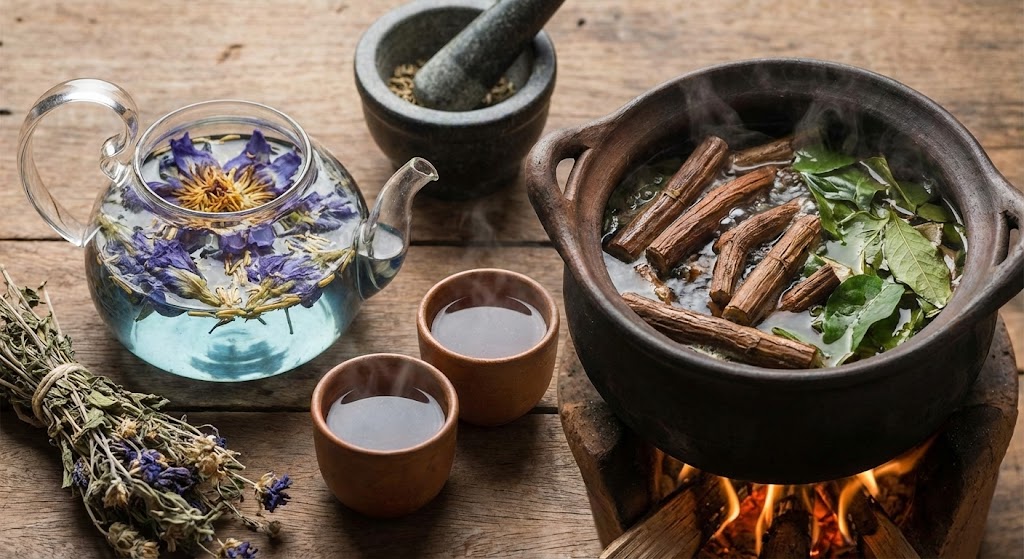
The History of Psychoactive Plant Teas
Throughout history, humans brewed psychotropic plants as teas for ritual, medicine, recreation: Blue Lotus (Nymphaea caerulea) in ancient Egypt for aporphine/nuciferine mild euphoria, Ayahuasca vine (Banisteriopsis caapi) in Amazon for DMT visions, Kava (Piper methysticum) in Pacific for kavain sedation, Kratom (Mitragyna speciosa) in Southeast Asia for opioid-like effects. These aren't Camellia sinensis tea—they're pharmacologically active drugs brewed as infusions. Similar concentration methods appear in Russian chifir.
The chemistry distinction: Camellia sinensis contains caffeine (stimulant) and L-theanine (calming amino acid)—mild psychoactive effect comparable to coffee. Psychotropic plant teas contain alkaloids that cross blood-brain barrier affecting neurotransmitter systems: dopamine (euphoria), serotonin (hallucinations), GABA (sedation), opioid receptors (analgesia/addiction). The effects are drug-like, not beverage-like.
Blue Lotus: Ancient Egyptian "Marijuana"
Blue Lotus flowers contain aporphine (dopamine agonist) and nuciferine (dopamine modulator) causing mild euphoria, relaxation, aphrodisiac effects when brewed as tea (5-10g flowers in 500ml hot water, steep 15 minutes). Effects: 1-2 hours gentle relaxation, some users report enhanced meditation/creativity. Legal UK/USA but weak compared to modern drugs. Historical use: soaked in wine for Egyptian rituals, depicted in hieroglyphics.
Blue Lotus vs Cannabis: Chemistry Comparison
Blue Lotus aporphine is dopamine receptor agonist (activates D1/D2 receptors directly). Cannabis THC is CB1 receptor agonist (activates endocannabinoid system). Both produce euphoria but via different neurotransmitter pathways. Blue Lotus is far weaker—comparable to 2-3 beers alcohol level, not comparable to modern high-THC cannabis (15-25% THC).
Effects comparison: Blue Lotus = subtle relaxation, mild aphrodisiac, slightly dreamy state, clear-headed. Cannabis = moderate-strong euphoria, perceptual changes, impaired cognition, anxiety (in some). Blue Lotus legal because effects are weak enough to avoid scheduling. Cannabis illegal UK (Class B) because effects strong enough to constitute abuse potential. The legal/illegal line is arbitrary but reflects potency difference. Compare to sassafras carcinogen status and comfrey hepatotoxicity.
| Plant | Active Compound | Mechanism | Effect Strength | Legal Status UK | Duration |
|---|---|---|---|---|---|
| Blue Lotus | Aporphine/Nuciferine | Dopamine agonist | Mild (beer-like) | Legal | 1-2 hours |
| Kava | Kavalactones | GABA modulation | Moderate (alcohol-like) | Legal (restricted) | 2-4 hours |
| Kratom | Mitragynine | Opioid receptor agonist | Moderate (weak opioid) | Legal UK, banned USA some states | 3-5 hours |
| Cannabis | THC | CB1 receptor agonist | Moderate-strong | Illegal (Class B) | 2-6 hours |
| Ayahuasca | DMT + MAO inhibitor | Serotonin agonist | Very strong (hallucinogen) | Legal plants, controlled DMT | 4-8 hours |
Why Some Are Legal, Others Aren't
Psychotropic plant legality doesn't follow consistent pharmacology—it's historical accident + moral panic + political pressure. Blue Lotus legal because effects too mild to attract enforcement attention. Kava legal in UK but caused liver damage scares leading to EU restrictions (since lifted). Kratom legal UK but USA DEA attempted ban (failed due to public backlash). Cannabis illegal despite medical benefits due to 1960s-1970s drug war politics. See tea ethics considerations for regulatory frameworks.
The scheduling paradox: alcohol (neurotoxic, addictive, socially destructive) is legal and culturally normalized. Cannabis (lower toxicity, lower addiction potential, medical applications) is Schedule I. Tobacco (highly addictive, kills 8 million annually) is legal. Kratom (less addictive than coffee, medical potential for opioid withdrawal) faces bans. Regulation reflects political history not harm reduction science. Related legal paradoxes: coca tea legal Peru, felony USA, kratom botanical vs drug status.
Ayahuasca: The Shamanic DMT Tea
Ayahuasca combines Banisteriopsis caapi vine (MAO inhibitor) + Psychotria viridis leaves (DMT source) to create powerfully hallucinogenic brew. DMT (N,N-Dimethyltryptamine) is normally inactive orally because MAO enzyme in gut destroys it before absorption. B. caapi MAO inhibitors (harmine, harmaline) block this degradation, allowing DMT to reach bloodstream and brain. Result: 4-8 hour intense visual hallucinations, profound psychological experience, frequent vomiting ("purging").
Used in Amazonian shamanic traditions for millennia, ayahuasca tourism boomed 2000s-present with Westerners seeking spiritual experiences. The legal status is complicated: DMT is Schedule I controlled substance UK/USA, but the plants themselves aren't explicitly illegal to possess. Drinking ayahuasca in retreat context exists in legal grey area—plant material legal, extracted DMT illegal. This creates legal framework for ceremonial use while prohibiting street drug form. The psychological effects parallel tea meditation practices in traditional ceremonial contexts.
Psychotropic Plant Tea Safety Considerations
- Research legal status: Varies by jurisdiction. What's legal in Peru may be felony in USA. Check local law before importing/possessing
- Understand drug interactions: MAO inhibitors (ayahuasca) interact dangerously with antidepressants (SSRIs), tyramine-rich foods causing hypertensive crisis
- Set and setting: Psychedelic experiences highly dependent on environment, emotional state. Bad setting = bad trip risk
- Start low dose: Traditional preparations vary wildly in potency. Begin with minimal dose to assess sensitivity
- Have sober guide: Never use strong psychotropics alone. Experienced sitter essential for safety during multi-hour experiences
Modern perspective: Some psychotropic plant teas show medical potential (psilocybin for depression, ayahuasca for PTSD, kratom for opioid withdrawal), but recreational use carries risks—psychological distress, triggering latent psychosis, physical dangers during impairment. These aren't casual beverages like tea/coffee—they're tools requiring respect, knowledge, appropriate context. Understanding plant toxicology and forensic analysis helps distinguish environmental contamination from intentional poisoning.
Comments