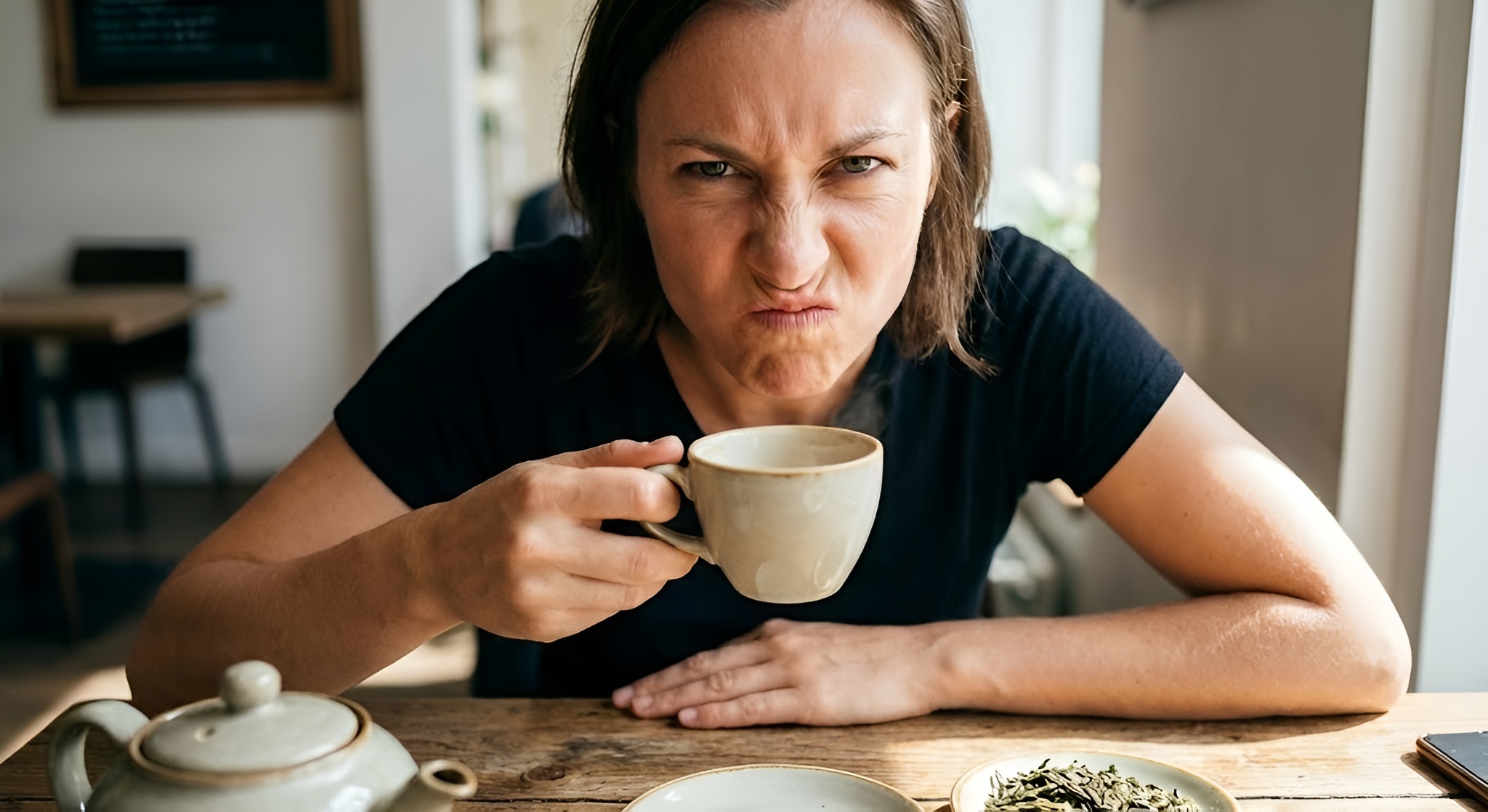
1. The Chemistry of Flavor: The Race Between Sweet and Bitter
To understand bitterness, we must look at the leaf under a microscope. Green tea leaves contain three primary groups of flavor compounds, and they dissolve at different speeds and temperatures. Brewing tea is essentially a race: you want to extract the good compounds before the bad ones overwhelm them.
The Good Guys: Amino Acids (Theanine)
Flavor: Sweet, savory, brothy (Umami).
Solubility: These are the first to dissolve. They extract easily in water, even at low temperatures (50°C+). This is what you want. High-grade Japanese teas like Gyokuro are packed with L-Theanine because they are shaded from the sun before harvest.
The Bad Guys: Catechins & Tannins (polyphenols)
Flavor: Bitter, astringent, dry mouthfeel (like unripe persimmon or red wine).
Solubility: These are stubborn. They require high heat and time to extract. If you use boiling water (100°C), the catechins (specifically Epigallocatechin Gallate, or EGCG) rush out of the leaf instantly, overwhelming the delicate amino acids.
The caffeine
Flavor: Bitter.
Solubility: Highly soluble in hot water. The hotter the water, the more bitter caffeine is released. Interestingly, caffeine also enhances the perception of bitterness from tannins.
The Goal: You want to extract the Amino Acids (Sweet) while keeping the Catechins (Bitter) trapped inside the leaf. The only way to do this is by lowering the temperature.
Need Precise Control?
You can't guess 80°C. The single best investment for green tea lovers is a Variable Temperature Kettle. It lets you set the exact degree. See our top pick: The 6 Essential Tea Tools →
2. The Thermodynamics of Brewing: Why 100°C is Deadly
Black tea is fully oxidized. The cells are hard and woody. They need boiling water to break down the cell walls. Green tea is unoxidized. The vegetable cells are fresh and fragile. Pouring boiling water on them is like boiling a fresh salad lettuce—it cooks the leaf instantly ("stewing") and releases a metallic, swampy taste.
[Image of green tea brewing temperature chart]| Tea Type | Ideal Temp | Steep Time | Flavor Result |
|---|---|---|---|
| Gyokuro (Premium) | 50°C - 60°C | 2 mins | Pure Umami soup |
| Sencha (Standard) | 70°C - 80°C | 1 min | Sweet, grassy, fresh |
| Dragon Well (Chinese) | 80°C - 85°C | 2-3 mins | Toasted chestnut, sweet |
| Gunpowder (Strong) | 85°C | 2 mins | Smoky, bold |
3. The Water Chemistry Factor: Hard vs. Soft Water
If you are brewing at the right temperature but your tea is still bitter or muddy, check your tap water. Water quality makes up 99% of the cup, and chemistry plays a huge role.
Hard Water (Calcium Carbonate):
If you live in London or areas with limestone, your water is "Hard." Calcium reacts with tea tannins to form a visible scum on the surface. This reaction kills the top notes (aroma) and highlights the base notes (bitterness). It makes premium tea taste flat and dull.
Soft Water:
Japanese tea is designed for Japanese water, which is incredibly soft (low mineral content). Soft water allows the delicate, sweet notes to shine. If you have hard water, use a Brita filter or buy bottled spring water (like Ashbeck or Volvic) for your green tea. The difference is night and day.
4. The "Rescue" Protocol: Fixing a Bitter Cup
So you brewed it wrong, and now it tastes like battery acid. Can you save it? Yes. Don't pour it down the sink yet.
Method 1: The Dilution
Add hot water. Diluting the concentration lowers the perception of bitterness. It won't bring back the sweetness, but it makes it drinkable. Think of it like an Americano coffee—watering down a strong espresso.
Method 2: The "Ice Shock"
Pour the hot tea over a glass full of ice immediately. Cooling the liquid reduces our tongue's perception of bitterness. Cold tea always tastes sweeter than hot tea because our taste buds are less sensitive to astringency at low temperatures.
Method 3: The "Fat" Fix (Matcha Only)
If your Matcha is bitter, add milk (oat or dairy). The fat molecules bind to the catechins and neutralize the astringency. This is why Matcha Lattes are so popular—they hide the bitterness of low-quality powder.
Why Does Green Tea Make Me Sick?
Bitterness and Nausea often go together. If you drink bitter tea on an empty stomach, the tannins will attack your stomach lining, causing "Tea Drunkenness." Learn the cure: Why Green Tea Makes You Sick →
5. Quality Control: Is Your Tea Just Bad?
Sometimes, it's not you. It's the tea. Even the best chef can't make a good salad with rotten lettuce.
- Harvest Time: Tea picked in Spring (Ichibancha) is sweet. Tea picked in Summer (Bancha) has been baking in the sun, producing massive amounts of bitter catechins to protect itself from UV rays. Cheap tea bags are almost always Summer harvest.
- The "Dust" Factor: Tea bags containing dust release tannins instantly. You cannot control the brew. Switching to loose leaf allows you to control the extraction speed.
- oxidation (Staling): Green tea is unstable. If your tea has been sitting in a glass jar or an open bag for 6 months, it has oxidized. It turns brown and tastes metallic. Green tea must be fresh.
The Shade Factor (Umami)
The secret to sweet Japanese tea is Shading. Farmers cover the tea bushes with black nets for 2-3 weeks before harvest. This blocks the sun, preventing the plant from turning sweet Amino Acids (Theanine) into bitter Catechins. If you buy "Kabusecha" (Shaded Tea) or Gyokuro, you are paying for this sweetness.
Looking for Sweet Green Tea?
Don't buy bitter supermarket dust. We tested the best Japanese Sencha and Chinese Dragon Well teas that are naturally sweet and nutty. See our top picks: The 6 Best Green Teas of 2025 →
6. The Ultimate Solution: Cold Brewing (Mizudashi)
If you simply cannot get the temperature right, or if you have low-quality tea you want to use up, there is a magic bullet: Cold Brewing.
The Science: Tannins and Caffeine are barely soluble in cold water. Amino Acids (Sweetness) are highly soluble in cold water.
By brewing in the fridge overnight, you chemically selectively extract only the sweet parts of the tea leaf. The bitterness stays trapped in the leaf structure. It is impossible to make bitter cold brew.
How to do it:
1. Put 10g of tea in a bottle.
2. Fill with cold water.
3. Leave in fridge for 4-8 hours.
4. Strain and enjoy the sweetest tea you've ever tasted.
Comments