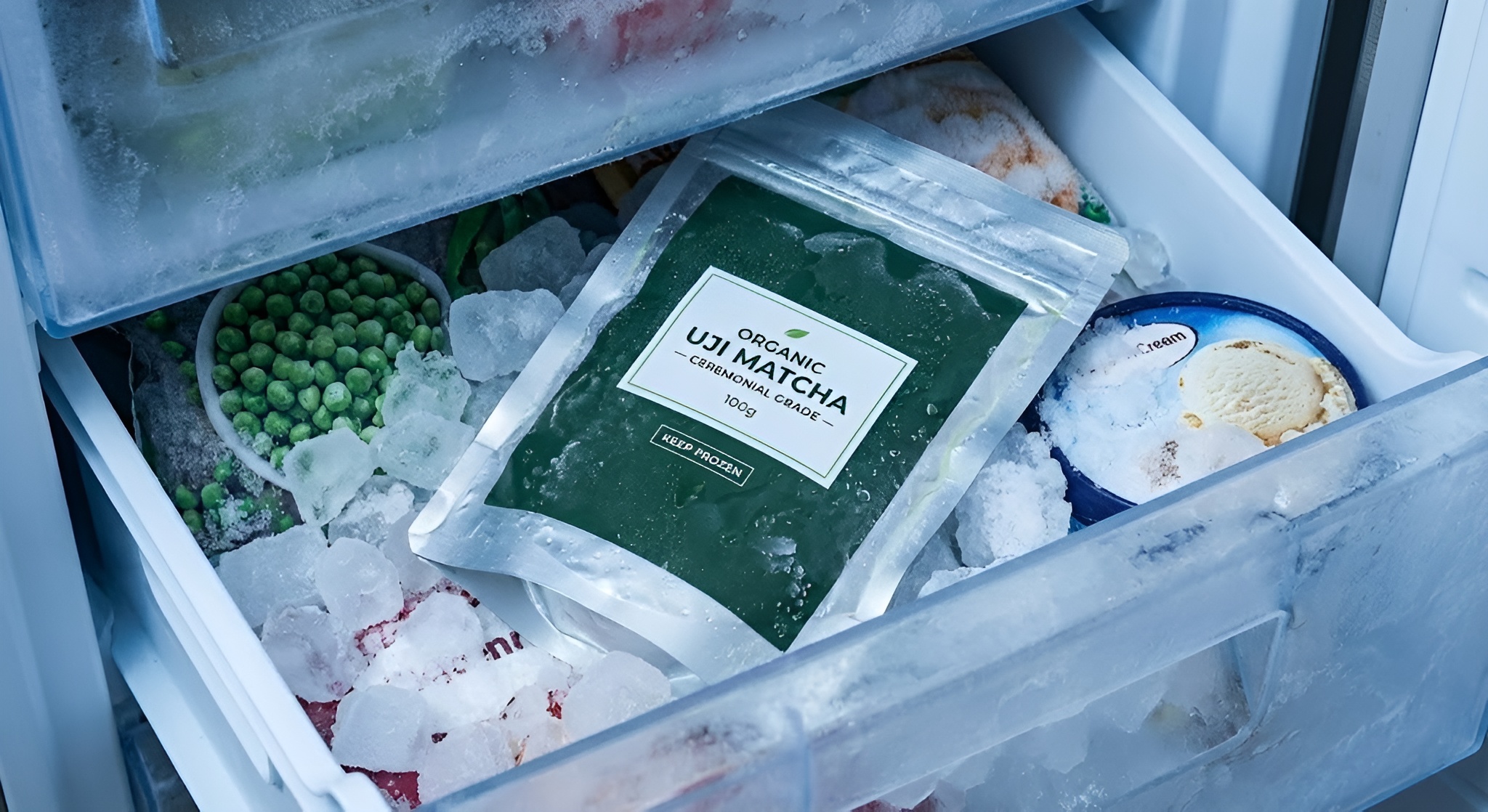
1. The Science: Hygroscopy and "The Flash"
Tea leaves are dried during manufacture to a moisture content of roughly 3-5%. This makes them hygroscopic, meaning they are chemically desperate to absorb water from their environment.
When you freeze tea, the cold temperature preserves the catechins (antioxidants). This is good. The problem arises when you take it out. If you open a cold canister in a warm kitchen, the warm air hits the cold tea leaves and flash condenses.
You might not see it, but a microscopic layer of water forms on every leaf. When you put the tin back in the freezer, that water freezes into ice crystals, damaging the cell walls. Repeat this 3-4 times, and your premium tea turns into flavorless, damp mulch.
Expert Tip: The 24-Hour Thaw Rule
If you do freeze your tea stash, you must never open it while cold. Take the bag out of the freezer and let it sit on the counter for 24 hours before breaking the seal. This allows the tea to reach room temperature gradually, ensuring condensation happens on the outside of the bag, not on the leaves.
2. The Exception: Matcha and delicate Greens
While we advise against freezing robust teas like Assam or Oolong, delicate Green Teas are a different story. Matcha, Gyokuro, and fresh Sencha degrade rapidly at room temperature—they can lose their vibrant green color in weeks.
For these teas, the freezer is a valid tool for unopened, long-term storage. If you buy Matcha in bulk (e.g., 3 tins at a time), keep one in the fridge for daily use and the other two in the freezer.
Expert Tip: The "Daily vs. Hoard" Strategy
Divide your tea into two categories: "Drinking Now" and "The Hoard." The "Drinking Now" tea belongs in a metal tin in a cool cupboard (See our Tins vs. Glass Guide). Only "The Hoard"—vacuum sealed bags you won't touch for 6 months—belongs in the freezer.
3. The Odor Risk (Lasagna Tea)
Your freezer is full of volatile aromatic compounds from frozen fish, onions, leftovers, and ice cream. Tea leaves are natural deodorizers (people actually use dry tea leaves to clean carpets). If you put a loosely sealed tea bag in the freezer, it will absorb those odors within days.
There is nothing worse than brewing a cup of delicate Silver Needle and tasting last month's chili.
Expert Tip: Double Bagging
If you must freeze tea, the manufacturer's packaging is rarely enough. Place the original sealed foil bag inside a heavy-duty freezer Ziploc bag. Squeeze as much air out as possible before sealing. This creates a secondary barrier against smells.
4. Teas You Should NEVER Freeze
Some teas are effectively ruined by freezing. Pu-erh and Dark Teas (Hei Cha) are fermented products containing live microbial cultures. They need oxygen and ambient humidity to age and improve. Freezing them puts the bacteria into dormancy or kills them, halting the aging process permanently. It can also dry out the cake, causing it to crack and lose flavor.
Similarly, heavily roasted Oolongs (like Da Hong Pao) and Black Teas are shelf-stable for years at room temperature. Freezing them introduces risk with zero benefit.
Expert Tip: Pu-erh needs a Pumidor
Instead of a freezer, Pu-erh needs a controlled warm, humid environment. Serious collectors build a "Pumidor" (a converted fridge or cooler) to maintain 65% humidity. Read our guide on How to Build a Pumidor.
Summary: To Freeze or Not To Freeze?
| Tea Type | Condition | Freezer? | Verdict |
|---|---|---|---|
| Matcha / Green | Sealed | YES | Excellent for long term (>3 months). Thaw 24hrs before opening. |
| Matcha / Green | Opened | NO | Condensation will ruin it. Keep in fridge or cool cupboard. |
| Black / Oolong | Sealed | NO | Unnecessary. They are stable at room temp for 2+ years. |
| Pu-erh / Dark | Any | NEVER | Kills the aging process. Requires airflow and humidity. |
| Herbal / Fruit | Any | NO | Dried fruit pieces may become gummy or freeze-burned. |
Expert Tip: Vacuum Sealing is Better
If you want to preserve freshness without the risks of freezing, invest in a simple vacuum sealer. Removing the oxygen from the bag prevents oxidation (staling) just as effectively as cold, but without the moisture risk.
Worried your tea is already spoiled?
Found a bag of tea in the back of the freezer from 2019? Before you brew it, learn the 3 tell-tale signs that tea has gone bad: Does Tea Expire? The "Sniff Test" Guide →
Comments