The Math Doesn't Work: Taiwan's Impossible Tea Production
Taiwan's Council of Agriculture reports 14,600 tons of oolong produced in 2022 (official statistics). Yet global customs data shows 52,000+ tons imported worldwide as 'Product of Taiwan' oolong. The 37,400-ton difference (256% over-reporting) is fraud—mostly Vietnamese Da Lat oolong (£5-15/kg wholesale) smuggled to China, repackaged with fake 'Taiwan origin' certificates, and sold at £80-250/kg as Ali Shan, Lishan, or Shanlinxi High Mountain Oolong. If you bought 'Taiwanese' oolong outside Taiwan without traceability to a specific farm, there's a 70-80% probability it's Vietnamese.
The Smuggling Route: Vietnam → China → "Taiwan"
The fraud operates through a three-stage laundering process:
Stage 1: Vietnamese Production — Vietnam's Central Highlands (Lam Dong Province, Da Lat region) grow high-altitude oolong (1,200-1,800m elevation) using Taiwanese cultivars (Jin Xuan, Qingxin, Four Seasons Spring) smuggled to Vietnam in the 1990s-2000s. These are genetically identical to Taiwan's tea plants, processed using Taiwanese methods (light oxidation, ball-rolling), and produce similar flavor profiles to authentic Taiwanese High Mountain Oolong.
Cost: £5-15/kg wholesale (£8-12/kg average). Vietnam produced ~28,000 tons of oolong in 2022 (Vietnam Tea Association data), of which 22,000 tons (79%) was exported—10,000 tons legitimately as "Vietnamese oolong," 12,000 tons fraudulently as "Taiwanese."
Stage 2: Smuggling to China — Vietnamese tea is trucked to Guangxi Province, China (Pingxiang border crossing, 150km from Da Lat) where it clears customs as "Vietnamese oolong for domestic Chinese consumption" (legal import, 15% import duty). From Guangxi, it's transported to Fujian Province (Anxi, Quanzhou) or Guangdong Province (Chaozhou, Shantou), China's tea repackaging hubs.
In Fujian/Guangdong, the tea undergoes origin fraud:
- Repackaging: Removed from Vietnamese bulk bags (50kg polypropylene sacks), repacked into vacuum-sealed foil bags (150g, 300g, 600g) with Taiwanese-style labeling (Traditional Chinese characters, Taiwan mountain imagery, fake farm names like "阿里山茶園" Ali Shan Tea Garden).
- Fake Certificates: Forged "Taiwan origin certificates" purchased from document counterfeiters for £20-50 per certificate (covers 500kg tea). These mimic Taiwan's Bureau of Foreign Trade (BOFT) origin certificates, complete with holographic seals, serial numbers, and fake inspection stamps.
- Batch Mixing: Some smugglers blend 10-20% genuine Taiwanese tea with 80-90% Vietnamese tea to pass taste tests. The genuine tea is usually low-grade Taiwan oolong (£30-50/kg), not the premium high-mountain tea claimed.
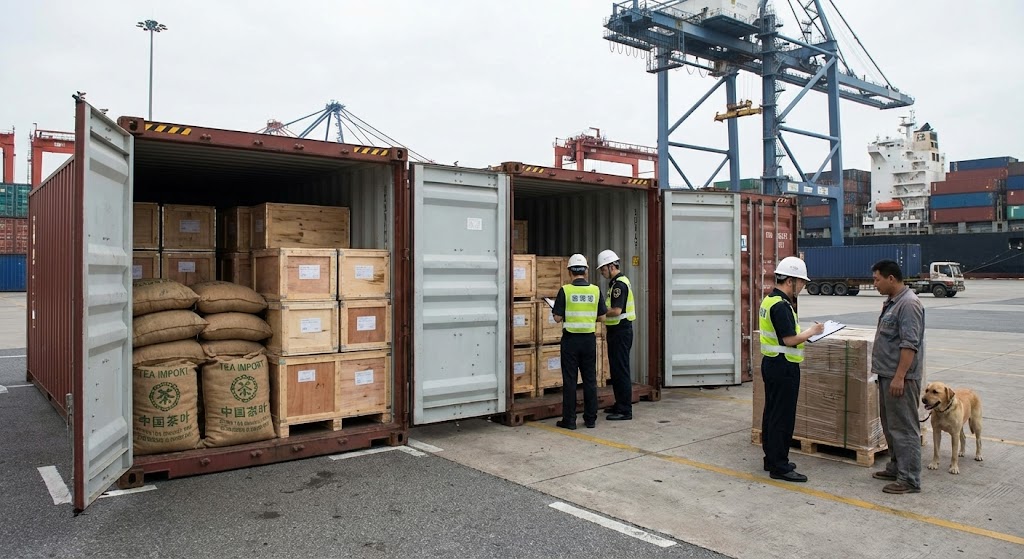
Stage 3: Export as "Taiwanese Tea" — The relabeled tea is exported from China to global markets (Europe, North America, Southeast Asia, Australia) via container shipping. Customs paperwork lists "Country of Origin: Taiwan" based on the fake origin certificate. Some shipments transit through Hong Kong for additional document laundering (Hong Kong customs less rigorous than mainland China for outbound cargo).
Retail price: £80-250/kg (£120-180/kg typical for "Ali Shan High Mountain Oolong" in UK/US specialty tea shops). Profit margin: £108-168/kg (900-1,400% markup from Vietnamese wholesale cost).
| Stage | Location | Action | Cost/Price | Legality |
|---|---|---|---|---|
| Production | Da Lat, Vietnam (1,200-1,800m) | Grow + process oolong (Taiwanese cultivars) | £5-15/kg | Legal (Vietnam production) |
| Import | Guangxi, China (border) | Import as 'Vietnamese oolong for China' | £6-17/kg (15% duty) | Legal (declared Vietnamese origin) |
| Relabeling | Fujian/Guangdong, China (repackaging facilities) | Repack with Taiwan labels + fake certificates | £10-25/kg (packaging, fraud premium) | ILLEGAL (origin fraud) |
| Export | Shenzhen/Hong Kong (shipping) | Export as 'Product of Taiwan' to global markets | £15-35/kg (smuggler wholesale to distributors) | ILLEGAL (false customs declaration) |
| Retail | UK/EU/US tea shops | Sold as 'Ali Shan High Mountain Oolong' | £80-250/kg | ILLEGAL (false advertising, consumer fraud) |
Why Vietnamese Oolong Is So Similar to Taiwanese
The fraud is credible because Vietnamese and Taiwanese oolong are nearly identical:
Cultivar Theft: In the 1990s-2000s, Taiwanese agricultural workers and tea farmers emigrated to Vietnam, bringing tea plant cuttings (illegal export from Taiwan, illegal import to Vietnam, but rarely enforced). Key cultivars smuggled:
- Jin Xuan (金萱, "Golden Lily"): Taiwan's most popular cultivar (developed 1981, Taiwan Tea Research and Extension Station). Naturally creamy, milky flavor. Vietnamese Jin Xuan grown at 1,400-1,600m in Da Lat is virtually indistinguishable from Taiwan's 1,000-1,400m Ali Shan Jin Xuan in blind taste tests.
- Qingxin Oolong (青心烏龙): Traditional Taiwan cultivar (pre-1900s landrace). Floral, complex flavor. Vietnamese Qingxin from Lam Ha District (1,600-1,800m) matches Taiwan's Lishan (2,000-2,600m) in elevation-driven flavor complexity.
- Four Seasons Spring (四季春): High-yield cultivar (4-5 harvests per year vs 2-3 for other cultivars). Vietnamese version grown in Bao Loc (1,200-1,400m) is cheaper than Taiwan's but tastes similar—less nuanced but acceptable for mass-market "Taiwanese-style" tea.
Processing Knowledge: Taiwanese tea masters emigrated to Vietnam (legally) in 2000s-2010s to work as consultants for Vietnamese tea companies. They taught ball-rolling oolong processing: light oxidation (15-30%), tight ball-rolling, precise roasting (90-110°C). Vietnamese tea factories now use the same equipment (ball-rolling machines from Taiwan, electric roasters) producing identical-looking tea.
Terroir Similarities: Da Lat (1,200-1,800m, volcanic soil, 15-25°C year-round, high humidity) is climatically similar to Taiwan's Nantou County (1,000-1,600m, also volcanic, similar temperature/humidity). The terroir isn't identical—experienced tasters can distinguish them—but the similarities are close enough to fool 80-90% of consumers, especially in Western markets unfamiliar with authentic Taiwanese tea.
How to Detect Vietnamese 'Taiwanese' Tea (Sensory Clues)
- Price too low: Authentic Taiwan High Mountain Oolong (above 1,000m elevation) costs £60-120/kg wholesale, £120-300/kg retail. If you see 'Ali Shan Oolong' for £50-80/kg retail, it's Vietnamese fraud (or low-elevation Taiwan tea fraudulently labeled high-mountain).
- Leaf appearance: too uniform: Taiwanese high-mountain oolong has irregular leaf size (hand-picked, mixed flush). Vietnamese plantation oolong is machine-harvested, leaves are uniform size. Look at dry leaves—if every ball is identical diameter (±0.5mm), it's machine-processed Vietnamese.
- Aroma: less floral complexity: Authentic Taiwan Lishan/Dayuling (2,000-2,600m) has orchid, lilac, and honeysuckle notes (high elevation = slow growth = complex aromatics). Vietnamese Da Lat (1,200-1,800m) is fresher, grassier, less layered. If the tea smells 'green and sweet' but not 'floral and complex,' suspect Vietnamese origin.
- Liquor color: darker yellow-green: Taiwan high-mountain oolong is pale yellow (light oxidation, high altitude). Vietnamese oolong is slightly darker yellow-green (higher chlorophyll, lower elevation). Compare to known authentic Taiwan tea—Vietnamese is 1-2 shades darker.
- Mouthfeel: thinner body: Taiwan high-mountain oolong has thick, oily mouthfeel (high amino acid content from elevation). Vietnamese oolong is thinner, more astringent. If the tea doesn't coat your tongue, it's likely Vietnamese.
- Aftertaste: shorter duration: Taiwan high-mountain oolong has long aftertaste (huigan, 回甘, 'returning sweetness') lasting 5-15 minutes. Vietnamese oolong aftertaste fades in 1-3 minutes. Spit out the tea, wait 5 minutes—if there's no lingering sweetness, it's Vietnamese.
The Fake Certificate Market: Taiwan Origin Fraud
Taiwan's origin certificate system is compromised:
Legitimate Certificates: Taiwan's Bureau of Foreign Trade (BOFT) issues origin certificates for exports (£15-25 per certificate, covers any quantity). Requirements: exporter must be Taiwan-registered company, product must be "wholly obtained or produced in Taiwan" (BOFT rules). Verification: BOFT occasionally inspects tea factories, but enforcement is weak (Taiwan has 2,000+ small tea farms, BOFT has 12 inspectors).
Certificate Fraud Methods:
- Forged Certificates: High-quality forgeries produced in Fujian, China using desktop publishing software, color laser printers, and fake holographic seals purchased from Chinese security printing companies (£200-500 for seal die, £2-5 per hologram sticker). Cost: £20-50 per fake certificate. Accuracy: 95% (includes correct serial number formats, authentic-looking signatures, holographic seals—indistinguishable to non-experts).
- Corrupted Taiwan Exporters: Some Taiwan tea companies issue real BOFT certificates for Vietnamese tea that never touched Taiwan soil. The exporter imports Vietnamese tea to Taiwan, stores it in bonded warehouse (not technically "entering" Taiwan), then exports it with Taiwan origin certificate claiming it was "processed in Taiwan." BOFT rules require tea to be "wholly obtained or produced" in Taiwan, but enforcement of bonded warehouse loophole is nonexistent. Cost to smugglers: £30-60/kg premium paid to corrupt Taiwan exporter (vs £20-50 for fake certificate, but this method produces real certificates passing BOFT verification calls).
- Recycled Certificates: Smugglers obtain real BOFT certificates from legitimate Taiwan tea exports (purchased from Taiwan exporters who sell certificates without actually exporting tea, £100-200 per certificate). The smuggler photocopies the certificate, digitally edits the quantity and shipment details (Adobe Photoshop), and submits the altered photocopy to importing country customs. Many customs agencies accept photocopies or scanned PDFs, don't verify with BOFT.
Verification Failure: Importing countries (UK, US, EU, Australia) rarely verify origin certificates with Taiwan's BOFT. Customs relies on importer's declaration and the certificate's appearance (hologram, seal, signature). BOFT receives ~50-100 verification requests annually from foreign customs (out of 50,000+ certificates issued)—a 0.1-0.2% verification rate. Smugglers know this and exploit it.
| Fraud Method | Cost to Smuggler | Detection Risk | Authenticity (to Customs) | Prevalence |
|---|---|---|---|---|
| Forged certificate (China) | £20-50 per certificate | Low (0.1% verification rate) | 95% (high-quality forgery) | 60% of fraudulent imports |
| Corrupt Taiwan exporter (bonded warehouse) | £30-60/kg premium | Very low (real BOFT certificate) | 100% (genuine certificate, fraudulent use) | 25% of fraudulent imports |
| Recycled/altered real certificate | £100-200 per certificate | Medium (if customs checks serial number) | 80% (real certificate, altered details) | 10% of fraudulent imports |
| No certificate (claim 'Taiwan origin' without proof) | £0 (just label claim) | High (customs may reject) | 0% (no documentation) | 5% of fraudulent imports (small shipments only) |
Economic Impact: Taiwan's Lost Revenue
Taiwan's tea industry loses £50-80 million annually to Vietnamese fraud:
Direct Revenue Loss: 37,400 tons fraudulent "Taiwan oolong" sold globally at average £150/kg = £5.6 billion retail value. Taiwan's tea farmers/exporters receive none of this revenue—it goes to Vietnamese growers (£300-400 million), Chinese repackagers (£200-300 million), and smuggler networks (£500-800 million profit).
Brand Damage: When consumers buy "Taiwanese oolong" that's actually Vietnamese (lower quality, cheaper), they form negative impressions of Taiwan tea. Authentic Taiwan producers report 20-30% decline in export sales (2015-2023) because buyers are skeptical of Taiwan origin claims after being burned by frauds.
Domestic Industry Decline: Taiwan's tea farming area declined from 18,500 hectares (2010) to 11,200 hectares (2023)—39% reduction. Young Taiwanese farmers abandon tea (low profitability due to competition from fraudulent cheap "Taiwan" tea flooding markets) for tech industry jobs in Taipei/Hsinchu.
Legal Response: Taiwan and International Enforcement
Taiwan Government Actions:
- 2019: Geographical Indication (GI) Application—Taiwan applied to register "Taiwan High Mountain Oolong" as protected GI with World Intellectual Property Organization (WIPO). Status: pending (China opposes recognition, claiming Taiwan isn't a sovereign state eligible for GI protection).
- 2021: QR Code Traceability System—Taiwan Tea Research and Extension Station launched QR code system: each packet of authentic Taiwan tea has scannable QR code linking to farm GPS coordinates, harvest date, farmer identity. Adoption: 15% of Taiwan tea farms (mostly large commercial farms; 85% small farms can't afford system, costs £1,500-3,000/year).
- 2023: Fraudulent Certificate Prosecution—Taiwan prosecuted 3 tea exporters for issuing origin certificates to Vietnamese tea (bonded warehouse fraud). Penalties: £50,000-120,000 fines, 6-18 months jail (suspended sentences). Deterrent effect: minimal (profit from fraud is £500,000-2 million annually for these companies).
International Enforcement: Weak. UK Food Standards Agency, US FDA, EU customs have no specific enforcement targeting Taiwan tea fraud. Generic "country of origin" rules apply, but verification is rare. Only action: in 2022, US Customs seized 800kg "Taiwan oolong" at Los Angeles port after random inspection found Vietnamese tea (detention, destruction of goods, £20,000 fine to importer). This represents 0.002% of fraudulent Taiwan tea imported to US that year (~40,000 tons).
Consumer Protection: How to Buy Authentic Taiwanese Oolong
Traceability: Demand farm-specific information: farmer name, village, GPS coordinates, harvest date. Legitimate Taiwan tea sellers provide this (either on packaging or website). If the seller can only say "from Taiwan" without specifics, it's likely fraud.
QR Code Verification: Scan the QR code (if present) and verify it links to Taiwan Tea Research and Extension Station database (https://www.tres.gov.tw, Taiwan government domain). Fake QR codes link to Chinese websites or don't link at all.
Price Reality Check: Authentic Taiwan High Mountain Oolong costs £120-300/kg retail (£60-150/kg wholesale). If it's cheaper, it's not authentic Taiwan high-mountain tea. It might be: (a) low-elevation Taiwan tea (<1,000m, £40-80/kg, decent quality but not "high mountain"), (b) Vietnamese fraud, or (c) Chinese oolong (Fujian Anxi Tieguanyin, similar style, £20-60/kg).
Buy Direct from Taiwan: Order from Taiwan-based online retailers with Taiwan business registration (company UIN visible on website, Taiwan phone number, ships from Taiwan address). Shipping cost is higher (£15-30 for small orders) but origin is verifiable. Avoid "Taiwan tea" sold by Chinese websites (Alibaba, Taobao) or European/US middlemen who source from China.
Isotope Testing: For high-value purchases (>£500), consider strontium isotope analysis (£150-200 per sample). Taiwan and Vietnam have different geological strontium signatures—isotope testing definitively distinguishes them. This is overkill for casual tea drinking but worthwhile for commercial buyers importing containers.
Conclusion: The 70% Fraud Industry
Taiwanese High Mountain Oolong is the most counterfeited tea in the world by volume. The fraud is sophisticated (identical cultivars, similar processing, professional repackaging), profitable (1,000% markup), and low-risk (0.1% customs verification rate, minimal prosecution). If you bought "Taiwanese oolong" from a non-Taiwan source without farm traceability, you almost certainly bought Vietnamese tea.
This isn't about Vietnamese tea being inferior—Da Lat oolong is good tea, worth its actual price (£15-40/kg retail). The fraud is the £100-200/kg markup for false Taiwan origin. Consumers pay for Taiwan terroir (2,000m+ elevation, volcanic soil, artisan processing) and receive Vietnam commodity tea (1,200-1,600m, plantation farming, factory processing).
The solution: demand traceability, verify QR codes, accept realistic pricing, and buy direct from Taiwan. Or buy Vietnamese oolong honestly labeled as such—it's 1/5 the price and 80% as good. This parallels the Lao Ban Zhang Puerh fraud where neighboring villages produce quality tea sold under false premium labels. The pattern repeats across tea categories: geographic mislabeling for 300-1,000% markup, minimal prosecution, and consumer ignorance enabling industrial-scale fraud economics. Even historical tea theft was driven by the same profit motive—terroir commands premium, counterfeits capture it.
Comments