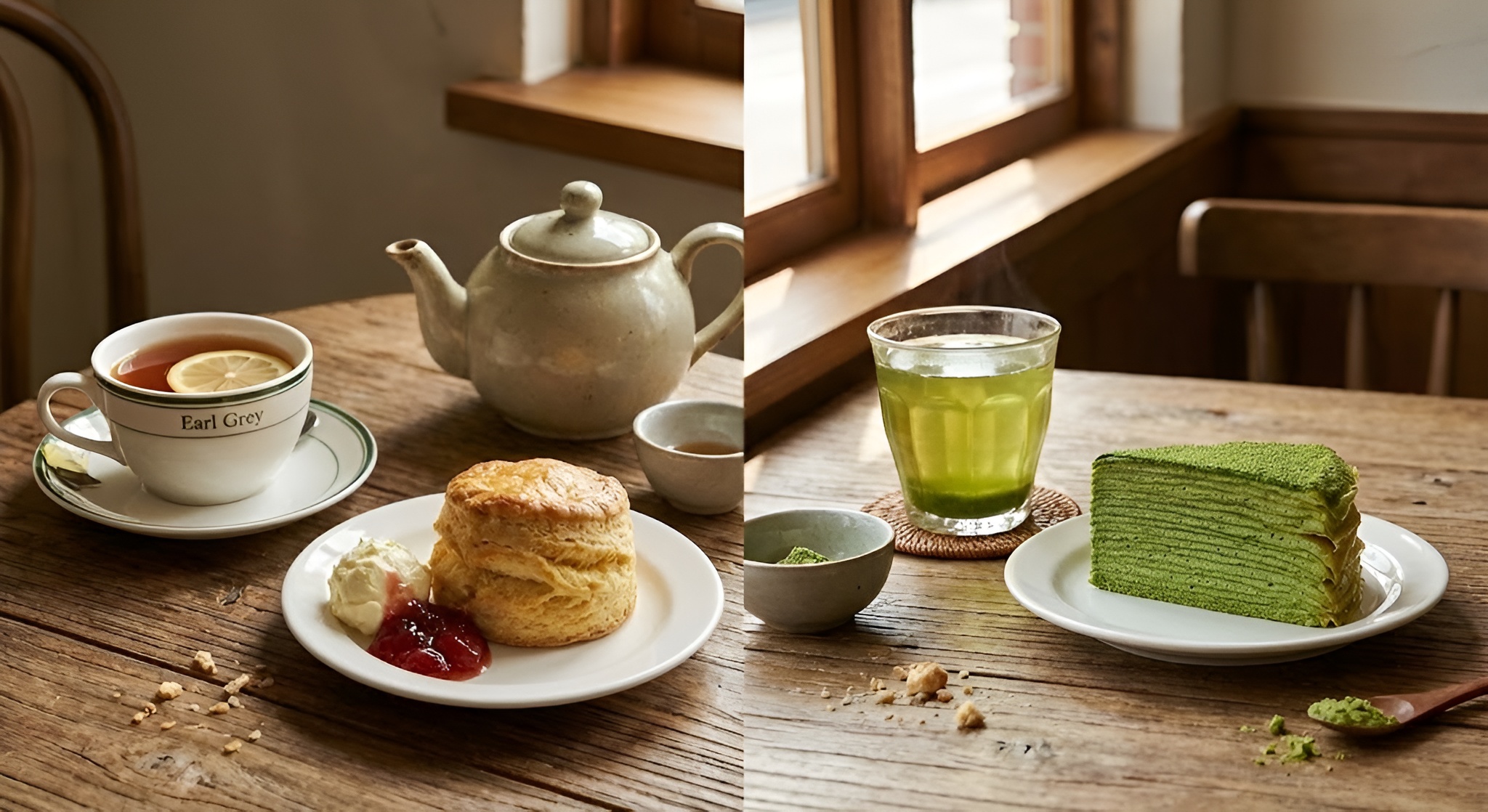
The Science of Pairing: Why It Works
Before we dive into specific cakes, we must understand why certain combinations work. It comes down to mouthfeel and chemical interaction.
1. Tannins vs. Fats
The Problem: When you eat something fatty—like clotted cream, buttercream frosting, or puff pastry—the fat coats your tongue. This film dulls your taste buds, making the second bite taste less vibrant than the first. It creates a "cloying" sensation.
The Solution: Tea contains polyphenols known as Tannins. These are astringent compounds that bind to proteins and fats in your mouth. When you sip a tannic black tea, it literally "scrubs" the fat off your tongue, refreshing your palate. This creates a cycle: Rich Bite -> Cleansing Sip -> Rich Bite. Read more about Tannins here.
2. Aroma Bridging
Flavor is mostly smell (Retro-nasal Olfaction). Pairing works best when the tea and the food share common aroma compounds. For example, Earl Grey contains Linalool (from Bergamot), which is also found in lemons and lavender. This makes Earl Grey a chemical "bridge" to lemon cakes or fruit tarts. Learn more about Retro-nasal Olfaction here.
1. The Scone Strategy (Cream Tea)
The Scone is the cornerstone of British Afternoon Tea. Whether you are in Devon or Cornwall, the scone is rarely eaten alone—it is a vehicle for Clotted Cream and Strawberry Jam. This combination is incredibly rich in both dairy fat and sugar.
The Perfect Pairing: Assam-guide.html" class="internal-link">Assam Black Tea
Why it works: You need a "Gut Punch" tea. A delicate white tea would vanish against the heavy cream. Assam is malt-heavy and high in tannins. It provides a robust, savory backbone that cuts through the 55% fat content of clotted cream. The maltiness also complements the baked flour of the scone.
Alternative: Irish Breakfast. Irish blends are typically stronger than English blends, making them ideal for heavy cream teas.
Looking for the Perfect Breakfast Blend?
We tested the top brands to find the strongest, most robust teas for your scones. Don't settle for weak tea bags.
Read: Battle of the Gold Blends2. The Laminated Pastry (Croissants & Danishes)
French pastries like Croissants, Pain au Chocolat, and Danishes rely on laminated dough—layers of dough separated by butter. While they are fatty, they are also delicate, airy, and flaky. A heavy Assam might be too aggressive and drown out the subtle yeasty fermentation flavors.
The Perfect Pairing: Darjeeling-guide.html" class="internal-link">Darjeeling (Second Flush) or Ceylon-tea.html" class="internal-link">Ceylon
Why it works: Darjeeling is known as the "Champagne of Teas" for its muscatel (grape-like) crispness. It has enough astringency to cut the butter, but it is lighter and more floral than a malt-heavy breakfast tea. This allows the buttery notes of the pastry to shine without being washed away. Ceylon tea, with its citrusy brightness, also works well to lift the heaviness of the pastry.
Temperature Matters
When eating butter-heavy pastries, always drink your tea hot. Cold liquid solidifies the fat on your tongue, creating a waxy, unpleasant mouthfeel. Hot tea melts the butter, enhancing the flavor release and ensuring a smooth finish. See our Brewing Guide for temperature tips.
3. The Sponge Cake (Victoria & Lemon Drizzle)
Sponge cakes are aerated, sweet, and often contain fruit jams, fresh berries, or lemon zest. They are lighter than pastries but sweeter.
The Perfect Pairing: Earl Grey
Why it works: Like pairs with like. Earl Grey is flavored with Bergamot oil, a citrus fruit from Italy. The citrus notes in the tea harmonize with the lemon zest or fruit jam in the cake, creating a seamless flavor bridge. The black tea base provides a contrasting bitterness that prevents the icing sugar from becoming cloying.
Want to bake it instead? Try our Earl Grey Tea Cake with Lemon Glaze Recipe.
4. The Chocolate Conundrum
Chocolate is notoriously difficult to pair with tea. It coats the mouth, contains its own tannins (bitterness), and has a strong, lingering flavor profile that can make delicate teas taste like water. You need a tea with equal weight and complexity.
Option A: Roasted Harmony
Pairing: Hojicha (Roasted Green Tea)
Why: Hojicha is roasted over charcoal, giving it notes of cocoa, coffee, and caramel. It mirrors the roasted notes of dark chocolate perfectly, creating a monochromatic flavor experience. Try this flavor profile in our Hojicha Pudding recipe.
Option B: The "After Eight" Effect
Pairing: Mint Tea or Mint Blends
Why: Just like mint chocolate chip ice cream, the cooling effect of menthol cuts through the richness of chocolate, while the herbal notes provide a refreshing contrast. Make your own Mint Choc blend here.
Option C: Spicy Contrast
Pairing: Masala Chai
Why: The spices in Chai (Ginger, Cardamom, Cinnamon) stand up to the intensity of chocolate. The heat from the ginger cleanses the palate, while the cinnamon enhances the sweetness.
5. The Cheesecake & Creamy Desserts
Cheesecake is dense, sour, and incredibly rich. It coats the mouth more than any other dessert. You need a tea that can cut through the density but also complement the creamy, lactic notes.
The Pairing: Matcha or Milk Oolong
Why it works: Matcha has a vegetal bitterness that cuts through the sugar, but a creamy mouthfeel that matches the cheese. Milk Oolong has natural lactones (creamy compounds) that harmonize with the dairy, creating a "peaches and cream" effect.
6. Savory Pastries (Quiche & Sausage Rolls)
Tea isn't just for sweets. Afternoon tea often includes savory courses like finger sandwiches, quiches, or sausage rolls. These contain salt, meat fats, and umami.
The Pairing: Lapsang Souchong or Shou Pu-erh
Why it works: Lapsang is pine-smoked. It acts like "liquid bacon," enhancing the savory umami notes of a quiche or pork sausage roll. Pu-erh has deep, earthy, mushroom-like notes that pair beautifully with cheese and savory meats.
The Slurp Technique
To really taste the interaction between the pastry and the tea, you need to use Retro-nasal Olfaction. Take a bite, chew, and then take a sip of tea while there is still food in your mouth. Slurp air through the liquid to mix the flavors. The heat of the tea will volatilize the aromas in the food, creating a new "third flavor" in your nose. Learn the science of Slurping here.
The Inter-Bite Refresh
When hosting an Afternoon Tea, serve small amounts of tea often. As tea sits in the pot, it cools and becomes more bitter (stewed). Fresh, hot tea is essential for the fat-cleansing effect. Consider using a smaller teapot and brewing fresh batches for the savory course and the sweet course. See our recommended Teapots here.
Quick Pairing Cheat Sheet
| Pastry / Food | Ideal Tea Pairing | Why It Works |
|---|---|---|
| Scones w/ Cream | Assam, English Breakfast | High tannins cut through fat. |
| Croissant | Darjeeling, Ceylon | Crispness balances butter. |
| Lemon Cake | Earl Grey, Lady Grey | Citrus harmonizes with citrus. |
| Chocolate Cake | Hojicha, Masala Chai | Roasted/Spicy notes match cocoa. |
| Cheesecake | Matcha, Jasmine Green | Grassy notes cut the density. |
| Savory Tart | Lapsang, Pu-erh | Smoke enhances umami. |
Comments