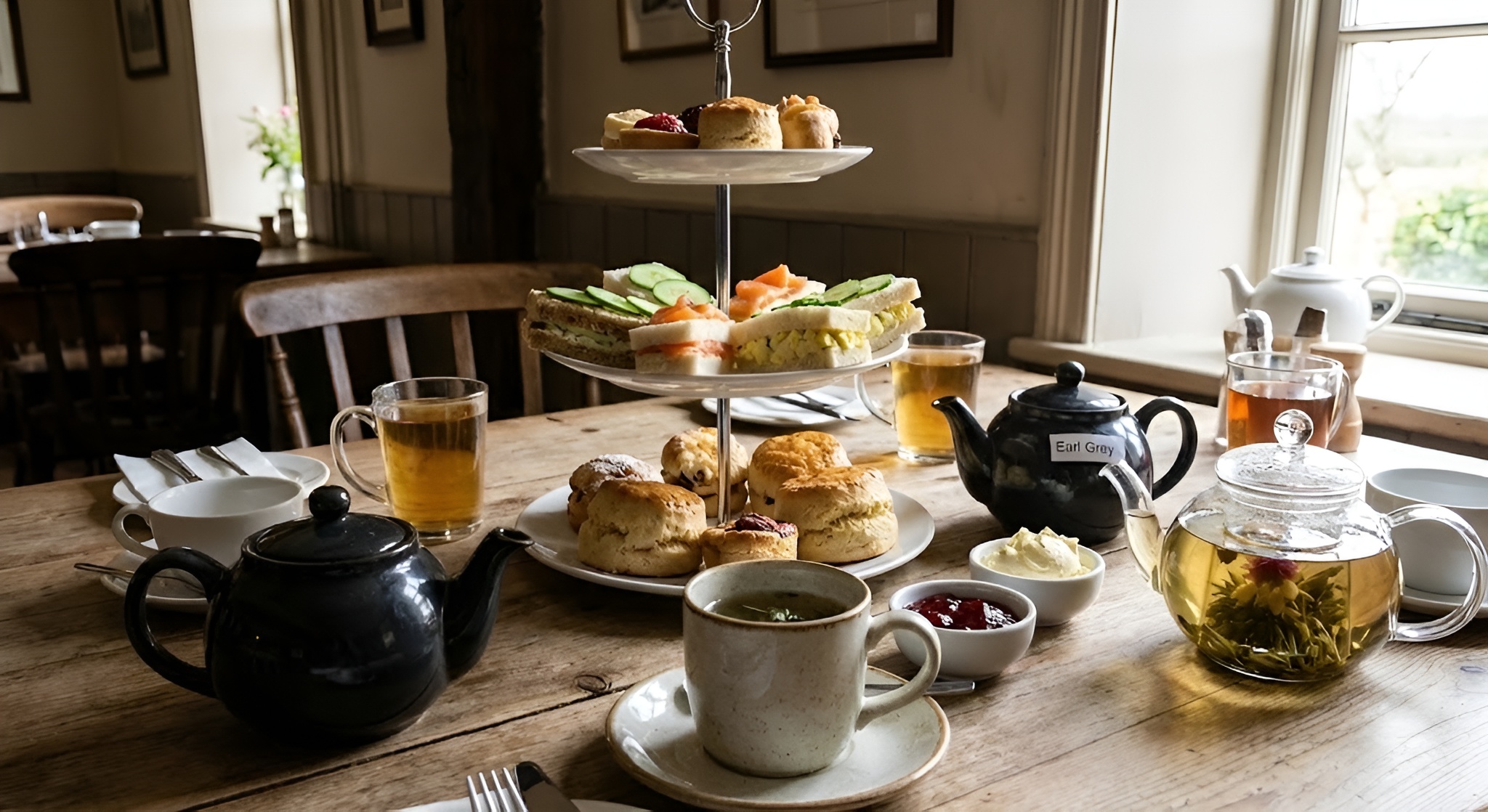
The Philosophy of the Savory Course
According to tradition (established by Anna, Duchess of Bedford—read more about the history here), Afternoon Tea is a progression. It starts savory to satisfy hunger and ends sweet to satisfy the soul. The sandwich course is characterized by:
- Salt: Cured meats, salted butter, smoked fish.
- Fat: Mayonnaise, cream cheese, butter.
- Umami: Cheese, tomatoes, savory spreads.
Your goal as a host is to choose a tea that can stand up to the salt without becoming bitter, and cut through the fat without stripping the palate entirely. Here is how to pair the classics.
1. The Cucumber Sandwich
Profile: Delicate, cool, crisp, slightly vegetal. Low fat (just a thin layer of butter).
The Challenge: The flavor of cucumber is extremely subtle. A strong black tea will wash it away completely, leaving you tasting only wet bread.
The Pairing: First Flush Darjeeling or Japanese Sencha
Why it works: First Flush Darjeeling is known as "Spring Tea." It is light, floral, and green-tasting. It mirrors the fresh, vegetal notes of the cucumber without overpowering them. Alternatively, a high-quality Sencha enhances the green notes. Avoid roasted teas here.
Temperature Warning
Cucumber sandwiches are served cool. Do not pair them with scalding hot tea, as the thermal shock can be jarring. Let the tea cool to a drinkable 60-70°C before serving alongside the cucumber course. Slurping helps cool it down—learn why here.
2. Smoked Salmon & Cream Cheese
Profile: Oily, smoky, salty, creamy, fishy.
The Challenge: Oily fish coats the tongue. You need something to cut the oil (acid/tannin) and something to complement the smoke.
Option A: The Citrus Cut -> Earl Grey.
Why: We squeeze lemon on salmon for a reason: acid cuts fat and neutralizes fishiness. Earl Grey is flavored with Bergamot oil (a citrus). The tea acts as the "lemon wedge" for the sandwich.
Option B: The Smoky Echo -> Lapsang Souchong.
Why: Lapsang is pine-smoked. Pairing smoke with smoke creates an intense, savory experience. However, use a lighter brew, as Lapsang can be overpowering.
Love smoked flavors? Try our Tea Smoked Chicken Recipe for a savory tea-time addition.
3. Egg Mayonnaise & Cress
Profile: Sulphurous (egg), creamy (mayo), peppery (cress). Rich and coating.
The Challenge: The high fat content of mayonnaise coats the mouth, dulling flavors. The sulfur in eggs can clash with delicate teas.
Why it works: You need Tannins. Tannins bind to fats and proteins. A malty Assam "scrubs" the mayonnaise off the tongue, resetting the palate for the next bite. Ceylon adds a crisp, citrusy finish that highlights the peppery watercress. Learn more about how Tannins work here.
4. Ham & Mustard / Beef & Horseradish
Profile: Salty meat, pungent heat (mustard/horseradish), savory.
The Challenge: Mustard and Horseradish attack the nose (Retro-nasal). You need a bold tea that won't retreat from the spice.
The Pairing: Irish Breakfast or Kenyan Tea
Why it works: Irish and Kenyan blends are typically stronger and more astringent than English Breakfast. They have a "brisk" character that stands up to salt and spice. The robust maltiness matches the umami of the cured meat.
Need a Strong Tea?
We tested the strongest "Gold" blends on the market to see which ones hold up best to milk and rich foods. Find your powerhouse tea here.
Read: Battle of the Gold Blends5. Cheese & Pickle (or Savory Tarts)
Profile: Fermented, acidic (pickle), fatty (cheese), umami.
The Challenge: Cheese is pure umami and fat. Acidic pickles can make tea taste metallic if not careful.
The Pairing: Oolong (Dark/Roasted) or Pu-erh
Why it works: Roasted Oolongs (like Wuyi Rock tea) have a mineral, woody profile that complements the earthiness of cheese. Pu-erh is fermented, sharing flavor compounds with aged cheese. Both teas aid digestion, helping to break down the heavy fats in the cheese course.
Hosting Strategy: The Two-Pot Rule
If you are serving a full Afternoon Tea, do not serve just one pot. Serve a lighter tea (Darjeeling or Earl Grey) with the sandwiches. Then, brew a fresh, stronger pot (Assam or English Breakfast) to serve with the scones and cakes. This progression mirrors the increasing richness of the food. Check our Teaware Review for the best hosting pots.
Quick Pairing Cheat Sheet
| Sandwich Filling | Ideal Tea Pairing | Why It Works |
|---|---|---|
| Cucumber | First Flush Darjeeling, Green Tea | Vegetal/Floral notes match lightness. |
| Smoked Salmon | Earl Grey, Lapsang Souchong | Citrus cuts fat; Smoke matches smoke. |
| Egg Mayonnaise | Assam, Ceylon | Tannins cleanse the creamy palate. |
| Ham & Mustard | Irish Breakfast, Kenyan | Boldness stands up to spice/salt. |
| Cheese / Savory Tart | Roasted Oolong, Pu-erh | Earthiness complements umami. |
| Chicken Salad | White Tea (Bai Mu Dan) | Delicate sweetness enhances poultry. |
Green Tea Caution
While Green Tea is excellent with cucumber, be careful pairing it with heavy meats or dairy. The proteins in milk/meat can bind to the delicate catechins in green tea, neutralizing their antioxidant power and flattening the taste. Keep Green Tea for the lighter, vegetarian sandwiches. Visit the Green Tea Hub for more tips.
Comments