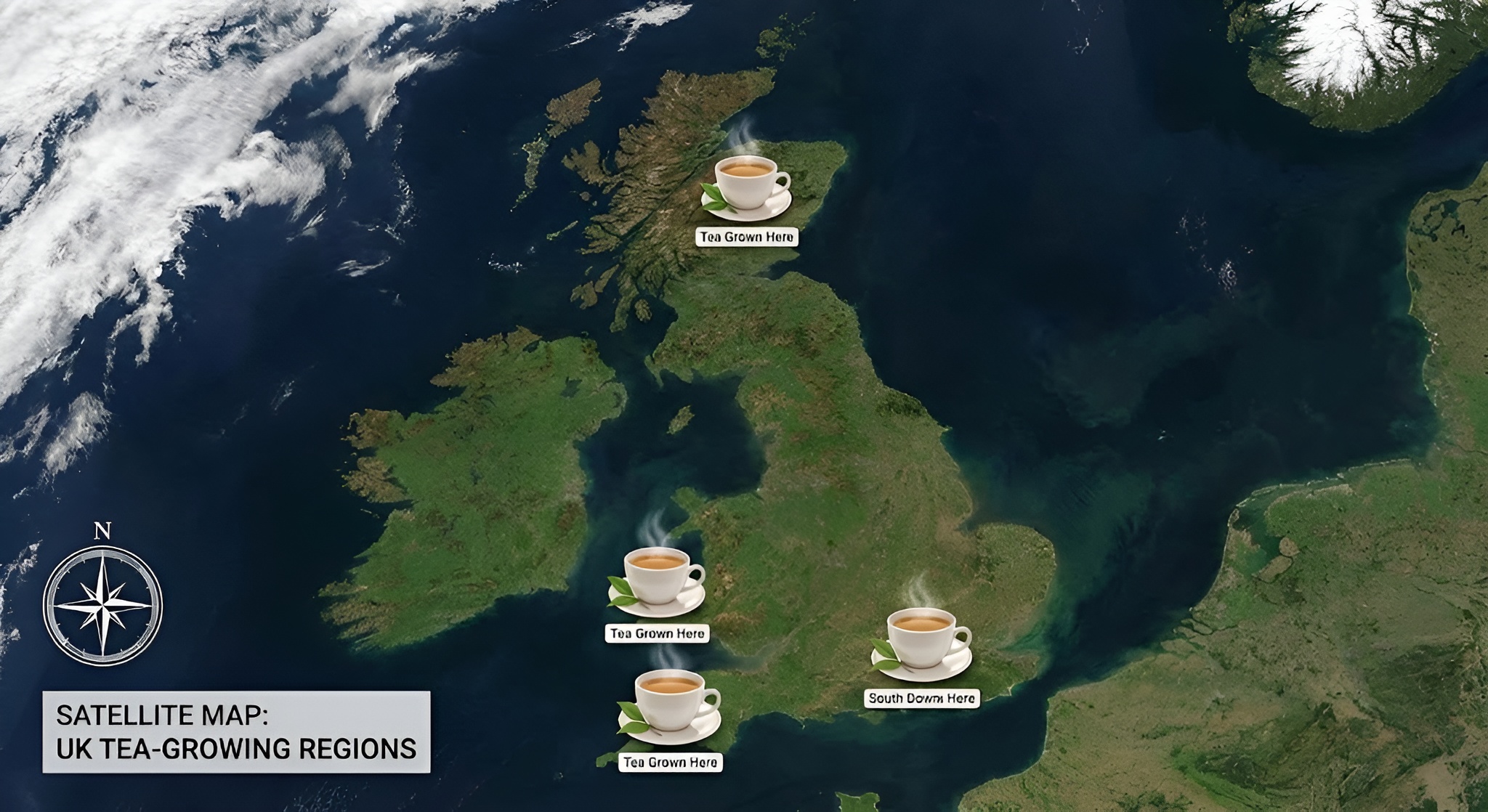
1. Why the UK? The Science of Microclimates & Soil
Okay, let's get the science bit out of the way. Tea (Camellia sinensis) is a fussy plant. It usually demands tropical heat and humidity. But if you look at the typical British garden, what do you see? Rhododendrons, Azaleas, and Camellias. These are all calcifuges—plants that absolutely hate lime and crave acid soil. The UK, particularly the West Coast and Scotland, sits on ancient rock formations that naturally produce the perfect acidic soil chemistry for tea.
Ecologically speaking, the UK's soil was ready for tea long before anyone dared to plant it. The only hurdle was the frost. Tea plants hate a hard freeze. But the UK has a secret weapon: The Gulf Stream. This warm Atlantic ocean current bathes the west coast of Britain in relatively warm water, keeping the air temperature surprisingly mild even in the depths of winter.
This creates specific pockets—or microclimates—where the temperature rarely drops below freezing. In Cornwall, the deep sea creek of the River Fal acts as a giant radiator, storing heat. In Scotland, growers use historic walled gardens that trap solar energy during the day and release it at night. It's not tropical, but it's just enough to keep the bushes alive.
Expert Tip #1: The Cultivar Matters
You cannot just plant tropical Assam seeds in Yorkshire. Successful UK growers use cold-hardy varietals, often sourced from high-altitude regions like Nepal, Turkey (Rize), or ex-Soviet Georgia. These plants have genetic adaptations to survive snow and dormancy.
2. England: The Cornish Revolution (Tregothnan)
The story of British tea really starts with one man: Jonathon Jones, the head gardener at the Tregothnan Estate in Cornwall. Tregothnan is an ancient estate, home to the Boscawen family since 1334. But it was in 1999 that Jones had a crazy idea. He noticed that the estate's ornamental Camellias, which had been introduced 200 years earlier, were flourishing outdoors. He thought, "If the flower grows, why not the tea?"
He was right. After extensive research (and trips to Darjeeling), the first bushes were planted in the kitchen garden, protected by Manuka bushes (which also provide the estate's famous honey). The first harvest in 2005 was tiny—just 28 grams—but it was auctioned for charity at a price higher than gold. It proved a point: England could grow tea.
Today, Tregothnan produces the only "Classic English Tea" that is actually grown in England. Their tea is characterized by a clean, eucalyptus-like freshness. It is often blended with high-grade Assam to create a bold, British breakfast brew that retains the strength Brits love but adds a unique domestic top note. Read our deep dive on Tregothnan here.
Expert Tip #2: "English" vs "English Grown"
Don't be fooled. "English Breakfast Tea" is a marketing term for a blend of Indian, Sri Lankan, and African teas. "English Grown Tea" means the leaves actually grew in UK soil. Always check the label. If it says "Home Grown," it's likely Tregothnan or one of the new micro-estates.
3. Scotland: Tea on the Edge (The TGS Collective)
If growing tea in Cornwall is ambitious, growing it in Scotland is bordering on madness. But it's a madness that works. The Tea Gardens of Scotland (TGS) is a collective of growers who are turning the cold climate to their advantage. They aren't trying to make mass-market black tea; they are making "Champagne" tea.
The Science of Stress: In the tropics, tea grows fast. In Scotland, it grows slowly. The cold nights and short seasons "stress" the plant. In response, the tea bush pumps its leaves full of sugars and amino acids like L-Theanine to protect itself from freezing. This slow growth concentrates the flavor. The result? A tea—often a White Tea—that is naturally sweeter, more complex, and smoother than its tropical cousins. It's the same logic as wine—grapes grown on the edge of viability often produce the best vintages.
Because the yield is so low (we're talking kilos per year, not tonnes), Scottish tea is positioned as an ultra-luxury product. It's picked by hand and processed with incredible care. Learn more about Scottish Stress Growing here.
Expert Tip #3: The Smoked Tea of Scotland
Just as Scotland smokes its whisky (peat) and salmon, some Scottish growers are experimenting with smoking their tea leaves. This creates a "Scotch Smoked Tea" that rivals the famous Chinese Lapsang Souchong, but with a distinct highland character derived from local wood.
4. Wales & Jersey: The Expansion
The success of Cornwall and Scotland inspired others. In Wales, the Peterston Tea Estate in the Vale of Glamorgan began planting in 2014. They focus on 100% single-estate, unblended teas. Their black tea has won awards for its fruit-forward profile, often described as having notes of dried berries and honey—a true expression of Welsh terroir.
Meanwhile, the Jersey Tea Company and Jersey Fine Tea have revived the island's tea history. Jersey, in the Channel Islands, has a unique microclimate that allows for hand-rolled, whole-leaf processing that is closer to high-end Taiwanese Oolong production than traditional British black tea. Discover Welsh Tea here.
Taste the British Isles
Want to drink tea that was actually grown in the UK? We reviewed the top blends from Cornwall, Scotland, and Wales to see if they live up to the hype.
See the Best UK Grown TeasExpert Tip #4: Brewing UK Tea
UK-grown tea is delicate. Do not treat it like supermarket bags. Do not use boiling water for the green or white varieties. Stick to 80°C (175°F) to preserve the unique "cool climate" sweetness. For the black teas, boiling is fine, but ensure you brew correctly to avoid bitterness.
5. The Future: Climate Change and Tea
It is an uncomfortable truth, but climate change is aiding the UK tea industry. As global temperatures rise, traditional tea-growing regions in India and Kenya are facing droughts and heat stress that lower quality. Conversely, the UK is becoming warmer and wetter—conditions that Camellia sinensis absolutely loves.
Researchers suggest that if current trends continue, tea could become a viable staple crop for UK agriculture by 2050. We might see tea moving out of the walled gardens and into open commercial fields. We are witnessing the birth of a major new tea region, right on our doorstep.
Expert Tip #5: The Price Tag
Expect to pay more. UK labour costs are high, and land is expensive. A box of UK-grown tea is a treat, priced similarly to fine wine. It is an experience, not just a morning caffeine hit.
Expert Tip #6: Cook With It
The unique flavor of Tregothnan Earl Grey makes it perfect for baking. The bergamot and Cornish tea leaves infuse beautifully into dairy. Try our Tregothnan Glazed Scones recipe for the ultimate British tea time.
Comments