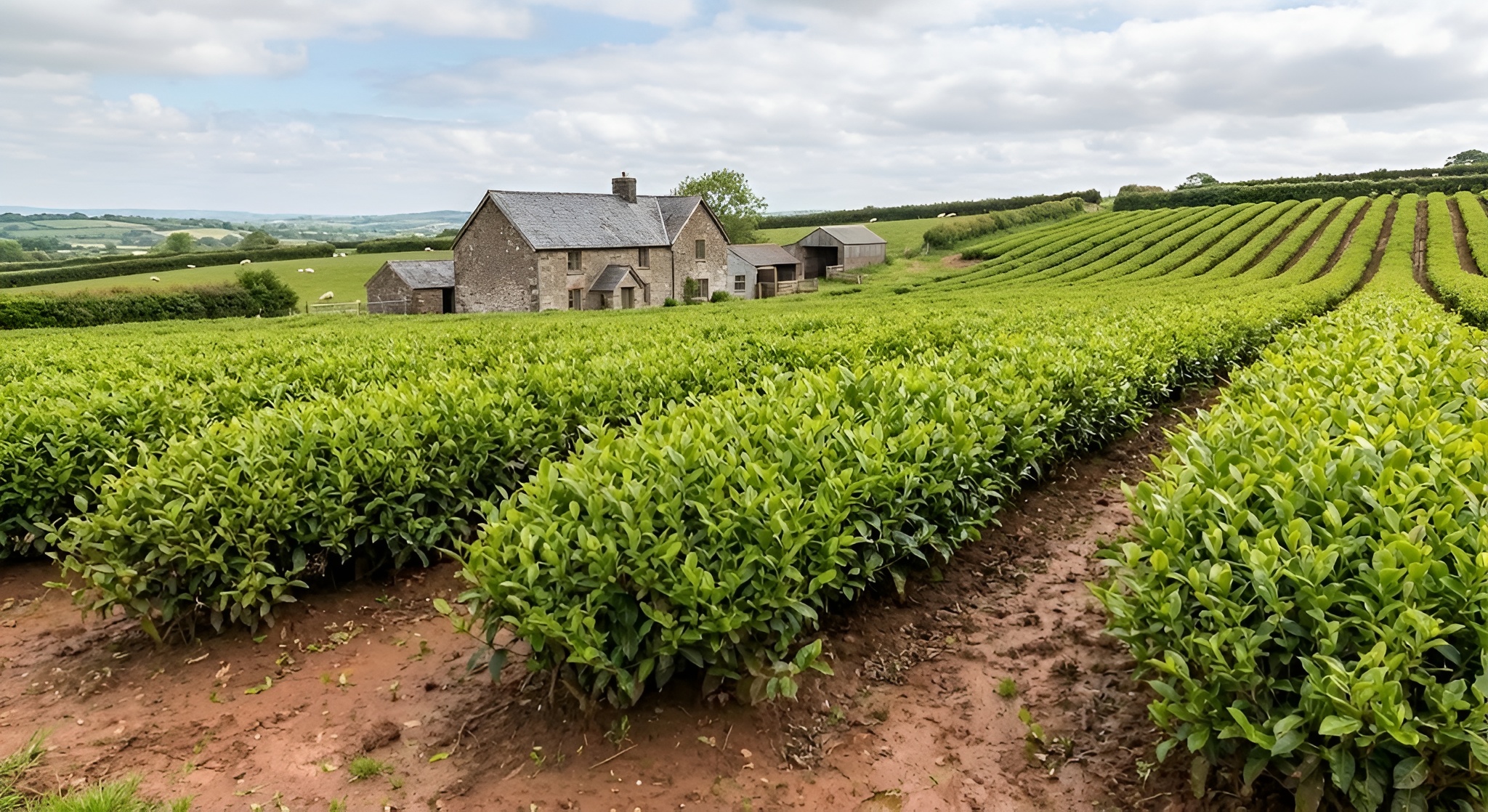
1. The Vale of Glamorgan: Not The Wales You Know
If you think Wales is all mountains and rain, the Vale of Glamorgan will surprise you. Known locally as "The Garden of Wales," this region is a fertile coastal plain that enjoys a unique microclimate. It sits to the south of the Brecon Beacons, which act as a shield, protecting the Vale from the harshest northern weather. It is sunnier, drier, and milder than the rest of the country—making it the perfect, unexpected home for Camellia sinensis.
The geography here is key. Unlike the Scottish walled gardens which rely on artificial heat traps, the Vale relies on its natural topography. The rolling hills create pockets of warmth, and the proximity to the Bristol Channel moderates the winter frosts. It’s not the tropics, but for a hardy tea bush, it’s a paradise compared to the Highlands.
The Glacial Advantage: Soil Science
It's not just the air; it's the dirt. The soil in the Vale is glacial drift—a mix of clay, sand, and stone left behind by ancient ice sheets. This makes it rich in minerals but, crucially, free-draining. Tea plants are notoriously fussy about their roots. They love water (and Wales has plenty of that!), but they hate "wet feet." If the roots sit in waterlogged soil, they rot. The rolling geography of the Vale ensures that the abundant Welsh rain drains away quickly, keeping the plants hydrated but healthy. This natural drainage is the secret weapon that allows Welsh tea to thrive where other crops might fail. The specific mineral composition of this glacial soil contributes directly to the complex flavor profile found in the cup.
Expert Tip #1: Seed vs. Cutting
Here is a technical detail that makes a huge flavor difference. Most commercial tea farms grow from cuttings (clones) to ensure every bush tastes identical. Peterston grows from seed. This creates a deep taproot (making the plant tougher against drought and wind) and ensures genetic diversity. Every bush is a unique individual with a slightly different flavor profile. When harvested together, this creates a complexity and depth in the cup that mass-produced tea simply cannot match.
2. Peterston Tea Estate: From Fruit to Leaf
The story of Welsh tea is largely the story of Lucy George and the Peterston Tea Estate. It didn't start as a tea garden; it was a family fruit farm. In 2014, seeking to diversify, Lucy realized that the horticultural principles used for high-end fruit—pruning, soil health, careful harvesting—applied perfectly to tea.
She started small, experimenting with seeds sourced from cold-hardy regions like Georgia (ex-Soviet) and Nepal. It was a gamble. Would the Welsh winter kill them? Would the Welsh summer ripen them? The answer was a resounding yes. The plants adapted, developing a resilience that seems to translate directly into flavor. Just like the Tregothnan Estate in Cornwall, Peterston proved that British tea was not a fluke.
Today, Peterston is a fully functioning estate. The tea is picked entirely by hand, adhering to the strict "two leaves and a bud" standard used in the world's best orthodox tea gardens. Because the operation is small, the processing is incredibly detailed. Leaves are withered, rolled, and oxidized in small batches, allowing the team to tweak the parameters based on the weather of that specific day. If it's humid, they oxidize longer. If it's dry, they adjust. This is "craft" tea in the truest sense of the word, a world away from the mechanized production of supermarket teabags.
Expert Tip #2: The "Fruit" Note
Why does Welsh tea taste different? Tasters consistently describe Peterston Black Tea as having notes of "dried fruit," "kombucha," or "apple skin." This isn't added flavoring. It is likely the result of the specific mineral content of the Welsh soil combined with the slower oxidation process necessitated by the cooler climate. It creates a tea that feels juicy in the mouth, almost like a fruit infusion.
3. Styles of Welsh Tea: More Than Just Black
While a robust Black Tea is the headline act (we are in Britain, after all), the Welsh climate allows for a surprising variety of styles depending on the harvest season.
- Welsh Black: The flagship product. Fully oxidized, rich, and deeply fruity. It has a beautiful amber liquor and is best drunk without milk to appreciate the complex berry notes. It lacks the harsh, tannic "bite" of a cheap supermarket tea, so milk isn't needed to smooth it out.
- Welsh Green: Depending on the batch, this can be steamed (Japanese style) or pan-fried (Chinese style). Welsh green tea tends to be sweet and vegetative, more akin to fresh peas or spinach than the bitter grassiness of some mass-market green teas. It pairs wonderfully with light foods.
- Welsh Kombucha: Because the tea itself has such a natural fruity profile, it makes an exceptional base for Kombucha. Some estates are now partnering with local fermenters to create high-end sparkling tea drinks, utilizing the "scoby" to amplify those apple and berry notes found in the leaf.
Taste the Welsh Dragon
Curious about the "fruit" notes of Welsh tea? We reviewed Peterston's award-winning black tea alongside the giants from Cornwall and Scotland. See how it stacks up.
Review: Best UK Grown Teas4. Sustainability: The Zero-Air-Mile Brew
There is a massive environmental argument for buying Welsh tea. Traditional tea travels around 5,000 miles to reach your cup, usually shipping from India, Kenya, or China. It sits in shipping containers for weeks, potentially losing freshness. Welsh tea travels... well, across the Severn Bridge. For UK residents, it offers a drastically lower carbon footprint.
Furthermore, Welsh tea farming is inherently sustainable. It uses no heavy machinery for harvesting (everything is hand-plucked to ensure quality). It generally uses no pesticides because the cold Welsh winter acts as a natural insecticide, killing off the bugs that plague tropical tea estates. It is an agroforestry crop that sequesters carbon and supports local biodiversity, including the wild bees of the Glamorgan coast. Buying this tea isn't just a treat for your palate; it's a vote for sustainable, local agriculture.
Expert Tip #3: Water Pairing
Tea is 99% water, and Welsh tea is grown with soft, mineral-rich Welsh rain. To get the best flavor, you should try to brew it with soft, filtered water. Hard tap water (common in London/South East) is full of calcium carbonate which will flatten the delicate fruit notes and make the tea taste dull. Read our Water Quality Guide to learn more.
5. The Cultural Renaissance: Tea and Welsh Identity
For decades, Welsh identity has been tied to heavy industry or sheep farming. The emergence of a luxury crop like tea signals a shift. It represents a new confidence in Welsh produce, standing alongside Welsh wine (which is also booming) and Welsh cheese. It is part of a broader "foodie" revolution happening across the country.
When you buy Peterston tea, you aren't just buying a drink; you are buying into a story of regeneration. You are supporting a family farm that dared to do something different. And perhaps most importantly, you are drinking a product that is undeniably, uniquely Welsh. It doesn't taste like Assam. It doesn't taste like Ceylon. It tastes like the Vale.
Expert Tip #4: The Price Explained
Be prepared for the sticker shock. A small tin of Welsh tea can cost £20+. Why? Labour. Hand-plucking tea in the UK is incredibly expensive compared to global commodity prices. Treat it like a fine whisky, not a morning caffeine fix. It is a "Sunday afternoon" tea.
Expert Tip #5: Limited Seasons
Unlike supermarket tea which is blended to taste the same year-round, Welsh single-estate tea is seasonal. The "First Flush" (Spring) is lighter and fresher; the Summer harvest is bolder. Stocks often sell out quickly after harvest. If you see it available on their website, buy it immediately—it won't last long.
Comments