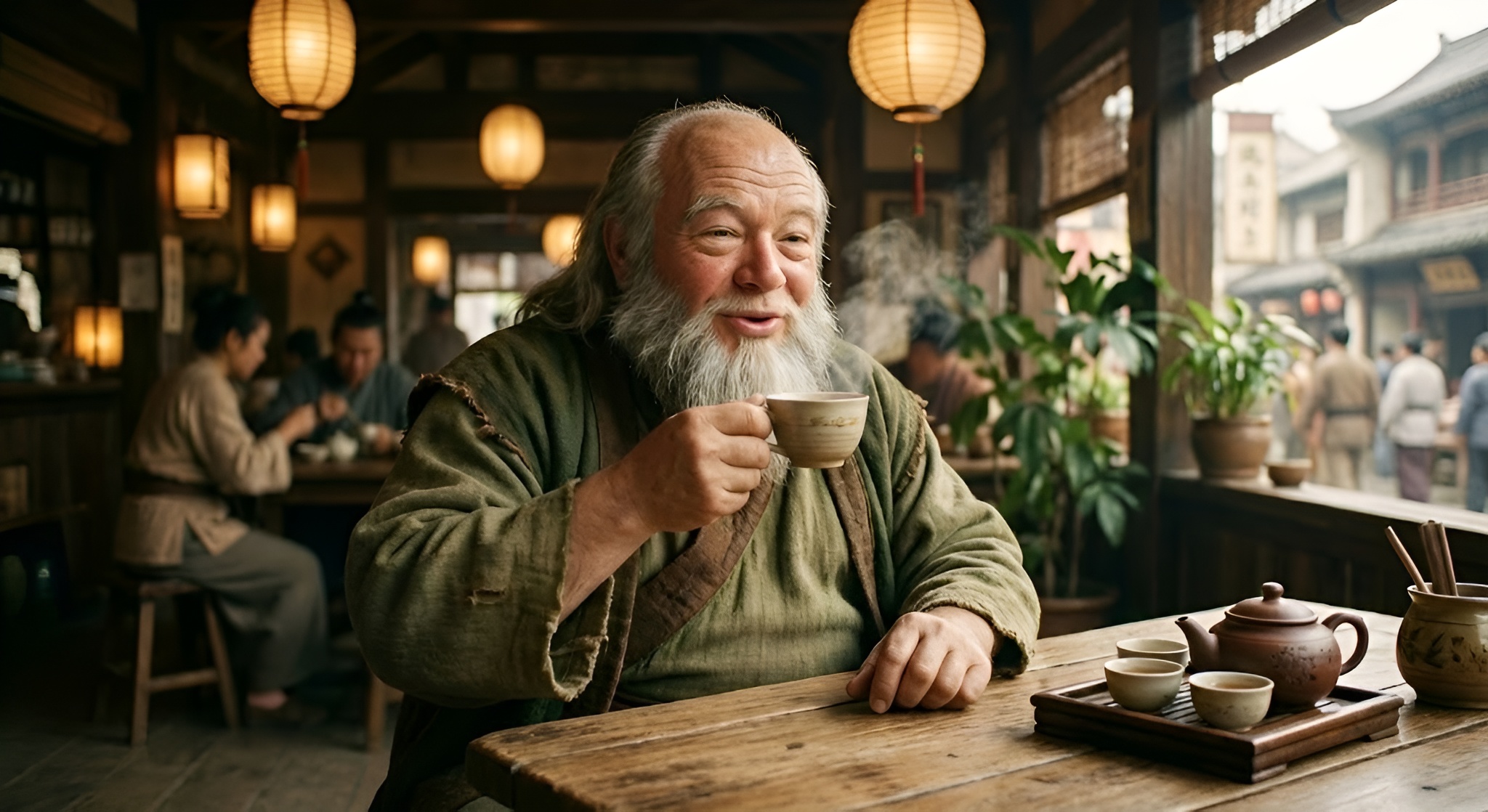
1. "Hot Leaf Juice": The Zuko Dichotomy
"Uncle, that's what all tea is." — Zuko
"How could a member of my own family say something so horrible?" — Iroh
This exchange is the central conflict of the show's philosophy. Zuko views the world through a utilitarian lens: things are tools to achieve an end (capturing the Avatar). To him, tea is simply hot water with leaves in it—a source of hydration or caffeine, nothing more. This mirrors the industrial approach to tea, where speed and efficiency (CTC production) are valued over nuance.
Iroh, however, understands tea as an essence. In gongfu brewing, the water, the temperature, the vessel, and the pouring height all change the spirit of the tea. To reduce it to "juice" strips it of its cultural soul. Iroh's outrage is not just about taste; it is about Zuko's inability to appreciate the subtle beauty of life.
Expert Tip: The Water Matters
When Iroh complains about cold tea, he is scientifically correct. The chemical compounds in tea (polyphenols and amino acids) require specific heat to extract properly. Lukewarm water fails to extract the L-Theanine (calmness), leaving only a flat, vegetal taste. Iroh's firebending allows him to maintain the perfect brewing temperature, making him the ultimate Tea Master.
2. The "White Jade Bush" Incident: A Lesson in Botany
In the episode "The Cave of Two Lovers," Iroh creates a tea from a wild plant he believes to be the White Dragon Bush. It turns out to be the White Jade Bush, which is poisonous.
This scene highlights a critical aspect of tea culture: Botany. All true tea comes from one species, Camellia Sinensis. However, the world of herbal tisanes is vast and dangerous. Iroh’s mistake serves as a warning about the importance of knowledge and humility. Even a master can be fooled by nature if they are rushing or overconfident.
The antidote? The berries of the Red Lily. This balances the poison, reflecting the Eastern medical concept of Yin and Yang—every poison has a cure, and nature provides balance.
3. The Four Nations & The Elements of Tea
Iroh famously teaches Zuko about the Four Nations by drawing a circle in the dirt. He explains that wisdom comes from drawing from many sources. This philosophy is perfectly embodied in a cup of tea, which requires all four elements to exist:
| Element | Role in Tea Brewing |
|---|---|
| Earth | The tea leaves themselves (grown in soil) and the Yixing-teapot.html" class="internal-link">Yixing Clay Teapot used to brew them. |
| Water | The solvent. As Iroh knows, water quality defines the clarity of the liquor. |
| Fire | The heat source. Fire transforms the water and releases the flavor. Without fire, there is no extraction. |
| Air | The steam (aroma). In Tea Tasting, retronasal olfaction (smell through the mouth) accounts for 80% of the flavor. |
4. What Was Iroh Actually Drinking?
Based on the cultural cues in the show (Earth Kingdom = China), we can deduce Iroh's menu:
- Jasmine Tea: His absolute favorite. The "Jasmine Dragon" tea shop is named after it. Real Jasmine Pearls are hand-rolled and scented with fresh blossoms, a process requiring immense patience—Iroh's defining trait.
- Ginseng Tea: Mentioned as a favorite. Ginseng is an energetic root, often paired with Oolong for vitality.
- Lychee Tea: Iroh jokes about "Lychee nuts." Lychee Black Tea (Lizhi Hongcha) is a classic Chinese export, sweet and fruity.
If you want to drink like the Dragon of the West, we recommend starting with a high-grade Jasmine Pearl Tea or a soothing Ginseng Blend.
Expert Tip: The Jasmine Dragon
Iroh's dream is to open a tea shop in Ba Sing Se. Why? Because the tea shop is a neutral ground. In tea culture, rank and military status are left at the door. By becoming a tea brewer, Iroh sheds his title of "General" and "Prince," finding peace in service to others. This mirrors the history of Chanoyu, where samurai would remove their swords before entering the tea house.
5. Tea with a Stranger (Toph)
One of the most touching scenes occurs when Iroh meets Toph in the wilderness. They are technically enemies, but they share tea. This embodies the "Social Contract of Tea"—hospitality overrides hostility. Iroh listens to Toph not as a Fire Nation general, but as a wise elder.
This act of sharing tea creates a liminal space where Toph can be vulnerable. Tea contains anxiolytic compounds (anxiety-reducing), physically lowering the heart rate and encouraging conversation. Iroh uses tea as a tool for diplomacy and therapy.
6. The Legacy: Why We Need Iroh Today
In a world of instant coffee and energy drinks, Iroh's philosophy is a counter-culture movement. He teaches us that efficiency is not the goal of life. The goal is the *process*. Whether you are brewing a simple bag of Yorkshire Gold or aging a cake of Pu-erh for 20 years, the act of making tea forces you to stop, breathe, and exist in the moment.
As Iroh says: "Perfection and power are overrated. I think you are very wise to choose happiness and love."
Gift for the Avatar Fan
Know someone who loves Iroh? We curated a list of the best tea gifts, including ceramic Gaiwans and Jasmine sets worthy of the White Lotus.
Review: Best Tea Gifts for 2025The White Lotus Tile
Iroh's frantic search for the White Lotus Pai Sho tile is a metaphor for his search for the Order of the White Lotus—a secret society of old masters from all nations. Like a good Single Origin Blend, the White Lotus transcends borders, proving that wisdom (and tea) belongs to no single nation.
Comments