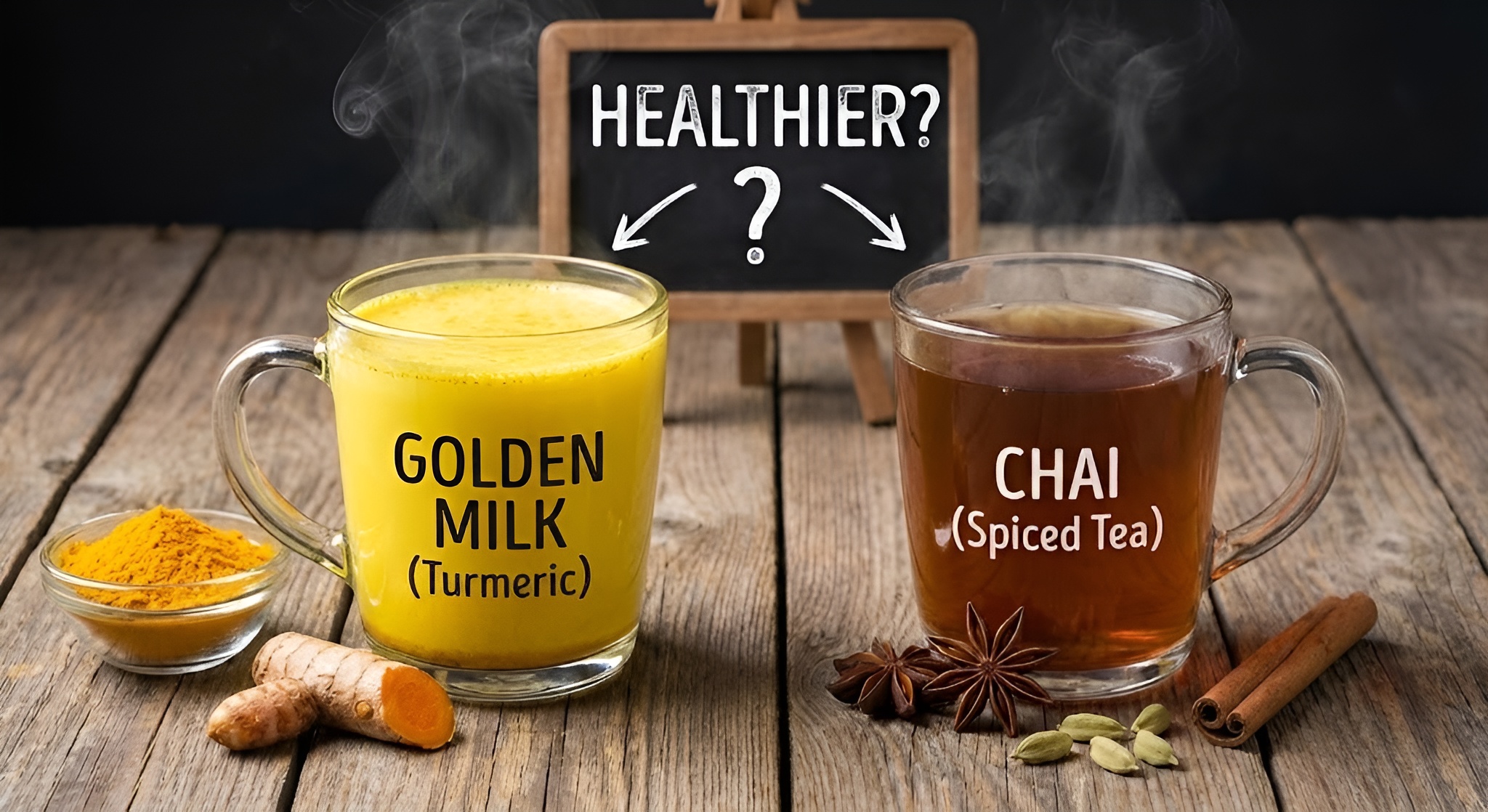
1. Masala Chai: The Engine of India
Masala Chai (literally "Mixed Spice Tea") is not just a drink; it is fuel. In India, it is traditionally consumed multiple times a day to maintain energy levels. The base is almost always a strong, granular Assam CTC Black Tea, chosen for its high tannin content and ability to withstand boiling milk without losing its bold flavor profile.
Nutritional Profile: Why It Wakes You Up
The primary driver in Chai is the interaction between caffeine and L-Theanine found in the black tea leaves. Unlike coffee, which provides a sharp spike in cortisol and adrenaline often leading to "jitters," the L-Theanine in tea crosses the blood-brain barrier to promote alpha-wave activity. This results in a state of "alert relaxation" rather than frantic energy.
Additionally, the spices in Chai are not just for flavor—they are functional. Known in Ayurveda as "warming spices," they stimulate blood flow and digestion.
Bioactive Breakdown:
| Compound | Source Ingredient | Physiological Effect on Body |
|---|---|---|
| Caffeine | Black Tea | Blocks adenosine receptors in the brain, preventing drowsiness and increasing alertness. |
| Theaflavins | Black Tea | Potent antioxidant formed during oxidation; supports heart health and cholesterol management. |
| Gingerols | Fresh Ginger | Stimulates gastric emptying, reducing nausea, bloating, and indigestion immediately. |
| Cinnamaldehyde | Cinnamon | Helps improve insulin sensitivity and regulate blood sugar levels post-meal. |
| Eugenol | Cloves | Acts as a mild analgesic (pain reliever) and has antiseptic properties for the throat. |
Expert Tip: The Tannin Trap
Traditional Chai is boiled for a long time on the stovetop. This extracts high levels of tannins (polyphenols). While tannins are antioxidants, they can bind to dietary iron in your stomach, creating a non-absorbable complex. This is known as the "Iron Thief." To avoid anemia or fatigue, drink your Chai at least one hour away from iron-rich meals. Read more about Tea and Iron Absorption here.
Want to brew authentic Chai? Skip the syrup concentrate. Learn how to boil fresh ginger and whole spices in our Authentic Masala Chai Recipe.
2. Golden Milk: The Healer's Elixir
Golden Milk (Haldi Doodh) is chemically distinct from Chai because it contains zero caffeine. It is a suspension of spices in fat (milk), designed to deliver Curcumin to the body's tissues. While Chai stimulates the nervous system, Golden Milk works to calm the inflammatory response and prepare the body for rest.
Nutritional Profile: How It Fights Inflammation
Turmeric is the star here. However, raw turmeric root is only about 3-5% Curcumin by weight, and Curcumin has terrible bioavailability—meaning your liver flushes it out before it can enter your bloodstream. The magic of Golden Milk lies in the combination of ingredients that unlock this potential.
When Curcumin enters the bloodstream, it inhibits the activity of NF-kB, a molecule that travels into the nuclei of your cells and turns on genes related to inflammation. By blocking NF-kB, Curcumin fights inflammation at the molecular level.
| Compound | Source Ingredient | Mechanism of Action |
|---|---|---|
| Curcumin | Turmeric | Suppresses cytokines and enzymes (like COX-2) that cause inflammation and pain. |
| Piperine | Black Pepper | Inhibits the liver process (glucuronidation) that breaks down Curcumin, boosting absorption by 2000%. |
| Lipids (Fats) | Milk/Coconut Oil | Curcumin is lipophilic (fat-loving); fats are required to transport it across the gut wall into the lymph system. |
Expert Tip: Fresh vs. Powder?
While powder is convenient, grating fresh turmeric root (like ginger) provides essential oils known as Turmerones. Research suggests these oils further aid the absorption of Curcumin and have their own anti-fungal properties. You can often find fresh turmeric in Asian grocers next to the ginger. Read our deep dive: Turmeric vs. Ginger Benefits.
Ready to make it? Don't just stir powder into water. Follow our guide to making the paste correctly: 5-Minute Golden Milk Recipe.
3. Head-to-Head Comparison: Which Should You Choose?
The choice between these two powerhouses depends entirely on your immediate needs. Are you starting your day, or recovering from it? Use this table to decide.
| Feature | Masala Chai | Golden Milk |
|---|---|---|
| Best Time to Drink | Morning (Cortisol awakening response) | Evening (Wind down & Recovery) |
| Caffeine Content | High (40-60mg per cup) | Zero (Unless "Dirty" Chai) |
| Primary Benefit | Mental Focus, Alertness, Metabolism | Joint Pain, Inflammation, Sleep Quality |
| Digestion Role | Good (Ginger helps motility) | Excellent (Turmeric heals gut lining) |
| Potential Downside | Acid reflux (if on empty stomach) | Stains teeth/braces/counters yellow |
4. Expert Analysis: Use Cases
For Post-Workout Recovery
Winner: Golden Milk. After heavy exercise, your body is in a state of acute inflammation (this is how muscles repair and grow). However, excessive inflammation causes Delayed Onset Muscle Soreness (DOMS). Curcumin has been shown to reduce biological markers of inflammation and muscle damage, potentially speeding up recovery times. Chai provides energy, but caffeine can sometimes constrict blood vessels, which isn't ideal immediately post-recovery. Read: Why Turmeric is the Ultimate Recovery Drink.
For Morning Brain Fog
Winner: Masala Chai. If you struggle to wake up, you need the Adenosine-blocking power of caffeine. Furthermore, the L-Theanine in black tea prevents the "jitters" associated with coffee, providing a smooth alpha-wave focus state that is perfect for starting work or study. Golden Milk can be too relaxing for the morning.
For Digestion & Bloating
Winner: Tie. Both drinks heavily feature Ginger. Gingerol helps speed up gastric emptying (moving food from stomach to small intestine), which relieves nausea and bloating instantly. If you are sensitive to caffeine (which can trigger IBS in some), opt for Golden Milk or a pure Ginger Tea.
The "Dirty" Golden Milk Hack
Can't decide? Try a "Dirty Golden Milk." Prepare your golden milk as usual, but add a single shot of espresso or a small concentrate of black tea. This gives you the caffeine kick of chai with the turmeric benefits. It is a popular café menu hack! However, be aware that caffeine may slightly interfere with deep relaxation effects.
Best Pre-Made Blends
Don't want to buy 5 different jars of spices? We reviewed the best Turmeric teas and Chai blends on the market, including Vahdam's Turmeric Spiced and Pukka's Three Ginger.
Review: Best Herbal & Spice TeasExpert Tip: Sweetener Science
If using honey in your Golden Milk, add it after the milk has cooled slightly (below 60°C). According to Ayurveda, heating honey to boiling point creates toxins (Ama) and destroys its natural enzymes. Maple syrup or jaggery are safer options if boiling is required.
Comments