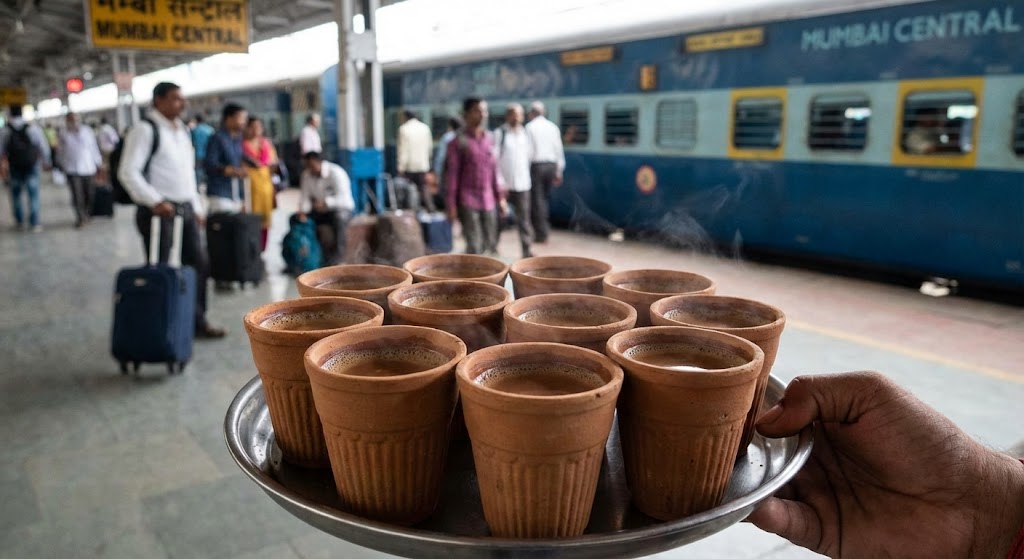
1. Porosity Physics: Clay's Evaporative Cooling Effect
Kulhar cups are unglazed terracotta (fired clay, no ceramic glaze coating)—distinguishing them from glazed porcelain or ceramic. The porous structure (30-40% porosity by volume) allows chai to seep into microscopic channels within clay walls. Once saturated, water molecules migrate to outer surface through capillary action and evaporate, removing heat through latent heat of vaporization (2260 kJ/kg).
The cooling effect: chai in kulhar reaches equilibrium 5-8°C cooler than ambient temperature (vs. glass or steel which equilibrate at ambient temp). In 35°C Indian summer, this means chai cools to comfortable drinking temperature (28-30°C) within 3-5 minutes, without burning tongue. The physics parallels olla irrigation and Mediterranean amphora wine cooling—ancient civilizations exploiting evaporative thermodynamics before understanding molecular theory.
Compare to modern materials: stainless steel cups (zero porosity, no evaporation) retain heat, requiring 15-20 minutes to cool. Glass offers transparency but poor thermal insulation. Kulhar's porous clay is passive cooling system—no refrigeration, no ice, just material science. This makes kulhar ideal for hot climates where refrigeration is luxury (parallels nomadic tea cultures using local materials for thermal management).
| Cup Material | Thermal Properties | Cooling Mechanism |
|---|---|---|
| Unglazed Terracotta (kulhar) | Porous (30-40%), high surface area | Evaporative cooling (5-8°C below ambient) |
| Porcelain (glazed ceramic) | Non-porous, low thermal conductivity | Slow conductive cooling (retains heat well) |
| Stainless Steel | Non-porous, high thermal conductivity | Rapid conduction to handle (burns fingers), but liquid stays hot |
| Borosilicate Glass | Non-porous, low thermal expansion | Radiative + convective (slower than steel, faster than porcelain) |
| Plastic/Styrofoam | Non-porous, excellent insulator | Minimal cooling (keeps chai too hot too long, no evaporation) |
2. Earthy Flavor Leaching: Iron Oxide and Mineral Transfer
Kulhar imparts subtle earthy flavor to chai—detectable as "clay taste" or "terracotta note." This is mineral leaching: clay contains iron oxide (Fe₂O₃, gives red color), calcium compounds, silicates. When hot acidic chai (pH 4.9-5.5 from tea tannins + milk acids) contacts porous clay, trace minerals dissolve into liquid.
The chemistry is dose-dependent. First use of kulhar releases most minerals (surface layer leaches easily), subsequent uses leach progressively less (surface becomes "seasoned" with organic tea compounds that block mineral sites). Traditional kulhar are single-use disposable—ensuring consistent strong earthy flavor, while modern reusable kulhar develop milder flavor profile over time.
Expert Tip: Seasoning New Kulhar
Before first chai use, fill new kulhar with water and let sit overnight (8-12 hours). This pre-leaches surface minerals and reduces strong clay taste on first use. Discard water (may be slightly brown from iron oxide), rinse, then use for chai. If you prefer strong earthy notes, skip this step and embrace the mineral-forward first cup. Note: Some commercial kulhar are pre-fired at low temps to reduce leaching—ask vendor about firing temperature (higher temp = less leaching).
The flavor effect parallels Yixing purple clay teapots (controlled mineral interaction) and Banko ware (specific clay terroir). But kulhar is extreme—high porosity + acidic chai + single use creates maximum leaching. Some chai vendors deliberately source high-iron clay for stronger mineral notes, while others use refined kaolin (white clay, low minerals) for neutral vessels.
3. Railway Platform Chai: The 20-Second Transaction
Kulhar culture is inseparable from Indian Railways—the world's third-largest rail network (67,000 route-km, 1.3 billion annual passengers). Railway stations are kulhar's natural habitat: chai wallahs circulate platforms shouting "chai, chai, garam chai!" (hot tea), serving passengers in disposable kulhar through train windows during brief station stops (2-5 minutes).
The logistics: chai wallah carries aluminum kettle with pre-brewed chai (kept hot on platform braziers). Passenger orders, receives kulhar of chai (10-20 rupees, ~US$0.15), drinks during station stop, then discards kulhar by tossing from train window. The kulhar smashes on platform or trackside—biodegrading into clay dust within weeks (unlike plastic cups which persist decades).
| Aspect | Kulhar (Traditional) | Plastic/Paper Cups (Modern) |
|---|---|---|
| Material Cost | 1-2 rupees per cup (local clay, hand-thrown) | 0.5-1 rupee (mass-produced, imported often) |
| Environmental Impact | Biodegradable (2-4 weeks to clay dust) | Plastic: 500+ years decomposition. Paper: 2-6 weeks (if not wax-lined) |
| Flavor Profile | Earthy, mineral notes from clay leaching | Neutral (plastic may leach chemicals at high temps) |
| Employment Impact | Supports millions: potters, clay miners, transporters | Centralized factory employment, often foreign ownership |
| Cultural Identity | Strongly associated with "authentic" Indian chai experience | Viewed as Western/modern, lacks cultural resonance |
4. The 1990s Plastic Displacement Crisis
In 1992, Indian Railways banned kulhar—mandating switch to plastic cups for "hygiene and efficiency." The decision was economic (plastic cheaper, no breakage waste) and logistical (plastic cups stackable, kulhar fragile). Overnight, millions of potters lost primary market. The kulhar industry collapsed: villages that produced 50,000 cups/day dropped to zero, potter families migrated to cities for construction labor.
The environmental consequences were severe: railway platforms drowned in non-biodegradable plastic waste (estimated 50 million cups/day system-wide). Cows grazing near tracks ingested plastic, suffering digestive blockages. Public backlash grew—activists citing plastic pollution, cultural heritage loss, artisan unemployment.
Expert Tip: Supporting Kulhar Revival
When traveling in India, actively request kulhar chai at railway stations ("kulhar mein dena" = give in kulhar). Many vendors stock both—plastic is default, kulhar available if requested. Pay slight premium willingly (2-5 rupees extra)—this directly supports potter cooperatives. In cities, seek out kulhar-specialized chai stalls (often marked "kulhar chai" on signage). Tourist demand signals economic viability, encouraging vendors to maintain kulhar stock.
5. The Kulhar Revival Movement (2009-Present)
In 2009, Railway Minister Lalu Prasad Yadav reversed the ban, launching "Kulhar Abhiyan" (kulhar campaign)—mandating railway vendors offer kulhar as option alongside plastic. The policy framed kulhar as triple benefit: environmental (biodegradable), economic (rural employment), cultural (heritage preservation).
The revival faced challenges: potters couldn't instantly scale production (wheels, kilns degraded during 17-year gap), quality control issues (some kulhar cracked from thermal shock), logistics (kulhar transport fragility vs. plastic's durability). But NGOs and government subsidies helped: potter cooperative formation, bulk contracts with Railways, kiln modernization (electric kilns for consistent firing).
Today, kulhar occupy ~15-20% of railway chai market (down from 90%+ pre-1992, up from 0% in 1992-2009). The partial revival parallels global sustainability movements: bamboo utensil replacement of plastic, traditional architecture vs. modernist concrete. Kulhar became symbol of degrowth, handicraft economy resistance to industrialization.
6. Regional Clay Variations: Terroir in Terracotta
Kulhar clay varies by region—creating subtle flavor differences recognized by connoisseurs. Rajasthan clay (red, high iron) imparts strongest mineral taste. Uttar Pradesh clay (brown, balanced) is considered ideal neutral base. West Bengal clay (yellow-tan, high calcium) gives slightly sweet earthy note. Each region's clay reflects local geology—alluvial river deposits, weathered granite, laterite soils.
The terroir concept parallels Yixing zisha clay types (purple, green, red) or Banko ware local clays. But kulhar terroir is accidental—potters use whatever local clay is available (no premium for specific sources). Only recent artisan movements market "single-origin kulhar" from specific clay deposits, charging 2-3x standard price to heritage-conscious urban consumers.
| Region | Clay Color | Dominant Mineral | Flavor Contribution |
|---|---|---|---|
| Rajasthan (Jaipur, Jodhpur) | Dark red-brown | Iron oxide (Fe₂O₃) 8-12% | Strong metallic-earthy, slightly astringent |
| Uttar Pradesh (Khurja belt) | Light brown-tan | Balanced silicates, 4-6% iron | Mild earthy, considered "neutral" standard |
| West Bengal (Hooghly) | Yellow-tan | Calcium carbonate, kaolinite | Subtle sweet-earthy, low mineral taste |
| Gujarat (Kutch region) | Gray-brown | Marine salts (coastal alluvium) | Slight saline note, unusual for inland chai |
| Maharashtra (Pune district) | Red-orange (laterite soil) | Aluminum oxide, iron | Moderate earthy, slightly acidic reaction |
7. Potter Caste and Economic Marginalization
Kulhar production is dominated by Kumbhar caste (traditional potter community)—classified as Other Backward Class (OBC) in Indian social hierarchy. Potter families face economic marginalization: low profit margins (1-2 rupee profit per kulhar), seasonal demand fluctuations (monsoon disrupts drying/firing), competition from plastic/paper alternatives.
The labor is physically demanding: clay mining, kneading (preparing workable consistency), wheel-throwing (hand-shaping 200-300 cups/day), sun-drying (3-5 days depending on humidity), kiln-firing (12-24 hour burns, wood or cow dung fuel). A skilled potter earns 300-500 rupees/day (~US$4-6)—above agricultural labor but below urban factory work. Many potters' children abandon craft for higher-paying jobs, threatening generational knowledge transfer.
Expert Tip: Ethical Kulhar Purchasing
When buying decorative kulhar for home use (many online sellers ship internationally), look for Fair Trade certification or direct-from-potter cooperatives. Brands like "Matka Chai" and "Kulhad.co" work directly with potter communities, ensuring fair wages. Avoid ultra-cheap bulk kulhar (likely middleman exploitation). At railway stations, tip chai wallah extra 5-10 rupees when kulhar is served—this creates vendor incentive to stock kulhar despite plastic's convenience.
8. Chai Recipe Optimized for Kulhar
Traditional Indian masala chai is specifically balanced for kulhar service: strong CTC black tea (withstands clay's mineral addition), robust spice blend (overpowers clay flavor), high milk content (fat coats mouth, reducing clay astringency), significant sugar (counters any clay bitterness). The recipe evolved over generations to complement—not fight—kulhar's earthy contribution.
Compare to delicate teas served in porcelain: Darjeeling first flush would be ruined by clay minerals, Dragon Well needs neutral vessel to showcase chestnut notes. But CTC chai + masala spices + milk + sugar creates flavor bomb where clay becomes supporting note rather than distraction. This ingredient-vessel co-evolution parallels mate in gourd (wood flavor integrated) vs. matcha in ceramic (neutral presentation).
9. How to Make Authentic Kulhar Chai
Ingredients: 2 cups water, 1 cup whole milk (buffalo milk traditional, cow milk acceptable), 2 tsp CTC black tea (Assam or strong blend), 2-3 green cardamom pods (crushed), 1-inch ginger (grated), 2-3 tsp sugar (adjust to taste), optional: 2-3 black peppercorns, 1 cinnamon stick, 2-3 cloves.
Step 1 - Boil water + spices: In heavy pot (stainless steel or aluminum), combine water, crushed cardamom, grated ginger, and optional whole spices. Bring to rolling boil over high heat. Let boil vigorously 2-3 minutes to extract spice oils.
Step 2 - Add tea and sugar: Add CTC black tea and sugar, stir to dissolve. Reduce heat to medium, simmer 3-4 minutes. The tea should turn very dark brown, almost black (strong concentrate necessary to survive milk dilution + clay absorption).
Step 3 - Add milk and boil: Add milk, increase heat back to medium-high. Watch carefully—chai will foam and rise rapidly. Let rise almost to pot rim, then remove from heat immediately (prevents boilover). Return to heat, let rise again. Repeat 2-3 times (this "boiling over" aerates chai, creating frothy texture and developing flavor—see teh tarik foam physics for similar aeration principles).
Step 4 - Strain into kulhar: Place fine mesh strainer over kulhar cup. Pour chai through strainer to remove tea leaves and spice solids. Fill kulhar to 1cm from rim (allows drinking without spills, plus surface area for evaporative cooling).
Step 5 - Wait and sip: Let chai sit in kulhar 2-3 minutes before drinking. The clay will absorb some liquid (you'll see darker "wet line" on outer surface), cool chai to comfortable temperature, and impart earthy mineral notes. First sip should taste: creamy (milk), spicy (ginger/cardamom), slightly sweet, with underlying earthy-clay note. If clay taste overwhelms, kulhar is low-fired or clay is high-mineral—next time dilute with more milk.
Disposal: When finished, traditional method is smashing kulhar on ground (releases clay back to earth, symbolizes impermanence). Urban settings: collect used kulhar for return to potter cooperatives (some recycle fired clay into new batches), or break into small pieces for garden mulch (clay shards improve soil drainage). Never put whole kulhar in regular trash—takes up landfill space unnecessarily when it could biodegrade in weeks if broken.
Comments