1. Sen no Rikyu: The Architect of Emptiness
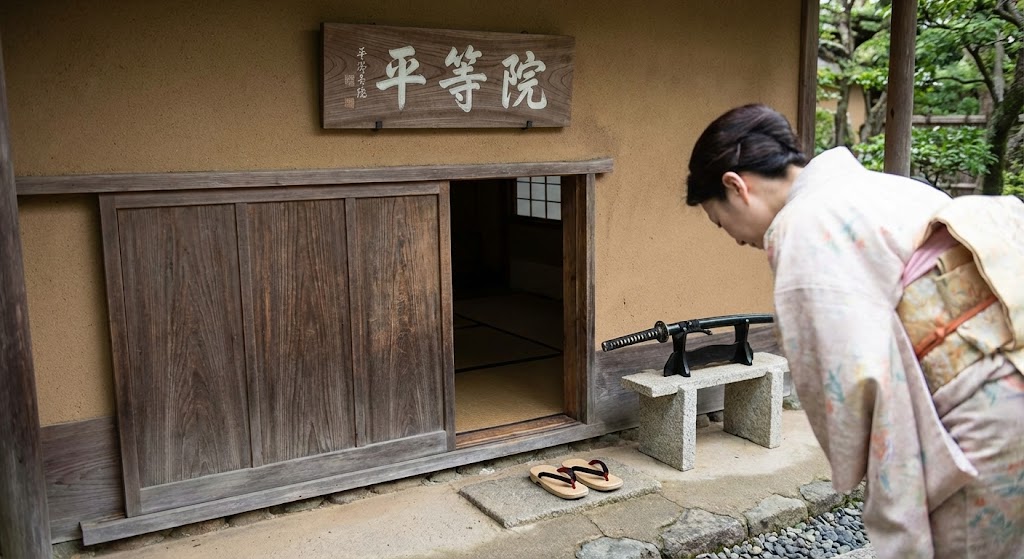
The Japanese tea room (茶室 chashitsu) reached perfection under Sen no Rikyu (千利休, 1522-1591), Zen-influenced tea master who served warlord Toyotomi Hideyoshi. Rikyu revolutionized tea architecture by radically shrinking room size: from spacious formal halls to tiny 4.5-tatami spaces (~7.4㎡ / ~2.7m × 2.7m—barely room for host + 4 guests). This miniaturization was political-philosophical statement: in cramped space, samurai couldn't wear swords (had to remove at entrance), social hierarchy dissolved (everyone hunched equally), and Zen poverty aesthetic (wabi-sabi) became physical environment.
The design philosophy: wabi (侘び—rustic simplicity, austere beauty in imperfection contrasting with Victorian tea's ornate luxury) + sabi (寂び—serene melancholy, beauty of aging/decay like tea pets' gradual patina). Rikyu's tea rooms featured rough mud walls (not polished plaster from European porcelain trade), exposed wooden beams (unfinished, showing knots/grain), tiny entrance (nijiriguchi 躙口—crawl-through door forcing humility), dim natural lighting (no artificial sources, shadows essential to aesthetic unlike Song Dynasty's bright competition halls). Every element designed to strip away artifice, reveal essential nature, create equality through shared poverty.
The tragic end: Rikyu's philosophy threatened feudal order—tea room as utopian space where status meant nothing attracted powerful followers, worried Hideyoshi (suspected tea gatherings were political meetings). In 1591, Hideyoshi ordered Rikyu to commit seppuku (ritual suicide). Rikyu's final act: hosted perfect tea ceremony, then killed himself. His death elevated tea architecture to martyr-level cultural significance—buildings became monuments to aesthetic resistance against power. Modern tea rooms preserve Rikyu's 16th-century dimensions exactly, 430+ years later.
| Architectural Element | Traditional Design | Symbolic/Functional Purpose |
|---|---|---|
| Nijiriguchi (Crawl Entrance) | 60-66cm square opening, requires crawling on hands/knees | Forces humility (samurai can't wear swords, all guests equal), purification threshold |
| Tokonoma (Alcove) | Raised platform, displays scroll + single flower arrangement | Spiritual focus point, only decoration in room, seasonal/poetic theme |
| Ro (Sunken Hearth) | 40cm square cut into floor, charcoal brazier for kettle | Heat source (winter use, Nov-April), visible fire = meditative focus, precise temp control |
| Furo (Portable Brazier) | Ceramic/metal brazier placed on floor (summer, May-Oct) | Less heat than ro (seasonal appropriateness), mobility allows room reconfiguration |
| Shoji (Paper Screens) | Wooden lattice + translucent washi paper, diffuses light | Soft indirect lighting (harsh light avoided), connection to nature (shadows of trees visible) |
| Tatami (Floor Mats) | Woven rush matting, 90×180cm standard, determines room size (4.5 mats typical) | Sitting surface (no furniture), defines space modularly, subtle fragrance (fresh tatami) |
2. The 4.5-Tatami Standard: Geometry of Intimacy
Rikyu's preferred tea room size: 4.5 tatami mats (~7.4㎡). The math: one tatami = ~90cm × 180cm (half-mat = 90cm × 90cm). Layout: 4 full mats arranged in square (creating 180cm × 180cm open center), plus half-mat for host's preparation area. This creates space where 5 people sit comfortably but cannot stand fully (ceiling height ~180-200cm—host's head nearly touches beams when kneeling). The compression forces intimacy—conversations occur at whisper volume (sound carries in small space), physical proximity eliminates formality, shared discomfort creates equality.
The physics of crowding: 4.5 mats for 5 people = ~1.5㎡ per person (comparable to airplane economy seat). Breathing raises CO2 concentration (5 people exhaling in sealed room, similar to mamak stalls' enclosed heat), creating mild hypoxia after 30-60 minutes (tea ceremony duration like Gongfu sessions). This physiological state induces light-headedness, enhancing meditative atmosphere (oxygen deprivation creates altered consciousness—similar to high-altitude spiritual experiences or campfire smoke effects). Modern fire codes often prohibit accurate Rikyu-scale reproductions (insufficient ventilation, safety hazards)—contemporary tea rooms are larger, losing original's claustrophobic intensity unlike Persian tea houses' intimate spaces.
Expert Tip: The Roji Garden Path Strategy
Approaching tea room through roji (??, "dewy path" garden) is psychological preparation—winding stone path forces slow walking (rushing impossible), washing hands at stone basin (tsukubai) symbolizes purification, moss/ferns create forest atmosphere (urban noise fades). Garden designers use "hide and reveal" technique—path curves behind trees, tea room glimpsed but not directly visible until final approach. This builds anticipation, separates mundane world from tea space. If building home tea room, invest time designing approach path—quality of arrival determines ceremony's tone. Even apartment dwellers can create mini-roji with potted plants leading to tea corner.
3. Lighting Physics: Shadows as Aesthetic Element
Tea room lighting is precisely controlled darkness: small shoji windows (paper screens) diffuse sunlight, creating soft ambient glow (no direct sunlight—harsh shadows avoided). Author Jun'ichiro Tanizaki's essay "In Praise of Shadows" (1933) analyzes tea room lighting: "We find beauty not in the thing itself but in the patterns of shadows...were it not for shadows, there would be no beauty." The aesthetic values penumbra (partial shadow), chiaroscuro (light-dark gradations), and mystery (objects half-visible, imagination fills gaps).
The scientific measurement: tea room illumination ~50-150 lux (comparable to candlelight or pre-dawn twilight). Compare to modern office lighting (500-1000 lux) or bright sunlight (10,000-100,000 lux). This low-light environment creates pupil dilation (eyes adapt to darkness), reducing visual acuity (forces focus on essential forms, not fine details), and triggers melatonin production (calm/drowsy state—meditative mindset). The lighting is engineered biology—using photobiology to alter consciousness without drugs.
The seasonal variation: winter tea (November-April) uses ro (sunken hearth)—charcoal fire provides warm glow (600-800°K color temperature—orange-red, comforting). Summer tea (May-October) uses furo (portable brazier) with minimal fire (cooler aesthetic). The fire itself becomes lighting element—dancing flames create moving shadows on mud walls, hypnotic focus point. This parallels campfire tea brewing (fire as social center) but elevated to architectural art.
4. Material Palette: Aged Wood, Earth, and Bamboo
Tea room materials are natural, unfinished, impermanent: Wood: Unpainted cedar, cryptomeria, or pine—shows grain, knots, aging (darkens over decades, aging as beauty unlike Victorian painted perfection). Earth: Mud walls mixed with straw (visible texture), clay plaster (neutral earth tones—gray, tan, brown, similar to kulhar's raw clay). Bamboo: Roof supports, decorative elements, hanging flower vases for chabana. Paper: Shoji screens (washi paper—handmade from mulberry bark, translucent). Tatami: Woven rush mats (slight green color when new, golden-brown when aged, distinctive grass scent bringing nature indoors like grandpa style's simplicity).
The anti-luxury stance: no paint (hides wood's nature), no lacquer (creates artificial shine), no gold leaf (ostentatious wealth display common in samurai architecture—tea room rejects this). The poverty is deliberate—Rikyu could afford expensive materials (served richest warlord in Japan), chose roughness as statement. This aesthetic reverse-snobbery: extreme simplicity becomes ultimate luxury (requires refined taste to appreciate), poverty-chic accessible only to wealthy (poor people's actual poverty isn't aesthetic choice—lacks agency tea room embodies).
Modern material challenges: authentic mud walls crack in heated buildings (thermal expansion), traditional materials expensive (handmade washi paper $50-200/sheet, old-growth cedar $500+/board), maintenance intensive (tatami requires replacement every 5-10 years, $100-300 per mat). Contemporary tea rooms often use modern substitutes (synthetic tatami, cement-based wall coating, machine-made paper)—cheaper, durable, but lose authentic aging patina that's central to wabi-sabi aesthetic.
5. The Tokonoma Alcove: Spiritual Focus Architecture
The tokonoma (床の間) is raised alcove (10-15cm higher than main floor) occupying one wall—displays hanging scroll (kakemono 掛物, calligraphy or painting) and single flower arrangement (chabana). This is room's only decoration—everything else is structural necessity. The alcove represents idealized nature (scroll depicts mountain/river/season, flower is actual nature fragment), creating contemplative focus without clutter.
The design rules: (1) Never step in tokonoma (sacred space, disrespectful), (2) Nothing else displayed (no photos, souvenirs, books—only scroll + flower), (3) Seasonal rotation (winter scroll shows snow scene, spring shows cherry blossoms—thematic coherence), (4) Asymmetric placement (scroll hung slightly off-center, flower vase positioned to balance composition—dynamic tension vs. static symmetry). The alcove is microcosm of tea philosophy—controlled imperfection, seasonal awareness, nature veneration.
The scroll selection is host's primary aesthetic decision—reveals theme for gathering, sets emotional tone, demonstrates cultural knowledge. Famous tea practitioners spend years studying calligraphy and Zen poetry to choose appropriate scrolls. The pressure parallels Chinese literati tea culture (aesthetic performance proving refinement) but compressed into single architectural element—tokonoma is exam question, guests silently judge host's answer.
| Season | Typical Scroll Theme | Flower Choice | Overall Atmosphere |
|---|---|---|---|
| Spring (March-May) | Cherry blossoms, renewal, Zen poetry about impermanence | Camellia, plum blossom, early cherry | Hopeful, fresh, celebrating ephemeral beauty |
| Summer (June-August) | Water scenes (rivers, waterfalls), cooling imagery | Morning glory, hydrangea, lotus | Cool, refreshing (psychological relief from heat) |
| Autumn (September-November) | Moon viewing, harvest, melancholy poems | Chrysanthemum, maple leaves, autumn grasses | Contemplative, bittersweet, accepting transience |
| Winter (December-February) | Snow scenes, pine/bamboo (resilience), Daruma (Zen founder) | Bare branches, winter camellia, pine needles | Austere, enduring, finding beauty in bareness |
6. Acoustic Design: The Sound of Silence
Tea room acoustics are dead space—sound-absorbing materials (tatami mats, mud walls, paper screens) eliminate echo, creating intimate conversational environment. Speaking voice at normal volume fills room completely (no need to project), whispers are clearly audible, silence is profound (no ambient hum—no HVAC, no electricity, no traffic if properly sited). The acoustic intimacy forces mindful speech—every word heard clearly, thoughtless chatter becomes painfully obvious, silence becomes comfortable default.
The intentional sounds: water boiling in iron kettle (matsukaze 松風, "wind in pines"—poetic name for bubbling sound similar to Tang Dynasty's three-stage boiling), charcoal settling in brazier (soft crackle like billy tea's campfire), whisk scraping bowl during matcha preparation (rhythmic friction). These sounds are foreground—ceremony's soundtrack contrasting with Hong Kong tea shops' clatter or Turkish tea houses' conversations. Background silence emphasizes their significance, same way tea room lighting uses darkness to emphasize dim glow. Negative space (silence) defines positive space (sound)—core wabi-sabi principle applied acoustically.
Expert Tip: Modern Soundproofing for Urban Tea Rooms
Authentic tea room silence impossible in cities—traffic noise, neighbor sounds, airplane flyovers destroy atmosphere. Modern solution: acoustic insulation between walls (rockwool batts, mass-loaded vinyl), double-pane windows (laminated glass for sound reduction), door sweeps and gaskets (seal gaps). Budget $3000-8000 for proper soundproofing retrofit. Cheaper alternative: white noise machine playing forest sounds (masks urban noise, creates nature illusion). Purists reject this (artificial sound violates tea principles), pragmatists accept compromise (imperfect tea room better than no tea room). Urban tea practice requires adaptation—preserve spirit while bending rules for modern reality.
7. Ventilation and Thermal Comfort: Designed Discomfort
Traditional tea room has minimal ventilation—small windows (rarely opened during ceremony), sealed nijiriguchi entrance, no chimney (charcoal smoke vents slowly through shoji paper pores). This creates: (1) Smoke accumulation (charcoal produces CO, creating mild carbon monoxide exposure—light-headedness), (2) Heat retention in winter (ro hearth warms small space efficiently, 15-20°C interior vs. 0-5°C exterior), (3) Stuffy atmosphere in summer (poor air circulation, humidity builds, uncomfortable heat).
The discomfort is intentional: tea ceremony shouldn't be luxurious spa experience—mild suffering (too hot, too cold, slightly oxygen-deprived) builds character, demonstrates commitment, equalizes participants (everyone endures together). This ascetic tradition parallels Zen monastic training (meditation in unheated halls, minimal comfort). Modern safety standards conflict with tradition—building codes require ventilation (CO detectors, exhaust fans), fire codes demand emergency exits (second door, wider openings). Authentic tea room is technically uninhabitable by contemporary standards.
8. Regional Variations: Kyoto vs. Tokyo Styles
Kyoto style (Rikyu tradition): Extreme minimalism, 4.5-tatami or smaller, very dim lighting, rough textures, strict wabi-sabi. Kyoto was traditional capital (cultural conservatism), home to Urasenke/Omotesenke schools (Rikyu's lineage). Tokyo style (Edo period adaptation): Slightly larger rooms (6-8 tatami), brighter lighting (merchant class preference—less austere), smoother finishes (urban sophistication vs. rustic roughness). Tokyo (formerly Edo) was new capital (1603+)—merchant wealth created different aesthetic (still tea ceremony, but less extreme poverty-worship).
Modern corporate tea rooms (built by companies, universities): often 10+ tatami (accommodate larger groups, demonstrations), electric lighting (code requirements, convenience), climate control (HVAC for year-round use). These sacrifice authenticity for functionality—more museum exhibit than living tradition. Purist criticism: large bright comfortable tea rooms miss entire point (discomfort, intimacy, humility). Pragmatist defense: accessible tea rooms preserve tradition for modern practitioners (perfect authenticity means extinction—nobody practices anymore).
9. Building a Home Tea Corner: Practical Adaptation
Full tea room requires: dedicated 12-15㎡ space, $20,000-100,000+ construction cost (authentic materials, skilled carpenters), ongoing maintenance, and commitment to traditional practice. Most practitioners compromise: create tea corner in existing room—affordable, flexible, captures essence without architectural perfection.
Minimal setup (Budget: $500-2000): Designate room corner (2m × 2m minimum), install 4-6 tatami mats (or tatami-sized yoga mats as substitute), hang simple scroll on wall (tokonoma-adjacent), add portable brazier or electric kettle, use floor cushions (zabuton) for seating. This creates tea-practice space without construction—reversible, apartment-friendly.
Enhanced setup (Budget: $3000-8000): Build raised platform (10-15cm high, creates tokonoma effect), install shoji screen (room divider creating separate zone), add dimmable lighting (LED strips with warm color temp, hidden behind valance), commission custom low table (30cm height for floor seating). This approaches tea room feel without permanent renovation.
Dedicated room conversion (Budget: $10,000-30,000): Convert spare bedroom/basement: install real tatami flooring ($100-300 per mat × 8 mats = $800-2400), build tokonoma alcove (carpenter + materials $2000-5000), replace standard door with low entrance ($500-1500), add shoji windows ($1000-3000), install ro or dedicated brazier area ($2000-5000), soundproof walls ($3000-8000), apply earthtone wall treatment ($1000-3000). This creates authentic-adjacent space—not perfect replica, but functional tea room for serious practice.
Maintenance considerations: Tatami requires annual airing (prevent mold in humid climates), replacement every 5-10 years ($800-2400). Shoji paper tears easily (pets, children incompatible), needs re-papering every 2-5 years ($200-800). Mud walls crack (require periodic repair, skilled plasterers rare/expensive in West). Budget $500-1500 annually for upkeep if using authentic materials—less if using modern substitutes.
The philosophical question: Is imperfect tea room better than none, or does compromise destroy meaning? Rikyu would argue essence matters more than perfection—tea ceremony about mindfulness, hospitality, appreciating imperfection (wabi-sabi itself). Modern tea teachers generally support adaptation: "Tea room is state of mind, not building dimensions. Host's sincerity matters more than architectural authenticity." The spirit vs. letter debate—every tradition faces this when adapting to new contexts. Tea architecture proves flexible enough to survive 430 years by bending without breaking.
Comments