1. Ghand Pahlou: Sugar Between Teeth Physics
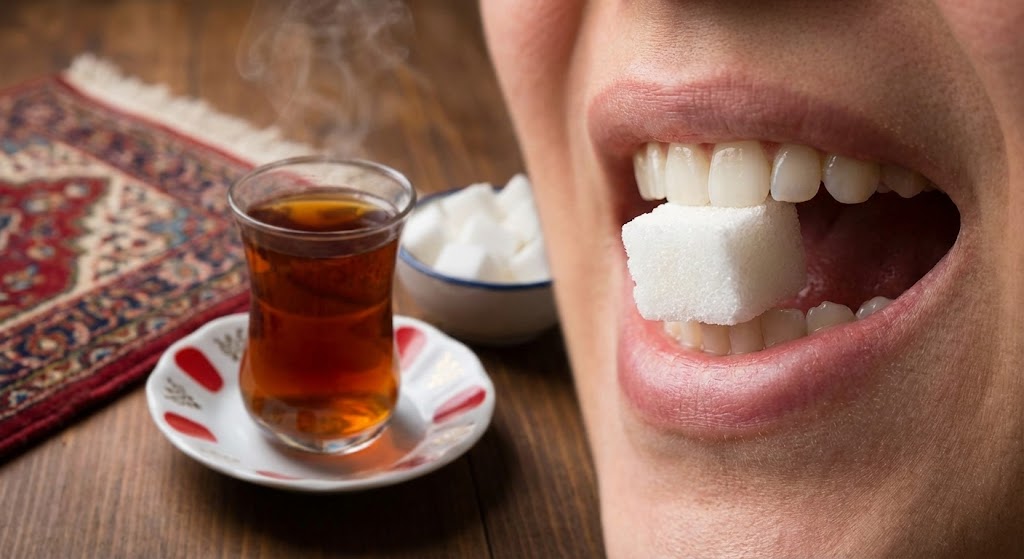
The defining feature of Persian tea culture is ghand pahlou (literally "sugar on the side")holding compressed sugar cube between front teeth while sipping tea. This creates gradient dissolution: hot tea flows over cube surface ? saturated sugar solution mixes with tea in mouth ? varying sweetness from sip #1 (intense) to sip #20 (mild) as cube shrinks.
The physics involves surface area and dissolution kinetics. A standard Persian sugar cube (nabat or qand) is compressed sucrose crystal (15-20mm cube, ~5g). When held between teeth, only one face (~4cm) contacts tea per sip. Dissolution rate = (surface area) (tea temperature) (contact time). Each sip dissolves ~0.2-0.3g sugar, meaning single cube lasts 15-20 sipsversus dissolving entire cube in tea immediately (standard Western method).
The practice has economic origins: when sugar was luxury commodity (Ottoman/Qajar era, 17th-19th centuries), making one cube serve entire glass was frugality. Modern Iranians maintain tradition as cultural identity markerdistinguishes Persian tea from Turkish ay (dissolves sugar in liquid) or East Frisian Kluntje (rock sugar settles at bottom).
| Sugar Method | Dissolution Pattern | Sweetness Experience |
|---|---|---|
| Ghand Pahlou (Persiancube in teeth) | Gradual surface erosion, 15-20 sips per cube | Decreasing gradient: intense ? mild over time |
| Dissolved Cubes (Turkish, British) | Rapid complete dissolution, uniform distribution | Constant sweetness throughout glass (2-3 cubes needed) |
| Kluntje (East Frisian rock sugar) | Slow dissolution at cup bottom, 5-7 minutes | Increasing gradient: mild ? sweet as you drink to bottom |
| Granulated (standard modern) | Instant dissolution (30-60 seconds) | Immediate uniform sweetness (no gradient) |
| Honey (alternative sweetener) | Viscous mixing, slower than granulated sugar | Floral notes, may settle if tea cools (density separation) |
2. Samovar Culture: Russian Influence on Persian Tea
Persian tea service centers on samovar (semvar in Persian)a large metal urn with internal heating element (charcoal historically, electric modern). The samovar maintains constant supply of boiling water, with teapot (quri) sitting on top holding concentrated brew. This system is identical to Russian samovar (заварка) and shares ancestry with Turkishçaydanlık.
The connection: Russian and Persian tea cultures cross-pollinated through 19th century trade and diplomacy. Qajar dynasty Iran (1789-1925) adopted samovar from Russian Empire contact, while geography enabled Silk Road tea caravans from China through Central Asia. The samovar became Persian domestic fixture by 1900ssymbol of hospitality that never runs out of hot water.
Expert Tip: Samovar Temperature Management
Traditional charcoal samovars require skill: too much charcoal = water boils dry (fire risk), too little = water lukewarm (insults guests). Modern electric samovars have thermostats (set to 95-9°C), but vintage charcoal models are status symbols. Test water temp: listen for gentle bubbling (correct), vs. violent rolling boil (too hot) or silence (too cold). Experienced hosts judge by sound aloneno thermometer needed.
The samovar's thermodynamics mirror Turkishçaydanlık: bottom vessel at 100C, top teapot at 85-9°C via steam heating (similar double-boiler principle as noon chai's multi-vessel setup). The concentrate-dilution method is identicalpour concentrated tea (1/4 to 1/2 of cup), dilute with boiling water to desired strength (paralleling Hong Kong's strong brew + milk dilution). Difference: Persian concentrate is often stronger (5-6 tbsp tea per 200mL vs. Turkish 3-4 tbsp), yielding darker, more astringent base that benefits from ghand pahlou sweetening.
3. Nabat vs. Qand: Crystal vs. Compressed Sugar
Persian tea uses two sugar types: nabat (rock candy crystals on strings) and qand (compressed white cubes). Nabat is crystalline sucrose formed through slow evaporationlarge transparent crystals (2-5cm chunks) grown on strings. Qand is pressed granulated sugaropaque white cubes similar to European sugar cubes but larger (2cm vs. 1.5cm).
The choice signals formality and expense: nabat is premium (costs 3-4x qand), served to honored guests or special occasions. Its larger crystal size means slower dissolutionsingle nabat chunk can last 25-30 sips, double qand's duration. The extended sweetness makes nabat preferred for traditional ghand pahlou method. Qand is everyday optionmore affordable, faster dissolution (acceptable for casual tea drinking).
| Sugar Type | Crystal Structure | Dissolution Time | Cultural Status |
|---|---|---|---|
| Nabat (rock candy) | Large monocrystals (2-5cm), transparent | Very slow (25-30 sips per piece) | Premium, formal occasions, honored guests |
| Qand (compressed cube) | Compressed polycrystalline (2cm cubes), opaque white | Slow (15-20 sips per cube) | Everyday use, standard hospitality |
| Saffron Nabat | Rock candy infused with saffron (yellow tint) | Very slow + adds floral aroma | Luxury item, wedding gift, Nowruz celebration |
| Granulated (modern) | Small crystals (0.5mm), free-flowing | Instant (30 seconds in hot liquid) | Western influence, rejected by traditionalists |
4. The Tea Glass: Narrow Waist for Heat Retention
Persian tea glasses (estekan) share design lineage with Turkish tulip glassesnarrow waist (3-4cm diameter), flared top (6cm), thin clear glass. The physics: narrow waist reduces surface area for convective heat loss, while maintaining enough capacity (120-150mL) for proper tea-to-water ratio after dilution.
The glass transparency serves quality control function: proper Persian tea should be amber-red ("color of garnet"), not brown or orange. Too dark = over-steeped concentrate (bitter), too light = weak tea (insult to guest). The visual feedback is instantbefore tasting, host can confirm proper strength by checking color against light. This contrasts with opaque Japanese raku bowls (aesthetics over inspection), kulhar's earthy concealment, Victorian porcelain opacity, or Gongfu's translucent porcelain inspection.
Expert Tip: The Saucer Signal
Persian tea glasses sit on small saucer (na'lbeki). When finished drinking, place empty glass upside-down on sauceruniversal signal that you want no more tea. Leaving glass right-side up = host will refill (endless cycle). If you want to stop but fear offense, take very small sips stretched over long time (signals satiation without explicit refusal). Never verbally refuse tea offersuse non-verbal cues only.
The thin glass (1-1.5mm) requires careful handlingtoo hot to grip directly after pouring. Iranians develop skill of holding glass by rim (fingertips only) or using saucer as heat shield. This tactile feedback indicates tea temperature: uncomfortably hot = fresh pour (compliment), comfortably warm = tea has sat (host should refresh). The system is social thermometer embedded in glassware design.
5. Tea Estates: Lahijan and Caspian Cultivation
Iranian tea production concentrates in Lahijan region (Gilan province, Caspian Sea coast)climatically similar to Rize, Turkey (neighboring Black Sea). The humid subtropical climate (2000mm rainfall, mild winters) supports Camellia sinensis var. sinensis (Chinese variety, not Assam variety used in India/Sri Lanka).
Lahijan tea is processed as orthodox black tea (whole/broken leafsimilar to sencha's whole-leaf emphasis) rather than CTC, yielding more delicate flavor than Turkish or British builder's tea's robust Assam. This requires stronger concentrate brewing to achieve proper colorexplaining why Persian teapots use more leaf per volume than Turkish equivalents (though less extreme than Gongfu's 1:15 ratio). The terroir produces tea with bergamot-like notes (natural, not added), which Iranians prize as sign of quality.
6. Cardamom and Saffron: The Spice Additions
While plain black tea is standard, special occasions call for spiced versions: cardamom tea (chai-e hel) or saffron tea (chai-e zafaran). Cardamom pods (2-3 crushed pods per pot) add warm, eucalyptol notes that complement black tea's tannins. Saffron threads (3-5 threads) provide floral aroma and golden tintvisual luxury signal (saffron costs $500-5000/kg depending on grade).
The chemistry: cardamom's essential oils (eucalyptol, terpinene) are non-polar compounds that require hot water + time to extract (similar extraction physics as teh tarik's tea compounds). Adding pods directly to concentrate pot during steeping ensures maximum extraction. Saffron's picrocrocin (bitter) and safranal (aroma) are alcohol-solubletraditionally saffron is steeped in small amount of hot water separately, then added to teapot (prevents overwhelming tea flavor, paralleling noon chai's spice balancing or Song Dynasty's flavor compound precision).
| Spice Addition | Chemical Compounds | Cultural Function |
|---|---|---|
| Cardamom (hel) | Eucalyptol (1,8-cineole), a-terpineol | Digestive aid, signals hospitality, common in homes |
| Saffron (zafaran) | Safranal (aroma), picrocrocin (bitter), crocin (color) | Luxury display, wedding/Nowruz use, health benefits claimed |
| Rose petals (golpar) | Geraniol, citronellol (floral aromatics) | Poetic association (rose = Persian symbol), feminine tea preference |
| Cinnamon (darchin) | Cinnamaldehyde (sweet-spicy note) | Winter warming, blood sugar control belief, less common |
| Bergamot oil (NOT traditional) | Linalool, linalyl acetate (citrus) | Western Earl Grey influence, rejected by purists |
7. Social Hierarchy and Tea Service Order
Persian tea service follows strict social protocol: eldest male first, then eldest female, then by descending age regardless of gender. Guests receive priority over family memberseven young guest is served before household elders. This hospitality-first hierarchy contrasts with Japanese tea ceremony's rigid rank-based order or Mongolian ger seating tied to architectural positions.
The server (typically youngest daughter or daughter-in-law) presents tea on tray (sini) with right hand, bowing slightly. Refusing first offer is acceptable (tarof cultureritual politeness), but refusing second offer is genuine insult. The tarof system creates multi-round negotiation: offer ? polite refusal ? insistence ? acceptance. Foreign visitors who accept first offer confuse hosts (appear overeager), while those who refuse multiple times frustrate (seem ungrateful).
Expert Tip: Navigating Tarof
As guest, refuse first tea offer politely ("No thank you, I'm fine"), wait for second offer, then accept ("Well, maybe just a little"). This satisfies tarof protocol without excessive back-and-forth. If you genuinely don't want tea (health reason), be explicit and firm: "I'm not drinking tea today, thank you" repeated twice signals genuine refusal vs. polite ritual. Never accept then leave tea untouchedmajor offense (implies tea quality is poor).
8. Chai Khaneh: Traditional Tea Houses
Chai khaneh (tea house) is Persian cultural institutionpublic space for male socializing, historically segregated (women excluded until 1950s-60s reforms, still predominantly male today). These venues serve continuous tea alongside qalyan (hookah/water pipe), dried fruits, nuts. Architecture features Persian rugs, cushioned seating (no chairssit cross-legged), and omnipresent backgammon (takhte nard) players.
The social function parallels Turkish ay bahesi (tea garden) and British workingmen's cafesaffordable public space for lingering. Single glass of tea (5000-10000 rials, ~US$0.20) buys hours of occupancy. Waiters (chai-chi) circulate with samovars, refilling glasses without being asked (payment upon exit based on honor system tally).
Modern Iran sees chai khaneh decline (replaced by Western-style cafes serving espresso + cake), but cultural preservation efforts maintain historic locations in Esfahan, Shiraz, Tehran bazaars. These serve as living museumstourists paying premium for "authentic" experience that locals increasingly abandon for air-conditioned modernity.
9. Step-by-Step: Persian Samovar Tea Method
Equipment: Samovar (or substitute large kettle + small teapot), Iranian black tea (Lahijan if available, else substitute Ceylon), tea glasses, nabat or qand, saucer set.
Step 1 - Heat samovar: Fill samovar with cold water (3-4L depending on size). If electric, turn on and set to 95-9°C. If charcoal, load charcoal into central chimney, light carefully, adjust vents for steady burn (not roaring firewastes fuel and boils water too hard).
Step 2 - Prepare concentrate: While water heats, add 5-6 tbsp loose black tea to teapot (quri). When samovar water boils, pour 200-250mL boiling water into teapot, covering leaves. Stir once to wet all leaves, place lid on teapot.
Step 3 - Steam steep: Set teapot on top of samovar (opening at top where steam escapes). The steam heat will gently warm teapot, steeping concentrate without boiling. Let steep 10-15 minutes. Concentrate should become very dark brown, almost opaque. If using spices (cardamom, saffron), add to teapot during this step.
Step 4 - Serve with dilution: Pour 30-50mL concentrate into glass (fill 1/4 to 1/3). Top off with boiling water from samovar tap, leaving 1cm space at rim. Check colorshould be deep amber-red (garnet color). If too dark, use less concentrate; if too light, add more.
Step 5 - Sugar and sipping: Place nabat or qand cube between front teeth (upper and lower teeth grip cube gentlydon't bite hard or cube crumbles). Sip tea through/over sugar cube. The hot tea dissolves sugar surface, creating sweet coating in mouth before tea reaches throat. Take small sipscube should last 15-20 sips minimum.
Accompaniments: Serve with dates (khorma), dried mulberries (tut), pistachios, walnuts. Traditional pairing: salty cucumbers or feta cheese (panir) to contrast tea's sweetness and stimulate continued tea drinking (salt ? thirst ? more tea). The sweet-salty oscillation extends social tea session from 30 minutes to 2-3 hours.
Maintenance: Refill samovar water throughout service (never let boil dry). Replace concentrate when bitter (2-3 hours maximum). Clean teapot and samovar daily with baking soda, avoid soap (residue affects flavor). Descale samovar monthly if using hard water (vinegar soak, then thorough rinse).
Comments