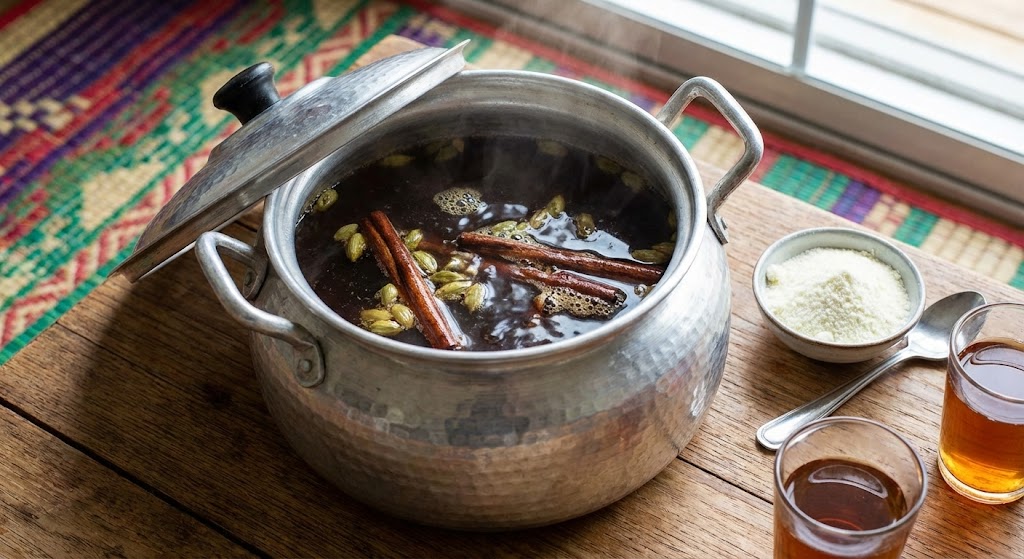
1. Extreme Sugar Concentration: Energy Drink of the Horn of Africa
Somali shaah is tea-flavored syrup—no exaggeration. Traditional recipes use 4-6 tablespoons sugar per cup (150mL), creating solution approaching saturation point (~200g sugar per liter). This is 3-4x sweetness of Southern sweet tea (60-80g/L) and rivals bubble tea sweetness (100-150g/L). The result: viscous, intensely sweet liquid that coats mouth and provides immediate caloric punch.
The chemistry: at 25°C, water can dissolve maximum 2000g sugar per liter (supersaturated solution). Hot shaah (90-95°C) approaches this limit at ~200g/L—meaning sugar is at edge of precipitation. As shaah cools, sugar can crystallize out if concentration too high. Somali tea masters calibrate precisely: enough sugar for energy but below crystallization threshold. The technique parallels rock candy production (controlled crystallization) but inverted—shaah seeks maximum dissolved sugar without crossing into solid phase.
The extreme sweetness serves survival function in hot climate. Somalia's daytime temperatures reach 40-45°C, causing significant caloric burn and fluid loss. A single cup of shaah delivers ~100-120 calories (pure sugar energy), plus caffeine for alertness, in shelf-stable form requiring no refrigeration. This nutritional density makes shaah closer to Mongolian fat-tea (survival beverage) than British social tea (leisure activity).
| Tea Type | Sugar Content (g/L) | Calories per Cup (150mL) | Cultural Function |
|---|---|---|---|
| Somali Shaah | 180-200g/L (extreme) | 110-120 cal | Energy source, nomadic survival, hospitality marker |
| Southern Sweet Tea (US) | 60-80g/L | 35-50 cal | Refreshment, regional identity (see sweet tea science) |
| Bubble Tea (Taiwan) | 100-150g/L | 75-110 cal (tea + tapioca) | Youth culture, flavor experimentation (see bubble tea) |
| Turkish Çay (with sugar) | 40-60g/L (2-3 cubes) | 25-35 cal | Social lubricant, continuous consumption (see Turkish tea) |
| British Tea (sugared) | 20-30g/L (1-2 tsp) | 12-18 cal | Mild sweetness, complements milk (see builder's tea) |
2. Cardamom and Cinnamon Dominance: Spice Chemistry
Somali shaah is spice-forward: cardamom (hayl) and cinnamon (qorfe) are mandatory, not optional. The recipe uses 8-10 crushed cardamom pods and 2-3 cinnamon sticks per liter—overwhelming quantities that would overpower delicate teas. But shaah uses strong CTC black tea (Kenyan or Yemeni), which has tannin concentration (800-1200 mg/L) sufficient to balance spice intensity.
The chemistry: cardamom contains eucalyptol (1,8-cineole, 30-45% of essential oil), a monoterpene that's intensely aromatic and slightly anesthetic (numbs tongue at high concentration). Cinnamon's cinnamaldehyde (65-80% of bark oil) is sweet-spicy compound that enhances perceived sweetness without adding sugar. Together, these compounds create synergistic effect: cardamom's cooling eucalyptol balances cinnamon's warming sensation, while both amplify sugar's sweetness through taste receptor cross-talk.
Expert Tip: The Spice Crushing Rule
Don't use pre-ground cardamom or cinnamon powder for shaah—essential oils volatilize during storage, leaving stale flavor. Crush whole cardamom pods with mortar & pestle or flat knife blade (exposing seeds, where oils concentrate). Break cinnamon sticks into 1-inch pieces (increases surface area). Add spices to cold water before boiling—this extracts oils slowly, preventing bitter notes that develop from boiling whole spices in already-hot water.
Additional spices vary by family: cloves (qaranfuul, intense eugenol aroma), ginger (sinjibil, warming gingerol), black pepper (filfil, piperine heat). These create personalized spice signatures—some Somali families guard recipes as secret formulas passed through generations. The spice complexity rivals Kashmiri noon chai and Persian chai-e masala, but shaah's extreme sweetness makes it distinctive.
3. Kenyan CTC vs. Yemeni Tea: The Base Leaf Choice
Somali shaah uses almost exclusively CTC (Crush, Tear, Curl) black tea, sourced from two origins: Kenya (modern commercial, 70% of market) or Yemen (traditional artisan, 30%). Kenyan CTC is factory-produced—uniform granule size (1-2mm), high tannin extraction (900-1100 mg/L in 5-min brew), low cost (US$3-5/kg wholesale). Yemeni tea is hand-processed—irregular pieces, complex flavor with floral notes, higher cost (US$8-12/kg).
The Kenyan variety dominates for economic reasons: Somalia and Kenya share border (short transport distance), Kenya is world's #3 tea exporter (abundant supply), and Kenyan CTC's aggressive extraction survives shaah's spice + sugar bombardment. Yemeni tea is nostalgic preference—reflecting historical trade when Yemen controlled Red Sea commerce and supplied East Africa's tea before British colonial tea networks diverted trade to India/Ceylon.
| Tea Origin | Processing Style | Flavor Profile | Shaah Suitability |
|---|---|---|---|
| Kenyan CTC (modern standard) | Machine CTC, uniform granules | Bold, malty, high tannin, no subtlety | Excellent (strong enough to survive spice/sugar, affordable) |
| Yemeni Black (traditional) | Hand-rolled, semi-orthodox | Complex, slight floral, medium-high tannin | Good (traditional preference, but expensive, harder to source) |
| Assam CTC (alternative) | Machine CTC, Indian-produced | Very malty, highest tannin (see Assam guide) | Excellent (but import costs higher than nearby Kenyan tea) |
| Ceylon/Sri Lankan (uncommon) | Orthodox or CTC | Bright, citrus notes, medium body | Poor (too delicate, citrus clashes with cardamom/cinnamon) |
| Chinese Black (wrong choice) | Orthodox, whole leaf | Smooth, sweet, low tannin | Wrong (insufficient body, spices dominate completely) |
4. Boiling Protocol: The Extended Extraction Method
Unlike Grandpa style's gentle steeping or Gongfu's quick infusions, shaah is boiled aggressively for 15-25 minutes. This extended extraction serves multiple functions: maximizes caffeine release (180-200 mg/cup vs. 40-60 mg for standard tea), completely extracts tannins (creates astringent base that balances sugar), and ensures spice oils fully integrate with tea liquor.
The method mirrors Mongolian brick tea boiling and Tang Dynasty soup tea—both ancient techniques predating infusion methods. The science: boiling accelerates molecular diffusion (rate doubles every 10°C increase), breaks down complex polyphenols into smaller astringent compounds, and creates Maillard reactions between tea amino acids and sugars (adding roasted notes).
Expert Tip: The Foam Test
Properly boiled shaah develops persistent foam on surface (from saponin compounds in tea + vigorous boiling). When foam forms stable layer (doesn't disappear when stirring stops), shaah is ready. If no foam develops after 20 minutes boiling, tea quality is poor (low saponins, likely old/stale leaves). The foam also indicates sufficient extraction—under-boiled shaah has thin, temporary bubbles that vanish immediately.
5. Milk Debate: To Add or Not to Add
Somali shaah divides into two camps: shaah cadeys (black tea, no milk) and shaah caano leh (milk tea). Northern Somalia and Djibouti favor cadeys (pure spiced tea, showcases spice complexity). Southern Somalia and diaspora communities lean toward caano leh (camel milk traditionally, cow milk modern substitute). The milk addition creates entirely different beverage—fat moderates sugar impact, protein binds tannins (reduces astringency), lactose adds subtle sweetness.
Camel milk (traditional) has unique chemistry: lower casein than cow milk (2.5% vs. 3.3%), higher vitamin C (35 mg/L vs. 15 mg/L in cow), and different fat globule size (3-5 μm vs. 4-6 μm). These differences affect texture—camel milk in shaah is less creamy than cow milk, doesn't curdle as easily under acidic + hot conditions, and adds slightly salty-sweet note. The nutritional profile parallels yak milk in po cha and mare's milk in suutei tsai—nomadic cultures using available dairy from herding animals.
6. Nomadic Heritage: Shaah as Hospitality Currency
In Somali nomadic culture, offering shaah is non-negotiable hospitality—refusing first offer is acceptable (ritual politeness), refusing second is social offense. The practice creates economic burden: poor families spend disproportionate income on sugar, spices, tea to maintain hospitality standards. Some spend 20-30% of monthly budget on shaah supplies—prioritizing social obligation over nutrition diversification.
The ritual parallels mate sharing circles (refusal = exit), East Frisian 3-cup minimum, and Persian tarof (multi-round offer/refusal dance). But Somali shaah's resource intensity makes it genuine economic sacrifice—not symbolic gesture. Serving shaah to unexpected guests demonstrates household's resourcefulness and honor, even if it means reducing family meals that day.
Expert Tip: Guest Etiquette
When visiting Somali household, accept first shaah offer (declining creates awkwardness in diaspora communities where tarof is less practiced than in Somalia proper). Drink at least half the cup—leaving full cup untouched is insult. If sweetness is overwhelming (common for non-Somalis), sip slowly and compliment preparation ("shaah fiican" = good tea). Don't request less sugar—this implies host's recipe is wrong. Instead, accept graciously and pace yourself.
7. Diaspora Adaptation: Instant Shaah and Sugar Reduction
Somali diaspora communities (US, UK, Canada, Australia) face shaah preparation challenges: limited access to fresh cardamom pods (expensive in Western markets), time constraints (25-minute boiling incompatible with work schedules), and health concerns (diabetes rates in diaspora populations). This drives adaptations: instant shaah mixes (tea powder + dried spices + sugar, just add water), electric shaah makers (automatic boiling timers), and reduced-sugar versions ("shaah khafiif" = light tea, only 2-3 tbsp sugar vs. 6).
The instant versions parallel Hong Kong milk tea instant sachets and bubble tea powder mixes—tradition commodified for convenience. Purists decry flavor loss (pre-ground spices, artificial sweeteners in some brands, no fresh-boiled complexity), but instant shaah serves identity function: diaspora youth maintain connection to Somali heritage through accessible version, even if elders consider it inferior.
8. Health Implications: Sugar, Caffeine, and Diabetes
Traditional shaah's extreme sugar content creates health concerns, particularly in sedentary modern lifestyles. Drinking 3-4 cups daily (typical Somali consumption) delivers 300-400g sugar (1200-1600 calories from sugar alone)—far exceeding WHO recommendation of 25-50g/day. Combined with Somalia's genetic predisposition to type 2 diabetes and diaspora diet changes (less physical activity, more processed food), shaah becomes cardiovascular risk factor.
The caffeine load (180-200 mg per cup × 3-4 cups = 540-800 mg daily) exceeds safe limits for some populations (pregnant women, cardiac patients). But caffeine also provides benefits in hot climate: thermogenic effect increases metabolic rate (heat production paradoxically helps thermoregulation), diuretic effect (debated—may increase fluid loss), and cognitive alertness (critical for nomadic herding requiring constant vigilance).
| Health Aspect | Traditional Shaah Impact | Modern Mitigation |
|---|---|---|
| Sugar Intake | 300-400g daily (extreme, diabetes risk) | Reduced-sugar recipes, artificial sweeteners (stevia, sucralose) |
| Caffeine Load | 540-800 mg daily (insomnia, anxiety possible) | Decaf CTC tea (rare in Somalia, available in diaspora markets) |
| Dental Health | Sugar + tannins = enamel erosion, cavities | Straw use (reduces enamel contact), water rinse after consumption |
| Iron Absorption | Tannins inhibit non-heme iron (anemia risk, especially women) | Consume shaah between meals (not with food), vitamin C supplementation |
| Antioxidants | High polyphenol content (catechins, theaflavins = cardiovascular benefit) | Already positive—no change needed |
9. Step-by-Step: Making Traditional Somali Shaah
Ingredients (Shaah Cadeys - Black Tea): 4 cups (1L) water, 4-5 tbsp Kenyan CTC black tea, 8-10 green cardamom pods (crushed), 2-3 cinnamon sticks (broken), 4-6 whole cloves (optional), 1-inch fresh ginger (sliced, optional), 6-8 tbsp white sugar (adjust to taste, traditional is 6-8).
For Shaah Caano Leh (Milk Tea): Same base + 1-2 cups whole milk or camel milk (add at end).
Step 1 - Combine spices and water: In large pot (stainless steel or enamel), combine cold water, crushed cardamom pods (bash with knife to crack open), broken cinnamon sticks, cloves, ginger. Bring to boil over high heat.
Step 2 - Add tea and boil: Once boiling, add CTC black tea. Reduce heat to medium (maintain steady boil but not violent). Boil uncovered 15-20 minutes, stirring occasionally. Liquid should reduce by ~20% (concentrates flavor). Tea will turn very dark brown, almost black. Foam should develop on surface.
Step 3 - Add sugar: Add sugar (start with 4 tbsp if unaccustomed to extreme sweetness, work up to 6-8 for authentic version). Stir to dissolve completely. Continue boiling 5 more minutes. Taste—should be intensely spiced, very sweet, highly astringent (tannins). If too bitter, sugar insufficient; if too sweet even for Somali palate, reduce next batch.
Step 4 - Optional milk addition: If making caano leh, add milk now. Reduce heat to low simmer (do NOT boil vigorously—milk will curdle). Simmer gently 5 minutes, stirring occasionally. Milk should turn tan-brown from tea, not separate into curds.
Step 5 - Strain and serve: Strain shaah through fine mesh strainer into teapot or serving vessel (removes tea leaves, spice solids). Serve immediately in small cups or glasses (shaah is strong—small servings appropriate). Traditional accompaniment: dates, roasted peanuts, Somali sambusa (savory pastries).
Serving culture: Shaah is drunk hot, in multiple small servings throughout day (not single large cup). Offer refills constantly—empty cup = automatic refill unless guest explicitly declines (place hand over cup = "no more"). Never drink standing—shaah is social ritual requiring sitting, conversation, time investment. Rushing shaah (drinking quickly, leaving immediately) insults host by implying their company isn't valued.
Comments