1. The Baking Soda Paradox: Alkaline Chemistry Creates Pink Tea
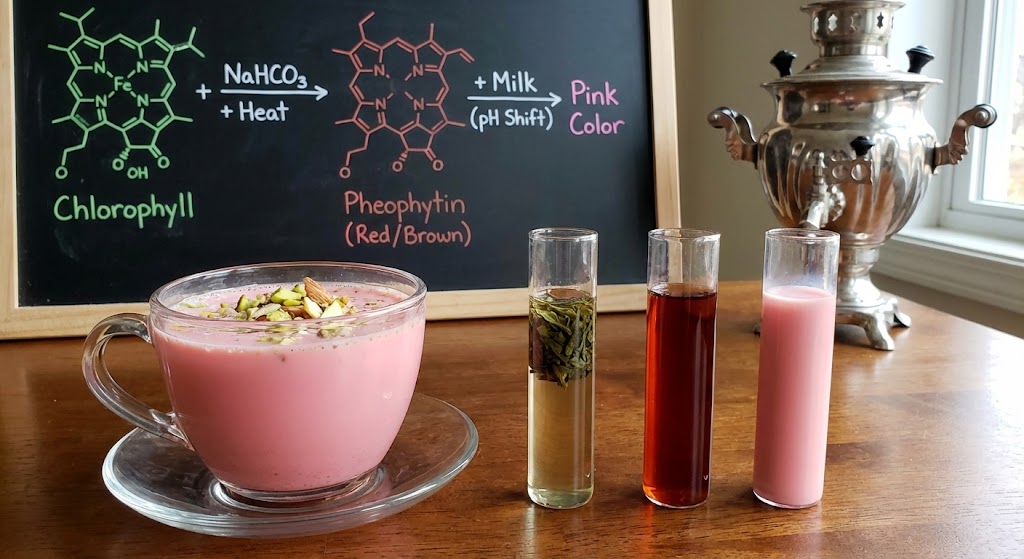
Noon chai's signature pink color comes from unlikely source: baking soda (sodium bicarbonate). Most teas darken with alkalinity—black tea turns nearly black, green tea becomes yellow-brown. But Kashmiri noon chai turns pink through multi-step chemical transformation that requires precise pH control and timing.
The chemistry begins with gunpowder green tea (tightly rolled Camellia sinensis leaves with high chlorophyll content). When boiled with baking soda (typical ratio: 1 tsp per 2L water), the alkaline environment (pH 8-9) extracts chlorophyll and converts it to pheophytin—a dull olive-green compound. This is the "green tea" stage that looks unappetizing. But continued boiling with bicarbonate causes oxidative degradation of chlorophyll into smaller molecules, some of which are pink-red in alkaline solution.
The key reaction: chlorophyll's magnesium ion (Mg²⁺) is replaced by hydrogen (producing pheophytin), then pheophytin oxidizes into pyrrole derivatives with reddish hue. But the color only appears after aeration—vigorous pouring between vessels introduces oxygen that oxidizes these compounds. Without aeration, noon chai stays brown-gray (the "failed batch" stigma). This makes noon chai closer to teh tarik's oxidation physics than cold brew's gentle extraction.
| Chemical Stage | pH Level | Visual Color | Molecular Process |
|---|---|---|---|
| Initial Green Tea Boil | pH 7-7.5 (neutral) | Yellow-green (normal tea) | Standard polyphenol and chlorophyll extraction |
| Baking Soda Addition | pH 8-9 (alkaline) | Dark olive-green (unappealing) | Chlorophyll → pheophytin conversion, Mg²⁺ loss |
| Extended Boiling (15-20 min) | pH 8.5-9 (maintained alkaline) | Brown-gray (intermediate) | Pheophytin oxidative degradation begins |
| Aeration (pouring/whisking) | pH 8-8.5 (oxygen exposure) | Brick-red to pink (success!) | O₂ oxidizes pyrrole derivatives → pink chromophores |
| Milk/Salt Addition | pH 6.5-7 (neutralized) | Pastel pink (final serving color) | Milk proteins stabilize color, fat dilutes intensity |
2. The Aeration Imperative: Oxygen as Color Activator
Noon chai requires aggressive aeration—pouring tea between two vessels from height (30-50cm) repeatedly (10-15 times minimum). This isn't ceremonial flourish; it's oxidative chemistry. Each pour introduces dissolved oxygen that reacts with partially degraded chlorophyll molecules, converting them to pink-red compounds.
The physics mirrors Malaysian teh tarik (pulled tea) where pouring creates foam through air entrainment. But noon chai's goal is oxidation, not foam. The long pour height maximizes air contact time—tea breaks into thin stream, increasing surface area exposed to atmospheric oxygen. Biochemists call this "forced oxidation"—mechanical process accelerating chemical reaction.
Expert Tip: The Color Test
After boiling with baking soda, pour a small amount (50mL) into white cup and aerate 10 times. Check color against white background—should be brick-red, not brown or gray. If gray/brown, continue boiling 5 more minutes, then re-test. If still wrong, start over (pH was off or wrong tea type used). Only proceed to milk addition when test sample shows proper red. This prevents wasting expensive milk/cream on failed batch.
Compare to East Frisian tea where stirring is forbidden (preserves layering), or Japanese matcha whisking (creates suspension). Noon chai's vigorous pouring is opposite of delicate handling—it's industrial-scale oxidation achieved through low-tech mechanical energy.
3. The Salt Debate: Sodium's Role in Color Stability
Kashmiri noon chai is salted (1-2 tsp per liter), not sweetened—confusing to Western palates expecting tea = sweet. The salt serves multiple functions: flavor balancing (counters bitterness from prolonged boiling), cultural identity (distinguishes from sweet Indian chai), and chemical stabilization.
Sodium ions (Na⁺) from salt interact with polyphenol compounds, preventing them from re-aggregating and precipitating. This keeps tea color stable—unsalted noon chai develops sediment and loses pink hue within hours. The salt also reduces astringency through same mechanism as Mongolian suutei tsai: chloride anions bind polyphenol hydroxyl groups, blocking salivary protein precipitation.
| Ingredient | Chemical Function | Flavor Impact |
|---|---|---|
| Baking Soda (NaHCO₃) | Raises pH, enables chlorophyll degradation | Slightly soapy if excess (keep to 1 tsp/2L max) |
| Salt (NaCl) | Stabilizes color, reduces astringency | Savory-salty, enhances umami from tea |
| Milk/Cream (fat + protein) | Casein binds tannins, fat dilutes color | Creamy, mellows harsh notes |
| Cardamom, Cinnamon (spices) | Essential oils add aromatic compounds | Warm spice notes, masks residual bitterness |
| Crushed Almonds/Pistachios (optional) | Lipids, proteins (nutritional enrichment) | Nutty richness, textural interest |
4. Milk vs. Cream: Fat Percentage and Color Dilution
The final step in noon chai is milk addition—but not just any milk. Traditional recipes demand buffalo milk (6-8% fat) or heavy cream (30-40% fat), not cow's milk (3.5% fat). The high fat content serves dual purpose: dilutes intense brick-red to pastel pink (aesthetic requirement), and creates luxurious mouthfeel (signals hospitality and expense).
When fat globules disperse through tea, they scatter light—reducing color intensity through Tyndall effect (same physics that makes milk oolong appear cloudy). More fat = more scattering = paler pink. This is why low-fat milk produces darker, less attractive color—insufficient scattering to achieve pastel shade.
Expert Tip: The Cream Ratio Formula
For proper pink color, use 1:3 ratio of tea concentrate to milk/cream. Example: 500mL boiled tea base + 1500mL whole milk or 500mL tea + 750mL milk + 750mL cream. If using skim milk (not recommended), add 2-3 tbsp heavy cream to boost fat content. Pour milk slowly while stirring—rapid addition can cause curdling due to tea's acidity and heat. Target color: Pepto-Bismol pink, not hot pink or salmon.
Compare to Hong Kong milk tea which uses evaporated milk (60% water removed, intense creaminess) or British builder's tea with splash of whole milk. Noon chai's cream requirement is extravagant—signaling special occasion rather than daily beverage.
5. The Wedding Connection: Pink as Auspicious Color
In Kashmiri culture, noon chai is mandatory at weddings—served in samovars (waza) to hundreds of guests. The pink color symbolizes celebration, prosperity, and good fortune (parallel to Chinese red envelopes or Indian turmeric). Serving gray or brown noon chai at wedding is social catastrophe—implies host cut corners or lacks skill.
This creates high-stakes pressure: wedding cooks (waza) must produce dozens of liters of perfectly pink noon chai using inconsistent fuel sources (wood fires, kerosene stoves) and variable water quality. The chemistry is unforgiving—slight pH miscalculation or insufficient aeration ruins entire batch. Experienced waza command premium fees because their noon chai consistency is guaranteed.
The ritual parallels Chaozhou Gongfu tea as social performance and Victorian afternoon tea as status display. But noon chai adds chemical challenge—it's not just precision, it's applied chemistry under social scrutiny.
6. The Gunpowder Green Tea Requirement
Noon chai traditionally uses gunpowder green tea (zhū chá / pearl tea)—tightly rolled Chinese green tea pellets. This isn't arbitrary: the rolling process concentrates chlorophyll in leaf center, and high-temperature pan-firing creates partially oxidized outer layer. When boiled with baking soda, the chlorophyll-rich core provides pink pigment precursors.
Other green teas fail: Japanese sencha is too delicate (steamed, not fired—different chlorophyll profile). Dragon Well is too expensive and flat-pressed (insufficient chlorophyll concentration). Gunpowder's dense rolling + smoky firing creates ideal chemical substrate for alkaline extraction + oxidation.
| Tea Type | Processing Method | Noon Chai Suitability |
|---|---|---|
| Gunpowder Green (traditional) | Rolled tight + pan-fired (high heat) | Excellent (high chlorophyll, withstands boiling) |
| Sencha (Japanese) | Steamed (gentle) + needle-shaped | Poor (too delicate, low chlorophyll after steaming) |
| Dragon Well (Chinese) | Pan-fired + flat-pressed | Medium (expensive, better for grandpa style) |
| Matcha (powdered) | Stone-ground (ultra-fine) | Poor (dissolves completely, can't strain, wrong texture) |
| Black Tea (Assam/Ceylon) | Fully oxidized (brown pigments) | Wrong (no chlorophyll to convert, stays brown) |
7. The Butter Float: Physics of Fat Layering
Some noon chai recipes call for butter added at end—not mixed in, but floated on surface as visible fat layer. This serves signaling function: butter = wealth (historically expensive in Kashmir), and surface fat prevents heat loss (insulation layer, keeps tea hot longer in cold climate).
The physics: butter (98% fat) has lower density than tea (mostly water, density ~1.0 g/mL) at hot temperatures. When spooned onto surface, butter melts and spreads into continuous film (minimizes surface area through surface tension). This layer is 1-2mm thick—thin enough to drink through but visible enough to signal luxury.
Expert Tip: Butter Quality Matters
Use cultured butter or ghee (clarified butter), not regular salted butter. Cultured butter's lactic acid adds tangy note that complements tea's savory profile. Ghee (milk solids removed) is pure fat—creates cleaner layer without white sediment. Add 1/2 to 1 tsp per cup, dropped gently on surface with spoon. Should form golden puddle, not sink. If butter sinks, tea is too cool (butter solidified) or too agitated (mixed in accidentally).
The butter float parallels Tibetan po cha (churned butter) and Mongolian suutei tsai (mutton fat emulsion)—all high-altitude, cold-climate adaptations using fat for calories and warmth. But noon chai's surface butter is presentational, not fully integrated like Tibetan churning.
8. Modern Shortcuts: The Instant Noon Chai Problem
Contemporary Kashmir has instant noon chai mixes (tea powder + baking soda + milk powder + salt + artificial pink dye). These eliminate chemistry and technique—just add water. Purists decry this as cultural destruction, but urban Kashmiris argue practicality: not everyone has 2-hour window for traditional preparation.
The instant versions use food dye (Red 40 or beetroot extract) instead of chlorophyll oxidation. Color is consistent (no chemistry failure risk) but flavor lacks complexity. Missing: oxidized tea notes, alkaline bitterness balanced by cream, textural richness of fat emulsion. It's noon chai's appearance without its soul—similar to instant matcha lattes vs. whisked ceremonial matcha.
9. Step-by-Step: Traditional Noon Chai Preparation
Ingredients: 4 tbsp gunpowder green tea, 2L water (divided), 1 tsp baking soda, 2 tsp salt, 1L whole milk or 500mL heavy cream + 500mL milk, 4-5 cardamom pods (crushed), 1-inch cinnamon stick, butter or ghee for serving (optional), crushed nuts (optional garnish).
Step 1 - Boil tea with baking soda: Bring 1L water to boil in large pot (use non-reactive pot: stainless steel or enamel, never aluminum). Add green tea and baking soda. Boil vigorously 15-20 minutes, stirring occasionally. Tea will turn dark olive-green (unappealing but correct).
Step 2 - Aerate: Transfer half the tea to second pot. Pour tea back and forth between pots from height (30-50cm), 10-15 times. The liquid should start turning reddish. Continue pouring until brick-red color develops (5-10 minutes total aeration time).
Step 3 - Add water and spices: Return all tea to single pot, add remaining 1L water, cardamom, cinnamon. Bring back to boil, simmer 10 minutes. The extra water dilutes to proper tea strength (initial boil is concentrate).
Step 4 - Strain: Strain out tea leaves and spices through fine mesh strainer or cheesecloth. Liquid should be clear brick-red, no sediment. If color is gray/brown, the chemistry failed—start over or add tiny pinch more baking soda and re-aerate (risky—can become too alkaline/soapy).
Step 5 - Add milk and salt: Return strained tea to pot (clean pot—removes any sediment). Heat to gentle simmer (not rolling boil—prevents curdling). Slowly add milk while stirring constantly. Add salt, stir to dissolve. Simmer 5 minutes. Color should transform from brick-red to pastel pink as milk disperses.
Step 6 - Serve: Ladle into cups or traditional samovars. Top each cup with 1/2 tsp butter/ghee if desired (should float on surface). Garnish with crushed pistachios or almonds. Serve immediately—color fades if left sitting (oxidation continues, pink compounds degrade). Traditionally accompanied by Kashmiri bread (kulcha, lavasa) for dipping.
Comments