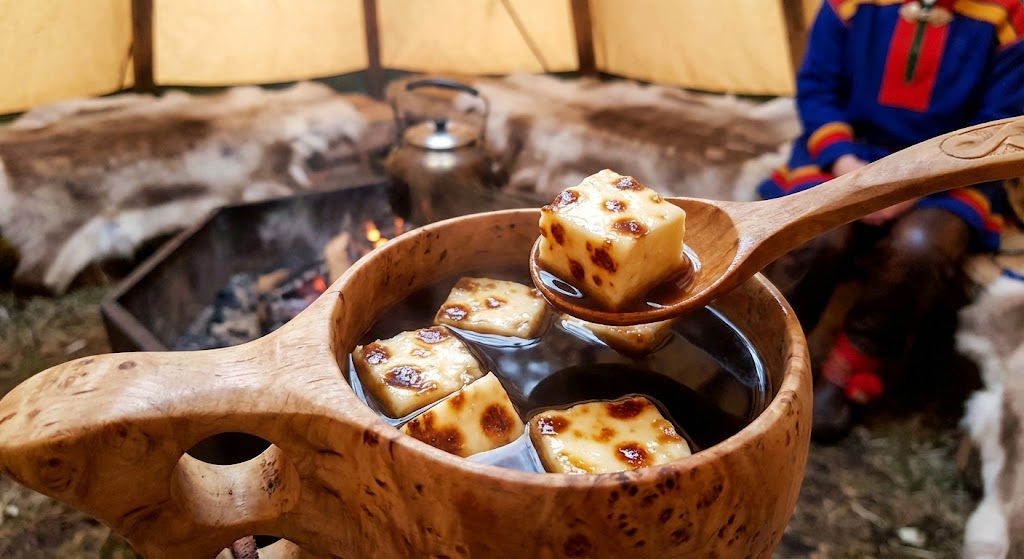
1. Leipjuusto: The Physics of Squeaky Cheese
Leipjuusto (bread cheese) produces distinctive squeak when cheweda texture phenomenon that makes it perfect for hot tea immersion. The squeak originates from protein structure: fresh cheese curds form dense casein networks that resist compression. When bitten, these networks release elastic energy as sound (200-400 Hz frequency range), creating the characteristic squeak.
The cheese-making process involves heating milk to 85-9°C, adding rennet to coagulate proteins, then pressing curds into flat rounds. But the critical step is surface heatingtraditionally held near open fire or modern oven broiler. This creates Maillard browning (caramelized spots) that add nutty flavor and structural rigidity. The browned surface has lower moisture content (15-20%) than interior (45-50%), creating textural gradient.
When dropped into hot tea (70-8°C), leipjuusto absorbs liquid like spongeprotein matrix swells but doesn't dissolve (unlike kulhar clay cups which leach earthy flavor). The cheese softens gradually: first bite is firm and squeaky, tenth bite is creamy and saturated. This texture transformation is unique to Nordic tea culturecompare to bubble tea pearls which maintain constant texture throughout drinking.
| Cheese Parameter | Fresh Leipjuusto | After Tea Soaking (5 min) |
|---|---|---|
| Moisture Content | 40-45% | 60-65% (absorbed tea liquid) |
| Texture (Compression Force) | Firm (30-40 N to compress) | Soft (10-15 N, marshmallow-like) |
| Squeak Frequency | 300-400 Hz (loud squeak) | 100-200 Hz (muted, may disappear) |
| Flavor Profile | Mild, milky, slight caramel notes | Tea-infused, complex tannic + dairy combination |
| Protein Structure | Dense casein network, low porosity | Swollen network, high porosity (sponge-like) |
2. Maillard Reaction: Why Cheese Must Be Browned
The defining characteristic of proper leipjuusto is surface browningachieved through direct heat (broiling, grilling, or traditional open fire). This isn't mere aesthetics; it's flavor chemistry. The Maillard reaction occurs when amino acids (from milk proteins) react with reducing sugars (lactose) at temperatures above 140C, producing hundreds of flavor compounds.
Key Maillard products in browned leipjuusto include furanones (caramel notes), pyrazines (nutty, roasted), and melanoidins (brown color, antioxidant). These compounds are absent in unbrowned cheese curds. The browning also denatures surface proteins, creating waterproof "skin" that controls tea absorption rateunbrowsed cheese becomes waterlogged and disintegrates within minutes.
Expert Tip: The Broiler Distance Rule
When browning leipjuusto at home, position oven rack 10-12cm from broiler element. Closer = burnt exterior with raw interior. Farther = insufficient Maillard reaction (cheese stays white/pale). Watch carefullyproper browning takes 3-5 minutes per side, with golden-brown spots (not black char). Flip once for even browning. The smell should be caramel-popcorn, not burnt milk.
This browning imperative parallels tea roasting traditions and hojicha roastingtransforming raw ingredients through controlled heat. The Finnish/Sami method differs from Indian paneer (unbrowned, acid-set) or Italian ricotta (gentle heating, no Maillard)each culture's cheese reflects its thermal environment.
3. Arctic Survival Nutrition: Cheese as Caloric Ballast
In Lapland winters (where temperatures reach -30C and daylight lasts 3-4 hours), leipjuusto in tea serves survival function. The cheese is 25-30% fat, 15-20% proteindense calories that keep reindeer herders warm during outdoor work. A single slice (50g) in tea adds ~150 calories, transforming hot beverage into meal replacement.
The fat content also slows caffeine absorption (lipid-delayed gastric emptying), providing sustained alertness rather than jittery spike. This contrasts with Southern sweet tea's sugar rush or Turkish tea's frequent small servings. One cup of kaffeost tea sustains herder for 3-4 hours of physical labor in extreme cold.
| Tea + Food Combination | Caloric Density | Cultural Function |
|---|---|---|
| Kaffeost (Finnish/Sami) | 150-200 cal per serving (tea + cheese) | Arctic survival food, reindeer herding sustenance |
| Tibetan Butter Tea (see po cha) | 200-300 cal per cup (yak butter + tea) | High-altitude energy, prevents altitude sickness |
| Mongolian Suutei Tsai (see salt milk tea) | 180-250 cal per bowl (milk + fat + tea) | Nomadic electrolyte replacement, liquid meal |
| British Afternoon Tea (see scones + tea) | 300-500 cal (sandwiches, pastries, tea separate) | Social ritual, class signaling, not survival food |
| Japanese Tea + Wagashi | 100-150 cal (small sweet + bitter tea balance) | Aesthetic pairing, palate cleansing, not sustenance |
4. Reindeer Milk vs. Cow Milk: The Protein Difference
Historical kaffeost used reindeer milk from Sami herdsa dramatically different substrate than modern cow's milk leipjuusto. Reindeer milk contains 22% fat (vs. 3.5% in cow's milk) and 11% protein (vs. 3.3%), creating super-rich cheese with higher nutritional density and different texture.
Reindeer casein has shorter protein chains and higher mineral content (calcium, phosphorus), yielding cheese that's crumblier and more porousabsorbs tea faster than cow's milk version. Modern commercial leipjuusto (made from cow's milk) is firmer and less absorbent, requiring longer soaking time. Artisan producers in Finnish Lapland still make small batches from reindeer milk during summer lactation season (June-August)these command premium prices from purists.
Expert Tip: Judging Cheese Quality
High-quality leipjuusto should bounce when dropped from 10cm height (elastic protein network intact). Squeeze a pieceshould compress slightly then spring back. If it crumbles or stays compressed, the protein structure is damaged (over-acidified or old). Smell should be sweet-milky with caramel notes, never sour or ammonia-like. Color: cream to golden-brown with darker spots, not uniform white (indicates insufficient browning).
The shift from reindeer to cow milk parallels broader agricultural changes in Scandinavia. As tea consumption spread beyond Sami communities to Finnish settlers, demand exceeded reindeer milk supply. Cow's milk became economic necessitycheaper, more abundant, year-round availability. But the ritual remained: cheese in coffee (kaffeost) or tea, maintaining connection to pre-industrial Sami heritage.
5. Coffee or Tea? The Beverage Debate
Despite the name kaffeost (coffee cheese), the cheese works equally well in teaand some argue better. Coffee's acidity (pH 4.85-5.10) can curdle milk proteins if cheese is very fresh, whereas tea's gentler acidity (pH 5.5-6.5 for black tea) creates smoother interaction. The tannins in strong black tea bind to cheese proteins, creating complex flavor that coffee's roasted notes can't match.
Regional preference divides: Northern Finland favors coffee (Finnish coffee consumption: 12 kg/person/year, highest globally). Swedish Lapland leans toward tea, influenced by British trade routes. Norwegian Sami communities use both interchangeably. The cheese itself is agnosticits porous protein structure absorbs any hot liquid. Compare to East Frisian Kluntje (sugar-specific) or Persian ghand (tea-only tradition)kaffeost is multifunctional.
6. The Sami Cultural Continuum: From Survival to Symbol
For indigenous Sami people, leipjuusto represents cultural continuity in face of Nordic colonization. Reindeer herding, traditional clothing (gkti), and food rituals like kaffeost are identity markers that resist assimilation. The practice of dropping cheese in hot beverages dates to pre-refrigeration era when preserving milk required immediate processingfresh milk ? cheese ? dried cheese ? rehydrated in liquid.
Modern Sami cultural movements use kaffeost as educational tool: teaching younger generations cheese-making skills, hosting "lavvu" (traditional tent) tea ceremonies with tourists, marketing artisan leipjuusto with Sami language labels. This cultural reclamation mirrors Chinese tea legends and mate rituals as indigenous heritage preservation through foodways.
Expert Tip: Respecting Sami Protocol
If invited to traditional Sami lavvu for kaffeost tea, accept the first offering (refusal is offense). Eat cheese with hands or carved wooden spoonnever metal utensils (historically taboo, though modern Sami are flexible). Finish your serving before requesting more. Ask permission before photographingsome elders consider documentation of rituals as commodification. Support Sami-owned producers when purchasing leipjuusto commercially.
7. Modern Fusion: Leipjuusto in Specialty Tea Culture
Contemporary Nordic cafs experiment with leipjuusto in specialty tea pairings: smoked lapsang souchong with browned cheese (matching campfire notes), Earl Grey with lemon-rubbed cheese, matcha lattes with cheese cubes. These fusion approaches horrify traditionalists but expand leipjuusto beyond ethnic niche.
The texture parallels bubble tea innovationboth use chewy elements that transform drinking into eating. Helsinki's "Nordic Tea House" serves deconstructed kaffeost: tea three ways (hot, cold brew, concentrate) with cheese selection (reindeer milk, cow, goat). The presentation is Instagram-optimized, but flavor principles remain traditional: hot liquid + protein matrix + Maillard complexity.
| Tea Type | Leipjuusto Pairing | Flavor Logic |
|---|---|---|
| Assam CTC (strong black) | Traditional cow's milk, heavily browned | Tannins balance fat richness, malty notes match Maillard caramel (see Assam guide) |
| Lapsang Souchong (smoked) | Lightly browned, mild cheese | Smoke + caramel = campfire nostalgia, Nordic forest connection |
| Earl Grey (bergamot) | Fresh cheese, minimal browning | Citrus cuts fat, cheese mildness doesn't overwhelm bergamot |
| Pu-erh (earthy, aged) | Reindeer milk cheese (if available) | Gamey reindeer notes match earthy Pu-erh funk, both are acquired tastes |
| Rooibos (naturally sweet) | Well-browned, caramelized cheese | Double sweetness (rooibos honey + Maillard sugar), no tannin bitterness |
8. Making Leipjuusto at Home: The Simplified Method
Ingredients: 2L whole milk (highest fat % available), 1/4 cup white vinegar or lemon juice, 1/2 tsp salt (optional). Equipment: Heavy pot, thermometer, cheesecloth, baking sheet, broiler.
Step 1 - Heat milk: Pour milk into heavy pot, heat to 85-9°C (185-195F) while stirring gently to prevent scorching. Use thermometertoo hot (>95C) = rubbery texture, too cool (<80C) = poor coagulation.
Step 2 - Add acid: Remove from heat, add vinegar/lemon juice all at once. Stir briefly (5-10 seconds), then stopover-stirring breaks curds into small pieces. Let sit 5 minutes. Curds should separate into white solids with clear yellowish whey.
Step 3 - Drain and press: Line colander with cheesecloth, pour in curds. Let drain 10 minutes. Gather cheesecloth edges, twist to squeeze out excess whey. Press curds into flat round (15-20cm diameter, 2cm thick) on clean surface. Place heavy plate on top, weight with cans/books. Press 30-60 minutes until firm.
Step 4 - Brown the surface: Preheat broiler. Transfer cheese round to baking sheet lined with parchment. Broil 10-12cm from heat, 3-5 minutes per side until golden-brown spots appear. Watch constantlyburns quickly. Flip carefully with spatula.
Step 5 - Cool and cut: Let cool 10 minutes (cheese firms as it cools). Cut into cubes (2-3cm) or wedges. Store refrigerated in airtight container up to 1 week. Reheat briefly in toaster oven before serving to restore squeak.
Serving: Drop 2-3 cubes into cup of strong hot tea (black tea recommendedbrew at 95C, 4-5 minutes). Let soak 3-5 minutes, spoon out cheese first (eat with spoon or hands), then drink tea. The cheese should be soft but not disintegrated, tea should have creamy-sweet notes from absorbed cheese.
9. Global Cheese-in-Tea Traditions: Comparative Analysis
Kaffeost isn't globally uniqueother cultures put dairy products in tea, each with distinct logic. Tibetan butter tea churns butter into tea (emulsion, not solid). Kashmiri noon chai adds butter at end (fat layer, visual signal). Mongolian suutei tsai boils milk with tea (homogenized liquid).
Leipjuusto's uniqueness: solid protein that transforms texture through tea absorption while maintaining structural integrity. It's closer to boba pearls (textural contrast) than Hong Kong milk tea (homogenized creaminess). The Sami/Finnish tradition is evolutionary outliercheese as tea "food" rather than tea flavoring.
Comments