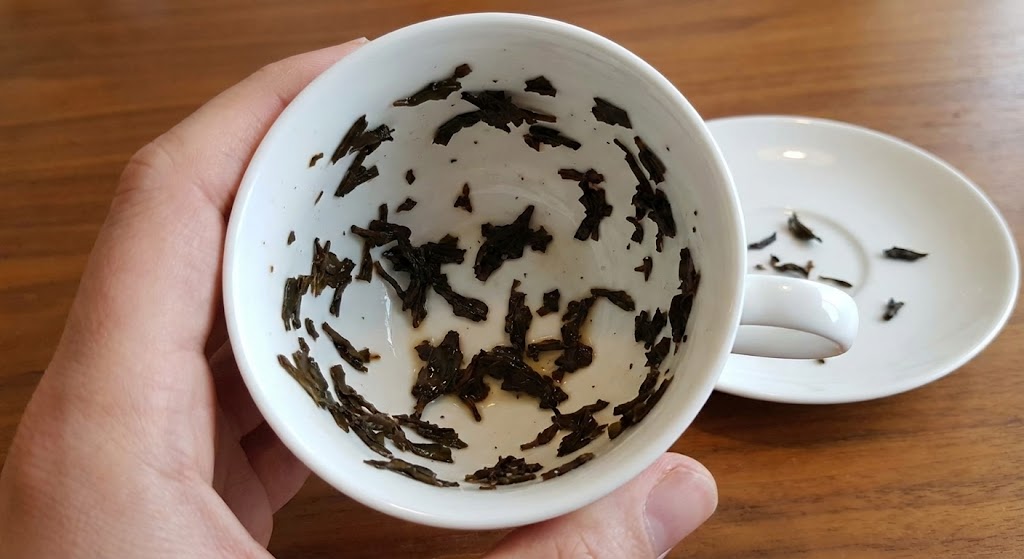
1. The Ancient Practice: Reading Tea Leaves for Fortune
Tasseography (also tasseomancy, tea leaf reading) is divination practice: interpreting patterns formed by tea leaves/coffee grounds in cup after drinking. Etymology: French tasse (cup) + Greek -mancy (divination), coined mid-1800s though practice much older. Basic method: (1) Brew loose-leaf tea (no bags—need visible leaves, ideally large-leaf varietals like grandpa style uses), (2) Drink most of liquid (leave ~1 teaspoon residue), (3) Swirl cup 3× counterclockwise (left hand traditionally—closer to heart, intuitive side), (4) Invert cup on saucer (drain excess liquid, leaves settle), (5) Right cup and read patterns (symbols, shapes, their positions reveal meaning). The philosophy: randomness contains meaning (Jung's synchronicity—meaningful coincidence, universe communicating through chaos), leaves arrange by natural forces but reveal psychic truths.
The physics of leaf settlement: when cup inverted, tea leaves distribute by: Gravity: Heavier particles (larger leaves, stems) fall faster, settle at bottom. Surface tension: Liquid film holds small particles to cup walls (similar adhesion to tea tray drainage systems), creating patterns as water drains. Turbulence: Swirling motion creates vortices (fluid dynamics $ \\omega = \\nabla \\times \\mathbf{v} $ where $ \\omega $ is vorticity, $ \\mathbf{v} $ velocity field—same physics as teh tarik's 4 m/s pour creating foam), spinning leaves outward then inward as momentum dissipates. Adhesion: Wet leaves stick to porcelain (capillary action $ h = \\frac{2\\gamma \\cos\\theta}{\\rho g r} $, intermolecular forces—Van der Waals attraction like tea pet patina formation), remaining on sides rather than sliding to bottom. The result: seemingly random but physically determined pattern (same initial conditions = same pattern theoretically—but chaos theory ensures tiny variations produce different outcomes, making each reading unique).
The global distribution: tea leaf reading appears independently in multiple cultures: China: Earliest records (Tang Dynasty 618-907°CE, possibly older), associated with Daoist divination practices (I Ching patterns, natural randomness as wisdom source like other tea mysticism). Middle East: Coffee ground reading (fal or tasseography, especially Turkey, Greece, Levant—similar method applied to thick Turkish coffee sediment, 16th-17th century records). Romani culture: European spread through Romani fortune-tellers (1700s-1800s, popularized in England/France), associated with carnival fortune-telling, crystal balls, palmistry (complete divination package). Victorian Britain: Peak popularity (1880s-1920s Victorian tea culture, middle-class parlor game, spiritualism movement, séances and occultism fashionable). The pattern: divination travels with beverages (wherever tea/coffee consumed, someone tried reading residue—universal human impulse to find meaning in randomness).
| Symbol Category | Example Symbols | Traditional Meanings | Modern Psychological Reading |
|---|---|---|---|
| Animals (common shapes in organic matter) | Bird (flight pattern), Snake (curving line), Dog (four-legged cluster) | Bird = news/travel, Snake = betrayal/danger, Dog = faithful friend approaching | Querent's associations matter—dog lover sees protection, dog-phobic sees threat (projection reveals internal state) |
| Objects (tools, vessels, structures) | Key (elongated leaf), Ring (circular cluster), House (angular shape) | Key = opportunity/solution, Ring = marriage/partnership, House = security/stability | What querent seeks (key = seeking answers, ring = seeking commitment—symbols reflect desires) |
| Numbers (distinct leaves/clusters) | Single leaf, Pair, Three-cluster, Many scattered | Timing (how many days/weeks/months), Quantity (how many people involved), Significance (single = clarity, many = confusion) | Numerology meanings (3 = creativity, 7 = spiritual, 13 = transformation—cultural number symbolism applied) |
| Geometric Shapes (abstract patterns) | Circle, Triangle, Cross, Lines (straight/wavy) | Circle = completion/wholeness, Triangle = change/conflict, Cross = burden/trial, Lines = paths/journeys | Jungian archetypes (circle = self, triangle = Trinity/divine, cross = suffering—universal symbolic language) |
| Position in Cup (spatial meaning) | Rim (top edge), Sides (middle), Bottom (base), Handle (querents side) | Rim = immediate future (days), Sides = coming weeks, Bottom = distant future (months), Handle = home/personal life | Attention hierarchy (rim = conscious focus, bottom = subconscious fears/hopes, handle = self-perception) |
2. The Victorian Parlor Craze: Middle-Class Mysticism
Tea leaf reading peaked in Victorian Britain (1880s-1920s): Spiritualism movement: Belief that dead communicate with living (séances, mediums, ectoplasm "evidence"), creating appetite for occult practices. Middle-class accessibility: Unlike expensive mediums or exclusive secret societies, tea leaf reading required only: teacup (everyone owned), loose tea (common beverage from clipper ship imports), manual (published guides like "Tea-Cup Reading" 1881, bestsellers). Gendered practice: Predominantly women's activity (afternoon tea culture, female social gatherings, domestic sphere—divination was "acceptable" female mysticism vs. "serious" male science).
The psychology: Victorians faced uncertainty (rapid industrialization, imperial anxieties, religious doubt—scientific materialism undermining traditional beliefs), creating hunger for meaning. Tea reading offered: Agency: Control over unknowable future (feeling you can predict = reducing anxiety, even if illusion). Social bonding: Shared ritual (reading each other's cups, discussing symbols, creating intimacy through vulnerability like tea ceremony's deliberate social architecture). Harmless transgression: Dabbling in forbidden occult (exciting without being dangerous—not full witchcraft, just parlor game). Psychological insight: Actually revealing (not future, but present anxieties—what you see in leaves shows what you fear/hope, projective test like Rorschach inkblot). The genius: tea reading worked psychologically even if not supernaturally (people gained insight, found comfort, bonded with friends—functional regardless of metaphysical truth).
The commercial exploitation: publishers sold manuals (Fortune-Telling by Tea-Leaves by "A Highland Seer" 1920s, Tea-Cup Reading and Fortune-Telling by Tea-Leaves 1920s—detailed symbol dictionaries, hundreds of meanings catalogued). Teaware companies marketed "fortune-telling cups" (1920s-1930s, cups with symbols printed inside—bird, anchor, heart, etc.—wherever leaves clustered revealed fortune, $1-3 each, novelty gifts like other teaware innovations of the era). Professional readers charged fees (1-5 shillings per reading, equivalent to £5-20 modern—affordable luxury for middle-class similar to East Frisian tea ceremony's social accessibility). The industry: divination monetized, mass-marketed, democratized (anyone could be fortune-teller with £0.50 manual, teapot, willing audience). Modern parallel: astrology apps, tarot cards on Amazon, psychic hotlines—ancient practices commercialized through contemporary distribution channels.
Expert Tip: Hosting a Tea Leaf Reading Party (Modern Revival)
Tasseography makes excellent social event (combines tea appreciation + mysticism + psychological game): Setup: Brew loose-leaf tea (Assam or Ceylon work well—large leaves, visible patterns; avoid green tea—too small/uniform), provide white/cream teacups (patterns show clearly against light background), set atmospheric mood (dim lighting, candles, incense—creates mystical ambiance). Ground rules: (1) Querent asks question silently (holds in mind while swirling), (2) Reader interprets honestly (shares what they see, not what querent wants to hear), (3) Group discusses (crowdsource symbol meanings, compare interpretations—more fun than solo reading). Psychological framing: Present as "guided introspection" not "future prediction" (avoids occult discomfort, emphasizes self-reflection—what you see reveals your mind, valid regardless of supernatural belief). Modern twist: Photograph cups (smartphones document patterns, share on social media, compare readings across time—"one year ago I saw a bird [travel], now it happened!"). Works for: book clubs, girl's nights, historical tea enthusiasts, anyone curious about Victorian culture. The appeal: combines history, psychology, tea, and conversation—multi-dimensional fun.
3. Jungian Psychology: Synchronicity and Meaningful Coincidence
Carl Jung (1875-1961, Swiss psychiatrist) theorized tasseography validity: Synchronicity: Jung's concept (1950s) that coincidences can be meaningful (not causally connected, but psychologically significant—universe presenting lessons through chance). Tea reading exemplifies: leaves settle randomly (physics determines pattern similar to foam formation in teh tarik), yet pattern resonates with querent's life (psychological projection finds meaning). Jung's argument: Divination works not by predicting future, but by activating unconscious (symbols bypass rational mind, access deeper knowledge already present, make conscious what was subconscious like tea room's deliberate architectural meditation). The mechanism: Projection: Seeing what you need to see (if worried about relationship, you see broken hearts in leaves—not magic, but mind revealing priorities). Archetype activation: Universal symbols (circle, cross, animal totems) trigger deep responses (collective unconscious, inherited symbolic language shared across cultures). Dialogue with self: Reading creates conversation (conscious ego asks question, unconscious answers via symbols, integration occurs through interpretation like Gongfu's meditative precision).
The I Ching parallel: Jung studied Chinese oracle (I Ching or Book of Changes, 3000+ year old divination text from same Daoist tradition as early tea culture), concluding it worked via synchronicity (coin tosses or yarrow stalk sorting creates "random" hexagram, yet hexagram's meaning addresses querent's situation—meaningful coincidence). Same principle in tea leaves: randomness becomes oracle (physical chaos organized by unconscious perception into meaningful pattern). The physics analogy: quantum mechanics' observer effect (measurement influences outcome, consciousness affects material reality—controversial interpretation but Jung found appealing). For Jung, divination was psychological tool (self-exploration technique, therapy aid, accessing non-rational wisdom like Senchado's anti-formality intuition), not supernatural prediction.
4. Symbol Dictionaries: The Language of Leaves
Traditional tasseography relies on symbol interpretation: Core symbols (100+ catalogued in Victorian manuals): Animals: Bird (news coming, travel opportunity), Fish (abundance, prosperity), Cat (deception, false friend), Horse (strength, journey), Butterfly (transformation, social success). Objects: Anchor (stability, or being stuck), Knife (conflict, sharp words), Crown (honor, achievement), Ladder (advancement, climbing), Gate (opportunity, threshold). Nature: Tree (growth, family roots), Mountain (obstacle to overcome), River (journey, life flow), Star (hope, guidance), Cloud (uncertainty, confusion). Body parts: Eye (awareness, being watched), Hand (help offered), Heart (love, emotion), Skull (ending, transformation—not necessarily death).
The position-meaning grid: Symbol's location modifies interpretation: Rim (lip of cup): Immediate present/very near future (days to weeks), high urgency. Sides (middle zone): Coming weeks to months, developing situations. Bottom (base): Distant future (3-12 months), deep subconscious issues, foundations. Near handle: Home life, personal sphere, querent's direct control. Opposite handle: External forces, other people, outside influences. Left of handle: Past influences affecting present. Right of handle: Future moving toward querent. The complexity: single symbol (bird) changes completely by position (bird near handle = family news, bird at rim = urgent message arriving, bird at bottom = long-planned journey finally happening). Combines symbol + location + size + clarity = 4-dimensional interpretation matrix (thousands of possible readings from ~100 core symbols).
| Symbol Type | Reading Priority | Interpretation Flexibility | Cultural Variation |
|---|---|---|---|
| Clear Symbols (distinct recognizable shapes) | PRIMARY (read first, most important—clear = strong message) | Low flexibility (obvious bird = bird meaning, hard to dispute—consensus easier) | Moderate variation (bird = travel in West, soul/freedom in some cultures, messenger in others) |
| Ambiguous Blobs (could be multiple things) | SECONDARY (interpret after clear symbols provide context) | High flexibility (blob = mountain OR pregnant belly OR loaf of bread—depends on querent's life context) | High variation (each culture sees familiar objects—Western sees bread, Asian sees rice bowl, Middle Eastern sees water jug) |
| Repeated Elements (multiple of same symbol) | EMPHASIS (repetition = amplified meaning, urgent attention needed) | Low (multiple hearts = definitely about love/relationships—hard to interpret otherwise) | Low (repetition signals importance universally, though specific symbol meaning varies) |
| Connected Patterns (symbols touching/overlapping) | COMPLEX READING (relationships between symbols = narrative, tell story) | Maximum flexibility (infinite combinations—bird + key + mountain = journey requiring solution to overcome obstacle, or dozens of other readings) | Maximum variation (narrative construction culturally specific—Western linear story, Eastern cyclical patterns, Indigenous web-of-connection thinking) |
5. Coffee Ground Reading: Tasseography's Twin Practice
Middle Eastern tradition reads coffee grounds (Turkish/Greek coffee): Method difference: Coffee brewed unfiltered (fine powder + water boiled together in Turkish çaydanlık-style small pots, served with sediment—drink liquid, thick mud remains in tiny cup). Reading process: (1) Drink coffee (leave grounds), (2) Cover cup with saucer (invert, let excess liquid drain—faster than tea, 1-2 minutes), (3) Right cup and read (similar symbol interpretation to tea leaves, but finer patterns—coffee grounds form more detailed images). Cultural context: Social ritual (done after meals, women read each other's cups, multigenerational tradition—grandmother teaches granddaughter, oral knowledge transmission like Persian tea's tarof etiquette).
The symbol differences: coffee creates finer resolution (powder particles smaller than tea leaves), producing: More detailed images: Faces, landscapes, animals recognizable (high detail like inkblot test). Darker contrast: Brown/black grounds against white cup (clearer visually than tea's subtle shadows). Faster drying: Coffee dries into permanent pattern (can save cup for hours, show others, photograph—tea patterns degrade as leaves dry/shift). Additional technique: Saucer reading (liquid that drained from cup forms patterns on saucer—"cup shows future, saucer shows past," or "cup = external events, saucer = internal emotions," depending on regional tradition).
The modern persistence: coffee reading survives robustly (especially Turkey, Greece, Balkans, Levant): Tourism: Cafés offer readings (Grand Bazaar Istanbul, Athens tourist areas—$5-10 per reading, authentic practice + commercial performance). Family tradition: Still practiced at home (less commercialized than Victorian tea reading, retained as genuine cultural custom like Persian ghand pahlou ritual). Immigration spread: Turkish/Greek diaspora brought practice (community centers, cultural festivals in US/Europe/Australia—maintaining tradition abroad similar to yerba mate in diaspora communities). YouTube tutorials: Hundreds of videos teaching coffee reading (Turkish grandmothers explaining symbols, English subtitles—democratizing knowledge, global access to regional practice). The contrast: tea reading became novelty/historical curiosity in West, coffee reading remains living tradition in origin cultures (unbroken practice vs. revival—authenticity difference).
Expert Tip: Learning Coffee Ground Reading (Turkish Tradition)
Turkish coffee divination (kahve falı) more accessible than tea (equipment cheap, method simple, community active): Equipment needed: (1) Cezve (small copper pot, $10-15 on Amazon), (2) Turkish coffee (Kurukahveci Mehmet Efendi brand authentic, $8 for 250g—lasts 30+ cups), (3) Tiny cups (fincan, demitasse size, $5-10 for set of 6). Brewing: 1 heaping teaspoon coffee + 1 demitasse water per serving, heat slowly (foam forms, don't boil over—remove from heat when foam rises, return 2-3×, pour with foam intact). Learning path: (1) Practice brewing (get foam right, master heat control—2-3 weeks daily brewing builds skill), (2) Study symbol dictionary (Turkish coffee reading books available in English—"Art of Turkish Coffee Fortune Telling" by Sema Bal), (3) Join online community (Facebook groups "Turkish Coffee Fortune Telling," Reddit r/tasseography—post cup photos, get interpretations, learn from practitioners). Cultural respect: Learn with humility (this is living tradition, not costume—credit Turkish culture, don't appropriate as "exotic mysticism"). The reward: beautiful ritual, delicious strong coffee, connection to millennia-old practice, psychological insight tool. Plus: impresses guests (authentic cultural skill, conversation piece, party trick with substance).
6. Scientific Skepticism: Pattern Recognition and Cold Reading
Skeptics explain tasseography as psychological illusion: Pareidolia: Human tendency to see patterns where none exist (faces in clouds, man in moon, Jesus on toast—brain over-interprets random stimuli seeking meaningful shapes, similar to how people believe monkey-picking myths despite zero evidence). Evolution favored false positives (seeing predator in bushes when none there = harmless, missing real predator = death—so we evolved to see patterns liberally, accept noise as signal). Tea leaves = ambiguous stimuli (perfect for pareidolia—organic shapes suggest animals, objects, symbols, but actually random). The mechanism: Brain's visual cortex (seeks closure, fills gaps, completes partial images), pattern-matching algorithms (compare sensory input to stored templates—"that curved line looks 70% like snake"), confirmation bias (once you see snake, can't unsee it—interpretation locks in like virgin picker mythology persisting despite debunking).
The cold reading technique: skilled readers extract information from querent without seeming to: Barnum statements: Generic truths applicable to anyone ("You have untapped potential," "You've experienced loss," "You seek deeper meaning"—true for 80%+ of population, feels personal but isn't). Shotgun approach: Rapid guesses, abandon failures, expand hits ("I see travel... maybe physical journey, or metaphorical—new job? relationship change? spiritual growth?"—covers all bases, querent picks meaning that resonates). Querent's feedback: Reader watches reactions (when you guess right, querent's face lights up, body language opens—pursue that direction, drop other threads). Post-hoc fitting: Vague predictions interpreted retroactively ("You'll meet important person"—later, querent meets anyone significant, credits prediction—unfalsifiable because every person is "important" in some context).
The physics of randomness: tea leaf distribution follows: Chaos theory: Sensitive dependence on initial conditions (tiny differences in swirl speed, cup angle, liquid viscosity = vastly different patterns—unpredictable determinism). Brownian motion: Random thermal fluctuations (molecules jostling leaves, quantum randomness at micro-scale—true randomness exists even in deterministic system). Entropy: System moves toward disorder (leaves won't spontaneously arrange into meaningful message—requires energy input, intentional organization). The conclusion: patterns are noise (physically random, given meaning by interpretation—no information about future, only about interpreter's mind). BUT: psychological value remains (even if not supernatural, provides insight, comfort, social bonding—functional regardless of metaphysical truth). The wise approach: treat as projective test (Rorschach inkblot, Jungian active imagination—tool for self-exploration), not fortune-telling (literal future prediction unsupported by evidence).
7. Modern Revival: Neo-Pagan and Witchcraft Communities
21st century tasseography revival: Wicca and neo-paganism: Modern witchcraft movements (1950s+ Wicca, 1990s-2000s eclectic paganism) embrace divination (tarot cards, runes, scrying, tea reading—full toolkit of occult practices like historical tea magic traditions). Tea reading appeals because: (1) Low barrier to entry (don't need rare crystals or expensive decks, just teacup and simple loose-leaf tea), (2) Kitchen witch aesthetic (domestic magic, everyday items sacred, modern witch as homemaker-mystic), (3) Historical legitimacy (Victorian precedent makes it "traditional" despite recent revival). Instagram witches: Social media aesthetic (photos of cups with leaves, atmospheric lighting, #witchesofinstagram—millions of posts, visual appeal drives engagement).
The commodification: modern witchcraft is consumer culture: Specialty teaware: Etsy shops sell "reading cups" ($25-60, often with zodiac symbols, moon phases, pentacles inside—aesthetically witchy, functionally same as regular cup like other decorative teaware innovations). Guided journals: "Tea Witch's Journal" type products ($15-25, prompts for recording readings, symbol dictionary appendices, Instagram-ready layouts). Online courses: "Learn Tasseography" Udemy/Skillshare classes ($30-100, video lessons, downloadable PDFs, community forums). Subscription boxes: "Witch subscription" includes tea sample, reading guide, ritual instructions ($25-40/month—convenience + community + aesthetics similar to tea pet collecting culture). The critique: spirituality monetized (genuine practice buried under products, consumerism replaces substance—buying identity rather than developing practice). The defense: accessibility argument (courses/products lower barrier, democratize knowledge previously locked in oral tradition or expensive books—mass market enables participation).
The psychological appeal: modern witchcraft attracts people seeking: Agency: Control in chaotic world (divination promises insight into unknowable future—comforting illusion even if you doubt). Ritual: Structured practice (humans need ceremony, secular culture lacks it, witchcraft provides without religious baggage like tea ceremony's secular mindfulness). Community: Like-minded others (online/offline covens, Facebook groups, convention attendance—social connection through shared interest similar to Gongfu tea circles). Aesthetics: Beautiful objects and actions (candles, crystals, tea ceremonies—sensory pleasure, Instagram-able lifestyle like chabana minimalism). Transgression: Mild rebellion (calling yourself witch challenges mainstream, claims marginalized identity, asserts difference—punk rock for people who like herbal tea). The function: whether "real" or not, provides meaning (Durkheim's sociology—religion/spirituality serves social function regardless of supernatural validity). Tasseography works psychologically—offers insight, community, beauty, ritual. That's enough for many practitioners (literal truth optional).
8. Cross-Cultural Divination: Global Parallels
Tea reading is one method in universal human practice: Bone casting: African traditions (throw bones/shells, read patterns—similar randomness-interpretation structure). Geomancy: Arabic ilm al-raml (casting sand/pebbles, reading marks—random patterns = oracle from same Middle Eastern mystical traditions). Bibliomancy: Opening sacred text randomly (Bible, I Ching, Quran—whatever page appears answers question, practiced in Tang Dynasty Daoist tea culture). Augury: Roman bird-watching (flight patterns, bird types, directions—natural randomness interpreted as divine message). Scrying: Gazing into reflective surface (crystal ball, black mirror, water bowl—seeing visions in optical noise like watching tea pet patina form). The pattern: every culture develops divination (universal psychological need, implemented through local materials/traditions).
The anthropological function: divination serves societies by: Decision-making aid: When outcomes uncertain, oracle breaks deadlock (tribe can't decide where to hunt, bone casting chooses—action > paralysis like Song Dynasty tea competitions deciding status). Responsibility diffusion: Blame oracle for bad outcomes ("The gods chose wrong, not me"—protects decision-maker from social consequences). Anxiety reduction: Feeling of knowledge (even illusory) calms fear (uncertainty is psychologically toxic, certainty feels good even if false). Social cohesion: Shared belief system (oracle's authority depends on community accepting it—strengthens group identity, common worldview like East Frisian 3-cup social contract). Empowering marginalized: Divination often accessible to low-status individuals (women, poor, excluded groups—whereas political power monopolized by elite). The modern parallel: data analytics, stock market predictions, weather forecasting—same psychological function (reduce uncertainty, enable decisions, provide comforting illusion of control), different technology (algorithms replace tea leaves, but serving same human needs).
Expert Tip: Developing Tasseography Skill (Practical Training Method)
Like any interpretive art, tea reading improves with practice: Daily practice (30 days minimum): Read own cup every morning (brew loose-leaf, swirl, invert, interpret—journal what you see, how it relates to day ahead). Outcome tracking: Evening review (did "predictions" manifest? Were symbols metaphorical or literal? What did you learn?—builds pattern recognition). Peer practice: Exchange readings with friend (each read other's cup—compare your interpretation of your leaves vs. their interpretation of theirs, identify blind spots). Study historical manuals: Victorian symbol dictionaries (public domain PDFs free online—"Tea Cup Reading" by Anonymous 1920s, detailed symbol lists). Develop personal lexicon: Not all symbols mean same for everyone (maybe you see roses as love, I see as thorns/pain—honor your associations, build custom dictionary). Trust intuition over rules: If book says bird = travel, but you viscerally feel bird = freedom, follow your gut (divination is psychological projection—your unconscious speaks your language, not textbook's). The goal: Not predicting objective future (impossible), but accessing subconscious wisdom (you know more than you realize—leaves help surface that knowledge). After 3-6 months regular practice, you'll develop fluency (automatic symbol recognition, rapid interpretation, confidence in readings). Works as self-therapy tool (cheaper than psychoanalysis, portable, tea-flavored).
9. The Paradox: Fake Fortune-Telling, Real Insight
Tasseography's contradiction: doesn't predict future (no evidence for supernatural causation, randomness is random like monkey-picking myths being fabrications), yet provides genuine insight (psychological projection, Jungian symbolism, therapeutic value). The mechanism: Leaves = blank screen (Rorschach inkblot, ambiguous stimuli), your interpretation = self-revelation (what you see shows what you think/feel/fear—diagnostic tool for mental state). Example: Woman sees "broken heart" in leaves → maybe relationship unconsciously troubled (she noticed micro-signals—partner's distance, decreased affection—but hadn't consciously acknowledged), leaves force recognition → she addresses problem → reading "came true" because it catalyzed action (self-fulfilling prophecy, but still valuable).
The therapeutic value: good readers function as counselors: Active listening: Paying attention to querent's words, body language, reactions (what excites them? what deflates them?—reading person, not leaves, similar to Gongfu's attentive ritual). Reflective questioning: "You say you see a mountain—what mountain in your life?"—prompting self-examination (Socratic method, client discovers own answer). Reframing: "That broken heart could also be opening heart—endings enable beginnings"—cognitive restructuring (changing perspective, finding empowering narrative). Validation: "Your reading shows struggle, but also strength"—affirming reality (you're not crazy to feel what you feel, symbols mirror your experience—psychological permission to trust yourself). This is therapy (active listening, cognitive reframing, validation, empowerment), dressed as fortune-telling. The leaves are props (conversational lubricant, structure for vulnerability like Persian tarof's indirect communication), real work is psychological. The wisdom: sometimes indirect approach works better than direct (saying "let's do therapy" feels clinical, saying "let's read tea" feels playful—people open up more when defenses down).
The modern lesson: we still need divination (uncertainty is existential condition, data can't eliminate it—always unknown futures, ambiguous situations, unclear answers). Modern replacements (data analytics, rationalist decision matrices, pro/con lists) provide illusion of certainty (false precision, assuming future is calculable). Tasseography admits uncertainty (accepts we can't know, uses randomness intentionally, finds meaning in not-knowing like Senchado's intuitive anti-formality). This is spiritually healthier (embracing mystery, tolerating ambiguity, accepting limits of knowledge—Keats' "negative capability"). The role: tea reading as modern meditation (contemplative practice like tea room architecture's deliberate mindfulness, psychological insight tool, ritual for processing uncertainty). Not because it's supernatural (it's not), but because it's effective psychology (provides structure for self-reflection, community for shared vulnerability, beauty for sensory engagement, meaning for existential chaos). The paradox resolved: fake fortune-telling, real wisdom. Just don't confuse which is which—read leaves for insight, not investment advice. The fortune is in your mind; leaves just help you see it.
Comments