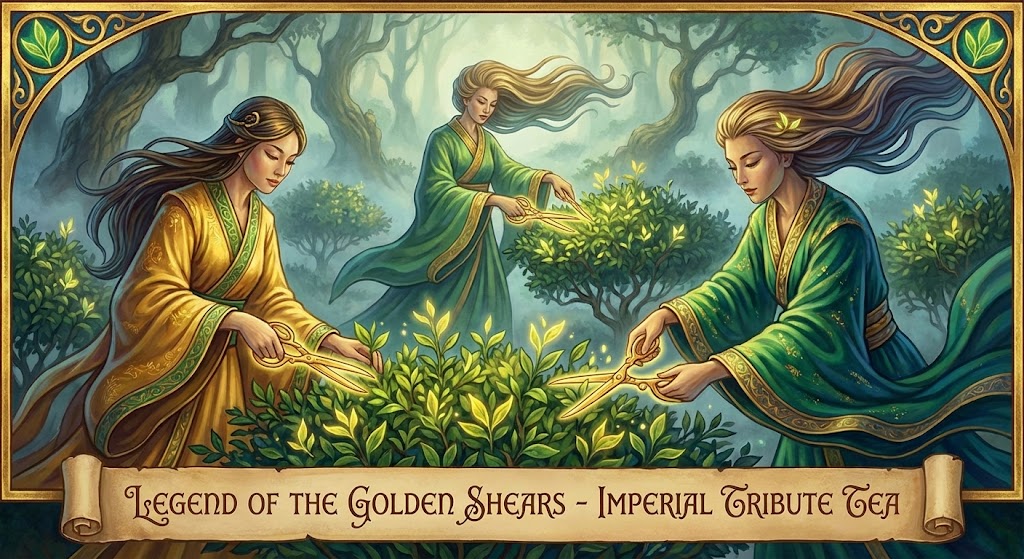
1. The Virgin Picker Myth: Purity and Imperial Tea
The legend: Finest imperial tribute tea (贡茶 gòng chá) required virgin girls to harvest—young unmarried women, sexually "pure," whose innocence wouldn't contaminate tea destined for Emperor. Claimed requirements: Must be 13-16 years old (post-puberty but unmarried), wash hands in flower water before picking, wear silk gloves (no skin contact), no speaking during harvest (voice vibrations damage leaves), bathe in rosewater night before (remove body odors). Modern persistence: Luxury tea brands still invoke myth ("hand-picked by virgin maidens," "imperial purity standards"—marketing language echoing Da Hong Pao origin legends and monkey-picking fabrications).
The grain of truth: Young workers preferred (not for purity, but dexterity): Nimble fingers: Children/adolescents have better fine motor control (smaller hands fit between branches, gentle touch reduces bruising—practical advantage like Gongfu precision). Sharp eyesight: Young pickers distinguish leaf grades better (identify buds vs. mature leaves, spot defects—vision declines with age, 20-year-old sees better than 50-year-old). Lower wages: Younger workers paid less (vulnerable to exploitation, fewer employment options—economic incentive for hiring youth, not magical purity). Endurance: 8-10 hour picking days favor stamina (bent posture, repetitive motion, heat exposure—youth recover faster than elders, like clipper ship crew selection).
The patriarchal control dimension: Virgin requirement = sexual surveillance: Female bodies policed: Virginity testing (humiliating examinations, invasive "purity checks"—control over women's sexuality justified by tea "quality"). Marriage market: Picking job as pre-marriage training (demonstrating skill, obedience, proper femininity—like Victorian gender restrictions). Class hierarchy: Elite families' daughters never picked (only peasant girls subjected to this, reinforcing class divides). Economic exploitation: "Virgin" label justified lower pay ("honored" to serve Emperor = compensated with prestige not money, like imperial tribute extraction). The function: not tea quality, but social control—using purity mythology to regulate female labor and sexuality.
Reject Exploitative Tea Marketing
Red flag language: "Virgin picked," "maiden harvest," "pure girls"—fetishizes female labor (creepy + historically false). What matters: Picker skill level (experienced = better selectivity), fair wages (living wage = ethical), safe conditions (shade breaks, water access like dignified labor standards). Better brands: Fair-trade certified (verifiable labor practices), direct-trade transparent (name actual pickers regardless of gender/marital status, like cooperative models). Support craft, not creepy patriarchal myths.
2. Historical Evidence: What Records Actually Say
Tang Dynasty (618-907°CE): Lu Yu's Cha Jing (The Classic of Tea) describes tea picking—mentions timing (spring), technique (gentle), weather (dry mornings), but NO gender/virginity requirements. Song Dynasty (960-1279°CE): Emperor Huizong's Daguan Chalun (Treatise on Tea, 1107 CE) obsesses over tea quality (foam perfection, cultivar purity, processing methods)—never mentions picker virginity. Ming Dynasty (1368-1644°CE): Tax records for tribute tea document quotas, payment rates, quality standards—no "virgin picker" categories (if genuinely required, bureaucracy would document it obsessively).
Qing Dynasty (1644-1912°CE): European travelers' accounts (missionaries, traders visiting tea regions) describe harvest—mention women working, children helping, but no virginity requirements. Example: Robert Fortune (1848, British botanist who infiltrated Chinese tea industry) wrote detailed reports (processing secrets, cultivation methods, labor practices like tea production)—never mentions virgin pickers despite documenting other "exotic" customs. The silence: If virgin picking existed, Westerners would've sensationalized it (Victorian obsession with Asian "mysteries," newspapers loved scandalous details)—absence from their accounts = strong evidence against practice.
3. The Fetishization Problem: Orientalism and Gender
Edward Said's Orientalism: West constructs Asia as exotic/sexual/mysterious Other (justifies colonialism, eroticizes difference). Virgin picker myth fits pattern: Sexualizing Asian women: Emphasis on virginity/purity (Western male fantasy projected onto tea production, like geisha misconceptions). Primitivism: Implies magical thinking ("virginity affects tea quality"—backward superstition vs. rational Western science, ignoring China's sophisticated tea chemistry). Commodifying bodies: Women reduced to tea accessories (their labor/sexuality marketed as product features, dehumanizing like monkey labor myths).
Modern continuation: Luxury tea brands weaponize Orientalism: Target market: Wealthy Western men (implicit sexual appeal—"virgins touched your tea," creepy undertones). Price justification: Fetish tax (paying premium for sexualized narrative, not quality improvement). Harm: Reinforces stereotypes (Asian women as sexually available/controllable, perpetuates colonial mindsets affecting real people). Alternative framing: Celebrate picker expertise (skill, experience, knowledge—human dignity like Gongfu mastery), not sexual status (irrelevant to tea quality, invasive to workers' privacy).
4. Child Labor Reality: Exploitation Behind the Romance
Historical truth: Children DID pick tea (still do in many regions)—not for mystical reasons, but exploitation: School absence: Harvest season (March-May) = children miss school (pulled from education to work, perpetuating poverty cycle like intergenerational labor patterns). Health impacts: Pesticide exposure (children absorb toxins faster, developing bodies more vulnerable—long-term damage for short-term profit). Wage theft: Children paid fraction of adults (sometimes unpaid "family labor"—economic abuse justified as cultural tradition). Injury risk: Sharp tools, heavy loads, long hours (accidents common, no workers' comp, medical care unaffordable like survival labor conditions).
Modern child labor: 2020 UN report estimates 100,000+ children in tea industry globally (India Assam, Kenya, Sri Lanka, China—enforcement weak despite laws). Tactics: Schools near plantations schedule "harvest breaks" (institutionalizing child labor as normal), parents paid less if don't bring children (coercing family participation), labor contractors recruit directly from schools (predatory targeting). ILO conventions: International law bans hazardous child labor (pesticide work, long hours, education interference)—tea industry chronically violates, weak accountability like historical plantation exploitation.
| Imperial Myth Element | Actual Historical Practice | Modern Equivalent | Ethical Reality |
|---|---|---|---|
| "Virgin purity" requirement | Young workers = cheaper labor (exploiting age/gender, economic not mystical like class hierarchies) | Child labor marketed as "tradition" (family farms, cultural heritage claims masking exploitation) | Violation of children's rights (education denial, health risks, wage theft—international law prohibits) |
| "Silk glove" delicate handling | Skilled technique required (gentle pinch-twist, selective picking—experience matters like Gongfu training) | "Hand-picked" premium branding (vs. machine harvest, skill difference real but unrelated to age/gender) | Skilled labor deserves fair wages (experience = value, compensate expertise regardless of picker demographics) |
| "Imperial tribute honor" | Forced taxation (peasants required to provide tea quota unpaid, tribute = exploitation like court demands) | "Heritage brand" prestige marketing (using imperial history to justify premium prices, erasing coercion) | Romanticizing oppression (tribute was theft, "honor" was propaganda—celebrate craft not tyranny) |
5. The Science: Why Virginity Doesn't Affect Tea
Chemical reality: Tea quality determined by: Cultivar genetics: Plant variety (Da Bai, Fuding, Yabukita—DNA controls polyphenol profile, aroma compounds, like Japanese cultivar precision). Terroir: Soil minerals, elevation, microclimate (geography shapes chemistry, similar to Rize terroir or Kashmiri altitude effects). Processing: Oxidation level, roasting temperature, rolling technique (biochemistry controlled by masters' skill like Song processing). Storage: Temperature, humidity, oxygen exposure (post-harvest chemistry, aging transforms compounds). NOT picker sexual history: Zero biological mechanism (no pheromones, no aura, no mystical contamination—virginity irrelevant to plant biochemistry).
Contamination concerns: Legitimate factors (none gender-specific): Hand cleanliness: Wash hands (removes dirt, oils, bacteria—standard hygiene, same for all pickers). Tool sanitization: Clean baskets/bags (prevent mold, cross-contamination—equipment hygiene matters like professional standards). Harvest timing: Pick before rain (wet leaves oxidize prematurely, dry conditions preserve quality—weather matters, not picker biology). Transport speed: Process within hours (enzymatic activity continues post-harvest, fresh = better—logistics matter, not identity). The conclusion: Virginity pseudoscience (no causal pathway from sexual status to leaf chemistry, pure superstition like poison detection myths).
Evaluate Tea Quality Rationally
Taste blind: Remove packaging, brew without story (if can't distinguish "virgin-picked" from regular = you've identified scam). Ask about plants not pickers: Cultivar? Harvest date? Processing method? (answers = knowledgeable vendor, deflection to mythology = red flag). Certifications matter: Organic (pesticide limits), Fair Trade (labor standards), specific origin (traceability like authentic sourcing). Support transparency: Vendors who name farms, show harvest photos, discuss processing—reality over romance.
6. Reclaiming Women's Labor: Feminist Tea History
Hidden majority: Women are majority of tea pickers globally (70-80% of harvest labor in India, Kenya, Sri Lanka, China—feminized profession like Victorian domestic work). Why women: Not delicacy myths, but economics: Wage discrimination: Women paid 20-40% less than men for same work (employers exploit gender wage gap, maximize profits). Dexterity stereotypes: "Women's nimble fingers" used to justify low pay (skill reframed as innate female trait, devaluing expertise). Limited alternatives: Rural women have fewer employment options (tea picking = only available wage work, employers leverage desperation). Seasonal flexibility: Women juggle picking with unpaid domestic labor (care work, household duties—flexibility exploited, double burden normalized).
Organizing resistance: Women tea workers' movements: India: Assam tea workers' unions (1990s+, majority-women membership, fighting for living wages, maternity leave, childcare—labor solidarity). Kenya: Women's cooperatives (direct export, cutting out middlemen, 30-50% higher pay—economic empowerment like cooperative models). Sri Lanka: Tamil estate worker activism (demanding citizenship rights, land ownership, education access—intersectional struggle beyond wages). Global networks: Women in Tea movement (connecting producers across countries, sharing strategies, collective advocacy for dignified labor).
7. Consumption Ethics: How to Support Real Women
Certification guide: Fair Trade USA/International: Guarantees minimum wages, safe conditions, no child labor (verified audits, complaint mechanisms—imperfect but meaningful like union protections). Rainforest Alliance: Environmental + labor standards (biodiversity preservation, worker training, health services). Ethical Tea Partnership: Industry group improving conditions (plantation monitoring, remediation programs, transparency reporting). B Corp tea companies: Social responsibility certified (holistic sustainability including worker welfare, like fair business practices).
Questions to ask vendors: (1) "Who picks your tea?" (specific farm/cooperative name = transparent, vague = suspicious). (2) "What are picker wages?" (daily rate, compare to regional living wage—should answer readily). (3) "Any child labor?" (should say no + explain verification, defensiveness = problem). (4) "Women's working conditions?" (maternity leave, harassment policies, leadership opportunities—shows genuine concern like respectful practice). (5) "Can I visit farms?" (openness = confidence, refusal = hiding issues). Vendor response quality: Detailed answers = probably ethical, marketing fluff = probably not.
The final principle: Pay fair prices. $2/cup tea ($30-40/100g) can't support ethical labor (do the math: farmer, picker, processor, exporter, importer, retailer—each needs margin, $2 leaves pennies for labor). Ethical pricing: $15-25/100g minimum for quality + fair wages (specialty tea like specialty coffee, costs more because it should). Budget constraint solution: Drink less tea, higher quality (1 cup/day of ethical $20/100g = same yearly cost as 3 cups/day of exploitative $8/100g—better for workers AND your palate like Gongfu's quality focus). The choice: Every dollar is a vote (support brands naming women pickers, showing their faces, sharing their stories—humanity over mythology, justice over virginity fairy tales).
Comments