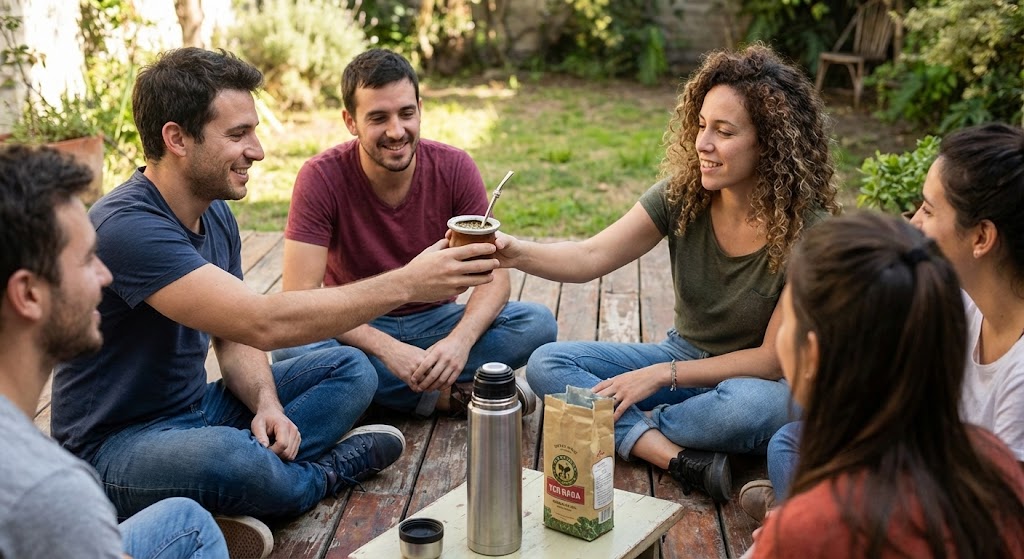
1. Yerba Mate: Not Actually Tea (But Tea-Adjacent)
Yerba mate (Ilex paraguariensis) is South American holly plant, botanically unrelated to true tea (Camellia sinensis). However, preparation and social function mirror tea culturehot water infusion, caffeine delivery, elaborate ritual serving. The drink originated with indigenous Guaran people (pre-Columbian Paraguay/Argentina/Brazil region), who consumed mate leaves for energy and medicine. Spanish colonists adopted practice (1600s-1700s), spreading yerba mate throughout Argentina, Uruguay, Paraguay, southern Brazil, and Chile.
The chemistry: mate contains caffeine (0.7-1.7% dry weightsimilar to tea's 2-4%), theobromine (chocolate's stimulant, 0.3-0.9%), and theophylline (bronchodilator, 0.0-0.2%). This cocktail creates distinct stimulationless jittery than coffee, more sustained than tea, described as "clean energy" by users. Polyphenol content rivals green tea (antioxidants, bitter tannins). The flavor profile: grassy, vegetal, bitter-smoky (traditional smoked mate) or bright-herbaceous (unsmoked mate)polarizing to newcomers, comforting to habitual drinkers.
The cultural significance: mate is national drink of Argentina and Uruguay (consumed by ~90% of population daily), regional drink in Paraguay and southern Brazil. It parallels Turkish tea (national beverage, all-day consumption) and Southern sweet tea (regional identity marker). Famous Argentine saying: "Un mate sin charla es como un cielo sin estrellas" ("Mate without conversation is like sky without stars")drink is social glue, not solo indulgence.
| Dimension | Yerba Mate | True Tea (Camellia sinensis) |
|---|---|---|
| Botanical Family | Aquifoliaceae (holly family) | Theaceae (tea family) |
| Geographic Origin | South America (Paraguay, Argentina, Brazil) | East Asia (China, India, Sri Lanka, Japan) |
| Caffeine Content | 0.7-1.7% dry weight (~85mg per 8oz serving) | 2-4% dry weight (~40-70mg per 8oz serving, varies by type) |
| Additional Stimulants | Theobromine (0.3-0.9%), Theophylline (trace) | Theobromine (trace), L-theanine (amino acid, calming effect) |
| Traditional Serving | Shared gourd + bombilla (metal straw), communal ritual | Individual cups (except Gongfu small-cup sharing) |
| Flavor Profile | Grassy, bitter, smoky (traditional) or bright-vegetal (unsmoked) | Varies widely (floral, malty, umami, fruitydepends on type) |
2. The Gourd (Mate) and Bombilla: Engineering the Vessel
Traditional mate drinking uses gourd (Spanish: mate, from Quechua mati = "gourd cup") and bombilla (metal straw with filter). The gourd is dried calabash squash (Lagenaria siceraria), hollowed and cured. Modern versions use wood, ceramic, or even silicone (purists scoff at non-gourd materials). Gourd size: 200-300mL typical (smaller than coffee mug but larger than espresso cup)holds enough mate for 10-20 refills before leaves exhaust.
The bombilla is engineering marvel: metal tube (stainless steel, silver, or alpaca alloy) with filtered base. The filter is fine mesh or perforated spoon-like end (100-200 micron holessimilar to silk-stocking pantyhose filters) that blocks mate leaves while allowing liquid to pass. The physics: suction creates pressure differential, drawing liquid through filter into straw, leaving leaf sediment behind. Without bombilla, drinking mate would be like consuming tea with leaves in mouthunpleasant, gritty, choking hazard.
The gourd curing ritual: new gourds require "seasoning" similar to Yixing teapots or tea pets that develop patina over time. Process: fill gourd with used mate leaves, add hot water, let sit 24 hours (mate oils penetrate gourd walls). Scrape interior to remove loose material, repeat 3-5 times. Cured gourd develops antimicrobial layer, flavor patina, and won't crack from hot water. Never wash gourd with soap (strips oils, creates musty taste)rinse with water only, air-dry completely after each use. A well-cured gourd lasts years, improves with age like kulhar clay cups or cast iron skillet.
Expert Tip: Never Move the Bombilla
Once bombilla is inserted into mate (before first water pour), DO NOT move it for entire session. Moving bombilla disrupts leaf arrangement, allows fine particles through filter (creates bitter sludge in straw), and is considered rude in social context (sign of impatience or disrespect). If bombilla clogs: resist urge to stirinstead, blow sharply through straw to dislodge blockage, or finish session and prepare fresh mate. This rule is absoluteeven beginners struggling with clogs must restrain themselves. Parallels Japanese tea ceremony's prescribed movementsdiscipline creates ritual.
3. Preparation Technique: The Mountain and Moat Method
Authentic mate preparation is precise choreography: Step 1 - Fill gourd: Add yerba mate to fill ~2/3 of gourd volume (not to brimneed space for water). Step 2 - Create angle: Tilt gourd 45, tap to settle mate into mound on one side (creates "mountain"). Step 3 - Insert bombilla: Keeping gourd tilted, press bombilla into empty space (the "moat" at bottom of lower side), pushing through mate until filter reaches bottom. Step 4 - Return upright: Slowly return gourd to verticalmate mountain stays on one side, bombilla occupies other side.
The water technique: Temperature: 70-8°C (NOT boilingboiling water destroys flavor, creates extreme bitterness, similar to sencha's delicate temperature requirements). First pour: Pour small amount warm water into moat (where bombilla sits), let absorb 1-2 minutes. This hydrates mate gradually, prevents washing leaves toward bombilla (which would clog filter). Subsequent pours: Pour water into same spot (moat area), never directly onto dry mate mountain. The mountain slowly collapses over session as leaves absorb waterthis gradual hydration is intentional design, contrasting with Tang Dynasty's rolling boils or Persian samovar's constant 100C heat.
The refill cycle: mate is refilled 10-20+ times until leaves are "washed out" (lavadoexhausted flavor). Each refill extracts more compounds: early pours = strong, bitter, high caffeine. Middle pours = balanced, mellow. Late pours = weak, almost flavorless. The session lasts 30-60+ minutesnot single-drink consumption, but extended ritual similar to Gongfu tea multiple infusions.
4. The Circle Ritual: Rotation and Social Hierarchy
Mate drinking is communal practiceone gourd shared among group, passed clockwise. The ritual: Cebador (host/server): Prepares mate, drinks first round (tests temperature/strengthensuring quality before offering to guests). Clockwise passing: After drinking, cebador refills gourd, passes to person on right. That person drinks entirely (don't leave liquid), returns empty gourd to cebador. Cebador refills, passes to next person clockwise. Cycle continues until mate is washed out.
The social rules: (1) Drink all liquid in gourdsipping partway and returning is rude (delays circle). (2) Say "gracias" (thank you) ONLY when done drinking mate for sessionsignals exit from circle. Saying gracias after drinking but wanting more is error (you've excluded yourself accidentally). (3) Don't wipe bombilla between drinkersshared saliva is intimacy marker, refusing shows distrust. (4) No conversation while drinkingfocus on mate, then return gourd and resume talking. (5) Don't adjust bombilla position (see earlier tip)cebador's configuration is law.
The egalitarian ethic: mate circle has no hierarchy after cebador's first drinkeveryone receives same gourd, same mate, same treatment. President and laborer drink from same vessel in same sequence. This contrasts with Mongolian tea's seating hierarchy (age/status determines position) and Chinese Gongfu's serving order (eldest first). Mate enforces social equality through shared vesselpowerful cultural statement in class-conscious societies.
| Role | Responsibilities | Social Significance |
|---|---|---|
| Cebador (Host/Server) | Prepares mate, maintains water temperature, refills gourd, manages circle flow | Position of service, not superiorityhonor to serve, requires skill and attentiveness |
| First Drinker (usually cebador) | Tests mate qualitystrength, temperature, bitternessbefore offering to guests | Quality control, protects guests from bad mate (too hot, too bitter, too weak) |
| Circle Participants | Drink fully when gourd arrives, return promptly, don't adjust bombilla | Equal statusno serving order beyond clockwise geography, democratic ritual |
| Exiting Participant | Says "gracias" after drinking to signal exit, may offer reason ("tengo que irme""I must go") | Polite exit mechanismno offense taken, circle continues without them |
5. Sweet vs. Bitter: The Sugar Debate
Traditional mate is unsweetenedbitter, grassy, vegetal. However, regional variants add sugar: Mate dulce (sweet mate): Add 1-2 teaspoons sugar to gourd before adding yerba (sugar dissolves in water during drinking). Popular in Paraguay, parts of Argentina, and among beginners. Mate cocido con leche: Mate brewed like tea in pot, add milk + sugardrunk from cup (no gourd/bombilla). Common as breakfast drink. Terer: Cold mate with ice, fruit juice, or herbs (summer variation in Paraguay)often sweet.
The purist position: adding sugar is training wheels for children or foreignersadults drink bitter mate (amargo). The chemistry: sugar masks yerba's complexity, same way excessive sugar obscures tea flavor or Persian nabat sweetening alters perception. However, cultural judgment is softer than coffee snobberysweet mate is acceptable if that's your preference, not grounds for excommunication from mate culture (unlike British builder's tea sugar wars).
The modern trend: flavored yerba (lemon, orange, mint blends) available in storesappeals to young people, tourists, health-conscious consumers. Traditional yerba is plain dried leaves (con palo = with stems, sin palo = stemlesslatter is stronger, pricier). Flavored versions trade authenticity for accessibilitysame cultural tension as bubble tea's fruit variants (expanding audience while diluting tradition), Victorian tea culture's elaborate adaptations, or Turkish apple tea for tourists.
Expert Tip: The Cold Water Primer Trick
Before adding hot water, pour small amount COLD water into moat, let absorb 30-60 seconds. This "primes" yerbahydrates leaves gently, reduces initial bitterness shock, extends mate's lifespan (leaves don't exhaust as quickly). After cold water absorbed, begin hot water pours as normal. This technique is beginner-friendly modificationreduces harsh first infusions that deter newcomers. Experienced drinkers skip this (prefer full bitter impact immediately), but for learning phase, cold primer makes mate more approachable. Science: cold water extracts fewer bitter compounds initially, hot water then extracts from already-hydrated leaves (smoother flavor curve).
6. Terer: Cold Mate for Summer Heat
Terer (teh-reh-REH) is cold-water mate variationdominant in Paraguay, popular in northern Argentina/Brazil during summer. The preparation: same gourd and bombilla setup, but use ice-cold water (0-5C) instead of hot water. Often add fruit juice (lemonade, orange juice), herbs (mint, lemongrass), or both. The result: refreshing cold beverage with caffeine, less bitter than hot mate, served in large cups/thermoses (500mL-1Lmore than hot mate's 200-300mL gourd).
The chemistry: cold water extracts fewer bitter compounds (catechins, alkaloids)solubility decreases with temperature, creating milder flavor. However, caffeine still extracts (solubility of caffeine less temperature-dependent than polyphenols), maintaining stimulant effect. Terer provides energy without bitternessattractive to non-traditional drinkers, especially in climates where hot drinks are uncomfortable (Paraguayan summer temps 35-4°C / 95-104F).
The social context: terer is Paraguay's national drink (even more than hot mate)consumed by workers in fields (hydration + energy for agricultural labor), office workers (desk beverage), and social gatherings (parks, barbecues). The large volume enables longer sessionsone terer preparation lasts 1-2 hours of continuous drinking (vs. hot mate's 30-60 minutes). Cultural parallel: terer is to mate what iced milk tea is to hot teaclimate adaptation creating distinct regional identity within broader tradition.
7. Health Claims and Scientific Evidence
Mate advocates tout health benefits: Antioxidants: Yerba contains chlorogenic acid, quercetin, and other polyphenols (similar to green tea)anti-inflammatory, cell protection. Studies confirm high antioxidant content. Weight loss: Claims mate boosts metabolism, suppresses appetite. Evidence is weakmodest effect at best, not miracle weight-loss beverage. Mental clarity: Caffeine + theobromine combination creates alertness without jitters. Anecdotal support strong, mechanism plausible (dual-stimulant synergy).
The health concerns: Cancer risk: Studies link hot mate consumption to esophageal cancerlikely due to thermal damage (drinking 70-8°C liquid repeatedly injures throat tissue, similar concerns for noon chai or Turkish tea consumed very hot), not yerba itself. Cold terer shows no cancer association. Caffeine dependence: Heavy mate drinkers (1-2L daily) can develop caffeine addictionwithdrawal headaches, fatigue. Nutrient inhibition: Tannins bind iron, reducing absorption (concern for anemia-prone individuals, affecting builder's tea drinkers as well).
The verdict: mate is healthy in moderation (1-2 gourds daily, not boiling-hot)provides antioxidants, moderate caffeine, social benefits. Excessive consumption (3-4+ gourds daily at very high temps) carries risks. The health profile parallels tea and coffeebeneficial compounds + manageable risks if consumed sensibly.
8. Mate Culture Symbols and Identity
In Argentina/Uruguay, mate is identity symbol: Thermos ubiquity: People carry thermoses of hot water everywhereparks, beaches, offices, streets. Seeing someone with thermos + gourd identifies them as local. Morning ritual: Mate replaces coffee for breakfastdrink while reading news, commuting, or working. Social lubricant: Offering mate initiates conversation, builds trust, signals openness. National pride: Argentina/Uruguay promote mate as cultural heritageUNESCO Intangible Heritage applications filed.
The immigrant export: South American diaspora spreads mate globallyexpat communities in Europe/North America maintain mate traditions (cultural preservation, homesickness remedy). Mate shops opening in major cities (London, New York, Barcelona)catering to expats, attracting curious locals. The globalization parallels bubble tea's spread (Asian immigrant communities ? mainstream adoption), Turkish tea (diaspora cafes introducing local culture), Hong Kong milk tea's cha chaan teng expansion, and British afternoon tea's colonial export.
The famous mate drinkers: Argentine Pope Francis (photographed drinking mateglobal visibility), Lionel Messi (brings mate to European football matchesnational identity performance), Luis Surez (Uruguayan footballer, famous mate thermos carrier). Celebrity mate drinking reinforces national stereotypebeing Argentine/Uruguayan means drinking mate, just as being British means drinking tea.
Expert Tip: Beginner Yerba Brand Selection
Yerba brands vary wildly in strength/bitternesswrong choice discourages newcomers. Recommendations: Beginner-friendly (smooth, mild): Rosamonte Suave, Taragi Vitality (lighter cut, less bitter). Intermediate (balanced): Cruz de Malta, La Merced (classic flavor, moderate strength). Advanced (strong, traditional): Canarias (Uruguayan stylevery strong, smoky), Playadito (bold, high caffeine). Start with beginner brandsbitter shock turns off many first-timers. Graduate to stronger brands after palate adapts (may take weeks/months). Buying super-strong yerba as first experience is like starting coffee with triple espressorecipe for dislike.
9. Preparing Mate at Home: Step-by-Step Guide
Equipment (Budget: $20-40): Gourd (calabash, ceramic, or woodavoid plastic/silicone initially), bombilla (stainless steel with filtered end), yerba mate (50-500g package from South American grocer or online), thermos (for maintaining water temperature), kettle (to heat water), thermometer (optional but helpful).
Yerba selection: Start with mild brand (Rosamonte Suave, Taragi Vitality), con palo (with stemsless intense) rather than sin palo. Avoid flavored varieties initiallylearn traditional taste first.
Step 1 - Heat water: Boil water, then cool to 70-8°C (ideal range). If using thermometer, target 75C. Without thermometer: after boiling, wait 5 minutes (drops to ~75-8°C). Water too hot = extreme bitterness, too cool = weak flavor.
Step 2 - Fill gourd: Add yerba mate to fill 2/3 of gourd (don't pack downleave loose). Cover gourd opening with hand, flip upside-down, shake gently (this brings fine powder to hand, preventing it from clogging bombilla later). Return upright.
Step 3 - Create mountain: Tilt gourd ~45, tap side to settle yerba into mound (mountain) on tilted side. Empty space (moat) forms at bottom of lower sidethis is where bombilla goes.
Step 4 - Insert bombilla: Keeping gourd tilted, place bombilla into moat, press down firmly until filter reaches gourd bottom. Cover bombilla top with thumb (prevents yerba from entering as you push through), push through mate until fully inserted. Remove thumb, return gourd to upright position slowly.
Step 5 - First pour (optional primer): Pour small amount cold/room-temp water into moat (around bombilla base), let absorb 1-2 minutes. This primes yerba gently, reduces initial bitterness. Skip if you prefer traditional strong start.
Step 6 - Hot water pours: Pour hot water (75C) into moat area (where bombilla sits), filling gourd to ~3/4 full (not to brimyerba swells). Let sit 30-60 seconds (initial extraction). Drink through bombillasuck steadily, don't sip delicately (creates better flow). Drink until "slurping" sound indicates empty gourd.
Step 7 - Refill cycle: Immediately refill gourd with more hot water (same moat position), drink again. Repeat 10-20+ times. Each refill extracts progressively less flavorearly rounds strong/bitter, middle rounds balanced, late rounds weak/mild. When mate tastes like plain water (lavadowashed out), session is done. Dump spent yerba, rinse gourd, air-dry completely.
Solo vs. group drinking: Drinking alone: same process, you are your own cebador (prepare, drink, refill until finished). Group drinking: one person prepares (cebador), drinks first round (quality test), then passes clockwise. Each person drinks fully, returns empty gourd, cebador refills and passes to next person. Say "gracias" only when exiting circle permanently.
Cleanup: Dump used yerba (compost if possiblehigh in nutrients). Rinse gourd with water only (NO SOAPdamages gourd seasoning, creates off-taste). Turn gourd upside-down to drain/dry completely (prevents mold in humid environments). Rinse bombilla under running water, blow through to clear filter, air-dry. Store yerba in airtight container, cool dry place (absorbs odors like teakeep away from spices, coffee).
Comments