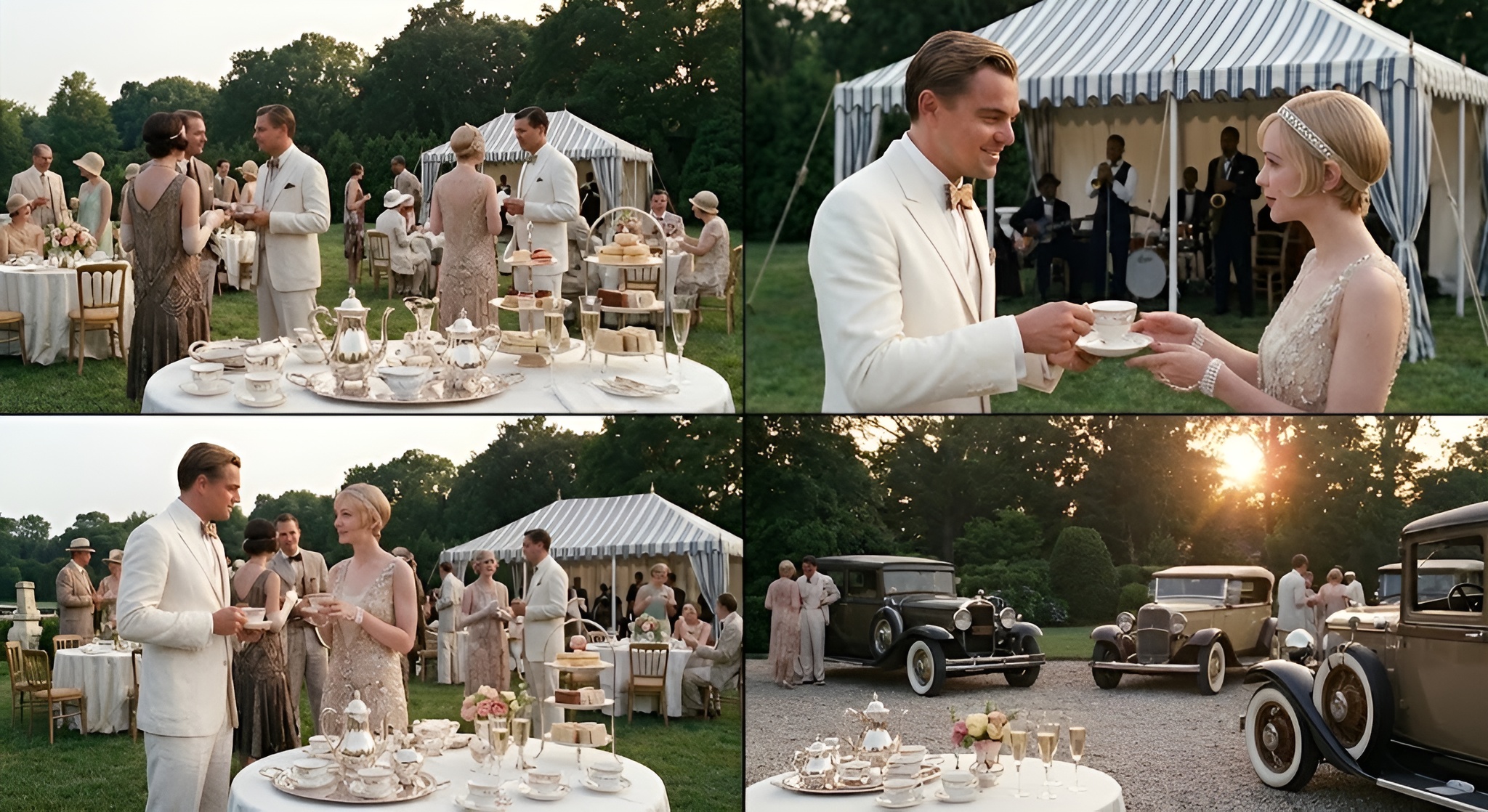
1. The "Tea Dance" (Thé Dansant): From Parlor to Party
Before the 1920s, tea was a Victorian parlor ritual—stiff, quiet, moral, and distinctly feminine. But the Jazz Age turned it upside down. The "Tea Dance" (Thé Dansant) became the craze of the decade. Hotels like the Plaza (where a key confrontation scene takes place in the book) hosted afternoon dances where young people could mingle unsupervised.
The Evolution of Energy: The 1920s were fast. The music was syncopated, the cars were faster, and the dresses were shorter. Tea provided the caffeine needed to dance the Charleston for hours. But it also provided cover. During Prohibition (1920-1933), a silver teapot on a table aroused no suspicion. Waiters would fill teapots with gin or whiskey, allowing flappers to pour "a nice cup of tea" right under the nose of the police. This is the origin of the "spiked tea" tradition.
Fitzgerald captures this duality perfectly. In the novel, tea marks the transition from the lethargy of the afternoon to the hedonism of the evening. It is the bridge between the two worlds of Gatsby.
Expert Tip: The "Long Island" Myth
Contrary to popular belief, the "Long Island Iced Tea" was NOT invented in the 1920s. It was created in the 1970s. The 1920s version of a tea cocktail was usually just warm gin with a splash of actual tea to color it. If you want a historically accurate Gatsby drink, try a Gin & Earl Grey infusion.
2. The Reunion: Rain, Lemon Cakes, and Panic
The pivotal moment in the book is when Gatsby reunites with Daisy at Nick Carraway's small cottage. This scene is a masterclass in social anxiety. Gatsby is terrified. He sends a greenhouse worth of flowers, gets the grass cut in the rain, but crucially, the meeting centers around tea.
Nick serves tea and "twelve lemon cakes." This setting is vital. Nick's cottage represents the "Old World"—modest, respectable, and authentic. Gatsby, in his white flannel suit and silver shirt, is out of place among the tea cups. He knocks a clock off the mantelpiece, symbolizing his clumsy attempt to turn back time.
The tea ritual forces them to sit and face each other without the distraction of loud parties or alcohol. It strips away Gatsby's facade. He cannot "perform" over tea the way he performs at his parties. The quiet intimacy of the teapot exposes his vulnerability.
What were they drinking? Given Nick's background (Yale educated, bondsman, midwestern roots), he likely served a classic, unpretentious English Breakfast or Ceylon. It stands in contrast to the champagne flowing next door at Gatsby's mansion. It is a grounding, sober beverage for a moment of high emotion.
Expert Tip: The Lemon Cakes
The "twelve lemon cakes" Nick buys are a symbol of excess in a modest setting—he over-prepares just like Gatsby does. They were likely bought from a bakery, but they went untouched due to the tension. If you want to recreate this scene (without the angst), check out our guide to Pairing Citrus Cakes with Earl Grey.
3. Old Money vs. New Money: The Tea Divide
Fitzgerald uses beverages to signal class. The Buchanans (Tom and Daisy) represent "Old Money." They drink as a matter of course. For them, tea is a bore, a routine to fill the empty afternoon. Daisy cries over shirts, but she drinks her tea with an air of entitlement. It is a ritual of stability.
Gatsby (New Money) drinks to be seen. His parties are fueled by crates of oranges and lemons (for cocktails), but we rarely see him sit down for a quiet cup of tea. He is too restless. When he does try to partake in the tea ritual at Nick's, he is awkward. He doesn't know the "rules" of the drawing room. He tries to buy the atmosphere with flowers, missing the point that tea culture is about understated elegance. To Old Money, tea is a right; to New Money, it's a performance.
4. Iced Tea: The American Invention
While the British clung to hot tea, the 1920s saw the explosion of Iced Tea in America. The invention of the commercial refrigerator and the availability of clean ice made it a status symbol. "New Money" Americans embraced Iced Tea as a rejection of stuffy European traditions.
It is highly likely that at Gatsby's pool parties, guests were sipping tall glasses of Iced Tea (sweetened heavily, of course) alongside their Mint Juleps. It was cool, modern, fast, and distinctly American—just like the Jazz Age itself. The clinking of ice in tall glasses is the soundtrack of the novel's summer heat.
If you want to drink like a flapper, forget the porcelain. Get a tall highball glass, fill it with crushed ice, and pour strong black tea over it. Read our guide to Cold Brew vs. Iced Tea here.
Expert Tip: The "Tea Gown"
In the 1920s, the "Tea Gown" was a specific type of dress—lighter and looser than evening wear, but fancier than day wear. It was designed for the transition hour (4 PM to 7 PM). Daisy Buchanan likely wore chiffon tea gowns in pastel colors, signaling her leisure status. She didn't have to work; she just had to exist beautifully between cups.
5. The Science of the "Nervous" Cup
Throughout the book, characters are constantly "on edge." Tom is aggressive, Daisy is flighty, Gatsby is trembling. They consume vast amounts of stimulants—alcohol, tobacco, and caffeine.
Tea played a crucial biochemical role in the Jazz Age. The caffeine provided the energy to sustain the frantic lifestyle, while the L-Theanine (found in tea but not coffee) provided a mild sedative effect to counteract the jitters. It was the perfect drug for a generation that was "burning the candle at both ends." Without tea, the nervous energy of the 1920s might have collapsed into exhaustion much sooner.
6. Conclusion: A Tragic Brew
In The Great Gatsby, tea represents the stability Gatsby craves but can never truly possess. He can buy the mansion, the car, and the hydroplane, but he cannot buy the effortless comfort of sitting in a parlor drinking Darjeeling with the woman he loves. He is always the outsider looking in through the window.
The tea at Nick's house is the closest he ever gets to a normal life with Daisy. It is a moment of suspended time, fragile and fleeting, before the tragedy unfolds. So, the next time you pour a cup, remember Gatsby. Whether you choose a classic hot brew or a spiked iced tea, drink it with the knowledge that you are partaking in a ritual that defined an era of excess, longing, and secret rebellion.
Drink Like the Jazz Age
Want to capture the spirit of the Roaring Twenties? We reviewed the best Art Deco tea sets and high-end blends that Daisy would approve of.
Review: Art Deco Tea SetsRelated Reading in Literature & Film
- Emma: Tea as Social Currency in Regency England
- The Remains of the Day: Butler's Tea Service as Emotional Repression
- Brideshead Revisited: Tea, Class, and Aristocratic England
- Cranford: Victorian Ladies Governing Through Tea
- Sense and Sensibility: Tea as Social Survival Exam
- Downton Abbey Tea Culture
- Pride and Prejudice Tea Etiquette
- Ted Lasso's Tea Journey
Comments